

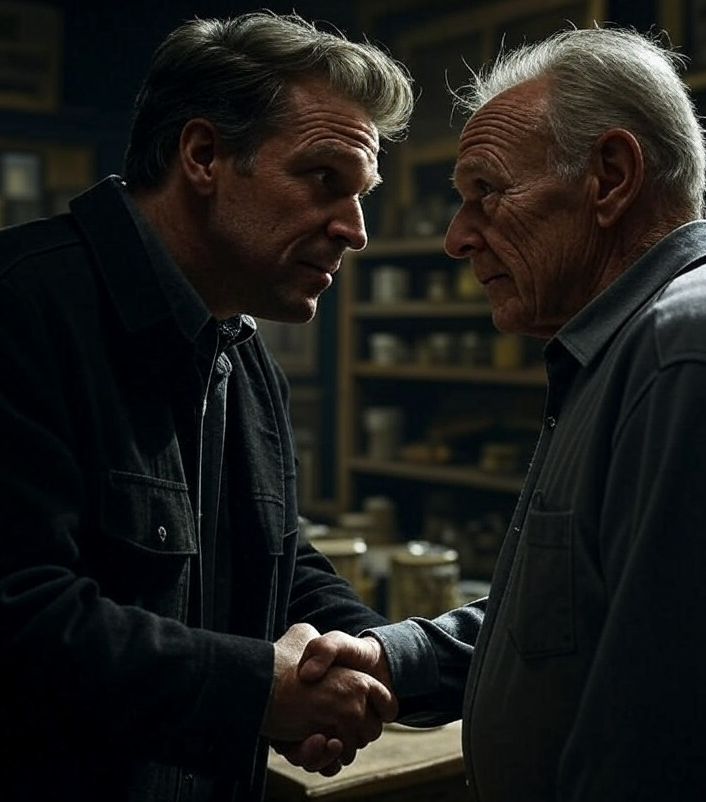
Hey, there! Hey! I remember you! You Will McMillan, ain’t you? That’s right. Me and you went to Compton High together. But you probably don’t remember me. We wasn’t close or nothing. Knew each other to say hey when passing, but that’s about all. You was a brain. Always had your face in a book. Always reading and studying. Not me. I did what I had to do to pass and that was about it. And almost didn’t do that. Came this close to flunking Miss Blitch’s English class, which meant I would not graduate. All I cared about then was girls and cars and drinking. If I had tried harder, I might have done better. But I didn’t care. Not then.
You do remember me? What’s my name then? Ah, you ain’t got to say that just to be nice. I know you nice. You always was nice. One of the nicest people at Compton High School. Didn’t bother nobody or nothing. Went around with your books. I remember once seeing you walking around the school with a pile of books all the way up to your nose. Wonder you didn’t trip and fall down for not seeing over them books. Wayne. That’s right. Wayne Paul Jarman. You do remember! I shouldn’t be surprised. Was always a brain, you was. Always smart. You say it’s my face that give it away? But it’s not a young face no more, Will. No. You can’t tell here in the dark, but it’s all full a wrinkles now. Wrinkles and trouble, and my hairline’s done about left me for good. I’m sixty years old now and feel every bit of it.
What do I do now? As far as work goes? Nothing. Not a thing. I’m on disability now, I’m ashamed to say. ‘Cause sixty’s old but not too old to work. I’ve always worked, ever since I got out of school. Wasn’t smart enough to go to college. But I don’t do nothing now far as work goes. It’s my nerves, Will. My nerves got a-hold of me a few years back and kindly mashed me down, you know? Everything makes me nervous. The littlest sound. A light coming on in a room all of a sudden. That kind of thing, you know. That’s how come I spend so much time in the dark. If you could see my hands good, you could see ‘em shaking some. Look. Can you see them? Coming here, to the Super SaveMore, that makes me nervous, what with all the people around. But I got to. I got to come and get what me and my wife needs. She don’t get out much no more herself. She’s worse off than I am as far as her nerves goes. Poor thing. Bless her heart. It’s a good day if she gets out of the bed for more than half a hour. We both nervous wrecks. How come? Oh it’s a hard thing to talk about, even to a nice man like you.
When I did work, I was in the finishing room at Majestic Fabrics. You ever work in a mill, Will? ‘Course not. You too much of a brain to have got caught in that mess. You lucky. Majestic’s gone. Almost all the mills is gone. Went over to Mexico and China and all such. When Majestic closed, I bummed around some. Worked in Dennis Abbitt’s garage a while fixing engines. Drove a truck. Whatever I could get. Alison worked too, at Nickelby Elementary School helping out the teachers. (You probably don’t remember Alison. Alison Daniel before she married me. She graduated from Broadusville High the same year we graduated from Compton.) Then what happened, happened, and me and her broke down to the point where we couldn’t work no more. Our nerves got the best of us.
What was it happened? I want to tell you, Will, ‘cause you a old friend and all that, but it’s a hard, hateful thing to talk about, even though I think about it all the time. I can’t sleep for thinking about it. I’m lucky to get a hour’s rest during the night, and even if I do, it’s filled with hateful dreams. That’s one reason I shake so. I can’t sleep. I’m wore out, exhausted.
We had a son. Wayne, Jr. Had him when we was both in our late thirties, so that was it for baby-having. There’d be no more after him. Everything seemed all right with him. He was a shy young’un, which we was glad for. Can’t stand no mouthy child. Junior kept to hisself mostly, even when he was around other young’uns. Perhaps was too quiet. Sometimes quietness is worrisome and means something’s wrong inside a person. So now and then I’d try to prod him on a little, you know. Get him outside more to run around. Play a sport with other boys. Get more fresh air and all like that, like a boy’s supposed to. One time, and this was so stupid, Will, so very stupid, he was sixteen years old, and I give him a drink. A little glass of Jack Daniels. I don’t know what I thought it would accomplish, giving him that drink. Maybe loosen him up some. Make him come out a little bit more. I don’t know. It was a mistake though. I know that. It planted a ugly seed, that first glass of Daniels, that grew in Junior so fast we didn’t see it as it sprouted in him. He liked that first taste of whiskey so good it became a habit to him, drinking. It got to be all he studied after a while. And that’s when the trouble started. He started cutting school. He would stay out all night sometimes with his drinking buddies and be too tired and hung over the next morning to get up and go to school the next day. He fell in with Tommy Ireland’s boy and that bad bunch. Even picked up their smart mouth, which he used against me and his mama ‘til I put a stop to it.
Will, you a smart man, and no doubt you know that the Jarmans ain’t got the best reputation in Compton County. We known as drunks and cheats and moochers and layabouts. And most of it is well-earned talk and true. Well, I was determined, in my own little way, to put a end to that bad picture of us. I couldn’t make it all good with all the people in this county, but I could do my part and maybe get some of ‘em to see we not all bad. So, I was hell-bent on making my son, the one who bore my name, Wayne Paul, Junior, different than the average Jarman. You know? He was going to break the mold and be different. He was going to show the world, at least this part of it, that it was possible to a Jarman and a good man.
So, one night I went up to him and said, “You got to cut this stuff out.”
“What stuff?” he says.
And I said, “This drinking. This cutting school. This hanging around with Robbie Ireland and his bunch. You got to dry out and get back to school.”
He looked at me and just laughed.
“I’m not joking with you, Junior,” I told him. “You got to straighten out and act like a responsible human being. If you need help doing it, I’ll get you help.”
He laughed again and said, “If you recall, you the one give me that first sweet taste of the stuff.”
“I know,” I said back. “And I ain’t never been more ashamed of a thing than that. I got to make it up to you, your mama, and myself.”
He laughed again, and I said, “You’ll do it, Junior, or else.”
“Else what?” he come back.
“Else you’ll leave this house,” I said, “and go as far away from me and your mama as you can. We not putting up with no white trash around here.”
He just kept on laughing like he was crazy and said, “That’s all the Jarmans is, is white trash.”
That’s when the real war began, I reckon. The war of words and threats and so on. And poor Alison caught in it all and her not a-cause of any of it. Day and night, we went at it, Junior and me, hollering and cussing at each other. There’s times I wanted to hit him, just knock him out, put some sense in him that way. But I never did. Instead, one night, I says to him, “You got to go.”
“What?” he says.
I say, “You got to leave this house. Tomorrow. You can stay tonight, but you got to leave in the morning.”
“And go where?” he asked me.
“I don’t know nor care. To Robbie Ireland’s for all I care. Just not here.”
“Wayne!” Alison said behind me. I knew I had hurt her but could not help it. “I will not have a ingrate under my roof anymore.” And with that, I left the discussion and went on to bed. Alison followed me a little later, and we laid awhile and talked about this thing, but I would not change my mind.
I never went to sleep that night. Just laid awake and watched the curtains on the window, waiting for day to come. At some point the bedroom door opened and someone said, “I’m leaving!” It was Wayne, Junior, of course. He said it again: “I’m leaving,” loud enough to wake his mama, but she kept on sleeping. I didn’t say nothing. I wanted his leaving to be as cold as possible, like nobody cared if he went. Then come this little pop, and I raised up in time to watch his body slump against the door then collapse to the ground.
“Junior!” I yelled, and then Alison stirred.
“What is it?” she asked.
“No!” I said. “Don’t look. Don’t get up.” But she did and she saw and she screamed so loud I bet the whole world heard her.
He used a old pistol I give him when I was trying to “man” him up or whatever it was I was trying to do. I was going to take him out and show him how to use it, but we never made it to the firing range. I put it off. He already knew how, I reckon.
I done it, Will! I killed him. I give him the glass of whiskey and the gun, and now he’s gone and I ain’t slept good in I don’t know when. Maybe I never will again. I don’t know. All I know is it is good to see you, my friend. And please pray for me. Oh if I had only been like you! If I had only kept my face in a book like you done.





My goodness. What a powerful and heartbreaking short story. The way Wayne Sr. speaks reminds me of people I knew in the county where I was born. Well done Dr. Ivey.
Thank you, ma’am!