


Radicalism has always been more popular than conservatism. Radicalism has the added side benefit of immediate gratification and a narrow focus born of heat. Conservatism on the other hand is seen as a vice in a day of tribulation. It is a detriment to the mind hardwired toward action, and immediate at that. Conservatism it has been said is poor at politics because you cannot pass a law that moves the heart towards tradition and the receiving of tradition. Hope founded in legislation is always left wanting. Yet, it is always the siren song of salvation for the moment. Only if this next thing is done, then the weight of the mountains of progress can be swept away as in a flood, a moment flexed in time.
Allen Tate in his poem Aeneas at Washington signals that feeling. He wrote:
I stood in the rain, far from home at nightfall
By the Potomac, the great Dome lit the water,
The city my blood had built I knew no more
While the screech-owl whistled his new delight
Consecutively dark.
In the seraphic way Tate could alone get at this he strikes at the soul of the impulse to radicalism. The eponymous Aeneas is standing in Arlington on the shores of the river as the sky itself releases a lamentation. One can recognize the scene. Tate chooses Aeneas as his muse for the simple reason that Aeneas as presented in Roman mythology is an ancestor of Romulus and Remus. The Trojan over the Greek. For the Southerner this is meant to invoke George Washington looking at the country he founded and the legacy of Lincoln and his industrial army who has destroyed, and seemingly permanently so, what the agrarian Cincinnatus had built. The screech owl as well is an important witness drawn from Virgil’s writings which portends immediate doom, in Virgil’s case Queen Dido, or in Tate’s muse’s voice, the continuing movement of that which was good in Washington, towards that which is not. Dido’s demise of course came at her own hand. Fitting for Tate’s lifetime experience.
Alienated from the world around them Tate and others, especially Donald Davidson, understood that the attitude expressed in the poem was one in which though recognizing the sadness of the scene, there was a truth that this was not the first time the city representing their dreams had fallen victim to death.
Notice what Tate says in the closing verse:
Stuck in the wet mire
Four thousand leagues from the ninth buried city
I thought of Troy, what we had built her for.
Time could spent naming out those nine buried cities and what each of them represent. Yet it would be better to consider what the right actions should be for those experiencing such for the tenth. It is well known that Allen Tate converted to Roman Catholicism at the insistence of his fellow Southern Agrarian, and sometime wife, Caroline Gordon. While I myself hail from a different tradition, it should be remembered that if there is anything which the Christian faith is known for it is the doctrine of the resurrection. While there is a sense in which resurrection is a radical type event, the means to which it witnesses is quite conservative. Israelite culture experienced it in its own way throughout the days of the Old Testament as they faced destruction and exile, and restoration. In the next to last example of that cycle, the prophet Jeremiah is granted wisdom to give instruction to the exiled, and soon to be exiled members of the southern kingdom. There are two verses which, despite existing in the mire of the mud the prophet excites them to consider the opportunity the death of the city might bring to them.
In Jeremiah 6:16 we read, “Thus saith the Lord, Stand ye in the ways, and see, and ask for the old paths, where is the good way, and walk therein, and ye shall find rest for your souls. But they said, We will not walk therein”. Now, as you notice in the second half the verse we see that the people did not heed the counsel. What did they do instead? They sought the help of a “far country”, and the bounty of a land the Lord did not give to them. The Radical will tell you that in order to re-establish the old paths that certain shortcuts need to be taken, common cause with those outside the kingdom. Yet, as Tate notes in his poem Neoptolemus in all his brutality could never rise past his brutality, his blood. The scorpion always kills the frog.
The solution is never as quick as that from which the fallen need to arise. To take on the same attitude and tradition as one’s captors is to betray the heritage one seeks to save. Conservatism is a practice born of history, not victory. That particular warning exudes itself from Jeremiah’s pen once more in the advice he gives to the young men who are now in exile in Babylon twenty-three chapters later:
Build ye houses, and dwell in them; and plant gardens, and eat the fruit of them; Take ye wives, and beget sons and daughters; and take wives for your sons, and give your daughters to husbands, that they may bear sons and daughters; that ye may be increased there, and not diminished.
Merely from the description given here by the Lord’s prophet it is clear that it will take at least three generations to be ready for the blessing God had in store. In the mean time what are the people who notice the wickedness of the city and nation in which they reside to be doing? To jump into the New Testament for a moment they are not, as the Apostle Paul says, to be taking up the weapons of the world, they are to use the means of grace granted unto them, those of prayer, praise, and the simple goodness of husbandry, of both animal and child. Raising the young to value those old paths, to know that what they see is not what must be, that there is a future filled with what Tate would describe as:
Now I demand little. The singular passion
Abides its object and consumes desire
In the circling shadow of its appetite.
There was a time when the young eyes were slow,
Their flame steady beyond the firstling fire,
In that mindset, where the young eyes are slow, the flame of their sight steady beyond the firstling fire is where we need to be at this moment, and as always walking in the ways of the old paths, tending to our gardens, our families, our heritage to save. It is not a time to be distracted by all the enemies both Left and Right, not gainsaying the hope of home and hearth through shed blood, but resting in the steady and sure ground where we are planted. Placing the seeds of truth and life in the hearts of children, knowing that diminishment comes in becoming that which we hate, the industrial behemoth of the moment, pulled and pushed by every wind of Radical reactionaries. Knowing that building takes time, and time is the treasure of the Conservative, of the agrarian comfort, for all things come to pass to those who do well, and tend to the land for the generation that is to come.
The views expressed at AbbevilleInstitute.org are not necessarily those of the Abbeville Institute.


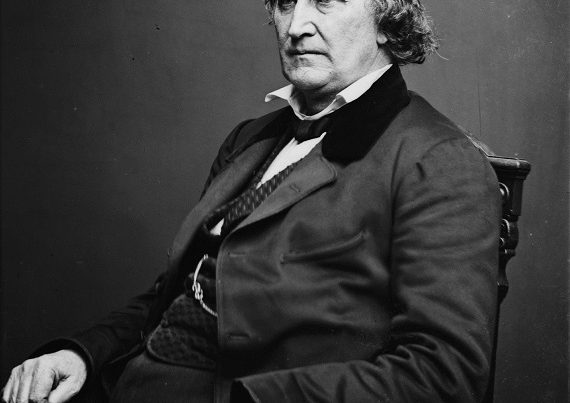


“Conservatism is a practice born of history, not victory.”
And ultimately the scorpion will also die.
Semper Fi and Deo Vindice, Pastor.
Amen
Rev. Glaser,
I appreciate that you have a hopeful tone without minimizing the sting of loss. It is also interesting to see how the mind of many conservatives go back through a different and contradictory path. The lines back to Washington are traced through Lincoln in a positive fashion. He’s seen as a man worthy to be called a proper successor in the same vein as Washington.
Again, thank you for your article.