

Originally published at Medium.com
By Agricola, a Freeholder of the Republic
“Liberty is preserved not by distant power, but by limits placed upon it.”
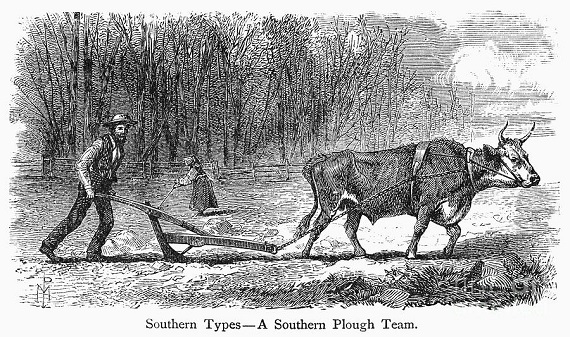
As a third generation agrarian in the Western United States, I inherit not only the soil worked by my family but also the principles they instilled in me — chief among them, the sanctity of private property and the necessity of personal liberty. These principles are not mere abstractions; they are the bedrock upon which my family’s survival and prosperity have always depended. I cherish the freedom that comes from working the land and providing for my family and community. But that freedom is increasingly under threat, not from drought or blight, but from federal overreach that ignores the realities of rural life. Regulations, taxes, and mandates handed down from Washington ignore the realities of our daily struggles and erode the liberty we hold dear.
Our fathers and grandfathers came west with little more than their grit and determination. They cleared the land, planted their crops, and built their homes with their own hands. They asked for no favors, only the right to work hard and enjoy the fruits of their labor. Yet, today, we find ourselves burdened by regulations written in far-off offices by men who have never worked a day in the fields. They dictate how much water we can draw, what crops we can plant, and how we manage our herds — all in the name of “progress” or the “public good.” But whose progress is this? Whose good? Certainly not ours.
These regulations do not consider the reality of our lives or the needs of our families and communities. They serve interests far removed from the soil — corporations and urban interests, and bureaucracies that see our land not as home but as a resource to exploit or control. They strip us of the liberty to make decisions about our own land, treating us as tenants on what is rightfully ours. When the federal government claims the authority to regulate the rain that falls on our fields, the wildlife that graze on our grass, or the streams that cross our pastures, it is regulating how we live, what we produce, and ultimately, who we are.
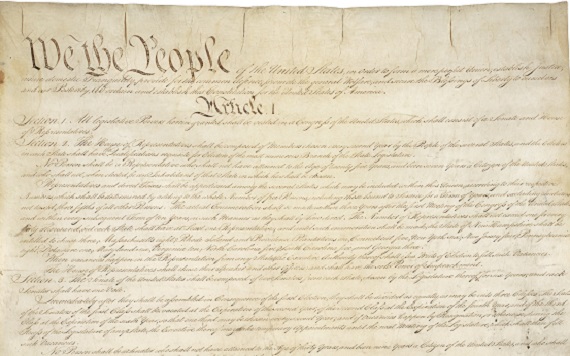
At the heart of this conflict lies a disregard for state sovereignty — a constitutional cornerstone of our Republic and a safeguard against federal encroachment. The Founders understood that power, concentrated too heavily in one place, would inevitably lead to tyranny. That is why they established a system of federalism, with the States and, ultimately, the people of those states reserving broad unenumerated powers. The federal government was not established to control our lives, nor to protect our personal safety. Its purpose was to secure our God-given rights — foremost among them, private property and personal liberty. Its authority was meant to be limited, enumerated and derived from the consent of the governed.
Yet today, that balance has shifted. Programs like agricultural subsidies, the Endangered Species Act, and federal land-use mandates all come with strings attached — strings that bind farmers and ranchers while empowering federal agencies. Taxation grows heavier, while our voices grow fainter under the weight of distant bureaucracies.
What makes this overreach so dangerous is that it erodes not only our independence but also our ability to provide for those who depend on us. Every dollar taken by unjust taxes, every acre restricted by federal policies, is a dollar and an acre less that we can use to feed our families and support our communities. The harm is not just economic — it is moral. These policies teach us to rely not on our own labor but on the dictates and benevolence of the central government, undermining the self-reliance and community spirit that have always been the backbone of rural life.
For agrarians, resisting unjust federal policies is not an act of rebellion — it is an act of preservation. Civil disobedience, when laws violate core constitutional principles, is not a rejection of order but a defense of liberty. It is a reclamation of rightful authority — of the authority every man has over his own person and property. To refuse compliance with unjust laws is not to reject order but to reject tyranny. It is an act of faith in the principles upon which this Republic was built: that government exists to serve the people, not to subjugate them. It is the act of standing firm against a tide that would wash away our rights, our dignity, and our responsibility to our families and communities. It is a refusal to surrender our liberty to a central government that has forgotten its purpose. We must resist not out of selfishness but because we understand that to submit would betray those who came before us and those who will come after.
This resistance must be measured and principled. Just as the land must be carefully tended, so must liberty. It must be guarded from erosion, whether by the winds of apathy or the floods of overreach. We must be clear in our purpose: to protect what is ours, to ensure our children inherit the liberties we were born with, and to remind the central government that its authority comes from the people, not the other way around.
Our fight is not against law itself, but against unjust laws that hinder honest labor and stifle independent spirit. If the central government refuses to govern within constitutional limits, then it is our duty to govern ourselves, to draw a line and say, “This far and no farther.” For every time we yield to overreach, we lose a part of the freedom that defines us.
State sovereignty serves as a crucial check on this federal overreach. It is through our state governments that we can most directly exercise self-governance and protect our families and communities from unjust policies. When Washington imposes laws that restrict how we manage our land, our water, and our labor, it is the duty of our state governments to push back. But this safeguard only functions when we, the people, hold our state leaders accountable and demand that they uphold their responsibilities to us.
It is not enough to resist unjust federal laws as individuals. We must ensure that our state governments do not become complacent or complicit in federal overreach. When the federal government acts outside its constitutional bounds, it is the duty of the State to interpose on behalf of its citizens, to act as a barrier against overreach, and to protect the rights and liberties of the people.
Too often, we see our State governments bowing to federal pressures, whether through the promise of funding or the threat of withholding it. This surrender undermines the very framework of our Republic. If state leaders fail to defend our sovereignty, they fail us, and open the door for federal overreach to grow unchecked. It is our duty, then, to remind them of their role and to demand that they stand firm against unjust mandates.
For those of us who depend on the land, this is not theoretical — it is survival. When federal policies dictate how much water we can use, how we cultivate our land, or what we can do with our property, the state government must stand between us and those oversteps. If it does not, the burden falls to us to resist — not out of defiance, but out of fidelity to liberty and self-governance.
Civil disobedience, in this context, becomes a collective assertion of our rights as citizens of a sovereign state. It is a declaration that we will not allow distant bureaucrats to dictate how we live, work, and provide for our families. It is a reminder to our state leaders that they have a duty to protect us from federal encroachments and to uphold the powers reserved by the states and the people of the states.
Our stand against federal overreach is not merely about rejecting unjust laws; it is about preserving the balance of power that protects our liberty. We must ensure that our State governments act as defenders of that balance, resisting any attempt by the federal government to exceed its enumerated powers.
This path is not easy, but it is necessary. Just as we steward our land with diligence and resolve, so must we tend the principles of liberty and federalism. If we fail to act — if we allow overreach to continue unchallenged — we risk leaving our children a legacy of dependence and subjugation rather than independence and opportunity.
We fight not only for our farms, our families, or our communities, but for the principle that all power comes from the people and should be entrusted to those closest to them. If the federal government forgets this truth, then it is our duty, through our States and ourselves, to remind it.
We ask for no special treatment, no favors, no handouts. We demand only our God-given right to live and work, to protect our property and provide for our families as we see fit. If securing these rights requires disobedience to unjust authority, then it is a cost we must bear. Only by standing firm, defending state sovereignty, and resisting overreach can we ensure that liberty endures for the generations to come.
Private property and personal liberty are inseparable; one cannot survive without the other. And if preserving these principles requires sacrifice, then so be it.
A farmer knows that some seasons demand hard choices — fields must sometimes lie fallow, and storms must sometimes be endured. But it is the care we give today that ensures the harvest of tomorrow.
The views expressed at AbbevilleInstitute.org are not necessarily those of the Abbeville Institute.





We concur and welcome the western States’ assistance in restraining the oppressive fedgov our ancestors fought to throw off.
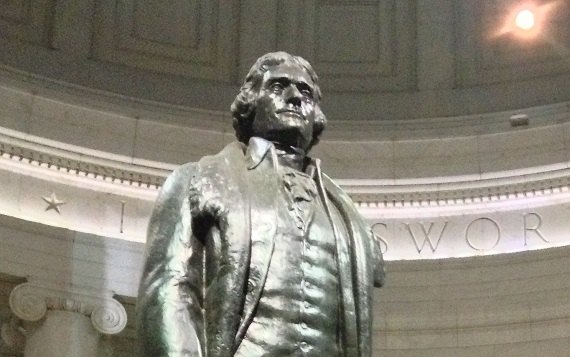
“ Law is often, but the tyrants will, and always so when it violates the rights of the individual.”
-Thomas Jefferson