
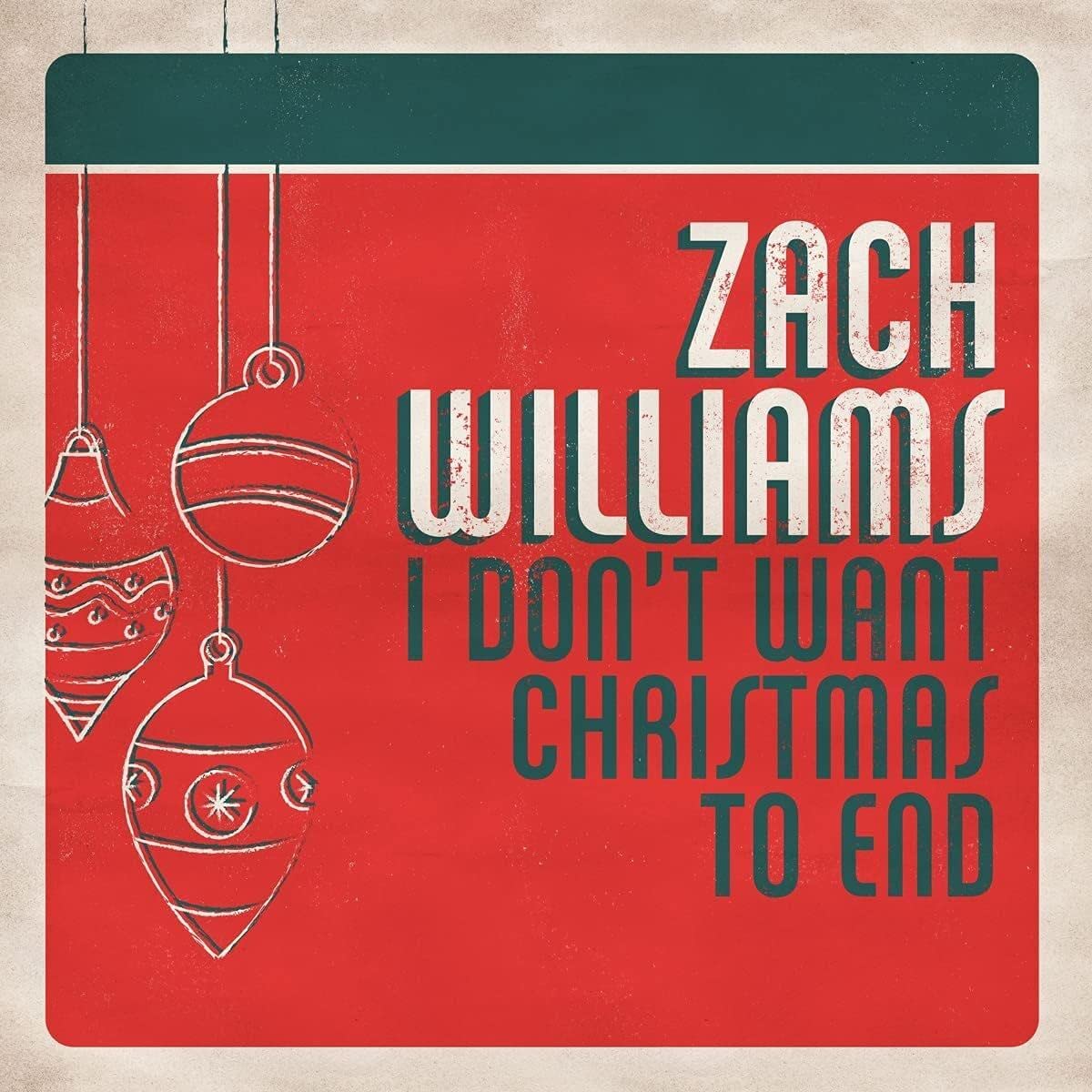
I Don’t Want Christmas to End, the 2021 Christmas album by Zach Williams, doesn’t feel as much seasonal as it feels Southern. Recorded at FAME Studios in Muscle Shoals, Alabama, Zach Williams’ first full-length holiday record does a lot more than borrow the iconography of classic American music as it absorbs the essence of the iconic studio that shaped American music for decades. The result is a Christmas album that doesn’t sound like a church service. Instead, it sounds more like a late-December session that ran long because nobody wanted to stop playing.
That sense of place matters. Muscle Shoals is not just a random, neutral studio environment, but a separate solar system with its own gravitational pull. The rooms at FAME have a way of giving music a lived-in warmth that can’t be added later in the mix, and you can hear that immediately on this record. The drums feel more rounded than punchy, the keyboards breathe, and Williams’ gravel-edged voice sits inside the band instead of hovering above it. This is not a pristine, modern Christmas album engineered for maximum polish. It sounds human, familiar, and Southern in the best way.
Williams wisely leans into that atmosphere instead of reinventing Christmas standards with modern worship dynamics or pop swagger. “Merry Christmas Baby” and “Run Run Rudolph” carry a blues-and-R&B looseness that are native to Muscle Shoals, not imported. These tracks swing without rushing. They don’t feel ironic or self-conscious, but simply comfortable.
The album’s quieter moments are where the Muscle Shoals influence becomes even more pronounced. “Christmas Time Is Here” and “Silent Night” avoid the usual grand gestures and choose restraint instead. In these tracks, Williams allows ample space for the Muscle Shoals room tone, for the decay of a slightly out-of-tune piano, and especially for the grain in his voice. It’s the sound of musicians trusting the songs to carry themselves without needing mixing board garnish. “Go Tell It on the Mountain,” with its unmistakable gospel undercurrent, feels like a testimony passed hand to hand that’s been shaped by the voices that have sung it before.
The title track, “I Don’t Want Christmas to End,” is the emotional heart of the album. It’s not a theological statement or a worship refrain, but a plainspoken and relatable sentiment, and that choice is crucial to understanding the project as a whole. This is a Christmas album about seasonal longing, not liturgical instruction. Williams isn’t trying to extend Christmas as a doctrine—he’s trying to linger in the feeling of warmth, memory, and shared space that the season briefly grants. He just doesn’t want that warmth to end. In that sense, the song functions as both thesis and confession.
Perhaps the most significant aspect of I Don’t Want Christmas to End is what it deliberately is not. This is not a Christmas worship record, despite Williams’ deep roots in contemporary Christian music. There are no extended praise builds, no altar-call bridges, and no attempt to turn the album into a sermon. Faith is definitely at hand, but it’s embedded. The Nativity is woven into Southern holiday tradition, story, and sound rather than announced. That’s such a smart choice, because it gives the album a broader cultural reach and a longer shelf life. It feels like a record you can play in a living room, a kitchen, or a car without it being a devotional time. It makes the album a Christmas record you really don’t want to end.
By stepping outside the expectations of a typical worship project, Williams allows himself to inhabit his full Southern lineage instead of using it as a category. This album sits comfortably alongside classic American Christmas records rooted in soul, blues, and early rock. It shares the Southern priorities of feel over flash, groove over gloss, atmosphere over argument, and blend over compartmentalization.
Ultimately, I Don’t Want Christmas to End succeeds because it understands that good Christmas music is not about novelty. By anchoring the project in Muscle Shoals and letting those rooms do their magic to humanize, warm, and steady the music, Zach Williams delivers a holiday album that feels earned. It opens the door and invites company in to stay awhile. And like the season it celebrates, it leaves you wishing the lights could stay on just a little longer.