

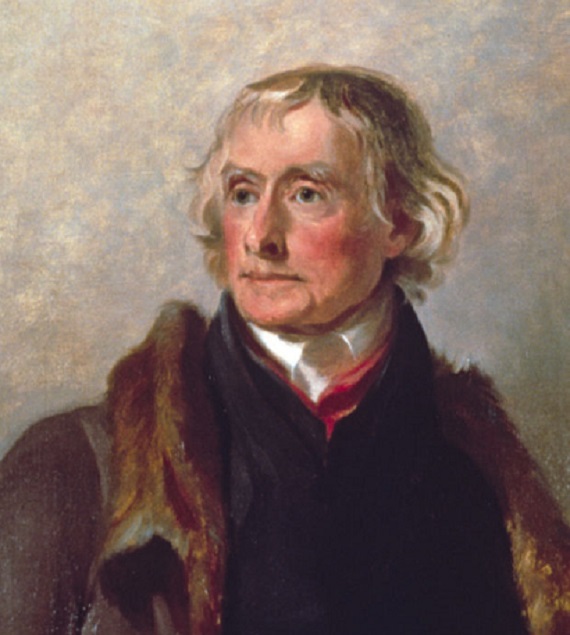
“Truth will do well enough if left to shift for herself. She seldom has received much aid from the power of great men to whom she is rarely known and seldom welcome. She has no need of force to procure entrance into the minds of men.
~Thomas Jefferson, “Notes on Religion,” 1776
INTRODUCTION TO CHAPTER 5 OF FRAMING A LEGEND: EXPOSING THE DISTORTED HISTORY OF THOMAS JEFFERSON AND SALLY HEMINGS
When I first turned to the historical literature on Jefferson, I was astonished by its unevenness. While many scholars contented themselves with modest and measured assertions from a careful scrutiny of the literature—historians Dumas Malone, Merrill Peterson, and Adrienne Koch come readily to mind—others took the liberties of speculating, often wildly from scant evidence, and of ignoring the work of other historians whose theses were inconsistent with theirs.
The most popular books, like the ones I have thus far considered, were those that focused exclusively on Jefferson’s private life. They aimed to show, against the celebrated Jeffersonian scholars, that the persona one gets from examination of the thousands of writings Jefferson has left behind differs significantly from the real Jefferson. The real Jefferson was no plaster saint but a Janus-faced master of secrecy and duplicity—the consummate hypocrite. So skilled was he at leading a clandestine double life that he kept a lengthy sexual relationship from his associates, friends, and even his family for thirty-eight years.
To show Jefferson was Janus-faced, such scholars have taken great license with the canons of sound historical scholarship. Many, like Fawn Brodie and Annette Gordon-Reed, seem to think a tendentious approach to history is acceptable—that it is appropriate to begin with the conclusion for which one wishes to argue and then seek out evidence in support of it. Inconsistent evidence, gleaned along the way, is merely ignored. Andrew Burstein, in arguing that Jefferson’s sexual relationship with Hemings came at the advice of Samuel-Auguste-André-David Tissot (author of De la santé des gens de lettres), seems to think nothing of hasty, shoddy induction—that is gilding an inordinately weak argument to give it the look of plausibility.
There are also abuses of science. Those scientists involved in the DNA study thought nothing of leaping to the conclusion, in spite of the inconclusiveness of the study, that Thomas Jefferson was the most probable father not only of Eston Hemings but also of all six of Sally Hemings’s children. The Thomas Jefferson Memorial Foundation (TJMF) followed their lead in confirming their quick conclusions. Soon, Fraser Neiman, one of the members of the TJMF’s committee, thought up a clever “proof,” involving Bayes’s theorem and Monte-Carlo statistical methods, to show Jefferson must have fathered all six children. The proof showed, at least in Neiman’s eyes, that it was nearly impossible for anyone other than Jefferson to be the father of all of Hemings’s children. Likewise, historian Alan Golden and professor of rhetoric James L. Golden, following a Toulminian model of argument assessment, used the data of historians and scientists to show Jefferson was likely the father of all of Sally Hemings’s children.
What is most disheartening is that Jeffersonian psycho-biographical history and the science behind it are generally replete with normative judgments: Jefferson was racist, Jefferson was a hypocrite, or Jefferson was a rogue. Just when did history and science become a normative and moralistic, not descriptive, discipline—namely, when did history and science become “Aesopian”? What gives certain scholars the right to assume a normative perch and pass moral judgment on Jefferson?
In this chapter, I begin by analyzing the appeals to science to indict Jefferson of paternity: the results of the DNA analysis, their interpretation by the TJMF, Fraser Neiman’s Bayesian argument, and a Toulminian analysis of the scientific data. I end with a critique of the methodological abuses of some Jeffersonian scholars in their attempt, come what may, to indict Jefferson.
The shoddiness of the arguments used by scientists and by historical scholars today to show that Jefferson had a relationship with Hemings or to explicate the nature of that relationship indicates that either sound reasoning is not in vogue or there is a witch hunt. Those two alternatives, as we shall see, need not be exclusive.
For a signed leather-bound edition, at a special price for 30 days (great Christmas gift!), see the video below as Dr. H speaks with Dasha Stein of Gryphon Editions…





Terrible, terrible people.
They’re trying the same with RE Lee and a newspaper report from the late 1850’s. The claim was he whipped and salted the wounds of a runaway slave. There’s a chapter in Elizabeth Brown Pryor’s book, Reading the Man. She concludes the chapter saying the claims are credible. I’ve researched dozens of memoirs and books of letters on Lee and found not a hint of inhumane treatment to man or beast over Lee’s entire life, either personally or reference in communications. There are references to servants saying hello in letters home. Like Jefferson, Lee refused to address the accusations publicly.
Lee didn’t do such a thing. Neither did TJ. Anybody getting a load of Maria Cosway will know Hemings wasn’t his type.
I’m getting your book.
1) Regarding the most important aspect of this article, thank you to all the scholars not letting the slurs against Jefferson stand undefended. What they have done with the Hemings issue is almost as bad as the science behind their Covid vaccines and mandates. Were you scholars not doing your homework I would believe whatever the Monticello Inc. people spit out.
2) In all seriousness, is there not a Thomas Jefferson hair or bone remains to just do a DNA test and get this nonsense over with? Seems like it can be done in a week if they so desired.
3) Lastly, I no longer share Jefferson’s vision of the so called informed voter. I think we can all admit it out loud. Would it be any better if most Americans returned to being mostly farmers tomorrow? I don’t know. Agrarianism has better values. But our agrarian ancestors didn’t make the best decisions also. So what do we do? Is more of a pre-Reformation feudal oligarchy preferable to the oligarch democracy we have now? George Fitzugh seemed to think so. And do people who hate us have the right to constitutional freedoms to rule over us? And commit genocide upon us? I don’t think so. So whenever the reset happens in our favor, what do we keep and what do we just burn as refuge? How do we properly balance the right to vote? Control over the factors of production? I don’t claim to have all the answers. I just know I don’t want to go back to George Fitzugh’s feudal society, and I no longer want to continue in this Mass Democracy Hell. The root of all our problems, aside from human sin, is the Yankee Empire. And federalism would solve most of our problems.