

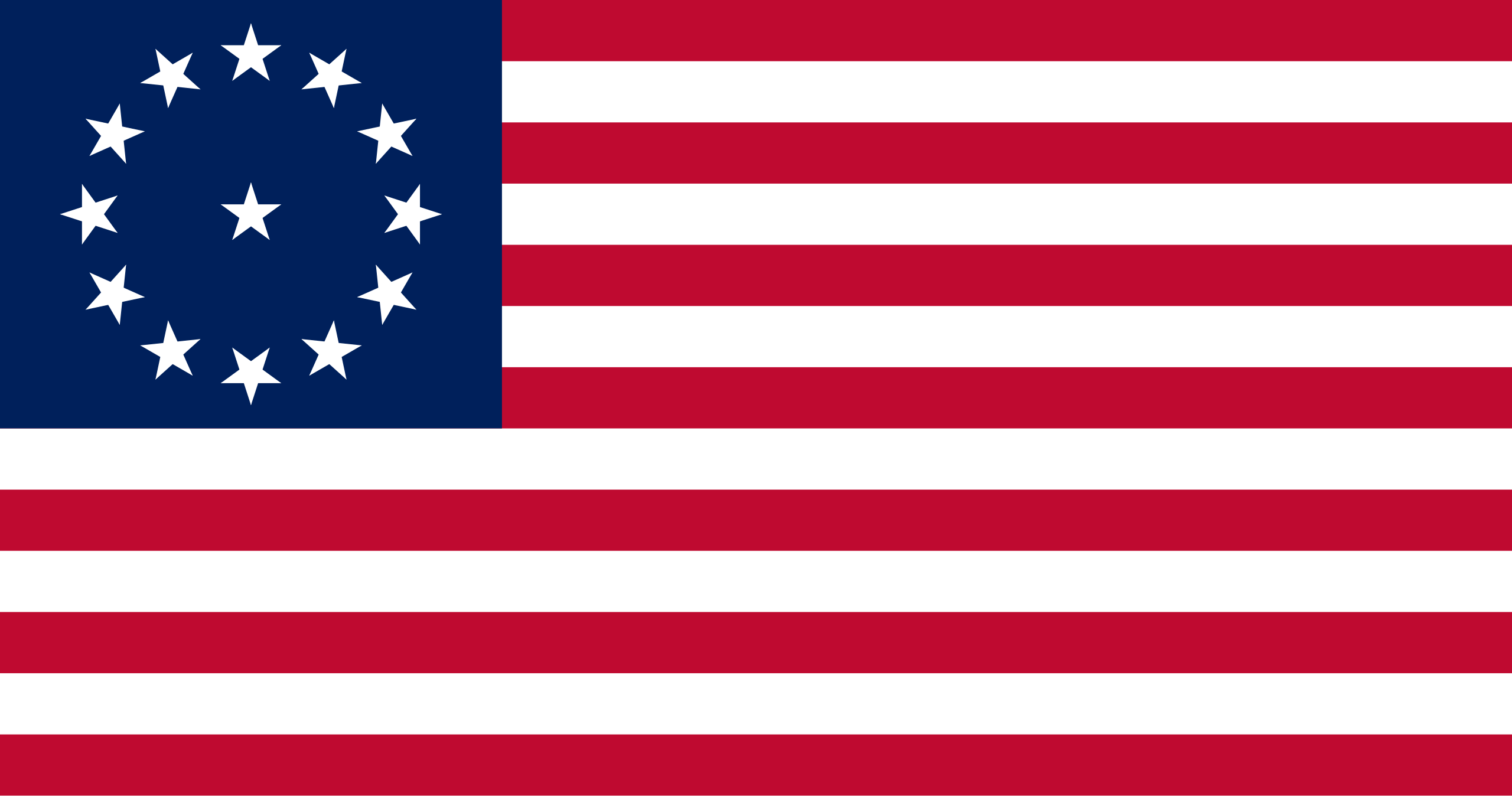
The socialist-democrat party’s leaders—particularly Rep. Pelosi—have taken to referring to “our democracy.” The term serves as a cudgel against political opponents in the de-civilizers’ attempts to justify or garner support for whatever unethical, unlawful, or unhelpful activities they seek to advance. How many of them—or even ordinary American citizens—realize that in the antebellum period it was not uncommon to encounter references, under several expressions, to what was understood as the American confederacy or confederation of the American States?
At roughly the same time as the “our democracy” charade, the derangement in our society regarding the word “confederacy”—the employment of which is permitted only as a term of disapprobation and contempt—seems to have become the new normal. In recent months the neo-marxist revolution—particularly in Gov. Walz’s Minnesota—has facilitated a resurgence of the illness that afflicts even some otherwise clear-thinking, well-educated, staunchly conservative commentators. Several refer to the disgraced governor and his allies as “Confederate Gov. Tim Walz,” his “neo-Confederate gang,” and such like; even going so far as naming Walz with derision as “clownish General Beauregard.” Among the Minnesota governor’s bizarre attempts to retain support from those whom Sen. Kennedy of Louisiana calls the “lunatic left,” Walz has compared his own actions with “Fort Sumter.” Others are employing Fort Sumter references, too, accompanied by claims that Walz’s gang is “following the Confederate script.”
Unfortunately, these writers have fallen into the tired phenomenon of intellectual abuse toward the citizens of those States which elected to withdraw from the Union; a government that many citizens—including non-Southerners—considered to be the American confederacy, and that existed from 1789 to 1861.[1]
The commentators I allude to nearly always promote mutual respect and civility rather than stoking the fires of ideological or uninformed rage, but in Minnesota’s case of otherworldly insanity they are—inadvertently, I expect—fanning the flames of anti-Southernism. Their disparaging references linking the politics, ideology, and violence of Walz’s neo-marxists to the Southern Confederacy are unjust. They do disservice to Southerners today, many of whom look to their ancestors with pride, as well as dissing the remembrance of those in the antebellum period who believed the nation’s form of government to be a voluntary union or alliance of individual and sovereign States, and who acted in accordance with that conviction.
This lamentable practice harkens to the 2021-2025 misadministration, during which the “diversity” industry’s anti-Southern vitriol lowered U.S. military recruitment to crisis level. Recall that during those years, normal white Southern men were suspected as extremists by the Pentagon they served under. But we’re not outta the woods yet. From what’s spewing out of Richmond these days, the Virginia Military Institute continues to be Suspect Number One for those holding the most horrible attitudes and behaviors imaginable; that is, in the Alternate Universe of Ralph Northam and likeminded, newly-minted Gov. Spanberger.[2]
My question to the commentariat is this: Does your incessant likening of Minnesota’s insurrection to the withdrawal of Virginia, for example, from the Union AFTER Pres. Lincoln’s call for 75,000 troops to invade the South—they could not reach South Carolina without marching through Virginia—make it more or less likely that Americans today will think and act in a dispassionate, rational, informed manner regarding issues affecting the South or Southerners or Southern military members or Southern military schools such as VMI and the Citadel? . . . Or, even more important, think and act maturely with regard to any substantive issue in which informed and honorable individuals hold differing views?
As difficult as it may be for 21st-century Americans to grasp, many antebellum citizens viewed themselves as citizens of their State first; and of the United States second (a plural term in that era). While much more could be said on the point, here it suffices to note that for the vast majority of Americans prior to 1860 the federal government in Washington was of little to no concern in their day-to-day lives.
The federal government’s mail stages delivered the U.S. mail to their local post office, where the post master—the only federal officer residing in most communities—ensured the townsfolk received their letters and packages, or posted a notice in the local newspaper for their unclaimed letters. In his highly-acclaimed 1995 work, Spreading the News: The American Postal System from Franklin to Morse, Richard R. John observed that, for the most part, the postal system was the federal government during that period. In terms of manpower, money, and the attention it received, the postal department dwarfed the rest of the federal government. Not only did the department deliver the mail, more important, it was responsible for authorizing and funding the establishment of “post roads,” the country’s primary infrastructure—at least until railroads became commonplace by the 1850s.
For one wishing to dismiss the view of voluntary union or State sovereignty (within its proper sphere of “powers not delegated to the United States,” but “reserved to the States”), please revisit the Hartford Convention of 1814-1815—during the War of 1812—when legislatures or counties of five New England States came close to acting upon the same principles that were taken up again five decades later. In January 1815, the highly-respected, politically-balanced Niles’ Weekly Register addressed the Hartford Convention’s proceedings:
. . . if the union be destined to dissolution, by reason of the multiplied abuses of bad administrations, it should, if possible, be the work of peaceable times, and deliberate consent. Some new form of confederacy should be substituted among those states, which shall intend to maintain a federal relation to each other. Events may prove that the causes of our calamities are deep and permanent. . . . Whenever it shall appear that these causes are radical and permanent, a separation by equitable arrangement, will be preferable to an alliance by constraint, among nominal friends, but real enemies. . . .”[3]
If one insists on condemning Southerners for their decisions in 1860-1861, shouldn’t one hold the same harshness toward those New Englanders who five decades earlier pushed for the same decision of withdrawal from the Union, albeit falling short due to the war’s end?
Let me make clear that I fully support the rigorous, heroic efforts of the ICE officers and departments of homeland security and justice to enforce federal immigration law. (I think it’s past time for the deployment to Minnesota of a task force from the 11th Airborne Division to restore law and order.) But the current writers I’ve quoted breezily and repeatedly equate the lawlessness and violence in Minnesota aimed at federal officers attempting to enforce immigration law, with 1861—as with this: “We have never seen anything like it; not since 1861, anyway.” This, written by my favorite writer on his conservative organization’s overall excellent blog site, whose clear, concise, informative, and humorous pieces I typically agree with.
In the correlating of “1861”—and by implication the Confederacy which was formed in that year—with the revolution’s long march to shred the fabric of our society for the benefit of a few atheist, authoritarian, ideological charismatics—I must respectfully disagree.
Below are eight excerpts from antebellum publications or documents that suggest why one ought to reject the disrespecting of the Southern government formed from the voluntary withdrawal from the confederacy of States in 1860-1861. Not that one must agree with their decision. But one ought respect rather than disparage it. The latter merely adds fuel to the fires of social unrest. For seven decades from 1789 we were viewed as a confederacy that went by the terms republic, union, United States, “united States,” or various renderings that included the key words federal/federated, states, confederacy/confederated [I have added the bolding and italics to each excerpt]:
- “Our Country,” Southern Religious Telegraph [Richmond, Va.], Dec. 7, 1832.
Concerning the Nullification Crisis (1832-1833),
At the present deeply interesting moment in the affairs of this country, we have devoted more space than usual to the insertion of papers of a political character. . . . The attitude in which one of the members of the Confederacy appears, cannot be contemplated with indifference. We hope that conciliatory measures may be devised, which shall restore harmony and allay excitement.
- “President Van Burens’ Inaugural Address,” New England Spectator [Boston], Mar. 15, 1837.[4]
Addressing his “Fellow Citizens,”
. . . Certain danger was foretold from the extension of our territory, the multiplication of States, and the increase of population. Our system was supposed to be adapted only to boundaries comparatively narrow. These have been widened beyond conjecture ; the members of our confederacy are already doubled ; and the numbers of our people are incredibly augmented. The alleged causes of danger have long surpassed anticipation, but none of the consequences have followed.
Following Van Buren, most presidents over the next twenty years made multiple references to “our confederacy,” “our Confederacy,” or “this Confederacy” in their inaugural addresses: Harrison (1841), Polk (1845), Pierce (1853), and Buchanan (1857).[5]
- Religious Telegraph and Observer [Phila.], Dec. 26, 1839.
At the opening of the Twenty-Sixth U.S. Congress in December 1839, on the eleventh ballot Mr. Robert M. T. Hunter, of Virginia, was duly elected Speaker of the House.
The next day, “Tuesday, Dec. 17.—At noon to-day, the Speaker of the House the [Hon. Robert Mercer Taliaferro] Hunter took the chair and called the House to order; after which he arose and addressed the House as follows”:
. . . I shall feel it as especially due from me to you, to preside as the Speaker, not of a party, but of the House. Whilst I shall deem it my duty on all proper occasions to sustain the principles upon which I stand pledged before the country, I shall hold myself bound at the same time to afford every facility within my power to the full and free expression of the wishes and sentiments of every section of this great Confederacy. You will doubtless deem it your duty, gentlemen, as the grand inquest of the nation, to investigate all matters of which the People ought to be informed . . . and to preserve inviolate the Constitution which you will be sworn to support. . . .
Note: the Speaker employed a reference to “this great Confederacy” in the very sentence in which he reminded his colleagues of their obligation “to preserve inviolate the Constitution.” There was no mixed messaging or ambiguity whatsoever. He knew of what he spoke. Despite what most Americans assume in our day, Speaker Hunter spoke with clarity and studied conviction of his country’s form of government, established as it was by the Constitution. Apparently, none of his colleagues—from a Northern or Southern State—had any objection.
- “Letter on Texas,” Alexandria Gazette and Virginia Advertiser, Sep. 14, 1844.
On incorporating Texas into our Union,
An enquiry into the cause of the hostilities existing between these two powers [Texas and Mexico] will readily delineate their true character and purpose. Nineteen Spanish provinces or colonies, now known as departments of Mexico, of which Texas and Coahuila were a part, threw off their allegiance to the crown, declared themselves independent, and in 1824, succeeded in establishing a confederacy of states, similar to our own. According to the terms of the constitution forming this confederacy, and constituting the sole bond of union between them, Texas and Coahuila together, were expressly recognized as one of these states.
- Letter, Rev. William Bullein Johnson to Editor, Edgefield [So. Car.] Advertiser, Apr. 25, 1845.
Johnson, the foremost Baptist minister of his day in the South and first President of the Southern Baptist Convention, had just returned home from a visit to Florida for the purpose of surveying the state of the Baptist churches there. Upon his return home to South Carolina, he provided an account of his trip to the editor of the Edgefield Advertiser:
During my abode in Tallahassee, the Supreme Court and the Territorial Legislature, composed of a Senate and House of Representatives, were in session. I was highly gratified to see, that each House had its Chaplain—that the business was opened regular every morning with prayer, and that the members of the respective houses were in [regular] attendance on that service. The proceedings of these bodies were conducted in parliamentary style, with propriety and decorum.
The announcement of the transition of the Territory into the relation of a sovereign member of the American Republic, was received with enthusiasm. Immediate measures were taken for the State organization, and in June, Florida will assume her station in the American confederacy. This change will, I am persuaded, be attended with happy results.[6]
- “Speech of Hon. Wm. C. Rives,” Jeffersonian Republican [Charlottesville], Nov. 18, 1858.
William Cabell Rives— protégé of Thomas Jefferson, U.S. congressman from Virginia, Minister to France (twice), scholarly author, and a representative to the Peace Conference in March 1861—delivered this address before the United States and Virginia Central Agricultural Societies, on Oct. 29, 1858. This occasion
has given us the proud and valued privilege of receiving [on?] the soil of Virginia, and welcoming to our hearth stones and our hearts, our brother farmers and friends of the other States of the Union. . . . No where, we flatter ourselves, could such a meeting have taken place with more of fitness and propriety than in this ancient commonwealth, now the central State, on the Atlantic seaboard, of our extended Union, the theatre of the closing scene of the Revolution which established our National Independence, the parent of the Federal Constitution which made us one people, and ever cherishing with fidelity and affection . . . those fraternal relations which belong to the members of one great family of confederated States.
It is in this catholic and parental spirit of equal regard for the agricultural interests and pursuits of all the States, that the National Society . . . desires . . . to exercise its fostering influence. It holds its great annual meetings, in succession, in each one of the States, seeks, in co-operation with the local societies of each, to stimulate and [develop] to its highest perfection the agriculture of each, and embracing . . . all the members of the confederacy, it warms and vivifies them all . . . by the rays of its countenance and encouragement.
- Southern Planter [Richmond, Va.], Dec. 1, 1859, pg. 739.
If a dissolution of the Union is to be followed by the revival of the slave trade, Virginia had better consider whether the south of the northern Confederacy would not be far preferable for her than the north of a Southern Confederacy. In the Northern Confederacy, Virginia would derive a large amount from the sale of her slaves to the South, and gain the increased value of her lands from northern emigration; while, in the Southern Confederacy, with the African slave trade revived, she would lose two-thirds of the value of her slave property and derive no additional increase to the value of her lands.
My point has not to do with the morality or economics of slavery, but simply to highlight that the form of government in the U. States was widely considered to be a Confederacy. Further, a confederacy/confederation—a voluntary alliance of sovereign and independent States—by raison d՛être, acknowledged the right of a member to withdraw from its union as it saw fit. Which right was not proscribed in the U.S. Constitution.
- Sermon, Rev. Robert Lewis Dabney, Delivered at Hampden-Sydney College, Va., Nov. 1, 1860.
In a sermon entitled, “The Christian’s Best Motive for Patriotism,” Dabney—arguably the preeminent Presbyterian minister-theologian of his day and soon to serve as chief-of-staff/chaplain at his friend “Stonewall” Jackson’s insistence—had this to say:
. . . Christians should everywhere begin to pray for their country. “Because of the house of the Lord our God, let us seek its good” [Psalm 122:9]. The guilty churches of all our land should humble themselves before a holy God for their Christian backslidings and our national sins.
. . .
And along with this should go humble confessions of our sins, individual and social. And here let me distinctly warn you, that I am not about to point your attention to sins of fellow-citizens of another quarter of the Confederacy, from whose faults some may suppose the present fear arises. Whether they have committed faults, or how great, it is not my present concern to say. Our business is today with our own sins. . . . It is our own sins alone that we have the means of reforming, by the help of his grace.
Could it be any clearer that such references are to the widely acknowledged form of the American government prior to the 1860s? (Such excerpts could be replicated many times over.) The current, toxic view of the idea of confederacy in American history promotes a post-1865 view of the Constitution—as if such view had always been held. The winners write the history. I get that. But next time you hear someone refer thoughtlessly to “our democracy,” you’re invited to remind the speaker (but only if they appear to be “mostly peaceful”) that a considerable number of our forefathers—among them highly-educated, patriotic, honorable, and moral men—including some of the best men of their day (several Presidents, Johnson of the Baptists, Rives of Virginia, Dabney of the Presbyterians), understood the American government to be, by its original design:
“our confederacy.”
**********************************
[1] Walter E. Williams, “Were Confederate generals traitors?” Lubbock Avalanche-Journal, Jul. 2, 2017.
[2] Forrest L. Marion, “Army Posts, History, and the Recruiting Crisis,” RealClearDefense, Feb. 6, 2025.
[3] “Hartford Convention,” Niles’ Weekly Register [Baltimore, Md.], Jan. 14, 1815.
[4] On Dec. 5, 1837, President Van Buren addressed both houses of Congress, stating: “We have reason to renew the expression of our devout gratitude to the Giver of all good for his benign protection. Our country presents on every side, the evidences of that continued favor, under whose auspices it has gradually risen from a few feeble dependent colonies to a prosperous and powerful confederacy” [emphasis added]; see “President’s Message,” New England Spectator, Dec. 13, 1837.
[5] “Inaugural Addresses of the Presidents of the United States . . .,” Project Gutenberg EBook 925, accessed at https://www.gutenberg.org/files/925/925-h/925-h.htm#link2H_4_0017.
[6] Letter (typescript), filed under “Johnson, William Bullein (1782-1862),” Furman Special Collections, Furman University, Greenville, So. Car.
The views expressed at AbbevilleInstitute.org are not necessarily those of the Abbeville Institute.






“But next time you hear someone refer thoughtlessly to ‘our democracy,’”
I hear them every day, and most or many claim a “conservative stance.” It is my opinion that these people would chew off their own fingers before listening to others or thinking where real food might come from.
I don’t know which side is worse. The liars or the fools