


At a recent Abbeville Conference, I tackled a subject that’s been hiding in plain sight all along – the Southern accent. I’ve lived in Alabama almost my whole life, so I’m definitely familiar with the Southern accent. Now it’s true that my wife and I lived in Iowa for three years, but we actually kind of liked it up there. I still make fun of the Iowans all the time – IOWA stands for Idiots Out Wandering Around – and life was definitely different up there, but it was tolerable. After all, the Iowans are mostly farmers, and farmers are farmers wherever you go, so there was at least that commonality between us.
However, here’s something funny we learned in Iowa that’s very different from the South – in Iowa, you never, ever, ever, ever, EVER ask someone how much land they have. In the South, that’s considered a polite, conversational thing to ask, because Southerners are deeply proud of the land. But in Iowa, you just don’t do that. Pretty much everybody in Iowa grows corn – it’s all corn as far as you can see. Therefore, pretty much everybody knows to the penny the exact price of corn per acre at all times. So, if you know somebody’s acreage, then you’re practically looking right at their financial statement. To ask somebody how much land they have is the equivalent of asking somebody how much they’re worth, and that’s just not done.
Now, I can kind of see from their viewpoint when you think about it like that. That would be a rude thing to ask, but Southerners don’t put monetary values on land like that. In the South, land is so much more than simple crop acreage. It’s trees and forestland, wildlife, creeks and streams, meadows and pastures, fresh air, etc. It’s all a bunch of stuff that real estate agents can’t really put a fixed number on, so Southerners don’t mind talking about how much land they have. They’re proud of it. Therefore, you can just imagine how things went for us when we first moved to Iowa. We though we were being polite and conversational by asking people how much land they had, and they thought we were being unforgivably rude.
Anyway, let me get back on topic – the Southern accent. Although the Southern accent is still prevalent where I live in Alabama, it’s not as much as it used to be. Each generation seems to be getting more and more homogenized with their speech, and they’re dropping their Southern accents. I don’t know if it has something to do with mockery and ridicule making them embarrassed to sound Southern, or if it’s the increasing addition of non-Southerners to the population saturating the Southern out of their voices, but regardless, I’ve noticed the Southern accent is clearly disappearing a little bit – in speech.
There’s one place where the Southern accent isn’t going anywhere, and that’s in music. The Southern accent is not just a way of talking, but it’s one of the most important instruments in American music. Without the Southern accent, American music would suck.
Okay, that might sound like an exaggeration. After all, when we think of instruments, we picture guitars, fiddles, trumpets, or pianos. But what if the Southern accent itself, and the way words are stretched, clipped, and bent, has been carrying as much musical weight as any banjo or saxophone? Without the Southern accent, the songs we know and love simply wouldn’t sound the same.
Let’s try a simple thought experiment.
Take a line most of us know: “Your cheatin’ heart will tell on you.”
If you sing that line with a flat Midwestern accent, the vowels stay neat and clipped, and the rhythm feels mechanical, almost like a recitation. But if you sing it the way Hank Williams does, with his slow Montgomery drawl, something remarkable happens. The vowels stretch like taffy. The consonants slide almost lazily. The phrasing dips and swells as if weighted down by the sorrow. Suddenly the words carry more than their dictionary meaning—the words bleed.
The betrayal cuts deeper and the heartache feels heavier. The words have meaning, but the Southern accent is what gives the line its pain, and this is my main point. The accent is not decoration. The accent is not wallpaper for the words. The Southern accent is the soul and bloodstream of the music.
What about all those genres of American music that are actually Southern? When Robert Johnson sang haunted blues in the Mississippi delta, it was with a Southern accent. When Mahalia Jackson belted out sanctified gospel in New Orleans, it was with a Southern accent. When Buddy Holly sang with a hiccup and a twang in Lubbock, Texas, it was with a Southern accent. When Outkast growled at the audience to break it down in Atlanta, it was with a Southern accent. When Loretta Lynn told us how proud she was in Butcher Holler, it was with a Southern accent. When Dewey Balfa told us to dance at the Mardi Gras in the Louisiana bayou, it was with a Southern accent. When Selena described her love as “como la flor,” in Corpus Christi, it was with a Southern accent. The Southern accent is always doing as much work in the music as the guitar or the drums.
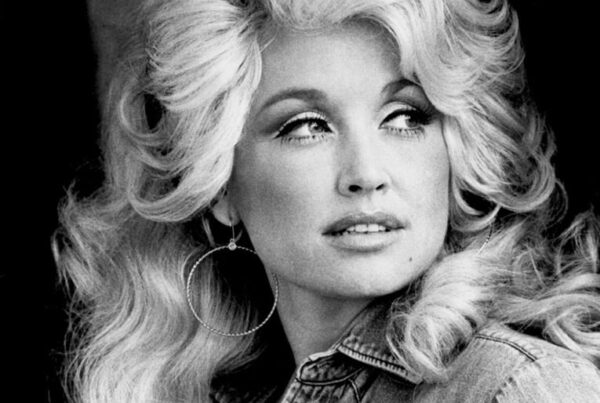
Think about Elvis. If you strip away that Tupelo drawl, what do you have? Well, a decent baritone, that’s for sure, but definitely not “The King.” And Dolly Parton’s brilliance as a songwriter is undeniable, but it’s her Smoky Mountain lilt that carries warmth and honesty that the sheet music alone can’t transmit. In soul and R&B, listen to Otis Redding or Al Green, where the vowels bend and slide in ways that feel inseparable from a tent revival. It’s the Southern accent that makes the notes ache, plead, and testify. Aretha Franklin might have grown up in Detroit, but the Queen of Soul’s accent is all Memphis.
And when we move forward in time—hip-hop, for instance—the same rule applies. The syrupy Houston flow of DJ Screw or the Atlanta bite of Gucci Mane demonstrates how deeply the Southern accent continues to shape rhythm and phrasing. In every case, the Southern accent is not just present—it’s pivotal. You can’t sing any of that music without a Southern accent.
Musically, what’s actually happening? Let’s think about the basics. The notes written on any musical staff tell us two things – rhythm and pitch. From any note anywhere on a staff, you can tell how long or short a note is as well as how high or low it is. It’s very, very similar to an X-Y axis in geometry. Musically, this represents precision. The brilliant and breathtaking music of Bach and Mozart exemplifies this precision in sound. However, 19th century composers like Beethoven, Chopin, and Liszt desired emotion in their music, which defied precision as there was no way to write that down on the staff. They solved the problem by writing the notes on the staff as always, but encouraged performers to speed up and slow down whenever they felt the mood to do so. They didn’t write it into the music – they left it up to each performer to interpret at will, and if you perform Beethoven, Chopin, or Liszt with perfect rhythmic precision, you ruin it. The allowance of this flexibility in rhythm – a technique known as “rubato” – gave the performer the ability to inject incredible emotion and power into the music.
The Southern accent does the exact same thing to common speech. The vowels of the Southern accent are stretched out longer and create a feeling of suspension, like notes held just a fraction longer than expected. It gives the illusion that Southerners talk slower. It’s actually not slower, it’s just “stretched.” Musically, this would be known as being slightly behind the beat, and is sometimes called “the groove.” It should be no surprise that non-Southerners struggle with the groove while Southerners seem to be born into it. It’s instinctive to Southerners because they talk and think that way. When you apply that “stretch” to music notes, it makes them inexact, and it gives them a groove. Consonants are softened or blurred, making words less percussive and more fluid. This gives the perception that while the Southern accent sounds “lazy” in speech, the accent is what grooves in the music.
Next comes pitch. Many languages around the world are “tonal languages,’ in that they require a correct pitch to go along with correct pronunciation, such as Vietnamese or Mandarin Chinese. The capitol of China is Beijing, but that’s actually not entirely correct in pronunciation. Since Chinese is tonal, it’s more than just “Beijing.” It’s still “Beijing,” but pronounced in two pitches, low and high. Chinese has about five of these tonal nuances in the spoken language, and a word’s meaning depends on the pitch. Although English is not a tonal language, I firmly believe that the Southern accent is a tonal dialect of English. When Southerners talk, there’s a melody in there.
So, where does the Southern accent get its tonal quality? Almost ALL West African languages are tonal languages. Pitch bending and shaping is vital and crucial to context in those languages, and that carries directly over into the Southern accent. Musically, this effect creates what we call “blue notes.” Blue notes are pitches that are slightly lower than the standard pitches in a Major or Minor scale. They’re not out of tune – just slightly off-pitch, and just enough to give them soul and feeling. Southerners talk that way, and most importantly, think that way. And if you sing with a Southern accent, you give a melody its emotion.
When you add in pitch slides – that subtle rise and fall that comes naturally in Southern speech – and suddenly you have melody built into ordinary conversation. Southerners have a built-in sense of melody because of the way we speak. In other words, the Southern accent is already half-song. The Southern accent transforms English into a tonal language. And when that everyday speech is set against a chord progression, it transforms into music almost seamlessly.
Can the Southern accent be notated into the sheet music somehow? Absolutely not. There is no way whatsoever to write the groove or the blue notes into music notation. But when you hear it, you know it.
The funny thing is that audiences may not even consciously notice this. A listener in Sweden is not going to say, “Oh yeah, that’s a Tennessee vowel, right there.” But they feel it. The Southern accent conveys longing, joy, defiance, or grief in a way that bypasses the head and goes straight to the heart. And if the accent was not there, they would notice instantly that something was wrong.
The Southern accent is also more than just linguistics. It carries the whole weight of Southern history. The drawl was shaped in cotton fields and coal mines, in the shouted sermons of Pentecostal revivals, and in the talk and laughter of juke joints. It comes from the beauty parlor and the barbershop, from the kitchen and from the battlefield. Each syllable carries not just melody but memory. To hear the accent is to hear work, suffering, faith, and resistance—all braided together. The most significant thing about this is that these experiences are not Black experiences or White experiences, but Southern experiences. It’s one of the things that non-Southerners struggle with the most about understanding the South. Farming, mining, worshipping, drinking, and grieving are universal experiences in the South which means that the Southern accent is cross-cultural. Whites, blacks, Cajuns, Hispanics, all talk with the same basic Southern accent.
One of the things that made Elvis so unique and marketable to Northern record executives is that he was the “white guy who sounded Black.” What they all missed was that ALL Southerners sounded like that. It wasn’t a Black accent – it was a Southern accent. Everybody sounded like that. Chuck Berry. Buddy Holly. Little Richard. Roy Orbison. Bo Diddley. Jerry Lee Lewis. Fats Domino. Carl Perkins. In order to rock, you had to be Southern.
Wait a minute, what about Bill Haley and the Comets? “Rock Around the Clock?” Bill Haley was from Michigan and grew up in Pennsylvania, so what about that? Yes, Bill Haley was a Northerner, but he didn’t sing with a Michigan accent, that’s for sure. He was smart enough to sing with a rockabilly Southern accent all the way. I dare you to sing “Rock Around the Clock” with a Midwestern accent without laughing.
And this is why the accent resonates so strongly. It’s rooted universally throughout the South, and the South is not interchangeable with anywhere else in the world. And neither is the accent. When the sound of that accent traveled – through migration, through radio, through records – it carried with it the memory of those places and people. That’s why American music is always Southern at its core, even when performed in New York, Chicago, or Los Angeles. If it doesn’t sound Southern, it’s not right.
Here’s another interesting wrinkle: non-Southern musicians instinctively sing with a Southern accent to gain authenticity, even if they don’t speak that way. Think about Bob Dylan, born in Minnesota, yet singing early folk songs with a very noticeable Southern accent. When you hear “Don’t Think Twice, It’s All Right,” you know that ain’t Minnesota. Creedence Clearwater Revival was a rock band from California, but they sang with Southern accents all the way. Trust me, nobody in L.A. talks that way, but they sure do sing it that way. Even Bruce Springsteen, the pride of New Jersey, slides into a Southern accent when he needs the song to have some teeth.
The phenomenon even applies to non-Americans as well. How about Mick Jagger of the Rolling Stones? Mick openly copied Muddy Waters long before he ever set foot in Mississippi. How about The Beatles? Paul McCartney sang with Buddy Holly’s voice, John Lennon sang with Chuck Berry’s voice, and even Ringo sang with Carl Perkins’ voice. British pop star Adele and Welsh crooner Tom Jones sing exclusively with Southern accents. You won’t find any song by either one of them that’s not in a Southern accent. But you also won’t find any recording of them talking in a normal conversation using these same Southern accents. When they talk, they’re British. When they sing, they’re Southern. A journalist once asked John Lennon why he sang the way he did instead of a British accent, and he replied, “It sells more records.”
There are German country bands, Scandinavian bluegrass bands, Canadian rock bands, and French rap artists. What they all have in common is that they all sing with Southern accents. It isn’t mimicry so much as necessity. The music itself requires a Southern accent to come alive. Without it, the song feels mechanical, flat, bloodless, and lifeless. In every case, the Southern accent is not just present—it’s pivotal. You can’t sing any of that music without a Southern accent.
So, when we think of the Southern accent, we need to think of it not as a quirk, but as an instrument. Like the steel guitar or the Hammond organ, the Southern accent shapes the tone, the rhythm, and the feeling of the music. Its peculiarities – the nasal twang, the slurred consonants, the pitch slides – are not liabilities. When people talk that way, they are mimicked, mocked, and ridiculed. But when they sing that way, those peculiarities become advantages. In fact, they are competitive advantages. No other American dialect even comes close in sheer expressive power.
I invite you to go back to the thought experiment with which we began. Sing that line – “Your cheatin’ heart will tell on you” – in the accent of Hank Williams, and you will hear not just a song but a history, a geography, a pain, and a beauty. American music is Southern music. And the Southern accent is America’s musical DNA. To follow the drawl is to follow the story of a sound that travels faster than geography, carrying with it both memory and meaning. Whether you listen to country, rock, gospel, bluegrass, soul, or hip-hop—pay attention to the accent. Listen for how the vowels are stretched, how the consonants bend, how the phrasing swells. Because in that accent lies not only the story of the South, but the story of American music itself.
The views expressed at AbbevilleInstitute.org are not necessarily those of the Abbeville Institute.





Excellent article. It reminded me of this song, although it is not a country tune. Scroll forward to 5:31.
https://www.youtube.com/watch?v=9dY9gtYeHhk
For the deeper roots of American regional accents, I recommend the book Albion’s Seed by David Hackett Fisher. The authors grandfather was spot on.
“Albion’s Seed” is definitely a vital source for material like this. Fischer explicitly links backcountry Scotch-Irish speech to the cadences of country singers, truck drivers, and even cowboys in popular culture.
I remember riding around with my daddy on a Saturday, on Mississippi roads, and the radio belting out Hank Williams. I had Cheatin’ Heart written on my brain before I was 7 years old.
Hank’s “Your Cheatin’ Heart” is arguably the greatest country song ever written (and performed)!
I feel that no wonder many Yankees dislike the Southern Accent! Many Northerners and Westerners have trouble with “feelings”! Mostly mind and very little heart. I lived in upstate New York for a few years, and I would hear someone say to someone, “Oh, my wife does all my feelings for me”!
They cannot like what they cannot process. Thus their Soul withers!
What we have is a dying language, dying for want of standardization. We do not have a drawl. We have diphthongs that do not exist in other languages, including English. We also have unique grammar and vocabulary and set of pronouns, the possessive absolute case: mine, yorn, hisn, hern, ourn, yausn, theirn.