

In the shadowed corners of American history lies a story rarely told, a narrative of colonists who crossed an ocean twice to forge communities in the swamps and plains of the Deep South. These were the Isleños, a people whose very name whispers of distant shores and forgotten tongues. The Spanish word for “Islander” would come to identify an entire culture that thrived in Louisiana’s treacherous wetlands and laid the foundations of Texas’s most famous city, yet somehow slipped through the cracks of popular memory.
Between 1778 and 1783, the Spanish Crown orchestrated a remarkable migration, recruiting between 2,000 and 3,000 settlers from the volcanic archipelago off Africa’s coast. These colonists left behind the familiar peaks of Tenerife, Gran Canaria, Lanzarote, La Gomera, and La Palma for an uncertain future in Spain’s Louisiana territory. Their mission was defense, but their legacy would prove far more profound.
The settlements they carved from the wilderness tell a story of survival against impossible odds. San Bernardo in St. Bernard Parish became their stronghold, spreading through places like Delacroix Island and Yscloskey, where their culture would endure for centuries.
Meanwhile, other outposts met darker fates. Galveztown near the Amite River succumbed to disease and flood, its inhabitants fleeing or perishing. Barataria in Jefferson Parish similarly collapsed, forcing survivors to scatter to more hospitable grounds. Only Valenzuela on Bayou Lafourche survived through cultural compromise, as settlers intermarried with the Acadians who would later become known as Cajuns.
Yet perhaps the most enduring Isleño achievement occurred far to the west. In 1731, 16 families totaling 56 individuals departed from Lanzarote on a journey that would make history. These civilian settlers established the Villa de San Fernando de Béxar, the settlement that would grow into modern-day San Antonio. Unlike their military counterparts in Louisiana, these pioneers created the first municipal government in Texas, transforming a military outpost into a proper city.
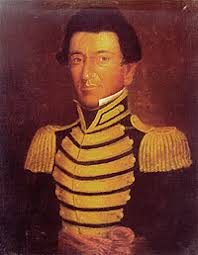
The Isleños proved their mettle on the battlefield as well. During the American Revolution, Louisiana’s Spanish speakers fought under Governor Bernardo de Gálvez, helping capture British strongholds at Baton Rouge, Mobile, and Pensacola. When the British invaded during the War of 1812, they stood alongside Andrew Jackson to defend New Orleans. In Texas, their descendants like Juan Seguín fought for independence, with Seguín himself serving as a signer of the Texas Declaration of Independence and defending the Alamo.
What makes the Isleños truly remarkable is not merely their military service or civic achievements, but their stubborn preservation of identity in a hostile environment. For over two centuries, the Louisiana communities maintained an archaic Spanish dialect dating to 18th century Canary Islands, a linguistic time capsule that survived in the New World long after it had evolved in the Old.
Their cultural expression took forms both practical and poetic. They became renowned for singing décimas, narrative ballads that recounted history and humor through intricate verse. These songs served as the soundtrack for a unique marsh frontier existence, a tradition distinct from other Spanish folk forms.
For generations, elderly Isleños gathered to sing these ancient ballads in an 18th century Spanish that transported listeners across time. They preserved folk healing traditions through curanderos (healers)and maintained cattle training methods brought from the islands. Originally farmers, they transformed themselves into fishermen, trappers, and moss gatherers, adapting to the Louisiana wetlands with remarkable flexibility.
In Texas, the San Antonio settlers laid civic foundations that endure today. They created the first civil government in Texas and built the San Fernando Cathedral, still standing as a testament to their vision. Juan Leal Goraz, who led the 1731 colonists, became the first mayor of San Antonio, establishing governance structures that would shape Texas politics for centuries.
The 20th century brought both challenges and revival. Irván Pérez, master décima singer and woodcarver, received the National Heritage Fellowship for his work preserving Isleño traditions. Henry “Junior” Rodriguez served over three decades as a St. Bernard Parish leader, becoming a forceful advocate for wetlands restoration and recovery after Hurricane Katrina. His passing in 2018 marked, in many ways, the end of an era.
The “Isleño Renaissance” began in 1975 when historian Frank Fernandez collaborated with New Orleans Public Television to document the community’s oral history. The resulting documentary generated tremendous enthusiasm, leading to the founding of Los Isleños Heritage and Cultural Society in 1976. Fernandez, son of a Spanish immigrant and an Isleña mother, had spent years tracing St. Bernard’s Hispanic families back to the Canary Islands, research that revealed forgotten origins even to the community itself.
The society’s achievements tell a story of cultural rediscovery. In 1977, they sent the first delegation back to Gran Canaria since the 18th century migration. They established El Museo de Los Isleños in 1980, which the Canarian government designated as an international historic site in 1991. Through festivals, concerts, and educational programs, they kept alive traditions that might otherwise have vanished entirely.
Yet the story carries an element of melancholy. The décimas, those haunting ballads that once echoed through the marsh, are no longer sung as an active tradition. The 18th century Spanish that survived for two centuries has largely fallen silent. Hurricane Katrina scattered the community across the nation, and while many returned, something ineffable was lost.
The Isleños remain a puzzle in American history, a people who contributed enormously yet are scarcely remembered beyond their immediate communities. They defended the nation in its infancy, founded one of America’s greatest cities, preserved a unique linguistic and cultural heritage for centuries, and adapted to some of the continent’s most challenging environments. Their descendants continue to shape Louisiana and Texas politics, culture, and society.
Perhaps their obscurity itself tells us something profound about American memory, about which stories get told and which fade into the mist of the bayous where the Isleños once sang their ancient songs. In the distal marshlands of St. Bernard Parish and the streets of San Antonio, their legacy endures for those who know where to look–a reminder that the American story contains countless communities we have yet to fully acknowledge.
The views expressed at AbbevilleInstitute.org are not necessarily those of the Abbeville Institute.







And now, they are remembered by those who come here to remember. Good job. Thanks.
Born in New Orleans but grew up in St. Bernard Parish, I know a little something about the Islenos culture. Good job, Jose Nino!