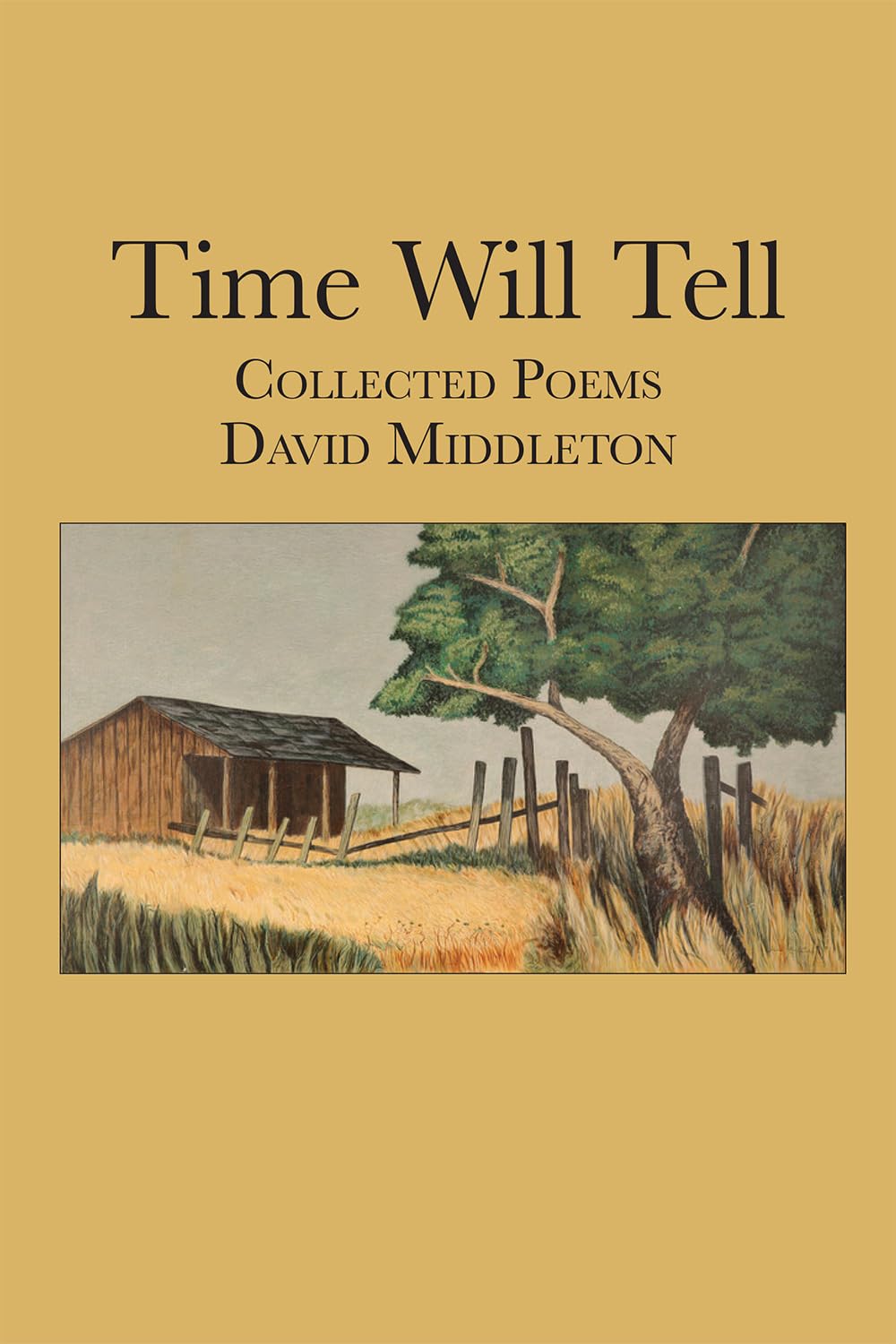
Time Will Tell: Collected Poems of David Middleton (2025)
The publication of David Middleton’s collected verse, from 1973 to the present year, in 362 pages, is a hallmark event in Southern culture. It is also a significant event in American literature. But you will not see much attention to either of these facts. The great literary journals founded by great Southern scholars and writers, like the Southern Review and Sewanee Review, in their good days would have celebrated this record of Middleton’s outstanding career. But like most Southern institutions they are now controlled by third-string carpetbag “intellectuals” interested only in themselves and trendiness.
I am hoping that scholars of literature will have more to say about Middleton’s work than I am qualified to offer. This historic event needs as much attention as possible. His work as poet has been praised by Andrew Lytle, George Garrett, Catharine Savage Brosman, Fred Chappell, and other greats.
Middleton is the Bard of Louisiana, but his verse covers vast territory of time and place. You will find here a complete picture of family, rural life, and history for this interesting Southern State from a viewpoint Christian and guardedly wise about the human condition.
In such poems as “Emerson at Belsen” and others he teaches lessons in the failings of modern progressivism. He has a whole moving cycle drawn from Millet’s paintings of French rural life. Middleton is eloquent in defense of Southern symbols in such work as “Lee in Darkness” and “Pickets.”
In such long poems as “The New World,” “The Yeoman Farmers. North Louisiana, 1840-1914,” “The South.” and “Oak Alley,” Middleton paints the real history of the South in memorable art.
This only hints at the surface of an life’s work in the most difficult of all literary forms. My favourite of all is “The Old Guard’s Coronach,” a meditation on Southern resistance. Friends, remember, I would like this to be read at my funeral.





Perhaps, Professor McClanahan will start a Southern Poet Society. Instead of a rallying cry of O Captain! My Captain! It can be Lee in the Mountains.