

First published at The Daily Economy.
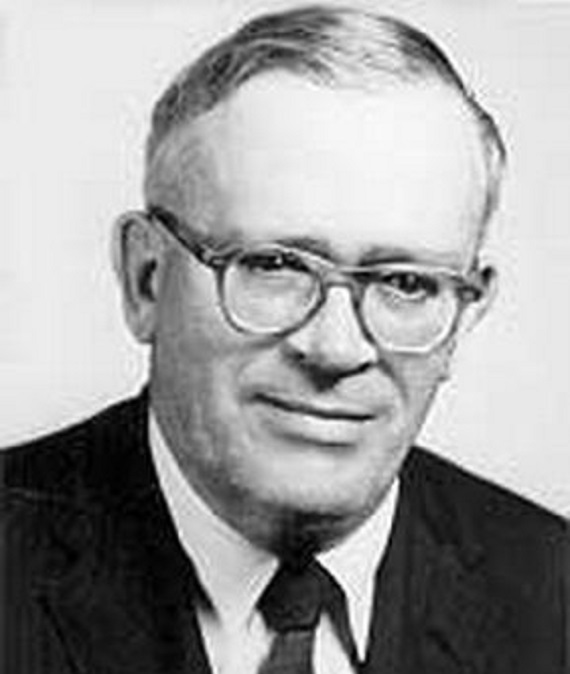
The modern American right could stand to gain from the insight of Richard M. Weaver. Weaver, a twentieth-century conservative of the Southern tradition, perceived the dangers of radical ideologies as well as the extent to which American thinking offered the viable alternative. Amid the disagreements and controversies of our present moment, today’s various libertarians, conservatives, classical liberals, and others are in need of clear thinking about our own ideas as well as those of our opponents. As such, we might learn from Weaver’s powerful dissections of authoritarianism.
A key component of Weaver’s philosophy was a recognition of the natural distinctions of individuals within society, what might also be termed “social bond” individualism. As the revolutionary movements of the twentieth century demonstrated through both communism and fascism, the overruling of this human basis was a harbinger of immense danger to the freedom of individuals and the natural order of their civilization. However, Weaver explained how, according to its largely Jeffersonian principles, the American South perceived the threat of these destructive movements sooner and more substantively than other regions.
In a 1944 essay entitled “The South and the Revolution of Nihilism,” Weaver laid out the reasons why fascism was (and still is) fundamentally opposed to the genuine traditions of American thought and society. He argued that fascism was at its core a revolutionary break with the Enlightenment ideas which had themselves transformed much of the Western world, especially since the French Revolution. Since, in his view, the South never fully entered the French Revolutionary schema of breaking down all social distinctions and “deep-rooted traditions,” fascism was rightly perceived not as a restoration of lost principles, but as societal upheaval.
Weaver contended that the American South, never having wholly embraced the levelling forces of the Enlightenment, stood rooted in its own history, which it had “learned the hard way.” He depicted the region and its society as being comprised of individuals who operated within a unique sense of spontaneous customs and social bonds to one another. Fascism, by contrast, was understood as a movement destructive of society’s natural structure and instead tended towards the “substitution of the formless mass manipulated by a group of Machiavellians.” This distinction meant that fascism was a malignant and incompatible force not to be trifled with or appeased, despite the wishful efforts of many in the West.
What was really at issue during the Second World War, according to Weaver, was a foundational conflict between traditional arrangements developed from the bottom-up versus regimented structures imposed upon society from the top-down. Centralization meant an alliance between the “mass” and a single dictatorial leader, a stark contrast to the decentralized approach with its roots in local authority and individualism. Seeing fascism as the “extreme proletarian nihilism” that it was, Weaver perceived “that the promise of fascism to restore the ancient virtues is counteracted by this process, and that the denial of an ethical basis for the state means the loss of freedom and humanity.” Despite the fascists’ claims of returning to lost traditions, Weaver and other Southerners understood that the heavily centralized nature of fascist regimes negated the spontaneous orders which people develop within society. In essence, fascism may give lip-service to traditional social arrangements, but it is at its core revolutionary because it seeks to impose an order, rather than being born out of a pre-existing order.
Having described fascism as the authoritarian concoction that it was, Weaver likewise held no illusions about the other revolutionary system which dominated the twentieth century, communism. In his excellent 1957 article, “Life Without Prejudice,” Weaver skewered the Marxist tactic of sowing seeds for a Utopia that never blooms. He noted how communists recognized that to implement their own dogmatic vision of the world they must first clear away the existing society, one pillar at a time. Whether playing upon public resentment about the “existence of rich men,” or “the right to acquire and use property privately,” or some other issue, communists seek to “vilify this as founded upon ‘prejudice.’” It was in effect a nihilistic strategy for implementing their own prejudices.
While the term “prejudice” has lost its regularity in conversation since Weaver’s time, it is not difficult to see the same strategy at play in modern discourse. There are numerous examples in recent years of people being pilloried as “racist,” “sexist,” “homophobic,” “antisemitic,” or various other “prejudices” which supposedly negate argument and justify cancellation or worse. As Weaver made clear, this is the communist deconstruction tactic at work once more. This strategy is crucial for aspiring tyrants, who must first defeat the existing society before ushering in their own manufactured one, imposed from above, much like fascism. They must inspire skepticism about the current order by oversimplifying everything as arising from malicious “prejudices” held by their opponents.
Instead, Weaver noted the natural role of prejudice, rightly understood, in individual thinking and personality. He explained that not every aspect of an individual’s thoughts and actions could be verified by a mountain of facts or logic. In contrast to the radicals who claimed objective certainty about what’s best for everyone, “The man who frankly confesses to his prejudices is usually more human and more humane. He adjusts amicably to the idea of his limitations. A limitation once admitted is a kind of monition not to try acting like something superhuman. The person who admits his prejudices, which is to say his unreasoned judgments, has a perspective on himself.” This perception is a meaningful counter to the moral framework of communism because it elevates humility above ideological presumption; it is an endorsement of genuine principles over presuppositions.
Ultimately, Richard Weaver presented insightful arguments for rejecting the devastating radicalisms of his era. It would stand to reason, then, that in our own uneasy era we too could gain by understanding the alternative he championed. To reject the upheavals offered by communism and fascism, the American right must instead reinforce its principles by embracing its vast intellectual tradition. We can reaffirm our commitments to liberty and order while so many others give way to the siren songs of centralized collectivism, whether fascist, communist, or otherwise. The stringencies of ideology ultimately impair our sense of humanity and can justify disastrous outcomes, as the history of the twentieth century attests. As Weaver put it, we must recognize that schemes for “a life without prejudice” are as inhuman and destructive as the life pursued strictly for the “satisfaction of physical man.”
The views expressed at AbbevilleInstitute.org are not necessarily those of the Abbeville Institute.








“To reject the upheavals offered by communism and fascism, the American right must instead reinforce its principles by embracing its vast intellectual tradition.”
I agree that there is (was) a “vast intellectual tradition.” But to try and have a true debate (as per certain ordered rule of debate) is, these days, almost impossible. Most of the (at least younger folks) have no clue as to what that means. If you have ever tried to point out some clear facts of those on the so-called left you get responses that you would get from a nine-year old. As well, many on the so-called right have been brainwashed by the idea that conservative means war or a powerful “leader of the free world” who like Caesar or Charlemagne will conquer in the name of a kingdom and empire that they call a republic which they insist is a democracy. They are of the nine-year old breed for the most part, but are dressed smartly and comb their hair. Those on the left dress like they are in the circus. So, what the hell?
The so-called educated class in this happy land is so uneducated ( blow-it-out “irony”) due to socialistic propaganda and the sea of pseudo-intellectual universities with their ilk, that any discussion at any reasonable level is dang near impossible
But good luck.
Really liked your article.
Thank you for the response. I think your diagnosis is pretty spot-on. As daunting of a picture as it paints, it seems to be no less real.
I’ve heard Thomas Woods say many times that “no matter who you vote for, you get John McCain.” There are plenty Southern MAGA, who are clueless of the paleo-conservatives, the antebellum conservatives, Jeffersonians, etc. I was once clueless (ignorant), but I believe God intervened. I found the Abbeville Institute 10 years ago. I’ve learned so much “what’s true and valuable in the Southern tradition” in the past 10 years than I have in the previous 40. I don’t think many Southerners have heard of the Southern intellectuals, Richard M. Weaver, the 12th Southerners, or M. E. Bradford.
I have much appreciation for people like Justin Madura, and many others who have contributed to the Abbeville Institute. Who have shared their knowledge and passion of Richard Weaver, Donald Davidson, Southern literature greats, etc. The opening sentence “The modern American right could stand to gain from the insight of Richard M. Weaver.” will be shared on my social media page.
“There are numerous examples in recent years of people being pilloried as “racist,” “sexist,” “homophobic,” “antisemitic,” or various other “prejudices” which supposedly negate argument . . . .” And let’s not forget “anti-vaxer” or “extremist” or “conspiracy theorist.” Such name-calling is juvenile and ends any possibility of thoughtful discussion. Applying such labels also allows the labeler an easy way to not have to think any further. Terrific article, Mr. Madura. Thank you.
And thank you for introducing me to AEIR and The Daily Economy (where I found a well-written piece on Nick Fuentes).