

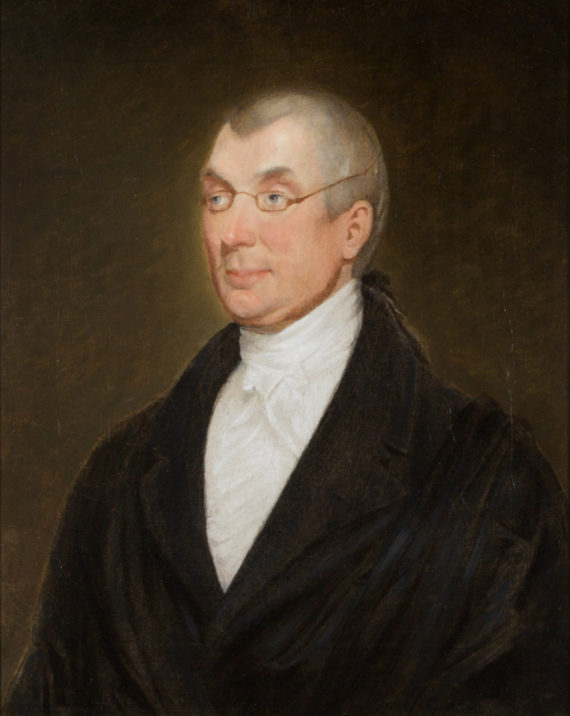
The party of Washington, Adams, and Hamilton were swept out of power. The election of 1800 saw the triumph of Jefferson’s Republicans and the complete decimation of the Federalists, a party that would never again control the White House, or either house of Congress, and would cease to exist after the 1816 presidential election. After a contentious battle in the House over the presidency, Jefferson emerged victorious in February 1801, while Aaron Burr, another Republican, would serve as Vice President. The new 7th Congress would include 17 Republican Senators, out of 32 seats, and 67 Republican members of the House, a chamber with 106 seats. Those numbers would only grow in subsequent elections.
To maintain influence within the government, the outgoing Federalist Party devised a scheme to control the federal judiciary and cement their policies with Supreme Court decisions. The Federalists would control Congress until March 1801 and would use that time to implement their plan, first by passing the Judiciary Act of 1801, also known as the Midnight Judges Act. This new law doubled the size of the federal court system with a host of new judicial offices, including 42 justices of the peace and 16 new judgeships, and a number of marshals and clerks. President Adams would then fill them with Federalist officials before Republicans took power. Becoming law in February, Adams worked feverishly, even remaining awake throughout his last night in the White House to make sure every nominee was confirmed by the Senate and their official commissions signed, sealed, and delivered.
In another major move, which was actually more opportunity than strategy, President Adams was able to appoint a new Chief Justice to the US Supreme Court before his term expired, and a strong Federalist at that. After his loss to Jefferson, and less than two months until Inauguration Day, Adams nominated John Marshall, his current Secretary of State, to the Chief Justiceship of the United States, after Oliver Ellsworth resigned in December because of poor health. The Senate quickly confirmed Marshall’s nomination and by February he was sitting on the bench. This would turn out to be one of the most decisive events in American political history. Seeing this, Jefferson wrote that the Federalists “have retired into the judiciary as a stronghold … and from that battery all the works of republicanism are to be beaten down and erased.”[i]
And Chief Justice John Marshall, a stalwart Virginia Federalist, would be the main battering ram. A cousin of Jefferson, the two men did not see eye-to-eye on much of anything and had, at best, a contentious relationship. An ardent nationalist, Marshall would serve in his position for nearly three and a half decades, until his death on July 6, 1835, handing down dozens of influential opinions. He would base these judicial decisions on three criteria: He favored increasing the power of the federal government at the expense of the individual states, strengthening the Supreme Court over the other two branches, and placing the propertied interests above all others. His political views were the polar opposite of Jefferson’s.
The Marshall Court’s first major case came in 1803: Marbury v. Madison. William Marbury had been appointed by Adams to a new judicial post, justice of the peace for Washington, DC. But Marbury did not get his official commission, which he would need in order to take office. By that time, though, Jefferson was in office and his Secretary of State, James Madison, had the official duty to deliver the commission to Marbury. In fact, Madison found 22 judicial commissions in his office that had not been delivered. Jefferson ordered him not to deliver any of them. Marbury then sued Madison to force the Secretary of State to carry out his official duties, seeking a writ of mandamus from the Court, which was a judicial order to compel a government official to carry out his duty. In this case, Marbury wanted to Court to order Madison to give him the commission. Marbury’s reasoning was Section 13 of the Judiciary Act of 1789, which set the Court’s original and appellate jurisdiction.
Marshall handed down his opinion in 1803. Marbury was, in fact, entitled to his commission and the right to take his office. To deny him that was illegal. But the Supreme Court could not issue a writ of mandamus because it was an appellate court; only the circuit court could, so Section 13 of the Judiciary Act of 1789 was ruled unconstitutional, setting forth a new power for the Court: Judicial Review, the exclusive right to rule on the constitutionality of acts of Congress. It’s quite likely that Marshall did not want to push Jefferson and the Republicans in Congress too far by ordering Madison to deliver the commissions but the Chief Justice was far more interested in establishing judicial review, thereby greatly strengthening the Court’s power and influence. Republicans eventually repealed the Judiciary Act of 1801 with a new law in 1802, abolishing many of the offices the Federalists had created.
Another of Marshall’s major cases, McCulloch v. Maryland, came in 1819 and concerned Madison’s bank, the Second Bank of the United States. Monroe was President by then and the country was in the midst of its first real depression, the Panic of 1819. Because of the economic troubles, there was a lot of hostility to the bank in a number of states. A few states amended their state constitutions to ban bank operations within their boundaries. Others imposed high taxes on bank branches in the hopes of destroying it. The federal government struck back with a suit against Maryland, which had imposed heavy taxes on the Baltimore branch of the Bank of the United States. The case involved two issues – whether the national bank was constitutional and whether or not a state had the right to tax it.
Marshall held that the bank was constitutional, using the doctrine of implied powers, the famed “necessary and proper clause, also known as the “elastic clause,” stating, in one of the most famous statements in American constitutional law: “Let the end be legitimate, let it be within the scope of the constitution, and all means which are appropriate, which are plainly adapted to that end, which are not prohibited, but consist with the letter and spirit of the constitution, are constitutional.” He also attacked the traditional understanding of the nature of the Union, writing that “the powers of sovereignty are divided between the government of the Union, and those of the States. They are each sovereign, with respect to the objects committed to it ….” On the second issue, Marshall held that no state could tax the bank, stating, “the power to tax involves the power to destroy.” Since the Constitution and federal law were supreme, Marshall held, the states cannot be allowed to attack federal power through the taxing power. In essence, Marshall had turned the Constitution on its head.[ii]
Pushing back against that decision, as well as those in Martin v. Hunter’s Lessee and Cohens v. Virginia, was a Virginia judge, Spencer Roane, who led a group of Virginia Republicans in what today might be considered a political machine, the Richmond Junto. Judge Roane, as one scholar has noted, was once hailed “as ‘one of the greatest ornaments of the American judiciary,’ Chief Justice of the United States but for Oliver Ellsworth’s inopportune resignation, founder of one of the leading newspapers of the nineteenth century, prominent leader of the Jeffersonians, implacable enemy of John Marshall, political boss of Virginia, ‘the original Southern secessionist,’ and capable of arousing passionate expressions of hatred and praise in his own day.”[iii]
Born in Virginia in 1762, Roane graduated from William and Mary, was a member of the original Phi Beta Kappa Society, attended law lectures with Chancellor George Wythe, and was admitted to the Virginia bar in 1782. He served in the Virginia House of Delegates, the State Senate, an advisor to Governor Patrick Henry at just 22 years of age, as a General Court judge, and later a judge on the state’s highest court, the Court of Appeals, which today is the Virginia Supreme Court, rising eventually to the chief judgeship. In the opinion of the Harvard Law Review, “Few judges have exerted a comparable influence in local and national law and politics.” As an ardent anti-Federalist, Roane did not approve of the new Constitution and was disappointed when Virginia ratified it in 1788. He believed that the Constitution gave too much power to the federal government and did not explicitly enunciate the reserved powers of the states. So, therefore, Marshall’s opinions greatly disturbed him.[iv]
Jefferson had supreme confidence in Roane’s abilities as a jurist but also as an avenue to attack Marshall and the Court. In fact, Jefferson thought so highly of him that Roane would likely have been Jefferson’s choice for Chief Justice had Adams not had the opportunity to appoint Marshall, and the whole history of the United States would have been different. “Against this I know no one who, equally with Judge Roane himself, possesses the power and the courage to make resistance; and to him I look, and have long looked, as our strongest bulwark,” Jefferson wrote in a private letter. He hoped Roane could smash the newfound reasoning Marshall was using to empower the Court and the federal government, so much so that “courts will never countenance the sweeping pretentions which have been set up under the words ‘general defence and public welfare.’” Because if a loose construction of the Constitution reigns, Jefferson worried, “all limits to the federal government are done away.”[v]
As much as Jefferson admired Roane, Marshall loathed him. “I think for coarseness & malignity of invention [Spencer Roane] surpasses all party writers who have ever made pretentions to any decency of character …. He will be supposed to be the champion of state rights, instead of being what he really is, the champion of dismemberment,” the Chief Justice wrote to Joseph Story.[vi]
During Jefferson’s first term in the early 1800s, there were concerns that the revolution was dying in Virginia because, along with the new President, other prominent Virginia Jeffersonians, such as James Madison, John Randolph, and William Giles, had positions in Washington and were no longer serving the commonwealth. Likewise, Governor James Monroe’s term ended in 1802 and Jefferson appointed him minister to Great Britain. The capital city of Richmond itself was a Federalist stronghold without even a single Republican newspaper. To reverse this unacceptable course, Roane, along with his cousin, Thomas Ritchie, founded the Richmond Enquirer in 1804. Ritchie would serve as the paper’s editor.[vii]
From that point forward, Roane’s organization, the Richmond Junto, increased in size and strength. By 1815, “Roane was the most powerful politician in the state. He nominated members of the legislature and caused them to be elected, he drew bills and resolutions which the law-makers passed almost without amendment….” What was billed the “Richmond Party,” had “complete control of the Court of Appeals,” and “Richmond Party men were also in Congress, on the lower Virginia courts, and in control of all three Richmond banks as well as banks in five other Virginia towns. In 1819 Thomas Randolph, son-in-law of Jefferson and member of the Party, was elected Governor. By 1822 all three branches of the state government and the financial system of the state were controlled by the Richmond Party. And at the head of the Richmond Party was Spencer Roane.”[viii]
The opinion in McCulloch found favor in the North but hostility in the South and West. Soon after the decision came down, essays began appearing in the Richmond Enquirer attacking it for expanding federal power. Roane warned that “a money-loving, funding, stock-jobbing spirit has taken foothold among us” and defended the Union as a confederation, not a consolidated national union that Marshall had espoused. The “necessary and proper clause,” Roane noted, was not a separate, distinct grant of power but were added for caution. The clause in question, he wrote, “ought to be construed in a liberal, rather than a restricted sense,” or the tendency would lead “directly to consolidation of the states, and to strip them of some of the most important attributes of their sovereignty. If the Congress of the United States should think proper to legislate to the full extent, upon the principles now adjudicated by the supreme court, it is difficult to say how small would be the remnant of power left in the hands of the state authorities.”[ix]
Jefferson heartily approved of Roane’s essays, which contained “the true principles of the revolution of 1800.” They were necessary, he later wrote, “because the Supreme Court was pushing the nation toward consolidation and usurping the right to exclusively explain the Constitution.” For Jefferson, each branch had just as much right to interpret the meaning of the Constitution as any other. It could not be left in the hands of the Supreme Court. Marshall, though, was keenly aware of the reaction his decisions were causing. “Our opinion in the Bank case has roused the sleeping spirit in Virginia,” Marshall wrote to Story, “if indeed it ever sleeps.”[x]
***********************************************
[i] Cunningham, 249.
[ii] McCulloch v. Maryland, 17 U.S. 316 (1819)
[iii] Harvard Law Review, “Judge Spencer Roane of Virginia: Champion of States’ Rights, Foe of John Marshall (Harvard Law Review, Vol. 66, No. 7, May 1953), 1242.
[iv] Ibid., 1244.
[v] Ibid., 1242; Thomas Jefferson to Spencer Roane, October 12, 1815, in Andrew Adgate Lipscomb and Albert Ellery Bergh, eds., The Writings of Thomas Jefferson (Memorial Association, Vol. 14), 350.
[vi] Harvard Law Review, 1242.
[vii] Rex Beach, “Spencer Roane and the Richmond Junto,” The William and Mary Quarterly (January 1942, Vol. 22, No. 1), 1.
[viii] Harvard Law Review, 1245.
[ix] Ibid., 1253; Robert E. Shalhope, John Taylor of Caroline: Pastoral Republican (Columbia: University of South Carolina Press, 1980), 197; Richmond Enquirer, March 30, 1819.
[x] Shalhope, 197; Harvard Law Review, 1253-1254.
The views expressed at AbbevilleInstitute.org are not necessarily those of the Abbeville Institute.







A good recent book on Spencer Roane and his long fight against John Marshall is “Irreconcilable Founders” by David Johnson.
Thank you, Earl.
Fine essay, Ryan.
Indeed, what might have been if Oliver Ellsworth had felt good for only a few more months.