

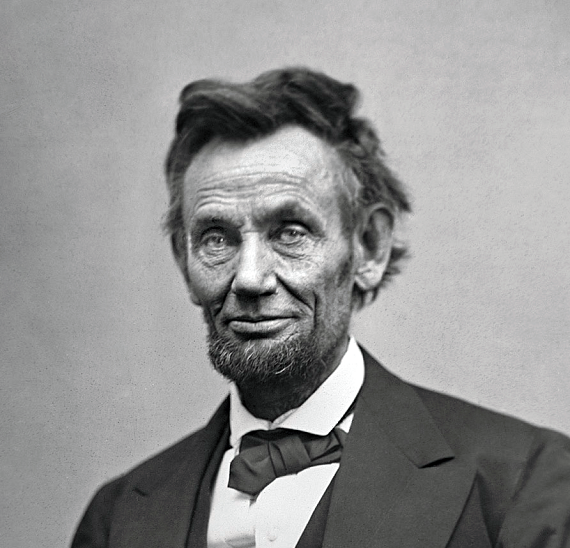
From what has been shown throughout this book, it would seem obvious that we should. No single man in American history has done more to abolish liberty than him. Yet Lincoln was not the real issue; he was one person, powerless unless backed by voters and wealthy interests. If we imagine the political decay instituted by the war and his election as a tree, Lincoln himself is simply one piece of fruit. He is wretched fruit grown from a foul tree, but without the tree, he is nothing.
I think we can place too much originality and masterminding on Lincoln, which is perhaps undeserved. Southerner Benjamin Palmer said, “He is nothing more than a figure upon the political chessboard… moved by the hands of the unseen player. That player is the party to which he owes his elevation.” Northern abolitionist Wendell Phillips stated, “Lincoln is a Pawn on the political chessboard. With fair effort, we may soon change him for a knight, bishop, or queen and sweep the board.” Lincoln’s close friend Ward Lamon said, “He was a natural politician, intensely ambitious, and anxious to be popular.” Lincoln scholar David Donald wrote of “Lincoln, whose one dogma was an absence of dogma.” Lincoln was just a tool used by those interest groups. He was an easy, malleable tool, a great one to accomplish goals, but once more, he could do nothing on his own without being placed in power and guided.
Meaning the real issue is not Lincoln himself but “who’s behind the curtain.” And while bankers, industrialists, politicians, Republican voters, abolitionists, and more all played a role, these men who are behind the curtain are not to blame either. It is not behind but what is beneath, what holds the man, Lincoln, and the men behind the curtain up, what sustains them. This deeper issue lies at the heart of the war and the breaking of the union. It is pride and the desire for power.
The North was morally, religiously, and culturally superior to the South, or so they thought. These already uppity busybodies who were high on self, descendants of the Puritans, had not just the moral right but an obligation to subject all lesser cultures to themselves and remake them in their own ideal image of a Yankee empire. First the South, then the Native American, and finally worldwide.
Now I actually think it is a good thing to love your locality, your culture, your people, your religion, and to think they are the best. This is often the result of those who have achieved self-government thinking their ways are best. Others are viewed as a lesser or at least less desirable society because they are not in accord with the way you perfectly desire. And a natural love of having things your way is perfectly acceptable. However, the Puritans, the Yankees, do not stop there. In their pride, they look on others as having less intrinsic value, thus lesser cultures that need improving for God and country. They then easily slip into the urge to control others and remake them in their own image, removing their God-given liberty to live as they desire. God allows people to go to hell, so should we! We can show them what to us is the way, the truth, and the life, but it is they who must choose; we cannot do so for them.
So the Puritan and the Yankee cannot follow the brotherhood of equality in the union; they do not live and let live; instead, they must mold, adapt, correct, and chastise, as General Sherman justified his actions against those who dared to oppose the righteousness of the Yankee empire. W.J. Cash rightly described the root of the unpleasantness the South endured when he wrote:
The Civil War and Reconstruction represent in their primary aspect an attempt on the part of the Yankee to achieve by force what he had failed to achieve by political means: first, a free hand in the nation for the thievish aims of the tariff gang, and secondly, and far more fundamentally, the satisfaction of the instinctive urge of men in the mass to put down whatever differs from themselves—the will to make over the South in the prevailing American image and to sweep it into the main current of the nation.
—W.J. Cash The Mind of the South, New York: Vintage Books, 1941.
As Confederate Lieutenant General Daniel Harvey Hill observed, “The Yankee repents of everyone’s sin but his own.” He sees the evils of others and thinks it is his responsibility to take the place of Christ and suffer for and correct what he perceives as others who don’t match up to himself. He is not content unless he perfects others. But when he sees others as they are, their sins just remind him of his own hidden faults and sins; thus, he will never escape and is on a constant power trip, always looking to correct the sins of others so he can ignore his own. As in J.R.R. Tolkien’s The Lord of the Rings, the issue lies in the hearts of men and their desire to control others.
As easy as it is to place the blame on Lincoln, it all comes down to pride and power.
The views expressed at AbbevilleInstitute.org are not necessarily those of the Abbeville Institute.





“The Yankee repents of everyone’s sin but his own,” is a great line. But perhaps it would be more correct to say, “The Yankee wants — demands? — everyone but himself repent of their sins.”
Fantastic!
You’re more than kind.
Speaking of being someone’s “puppet” this is from the account of John Brown Baldwin, who met with Lincoln on April 4, 1861, in an attempt to talk him out of war. This begins with Baldwin being led to his face-to-face discussion with Lincoln: “Colonel Baldwin accordingly followed him and Mr. Seward into what he presumed was the President’s ordinary business room, where he found him in evidently anxious consultation with three or four elderly men, who appeared to wear importance in their aspect. Mr. Seward whispered something to the President, who at once arose with eagerness, and without making any movement to introduce Colonel Baldwin, said bluntly, in substance: ‘Gentlemen, excuse me, for I must talk with this man at once. Come this way, sir!’ (to Colonel Baldwin). He then took him up stairs to quite a different part of the house, and into what was evidently a private sleeping apartment. There was a handsome bed, with bureau and mirror, washstand, &c., and a chair or two. Lincoln closed the door and locked it. He then said: ‘Well, I suppose this is Colonel Baldwin, of Virginia? I have heard of you a good deal, and am glad to see you. How d’ye, do sir?” Colonel Baldwin presented his note of credential or introduction, which Lincoln read, sitting upon the edge of the bed, and spitting from time to time on the carpet. He then, looking inquiringly at Colonel Baldwin, intimated that he understood he was authorized to state for his friends in the Virginia Convention the real state of opinion and purpose there. Upon Colonel Baldwin’s portraying the sentiments which prevailed among the majority there, Lincoln said querulously: ‘Yes! your Virginia people are good Unionists, but it is always with an if! I don’t like that sort of Unionism.’ Colonel Baldwin firmly and respectfully explained, that in one sense no freeman could be more than a conditional Union man, for the value of the Union was in that equitable and beneficent Constitution on which it was founded, and if this were lost, ‘Union’ might become but another name for mischievous oppression.'”
You have to wonder who the “three or four elderly men” were. Also, I think it was DiLorenzo who noted that the governors of nine pro-protectionist States immediately went to Lincoln to raise “red flags” about the Confederate States establishing a “free market” constitution with a 10% average import duty. They said it could not be allowed because it would devastate the Northern economy. There was likely a group of powerful individuals “behind the curtain” that controlled Lincoln just as their are those who now are alleged to control Trump.
Indeed. Between January and March of 1861, with the Cotton States of the Deep South out of the Union, the federal government quickly ran short of money, and trade diminished. The government had to start taking loans from major banks. Lincoln and his backers received a glimpse of what the Union would be like without King Cotton, and it triggered a panic. After realizing what would occur if the Cotton States were allowed to leave, Professor Samuel W. Mitcham Jr. quotes the New York Evening Post, “the nation will become bankrupt.” With income declining rapidly and trade dwindling, Lincoln faced a critical situation.
The situation became even more grave and desperate. The Confederacy announced its own tariff rate would be 10%; obviously, if the North were to maintain its far higher rate, it could not compete with the new libertarian confederacy. According to Lincoln’s Quest for Empire, produced by David and Esther Seppi, the day after the Confederacy announced its tariff rate a gathering of concerned and fearful bankers, industrialists, Wall Street figures, and prominent Republicans who originally promoted the South being allowed to leave in peace, now endorsed war. The American agent of the Rothschild banking family, NYC financier August Belmont, changed his stance from allowing the South to go, to now advocating for war. These interest groups agreed to fund and loan large quantities of money to the Federal government to support a war, as a free South would destroy their interests and economy. Northern newspapers began to switch, as well, since it was these influential groups that funded them. On Thursday, April 4th, in a meeting with John B. Baldwin at the White House, Lincoln said to him that if he were to abandon Fort Sumter, “his friends would not be pleased,”
Not only did Lincoln have his financial backers, bankers, and such whispering in his ear, but the most radical wing of Republicans (composed, as we will see, primarily of recent socialist immigrants from Europe) encouraged the subjugation of the South. German revolutionaries like future Union general Carl Schurz helped Lincoln draft his original inaugural address and told Lincoln that his people were “ready for coercion.” They held to socialistic blind obedience to the state, prioritizing the government above the self-governance of people and seeking centralized power, and thus allied with and encouraged Lincoln in his war of subjugation.
It should be “there” instead of “their.”
Pride, or perhaps a better expression would be the desire to be God, was the original sin of the devil. His Yankee offspring only followed in his evil footsteps.
At the Union League club of Chicago, the motto among the membership after the was was “every man for himself, and the last to the devil”
They do unto each other, before they do unto others. The bedrock of leadership by coercion
Context please! You begin with reference to “this book.” What book???
Editorial mistake, my apologies. Originally meant to be an appendix to an upcoming book of mi e I decided to drop it and publish as an article.
“Should we despise Abe?” I say yes, along with all the other guilty parties in his era, and still too modern day Abe like tyrants regardless of political party. Healthy disregard for tyrants and wannabe tyrants is a good thing.
Yes, we should.