

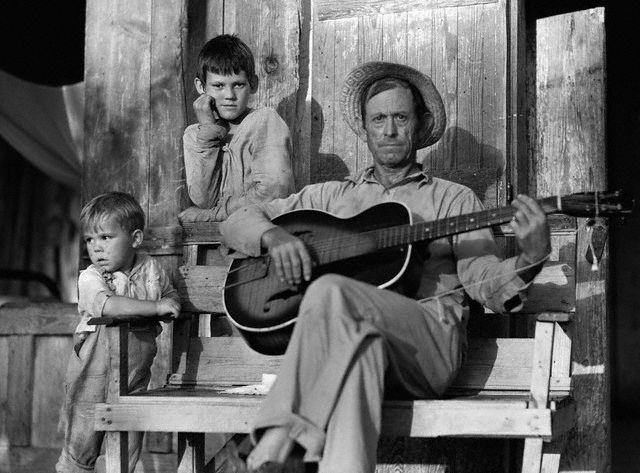
Southern music is not a single thing. It never has been. What we casually call Southern music is in reality a family of related musical responses to history — responses that look and sound similar on the surface but serve entirely different human purposes. A song written to send men to war is doing something fundamentally different from a song written to mourn the man who didn’t come home. A song that refuses to accept defeat is operating in a different emotional universe than one that simply remembers what defeat cost. Southern music understood these distinctions instinctively long before music scholars arrived to explain them.
The Civil War and its aftermath gave the South one of the richest and most emotionally complex musical catalogues in the history of any defeated people in the world. Across the sixty years that bracketed the four years of that conflict — from the first secession drums to the quiet resignation of Reconstruction’s survivors — Southern composers, poets, and ordinary folk singers produced songs that ran the full emotional spectrum of collective human experience. They wrote anthems to rally the faithful, protest songs to shame the oppressor, elegies for the individual dead, nostalgic songs for the world that was slipping away, myth-making songs that converted defeat into something closer to martyrdom, and finally, when all the arguing was done, songs of lament that simply accepted the permanent weight of what had been lost.
Each of these six categories serves a different function, emerges at a different moment in the life of a people under pressure, and carries a different relationship to hope. Confusing them is not merely an academic error. It is a failure to hear what the music is actually saying. What follows is an attempt to sort them out — to listen more carefully to what Southern music has been telling us all along.
Anthems are forward-facing songs where the future remains open and subject to positive influence. Actions still have the potential to influence the outcome, and the energy of the song exhorts the listener. Even if an anthem acknowledges hardship, it frames the hardship as only temporary. The song insists that perseverance alone may yield improvement if not total restoration. The anthem addresses a public that has not yet accepted loss as inevitable, and it gathers, stiffens, and recruits more followers to the cause. The anthem contains verbs of intention and expectation, and lives inside contingency. It’s not emotions alone that determine classification, but timing, as anthems do not appear when the outcome has been decided. An anthem belongs to a moment when salvation for the cause remains a possibility. If a culture still believes that hope still lives, and that the oppressors can be defeated and sovereignty restored, then the conditions for an anthem are still in place. Even though an anthem may protest and include dirges for the fallen or prayers for perseverance, they remain oriented towards change.
The Confederate South produced anthems with remarkable speed and conviction. Harry Macarthy wrote “The Bonnie Blue Flag” in January of 1861, before a single major battle had been fought, when secession still felt like the beginning of something rather than the end. The song celebrates the act of leaving the Union as a righteous assertion of sovereignty, and it exhorts Southern men by name — state by state — to join their brothers in the field. It does not grieve. It does not hedge. It recruits. Union General Benjamin Butler understood exactly what kind of song it was, which is why he had every printed copy seized, the publisher jailed, and threatened to fine anyone caught singing it or whistling the melody in the streets of New Orleans. You do not suppress a song unless it is working.
“God Save the South,” written in the same year by George H. Miles under a pen name and set to music by Charles Ellerbrock, operates in a more formally anthemic register — closer to a national hymn than a campfire rallying cry. Where “The Bonnie Blue Flag” exhorts through pride and solidarity, “God Save the South” exhorts through faith, calling directly on divine intervention for a cause whose outcome remains very much in doubt. Its opening line — “God save the South, God save the South, her altars and firesides, God save the South” — is a prayer of urgency, not of gratitude. The conflict is present tense. The future is unwritten. The song was the first to be published in the Confederacy and appeared in nine separate editions, a measure of how deeply it resonated with a people who still believed that heaven might yet take their side.
There is no reason to protest unless the argument still continues. Protests exist to contest the verdict, expose injustice, or rally the faithful. Therefore, protest songs may be mournful, but they operate within the framework of dispute. They list grievances and demand change, and they may be aimed at either the faithful, the opponent, or the undecided. Protest songs seek to open dialogue with the goal of using persuasion or pressure to alter the outcome.
The Confederate South produced protest songs in two very different voices, and both are worth hearing on their own terms. The louder of the two belongs to Innes Randolph, a former Confederate officer who wrote “Oh, I’m a Good Old Rebel” in the bitter years after the war. It is the most unambiguous protest song in the Southern catalogue — a first-person, unrepentant refusal of Reconstruction delivered in the rawest possible language. The singer declares that he hates the Yankee nation and everything it stands for, including the Declaration of Independence and the Union flag. He rode with Lee, was wounded four times, and starved at Point Lookout, and he has not softened a degree. He won’t be reconstructed, and he does not give a damn. What makes this a protest song rather than a lament is its energy. It seethes. It contests. The argument, for this singer, is emphatically not over, even if the cannons are. Protest requires a living grievance, and Randolph’s grievance is very much alive.
The quieter protest voice belongs to Carrie Belle Sinclair of Georgia, whose “The Homespun Dress” approaches Confederate defiance from an entirely different angle — the home front rather than the battlefield, the parlor rather than the prison camp. Written in response to Lincoln’s naval blockade, which cut the South off from European cloth and finished goods, the song turns economic deprivation into a declaration of cultural independence. Southern women, Sinclair announces, scorn Northern silk and Northern lace. They wear homespun, and they wear it with grace. The song is addressed simultaneously to Southern women, who are encouraged to take pride in the sacrifice, and to Southern men, who are reminded that the brightest smiles belong to the true and brave. It is protest through cultural defiance rather than outright rage — and in some ways it is the more interesting song for it, because it demonstrates that protest does not require fury to be effective. Sometimes a chorus and a point of pride will do the work just as well.
An elegy is intended exclusively for mourning, and is usually refined and literary. Cultures frequently produce elegies for poets, leaders, soldiers, and private citizens without presupposing collective defeat. Elegies don’t acknowledge systemic collapse. Elegies are concerned with personal death as part of a continuous order where institutions persist and the social structure remains. The loss is grievous but not civilizational. Elegies can flourish within stability.
The finest elegy in the Confederate catalogue asks nothing of the listener except the capacity to grieve. Marie Ravenel de la Coste was a young French teacher in Savannah, Georgia, who became a hospital nurse after losing her own fiancé, a Confederate captain, early in the war. Out of that experience she wrote “Somebody’s Darling,” a poem set to music by composer John Hill Hewitt and published in 1864. A nameless soldier is carried into a hospital ward. He is young, fair-haired, and dying. The song asks only one question — whose is he? — and never answers it. No cause is invoked. No side is identified. No argument is made about why he is there or whether it was worth it. There is only the particular, irreversible fact of a young man slipping away in a clean white ward while somewhere a mother does not yet know. Soldiers on both sides of the conflict wept to it equally, which is the surest possible confirmation that de la Coste had written a true elegy — one that belongs not to a cause but to the human condition.
“Stonewall’s Requiem” offers an instructive contrast. Where “Somebody’s Darling” mourns an unnamed everyman, this song mourns one of the most famous soldiers in the Confederacy — Lieutenant General Thomas J. Jackson, killed by friendly fire at Chancellorsville in May of 1863. The temptation with a figure of Jackson’s stature is to slide from elegy into myth-making, to convert the mourning of a man into the celebration of a martyr. “Stonewall’s Requiem” resists that temptation. It stays inside grief rather than reaching for glory. Jackson is mourned as a man — a loss measured in human rather than strategic terms. The distinction matters because it demonstrates that elegy can attach to the famous just as readily as to the anonymous, provided the song keeps its eyes on the person rather than the symbol. The moment a song begins arguing that the death meant something beyond itself, it has left the territory of elegy and entered the territory of myth.
Myth-making constitutes another adjacent category that must be distinguished. When a defeated society reframes its loss as moral victory, betrayal, or temporary setback, it is engaged in narrative reconstruction. Myth-making attempts to protect collective self-understanding by reinterpreting events. It often introduces heroic figures, explanatory conspiracies, or redemptive arcs. Myth may coexist with lament without being identical. A myth declares the cause righteous or the enemy corrupt.
No song in the Southern catalogue performs this work more powerfully or more deliberately than “The Conquered Banner,” written by Father Abram Joseph Ryan in the immediate aftermath of Appomattox. Ryan was a Roman Catholic priest and Confederate Army chaplain who would come to be called the poet-priest of the Confederacy, and he understood exactly what he was doing when he put pen to paper in the spring of 1865. By his own account he wrote the poem in less than an hour, consumed by thoughts of dead soldiers and a dead cause. What emerged was not a lament in any strict sense, because it does not simply accept loss — it transfigures it. The conquered banner is not merely a defeated flag. In Ryan’s hands it becomes a holy relic, its very fall a kind of consecration. The cause was righteous. The hands that carried it were noble. The enemies who tore it were corrupt. Defeat, reframed this way, becomes something closer to martyrdom than failure, and martyrdom is never truly the end of anything. Ryan himself described the poem as the requiem of the Lost Cause, and generations of Southern schoolchildren who memorized and recited it understood instinctively what he meant. A requiem is not a surrender. It is a promise to remember.
“Hood’s Old Brigade” operates in the same mythological territory but at a more intimate scale, honoring not a symbol but a specific fighting unit — the Texas Brigade that served under John Bell Hood through some of the war’s most savage engagements. Where “The Conquered Banner” sacralizes the Confederate cause in the abstract, this song sacralizes the men who embodied it in the particular. The brigade is remembered not as a military formation that was ultimately defeated but as a company of heroes whose sacrifice places them beyond the reach of ordinary historical judgment. The reverence is indistinguishable from the reverence reserved for sacred relics. These men did not simply fight and lose. They were transfigured by the fighting, and the song insists that transfiguration is permanent. That is the essential work of myth — not to deny what happened, but to insist that what happened meant something the victors cannot take away.
Nostalgia idealizes past moments by softening the edges. It is common in prosperous periods as well as in times of difficulty. Societies may be electively nostalgic for earlier times when the institution was intact, and nostalgic songs select and polish the memory they choose. They may even exaggerate the harmony or simplicity of the earlier time. A song of nostalgia can coexist with political confidence.
No song in the Civil War era demonstrates nostalgia’s power more vividly than “Home Sweet Home,” and it does so precisely because it belonged to no side. John Howard Payne wrote it in 1822, nearly four decades before the first shot was fired at Fort Sumter, as the climactic number of a stage operetta. It asks for nothing political. It argues nothing. It simply aches for the place where life was uncomplicated and the people who mattered most were close at hand. When the war came, both armies claimed it with equal feeling. The most famous moment in its Civil War life occurred the night before the Battle of Stones River in December of 1862, when Confederate and Union bands — camped within earshot of each other on the eve of what would become one of the bloodiest engagements of the war — fell into playing it simultaneously. The martial songs stopped. The patriotic declarations stopped. For a few minutes, ten thousand men on opposite sides of a killing ground were homesick together. That is what nostalgia does at its most powerful. It dissolves the present by making the past feel more real than the ground beneath your feet.
“Long Ago” works in a quieter register, without the dramatic historical incident or the cross-sectional appeal, but it earns its place in the catalogue precisely because of its simplicity. It does not dress nostalgia in the clothing of romance, as “Lorena” does, or attach it to a universal human longing, as “Home Sweet Home” does. It simply looks back. The world it remembers is softer and more harmonious than the world the singer currently inhabits, and the song makes no effort to explain the difference or assign blame for it. That restraint is the hallmark of pure nostalgia — the willingness to remember without arguing, to polish the past without demanding that the present account for its absence.
The two most effective ingredients in distinguishing a lament from an anthem, protest, nostalgia, or myth are timing and irreversibility. Instead of describing an emotional state, timing and irreversibility describe a configuration of power. Others have the power now, and the singers do not. Military defeat alone is not sufficient, because armies have been defeated throughout history and reconstituted. Revolutions have failed, only to be resurrected and succeed. Timing and irreversibility converge into songs of lament when all hope of restoration, resurrection, and reconstitution have been eliminated permanently. Power is transferred. Legal and administrative systems are reorganized under new control. Culture is constrained by the new framework. The distant hope of reversal fades because all practical pathways have been narrowed to improbability. Not discouraged — forbidden.
“Lorena” was not written as a lament. Henry Webster composed it in 1857 as a straightforward song of lost love, and for the first years of the war it functioned as something closer to nostalgia — a soldier’s aching memory of the life he had left behind. But songs change meaning as the world changes around them, and by the time the war was lost and Reconstruction had settled its weight onto the South, “Lorena” had become something else entirely. The years that crept slowly by in the lyric were no longer just the years since a romance ended. They were the years since everything ended. The frost gleaming where the flowers had been was no longer merely a seasonal image. It was a description of a permanent condition. Confederate General John Hood and his men sang it somberly as they evacuated Atlanta — not as a love song, not as nostalgia, but as an acknowledgment that the world they had fought to preserve was gone and would not return. One Confederate officer went so far as to blame the South’s defeat on the song, reasoning that it made men too homesick to fight. What he was really observing was lament arriving before the war was technically over, because the men singing it already understood, in their bones, what the outcome would be.
“The Vacant Chair” completes the picture from the home front. Written in 1861 by Henry Washburn after the death of a young soldier named John William Grout, it places the listener not on the battlefield but at the family’s Thanksgiving table, where one chair sits empty and will remain so. The song does not argue. It does not protest. It does not reach for myth or consolation. It simply holds the absence and refuses to look away. What makes it a lament rather than an elegy is precisely what your eye might miss on first reading — it is not really about John William Grout at all. It is about every chair that would be empty at every table across the South for the rest of recorded memory. By the time the war was over and Reconstruction had made clear that the old order was not coming back, “The Vacant Chair” had expanded beyond the mourning of any individual into something larger and more permanent — the mourning of an entire way of life that had quietly vacated its seat at the table and would not be returning. The loss is grievous. The chair will not be filled. That is all a lament needs to say.
Southern music of the Confederacy did not speak in a single voice, and it never pretended to. It rallied when rallying was still possible. It protested when the grievance demanded a hearing. It mourned its individuals with the refinement they deserved. It looked back at what had been with the selective tenderness that all human beings extend to their own past. It wrapped its defeat in the language of sacrifice and righteousness because that is what defeated peoples do when they need to go on living. And then, when all of those responses had run their course and the finality of what had happened could no longer be argued with, it grieved — quietly, without drama, and without any expectation that the grieving would change anything at all. Each of these musical responses was honest in its own moment. Each tells us something true about what it means to be a people navigating the full passage from confidence to catastrophe.
One final clarification is that one does not need to share the convictions nor endorse the political positions of a culture to understand their songs. The only prerequisite in absorbing the full impact of music is to be human. Not every mournful melody, sad song, or commemorative hymn qualifies. Has the conflict been settled? Has the culture largely ceased to expect reversal? When these conditions converge, the music becomes the custodian of what cannot be rebuilt. The only analysis necessary is to determine whether the music in question emerges after institutional power has been transferred and after restoration has become implausible in practical terms. If so, and if the song’s orientation is toward memory rather than mobilization, then it is a genuine song of lament. If not, then the fight continues.
The views expressed at AbbevilleInstitute.org are not necessarily those of the Abbeville Institute.





Excellent article. I’ve been interested in when certain songs were played and in what context during the war. If you have a good source or book on that front let me know.
Thanks, Matt! If such a book or source exists, I’ve never seen it. I’ve listened to Bobby Horton’s outstanding versions of Confederate songs so much that they fall naturally into the correct categories.
I love all those songs and have 2 of the CD’s which Pete and I bought when we used to attend the conferences of the Abbeville Institute. I’m too old to travel by myself anymore so I just try to listen to everything put out by the Abbeville Institute. Love y’all.
Betsy
Thanks, Betsy. I always love talking to everyone at those conferences.
GREAT!!!!
Thanks, David!
Mr. Daniel,
I want to thank you for such a well-written essay on a truly fascinating subject. I have enjoyed music, especially songs that touch all of our heart’s emotions, for as long as I can remember (1950’s to the present).
May God Bless.
Donald, there is something truly magical about the way music can intertwine so cleanly with emoions.