

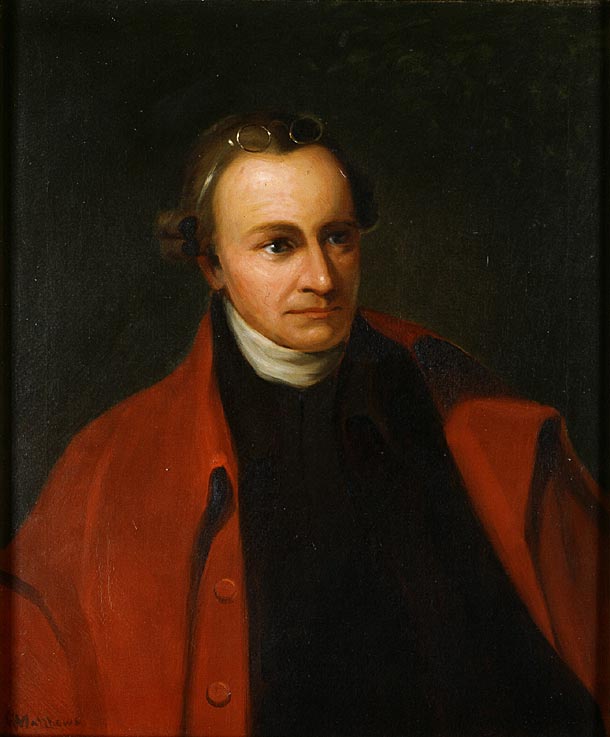
Some of the most forceful warnings against political centralization during the founding era came from a handful of figures rooted in the southern states. Virginia, North Carolina, and South Carolina produced voices who saw the proposed Constitution as a blueprint for consolidated, potentially tyrannical national power. With the benefit of hindsight, their warnings about the dangers of moving authority from dispersed states to a single central government appear remarkably prescient.
These men articulated concerns that resonate powerfully in an era when the federal government touches nearly every aspect of American life. The leading voice in this Southern resistance was a man whose name had already entered the pantheon of American revolutionary heroes. Patrick Henry delivered a marathon series of speeches at Virginia’s 1788 ratifying convention in Richmond, emerging as the most electrifying Anti-Federalist voice of the South. His primary target was the word “consolidation,” his shorthand for the dangerous merging of sovereign states into a single national government.
On June 4, 1788, Henry declared, “That this is a consolidated government is demonstrably clear, and the danger of such a government is, to my mind, very striking… give me leave to demand, What right had they to say, We, the people? Who authorized them to speak the language of, We, the people, instead of, We, the states? States are the characteristics and the soul of a confederation. If the states be not the agents of this compact, it must be one great, consolidated, national government, of the people of all the states.”
Henry warned that consolidation would destroy liberty without warning. “This Government will operate like an ambuscade,” he stated. “It will destroy the State Governments, and swallow the liberties of the people, without giving them previous notice.” He saw implied powers as the mechanism through which unlimited centralization would occur. “If you intend to reserve your unalienable rights, you must have the most express stipulation,” Henry argued. “For if implication be allowed, you are ousted of those rights… You therefore by a natural and unavoidable implication, give up your rights to the General Government.”
Henry also perceived executive power sliding toward monarchy. “This Constitution is said to have beautiful features; but when I come to examine these features, Sir, they appear to me horribly frightful. Among other deformities, it has an awful squinting — it squints towards monarchy. And does not this raise indignation in the breast of every American? Your President may easily become King.”
George Mason authored the Virginia Declaration of Rights and served as a delegate to the Constitutional Convention itself, yet he refused to sign the document. He declared, “I would sooner chop off my right hand than put it to the Constitution as it now stands.” His written Objections to the Constitution became the template for Anti-Federalist opposition across all states.
Mason feared Congress would absorb all power under the “necessary and proper” clause. Writing in his Objections to This Constitution of Government (1787), he warned: “Under their own construction of the general clause, at the end of the enumerated powers, the Congress may grant monopolies in trade and commerce, constitute new crimes, inflict unusual and severe punishments, and extend their powers as far as they shall think proper; so that the State legislatures have no security for the powers now presumed to remain to them, or the people for their rights.” He also saw the federal judiciary consuming state courts, warning that it would render justice “as unattainable, by a great part of the community, as in England; and enabling the rich to oppress and ruin the poor.”
At the Virginia ratifying convention, Mason drove the consolidation argument home on the power of direct taxation. “The assumption of this power of laying direct taxes does of itself entirely change the confederation of the States into one consolidated Government. This power being at discretion, unconfined, and without any kind of control, must carry every thing before it. The very idea of converting what was formerly a confederation to a consolidated Government is totally subversive of every principle which has hitherto governed us. This power is calculated to annihilate totally the State Governments.”
Mason also warned that history offered no examples of large republics preserving liberty. “It is ascertained by history that there never was a Government, over a very extensive country, without destroying the liberties of the people.”
The Anti-Federalist case extended well beyond Virginia’s borders. Rawlins Lowndes emerged as the leading Anti-Federalist voice in South Carolina’s legislature during the January 1788 ratification debates. He believed centralized power would doom the South to permanent minority status in a government dominated by Northern interests.
Lowndes argued that republican vigilance demanded skepticism toward the new system. “The security of a republic is jealousy; for its ruin may be expected from unsuspecting security. Let us not, therefore, receive this proffered system with implicit confidence, as carrying with it the stamp of superior perfection; rather let us compare what we already possess with what we are offered for it.” He saw the new Constitution as a path to monarchy. “On the whole, this was the best preparatory plan for a monarchical government he had read… this new government came so near to it, that, as to our changing from a republic to a monarchy, it was what every body must naturally expect. How easy the transition! No difficulty occurred in finding a king: the President was the man proper for this appointment.”
Lowndes feared the President’s unchecked power to manipulate Congress. He concluded with a defiant epitaph, wishing to have inscribed on his tomb, “Here lies the man that opposed the Constitution, because it was ruinous to the liberty of America.”
The Anti-Federalist current ran just as strongly through North Carolina, where it found a leader of comparable resolve. Willie Jones led the Anti-Federalist faction at the 1788 North Carolina ratifying convention at Hillsborough, where he successfully refused ratification without a prior Bill of Rights. He criticized the Constitution as “an instrument of centralization and an encroachment of community rule.” Jones argued that only the states, not the federal government, should hold the power to tax and control elections.
These southern Anti-Federalists shared a deep suspicion that moving power from dispersed states to a single central authority would, over time, eliminate the local accountability and limited government that the Revolution was fought to secure. Henry’s prediction that consolidation would “swallow the liberties of the people, without giving them previous notice” stands as perhaps the most prophetic single line of the entire founding debate.
The federal government they feared has materialized in ways they could scarcely have imagined. Agencies unmentioned in the Constitution now regulate everything from the air Americans breathe to the water they drink to the words they speak online. The “necessary and proper” clause Mason warned about has justified expansions of federal power that would have astonished even the most pessimistic Anti-Federalist. The direct taxation power that Mason said would “annihilate totally the State Governments” now funds a federal apparatus that dwarfs all state governments combined.
Power concentrated tends to concentrate further. Governments given implied powers will imply ever more. Additionally, liberties not expressly protected will eventually be swallowed, often without previous notice. Their warnings deserve attention from anyone concerned about the trajectory of American governance.
The views expressed at AbbevilleInstitute.org are not necessarily those of the Abbeville Institute.





It is amazing how prescient the voices of the South were at the time of our republic’s birth, and how the accuracy of their prophecies is being realized today.
Thank you for excellently highlighting these heroic and prescient men, who were actually anti-nationalists rather than “anti-federalists”. The nationalists weren’t honest enough to label themselves what they were; they cleverly adopted the dishonest label of Federalists, when it was their opponents who wanted a FEDERATION of autonomous states.
It is unfortunate that many anti-nationalists like Willie [pronounced Wiley] Jones declined appointments to the Constitutional Convention in Philadelphia because they understood and disapproved of the motive. They could have contributed to a better, more libertarian Constitution. Nor did they initially have any involvement in the Federal government, so that the Bill of Rights flowed from Madison and neglected “anti-federalist” elements such as 2/3 majority to declare war (which would have prevented the stupid War of 1812) and 2/3 majority to regulate commerce (which would have avoided the Tariff of Abominations and possibly Lincoln’s War) and limitations on a standing army.
We live now not in a time of overreach, but of takeover and insanity. The president and his oligarchs control the judiciary and the Congress and run roughshod over the country, wholly insensitive to the voice of the people. This is a man, months after swearing in to the office, said “I don’t know” to a question about whether he was supposed to abide by the Constitution. He has sullied every principle of Jeffersonian republicanism and yet Southerners love him.
The author leaves out that after a Bill of Rights was added, Patrick Henry and George Mason went along with it.
OVERREACH IS VERY UNDERSTATED: BOTH PARTIES WANT MORE,MORE,MORE POWER!!!!