

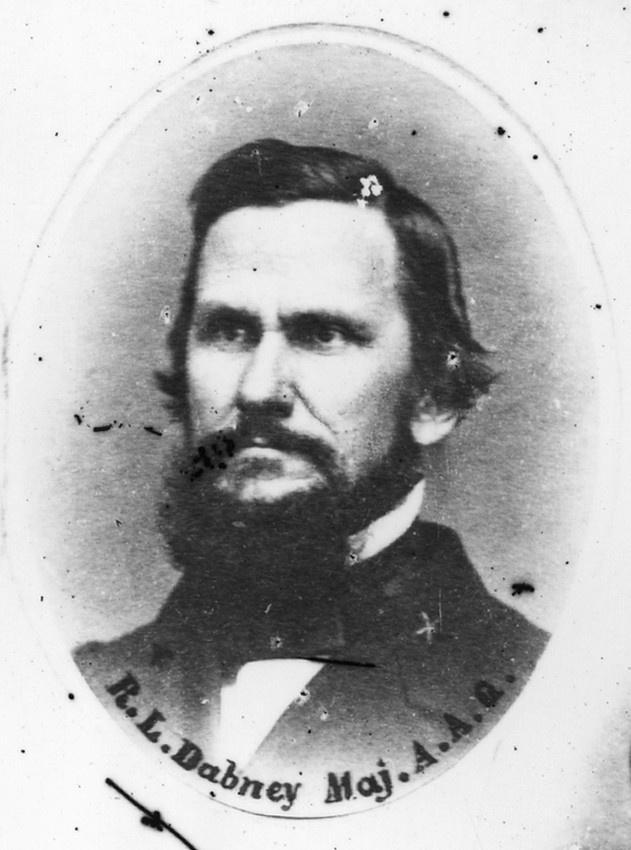
Robert Lewis Dabney stood before the graduating class of Hampden-Sydney College in June of 1882 and told them, with the measured certainty of a man who had already watched one civilization end, that another was ending around them. He was sixty-two years old, a Presbyterian theologian, Stonewall Jackson’s chief of staff and biographer, and one of the most unsparing critics of industrial capitalism the postbellum South produced. The speech he delivered that day was called “The New South,” and it was not a celebration. Dabney had no use for the enthusiasm with which certain Southerners were rushing to embrace Northern industrial models, Northern commercial culture, and Northern definitions of progress. He saw that enthusiasm as a surrender. The New South, as its boosters imagined it, was the Old South taught to imitate the people who had beaten it. Dabney named six conditions corroding the civilization he had known — the displacement of principle by material ambition, the concentration of wealth into oligarchic hands, the corruption of democratic forms into instruments of that oligarchy, the destruction of communal life by urbanization, the hollowing of the press into tools of money-making, and the general abandonment of enduring truth in favor of commercial success. He was describing 1882. He was also, with the precision of the genuinely prophetic, describing what was about to happen to Southern music.
The American music industry did not even exist when Dabney spoke. The phonograph was three years old. Commercial recording was a decade away. The conditions that would industrialize and then nationalize and then corporatize Southern music were still forming. Southern music had been developing all along on front porches, church steps, juke joints, and work fields, independent of the “serious art music” coming from New England. However, modern recording equipment introduced everyone to the incredibly breathtaking and unparalleled sound of Southern music, and as the rest of the world listened and marveled, the Yankee brain only saw commercial potential and profit. While Dabney’s six points were not predictions about any particular industry, they were observations about what concentrated commercial power does to the things it touches. Southern music was about to be touched deeply and in every way that Dabney would have recognized.
Therefore, if Southern music is to be rescued, restored, and allowed to prosper, then it should not be by Northerners. Lord knows, they’ve done enough already. And the solution has been there all along, given in 1882 by Robert Lewis Dabney. Southerners should be in charge of Southern music. The triage has been assessed, and the prognosis is very, very good.
1. Do Not Imitate the Conqueror. His first point was the simplest and the most corrosive. He watched his countrymen adopting the manners, the economics, and the ambitions of the North with the eagerness of people who had decided that losing the war meant their own way of life had been wrong all along. The same impulse ran through the music industry a generation later. When the recording industry established itself in New York and later in Chicago and Los Angeles, Southern musicians faced an immediate and concrete choice: they could make the music they came from, or they could make the music the labels wanted. The labels wanted something polished, something that fit the commercial conventions of wherever they were headquartered. The bent note, the slurred rhythm, the call-and-response structure that assumed a room rather than a listener — these were complications, and executives wanted them smoothed. The musicians who complied by sanding off their Southern accents and straightening their blue notes became commercially successful, but were doing exactly what Dabney had warned against. It didn’t matter that the conquest was commercial rather than military. The mechanism was identical.
2. Material Prosperity is a False God. In Dabney’s second point, he was not arguing against prosperity itself, but was arguing against the confusion of prosperity with purpose. A civilization that organizes itself around the accumulation of wealth has mistaken the means for the end. The recording industry offered Southern musicians a version of this bargain that was almost impossible to refuse: fame, money, and a national audience in exchange for signing away ownership of their work. The exchange looked favorable from the outside and was catastrophic from the inside. Elvis Presley made RCA Victor extraordinarily rich. Robert Johnson’s recordings, which did more to define the American musical imagination than almost anything produced in the twentieth century, generated income for decades after he died in 1938 — income that reached his estate only after litigation, not by design. The music was worth everything. The people who made it were worth almost nothing as a contractual matter. The industry had successfully separated the product from the producer and assigned all durable value to the former.
3. Industrialization Concentrates Wealth and Power. The third point in Dabney’s 1882 address observed that the financial growth of New York City was remaking the whole nation into a dependent, whether the dependent understood its condition or not. The recording industry repeated this pattern with a thoroughness that even Dabney might have found impressive. By the end of the twentieth century, the industry that had emerged to exploit and distribute Southern music had consolidated from dozens of competing minor labels into six major corporations — Warner, Universal, Sony, BMG, EMI, and PolyGram. By the time the mergers ran their course in the early twenty-first century, it was down to just three. EMI was broken up and sold off in 2012. BMG was absorbed by Sony, and Polygram was absorbed by Universal. Three corporations headquartered in New York, Los Angeles, and, in Universal’s case, originally in France, controlled the commercial fate of music that had been made by Southern people in Southern places for centuries. The artists who had created the tradition ended up working, contractually, for companies that had nothing to do with the music’s origin and no particular interest in what the music was. Their interest was in what the music could be made to earn. Dabney’s image of New York as the commercial mistress of the nation applied to Southern music with uncomfortable exactness.
4. Democracy Can Become an Oligarchy. His fourth point was about the corruption of democratic forms into instruments of oligarchic control, and while he was talking about politics, the music industry invented its own version of the same structure. The Billboard chart might have looked like a democracy where the people chose what rises and what falls, but it’s not really a choice if someone else gets to decide what your choices are in the first place. What Billboard actually measured was what the labels released, promoted, and placed with radio stations that were themselves becoming increasingly consolidated. The payola scandals of the 1950s made explicit what the structure had always implied: the appearance of popular choice masked corporate control of what got heard. American Idol, a century after Dabney, was perhaps the purest expression of the same principle. It presented itself as the ultimate populist mechanism, millions of votes determining who would become a star. It was actually a mechanism for identifying talent at low cost, developing public investment in that talent through viewer participation, and then signing the winner to a controlled contract with 19 Entertainment under conditions favorable to the producing network and its label partners long before a single contestant ever appeared before a single judge. The votes were real. The democracy was not.
The contracts signed by the contestants gave the producer control over recording, management, merchandising, touring, and sponsorship deals, and forbade contestants from revealing anything about the show on pain of damages estimated at five million dollars. Season 11 winner and Georgia native Phillip Phillips later described his agreements with 19 Entertainment as “oppressive” and filed a legal petition asserting he had been “constantly manipulated” into accepting jobs for the company’s benefit rather than his own. He had been forced to perform for free at a corporate event for a show sponsor, JetBlue. He did not know the title of his own album before it was announced publicly. The appearance of popular choice masked all the massive corporate control of what actually got heard.
5. Cities and Commercial Structure Weaken Traditional Society. Dabney watched Southerners leaving the land and the community structures that had defined their lives, drawn by the economic gravity of industrial centers. When Southern musicians made the same migration — to Chicago, to Detroit, to Los Angeles — they carried the sound but could not carry the community that had made the sound. The porch, the church steps, the juke joint, the fields, and the singing convention were not quaint backgrounds, or merely pleasant settings for music that could have been made anywhere. They were the social structures that produced the music and were the functional parts of how the music worked. They were the mechanism by which the music was taught. They were the power by which the music was corrected, varied, and sustained. When Southern musicians moved to New York, Chicago, Detroit, or Los Angeles, they brought the sound with them, but they could not bring the community. The music became increasingly a product made in studios by professionals under contract rather than a practice lived in communities by people who had no other name for what they were doing. The studio is not a juke joint. The album is not a song carried in a body from one room to the next. The difference is not incidental.
6. Rest on Enduring Principles, Not Economic Success Alone. Dabney’s sixth and final point argues that truth outlasts the commercial cycle. This is where the music itself offers the most direct response to everything Dabney feared. The Southern musicians who endured — whose recordings still change people who hear them for the first time, whose influence runs through every subsequent form of American popular music — are not the ones who chased the market most successfully. They are the ones who stayed close to something true. The bent note is true because it expresses what the equally-tempered scale cannot. The call-and-response structure is true because it refuses the fiction of the solitary performer addressing a passive audience. The carried song, the one that stays in a community for generations because it says exactly what the community needs to be said, is true in a way that the market-tested single is not. These truths have survived commercial exploitation, institutional neglect, geographic displacement, and the steady pressure of an industry that preferred a product it could control to a tradition it could not.
The list of inspiring examples from the past is seemingly endless. The Grand Ole Opry fired Hank Williams, but Hank never stopped being Hank. He died in the back of a Cadillac at twenty-nine, and his best songs are still being discovered. Charlie Patton recorded for Paramount beginning in 1929, but never adjusted his approach for commercial palatability, and never became a known name in his lifetime. His recordings sold modestly, yet he is now recognized as the fountainhead of Delta blues. Bill Monroe actually did navigate the Nashville machinery and still refused to let his “high, lonesome sound” be smoothed away. While he watched bluegrass get diluted and popularized by others, he held to the original form, and that original form is what survived and what people still seek out. Doc Watson never chased anything. He played what he knew, and in the way he knew it, with the flat-picking precision that came from the Appalachian tradition. The folk revival found him rather than him finding it, and his best work sounds like it was made outside of time. Ralph Stanley was a late-career option who lived long enough to see the vindication happen in public. O Brother, Where Art Thou? in 2000 brought his “O Death” to an audience of millions, but he had been singing it for fifty years. He didn’t change it for the film. The film came to him.
And the list goes on and on.
Dabney had already seen the Confederacy rise and fall, and he had watched Reconstruction install the machinery of Northern governance over Southern life. He was not a man who expected history to accommodate what he valued, and he said so. What he offered the graduating class was not consolation but clarity: these are the conditions you are inheriting, these are the forces that will press against everything worth preserving, and here is how to think about them. Southern musicians did not have Dabney to instruct them when the industry came for their tradition. They had only the tradition itself — the habits of music-making that had been carried in communities for longer than anyone could document. Some of it was lost. The industry was efficient. But some of it could not be industrialized, precisely because it lived in the performance rather than in the recording, in the room rather than in the product, in the communal act of singing together rather than in anything that could be owned, controlled, or marketed. Dabney would have recognized exactly what survived and exactly why.
If the reader is curious to discover some modern contemporary Southern artists who have managed to navigate the music business in a way that seems to have followed Dabney’s advice, let me get you started. Previously at the Abbeville Institute, I published two essays introducing Daniel Donato, who maps most directly onto Dabney’s sixth point, and the band 49 Winchester, which connects particularly cleanly for Points #1 and #5.
Beyond them, Tyler Childers is probably the most complete example for this essay’s purpose. He built his following entirely outside the Nashville machinery — Hickman Holler Records, Thirty Tigers distribution, no radio push, no Music Row grooming — and when his album Purgatory broke through in 2017, it did so because the music was already true before anyone outside eastern Kentucky noticed. Then, when he won Emerging Artist at the Americana Awards in 2018, he stood at the microphone and told the audience he didn’t identify as an Americana artist, he was a country music singer, and Americana felt like “purgatory.”
Charley Crockett is a genuinely interesting case because his biography actually enacts several Dabney points simultaneously. He is from San Benito, Texas, a South Texas border town near the Rio Grande, busked on the street in New Orleans and across Europe, recorded prolifically on his own before anyone offered him a deal, and has released something like a dozen albums since 2015 at a pace the industry couldn’t have managed or controlled even if it had wanted to. He is a distant descendant of David Crockett, and his sound is a direct inheritance from Bob Wills, Lefty Frizzell, and Gulf Coast blues. He’s had heart surgery and kept touring. The industry has noticed him mostly by trying, unsuccessfully, to categorize him, but he refuses to fit.
Oliver Anthony is also a compelling case, and in some ways the most dramatic one available for the Dabney argument. He recorded “Rich Men North of Richmond” on his own land with a borrowed camera and a resonator guitar, turned down an $8 million label offer after the song went to number one, and has continued releasing music independently. He is from the Virginia Piedmont, took his stage name from his grandfather, who grew up in 1930s Appalachia, and the song itself is a direct descendant of the Southern working-class complaint tradition — structurally, tonally, and lyrically closer to Merle Haggard than to anything on mainstream country radio. The fact that it hit number one without radio play, without a label, without promotion, and without any prior chart history is precisely Dabney’s sixth point made visible in real time: the tradition reached people directly, bypassing every mechanism of corporate control.
Rhiannon Giddens is the most intellectually compelling case, and she maps onto Dabney’s argument in a way that goes deeper than most of the male artists already named. She is from Greensboro, North Carolina, trained as an opera singer at Oberlin, and then came back to the Southern string band tradition rather than away from it — specifically because she recognized that the tradition she was recovering was her own. The Carolina Chocolate Drops, which she co-founded in 2005, learned directly from Joe Thompson, one of the last surviving Black old-time fiddle players, and their entire project was the demonstration that what had been coded as “white Appalachian music” and “Black blues” were originally the same music, made in the same rooms, by people living in the same place. She is not a political argument, but one about making Southern music as a civilizational phenomenon rather than racial property. Giddens did her research, played her instruments, and told the truth about where the music came from.
Finally, I would make mention of the Turnpike Troubadours from Tahlequah, Oklahoma. They built a regional following for years through relentless touring before any national attention arrived, but they never moved toward Nashville polish. They broke up in 2019 when frontman Evan Felker needed to deal with personal matters, and reunited in 2022 to find the audience had waited for them without being asked to. That reunion is itself a Dabney argument: the tradition was there when they came back to it.
Dabney called himself the Cassandra of Yankeedom: predestined to prophesy truth and never to be believed until too late. The recording industry proved him right on schedule. Wealth concentrated. Democratic forms hollowed out. The community that made the music did not survive the migration intact. The conqueror got imitated. All six of his points landed, with the precision of a man who had already watched one civilization give way and understood the mechanism well enough to describe the next one before it arrived. What Dabney could not have predicted is that the tradition he was defending would prove harder to kill than the civilization he had watched fall. Armies can be surrendered. Institutions can be abolished. Music that lives in the body, passed from hand to hand and voice to voice across a hundred years of juke joints and church steps and kitchen tables, does not surrender on the same terms.
The views expressed at AbbevilleInstitute.org are not necessarily those of the Abbeville Institute.







As a conservative Presbyterian, I love Dabney! This “take” only deepens that love . . . and his applicability!
Thanks, Dr. Daniel! We need our music, the real stuff, to remind us of who we are, so we need to know how to tell the real from the fake! From our roots in the Old Country, ceiligh and hooley, to our front porches, churches, and, yes, juke joints, those and the REAL people who sang and played them, we need to remember!
Ditto
William, I listened to Brion McClanahan go over Dabney’s six points recently, and my mind instantly drew the parallels to music in real time. That’s only because Dabney was so insightful.
Thanks for the recommendations. Didn’t know of Daniel Donato or Rhiannon Giddens.
Thanks, Matt. Donato is a freight train of the Buck Owen’s sound, and Rhiannon is at her best when she leaves her politics behind.
Giddons is talented but has gravitated towards being eaten up with wokism and racial grievance
Great respect for Reverend Dabney. Have paid my respects to him while his grave At Hampton Sydney college. The man was prescient in matters of faith and societal devolution. Thank you for the enlightened vector of study and cultural preservation you have offered in the music you have encouraged the readers to experience and protect.
Deo Vindice
Joseph, yes! “Prescient” is the exact right word.
im a product of my times, is what i is ….Warner, Universal, Sony, BMG, EMI, and PolyGram…blah blah blah…. prefer this black flag southern rise https://www.youtube.com/watch?v=lmIFedH4Gwo&t=6s
and this gem https://www.youtube.com/watch?v=V8OxQpyEI2k&t=3s