

Appalachia was dying. It had been the most self-sufficient region of the country in 1840, but the eighty years that followed saw the culture of Appalachia come under a series of unrelenting attacks. The first blow came during the Civil War. Far from the homogenous block of Union sympathizers that liberal academics have made the region out to be since William G. Frost wrote “Our Contemporary Ancestors in the Southern Mountains” in 1899, the Civil War saw Appalachia turned into a bloody struggle between opposing bands of guerillas that gave the partisan war in Missouri a run for its money. The destruction was only exacerbated in the last month of the war, when Union Gen. George Stoneman did to southwest Virginia and western North Carolina what Sherman had done to Georgia and South Carolina and what Sheridan had done to the Shenandoah.
This was immediately followed by the second major blow. Still shifting through the ashes of the war, the mountains were set upon by Northern corporations who laid waste to the land itself as they greedily scratched out every piece of coal and cut down every tree they could get their hands on. Their woes were only compounded by large farms in the Midwest and Great Plains flooding the market with cheap food. Many of the people of Appalachia, who had once been able to make a modest living off of their small farms, could now only survive by selling their land to the corporations and taking up residency in company towns. This desperation allowed the corporations to pay the people of Appalachia sometimes as much as 30% less than people in Pennsylvania and Ohio for the same job.
While the first two blows had damaged Appalachia’s economy, the final blow was both more serious and more insidious. The only people other than corporate stooges who went out of their way to visit Appalachia in the initial post war years were travel writers. These men portrayed the region as a land forgotten by time, populated by backwards people who still lived the way early settlers had lived in the eighteenth century. As the turn of the twentieth century approached, rich Northern and Eastern tourists began trekking into the mountains to see the outdated people of Appalachia for themselves, entering the once remote region via the railroads the corporations had laid to take their loot from the mountains and later with automobiles. While they didn’t particularly care for the people, they found that they quite liked the cool mountain climate and the beautiful scenery. So, several of these wealthy wanderers plopped down resorts which quickly grew into tourist towns as other wealthy elites moved into the mountains in droves. Land speculators, hoping to take advantage of wealthy clients who wanted to have their own mountain mansion, drove property prices and taxes up so high that even more local Appalachians found themselves displaced from their ancestral homeland.
To make matters worse, these newcomers had no intention of assimilating into what they viewed as the antiquated Appalachian culture. They attempted to bulldoze the region’s culture with the elite, cosmopolitan, globalist culture they were accustomed to in coastal cities. To add insult to injury, many of these rich outsiders were often closely linked to the very corporations exploiting Appalachia. Partially out of a desire to ingratiate themselves to their overlords and partially out of the allure of leaving their lives of poverty behind, many of the local Appalachians cast aside their centuries old culture and attempted to assimilate into the globalist culture. The part of their culture that the locals frequently cast off first were the old songs and dances of the mountains, the things that made them most obviously distinct from the rest of America and especially the coastal elites. There was a genuine fear that Appalachian culture, especially the old songs and dances, would vanish into history, leading several ethnographers to enter the region to record the songs before they faded away. Appalachia was dying and it was at that moment that our hero stepped onto the scene.
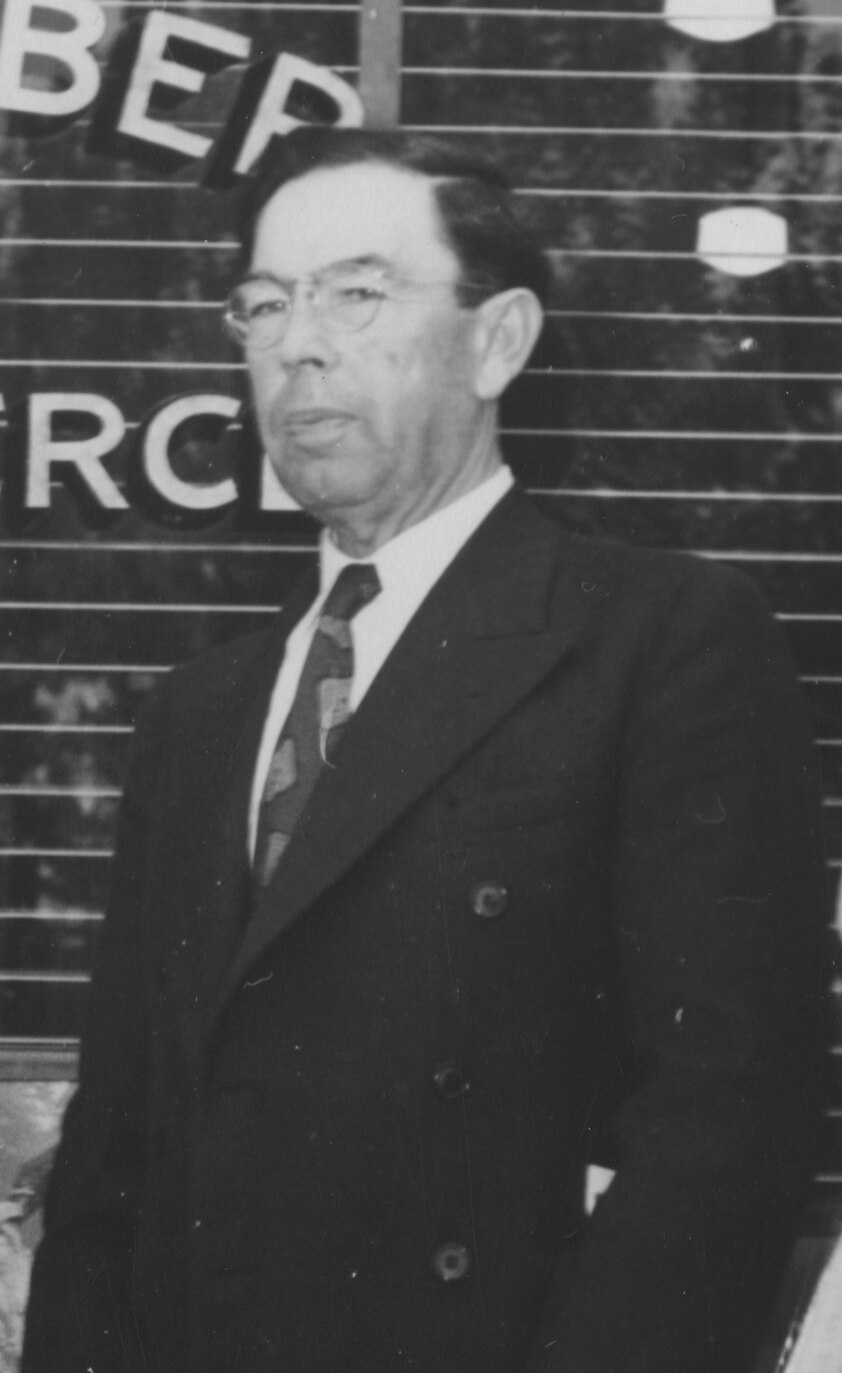
Bascom Lamar Lunsford was born on March 21, 1882, in Mars Hill, North Carolina. His father was a Confederate veteran, and his mother was from a family of prominent Union sympathizers. With both his parents employed at Mars Hill College (now University) young Bascom was instilled with a love of learning, especially anything having to do with words. Bascom was especially fond of Shakespeare and Robert Burns, both of whom he quoted frequently throughout his life. However, he remained connected with the agricultural lifestyle of his community, recalling that he spent many days in his youth helping neighbors tend their crops with handmade tools. He also stayed connected to local culture thanks to his uncle, Oswald “Os” Deaver, whose prowess with the fiddle had made him a local celebrity. Bascom and his brother Blackwell used this musical heritage to their advantage, hiring themselves out to fiddle for local parties and events. When Bascom was in his early teens, Blackwell bought a banjo to broaden their skills and Bascom was hooked. The banjo quickly became his favorite instrument and the one he would become most well known for playing.
Bascom had always been interested in the culture of his Appalachian homeland, especially its music. While he and his brother’s side hustle was the initial driving force in his efforts to collect as many traditional tunes as he could, so he could expand their repertoire, he gradually shifted to collecting old songs and tunes for his own pleasure. He was aided in his quest by an incredible memory. By the time of his death, Bascom had memorized over 300 songs and fiddle tunes and had a written collection of 3,000 more. His collection became invaluable to historians and anthropologists in later years not just because of its vast scope, but because he made a point of memorizing where, when, and from whom he had collected each song, allowing future researchers to map out where traditional music had travelled to and in which regions it held out the longest.
Getting married and starting a family required him to find a better paying job than an amateur musician, but Bascom never lost his focus on his passion for traditional Appalachian music. Whenever possible, he took jobs that allowed him to travel, so he could continue his unending quest to discover new music. It was during his brief time as a Justice Department agent during World War I that he took a trip to Washington D.C. and had a chance meeting with Maude Karpeles, the partner of renowned English folklorist, Cecil Sharp, just as they were finishing up their three-year tour collecting folk songs in Appalachia. Karpeles introduced Bascom to several other scholars and anthropologists, not only providing valuable contacts but also training Bascom in the formal, scholarly methods of collecting songs. It’s also possible that it was during this meeting that he learned of the various folk dance schools that Sharpe had set up in Appalachia, in an attempt to make sure the region’s musical traditions continued to the next generation. This may have been the inspiration for the dance lessons Bascom and his wife would begin hosting at their house in the 1930s.
His travels not only sharpened his skills as a scholar but also made him realize just how distinct Appalachia’s musical traditions were from the rest of the country. Bascom began to realize that mountain music and dances were not just a social activity, but an indigenous artform. He began telling people it was his calling to preserve the region’s musical heritage. As a mountain man himself, he was uniquely fit for his calling in ways that the outside scholars and anthropologists never were. Having grown up in the region’s culture, Bascom knew the perfect blend of Southern manners and mountain respect that the people of Appalachia expected to be treated with. He also had a friendly disposition that put people at ease and allowed them to open up to him in a way they never would to outside researcehrs. Bascom’s background also allowed him to keep the culture alive in its contemporary state. While outside researchers had started folk dance schools, they were designed to teach students what the researchers thought was the origins of Appalachian dance, that being 18th century British dances. Bascom did no such thing. When offering cash prizes at dance contests or later teaching lessons at his home on South Turkey Creek, Bascom taught and celebrated Appalachian musical traditions for what they had become, not what they used to be.
His reputation for being a great collector of traditional music brought Bascom to the attention of ever more scholars and even to the music industry. In 1922, Frank C. Brown of Duke University made audio recordings of Bascom, marking the first time his songs would be recorded in a collection other than his own. He would also make vinyl recordings for a couple of different record companies and even recommend other traditional Appalachian musicians to them, such as when he gave Jimmie Rogers his big break by putting him in contact with Victor Records.
It might seem strange that record companies would suddenly take an interest in rural music just after the 1920 census showed that America had become a majority urban society. However, it was more than just a few folklorists and anthropologists that were concerned with the nation’s vanishing rural culture. It turned out many of the new urban Americans missed the countryside. So, there was a growing market for country décor and country music. So, it was natural that the city of Asheville, eager to seduce more rich outsiders, decided it would be a good idea to invite Bascom to host a small sideshow at its 1928 Rhododendron Festival dedicated to the traditional culture of the region. Bascom hated the touristy, globalist nature of Asheville that had stripped the city of its Appalachian culture and even the kindness and hospitality that could still be found in the rural mountains. However, he couldn’t pass up an opportunity to share Appalachia’s musical traditions with a bunch of spectators who were unaware of the region’s rich culture. So, he gathered a group of the best musicians and dancers he knew and set out for Asheville.
Through a mix of Bascom’s personal charisma and the talents of the performers, the little sideshow became the festival’s main attraction, with nearly 5,000 people showing up to the inaugural performance. With thousands of people from all social classes from all over the country falling in love with Appalachian songs and dance after just one show, the world had a newfound appreciation for mountain music. After just two years, the show had grown so big that Bascom split off from the Rhododendron Festival to start his own event, the Mountain Dance and Folk Festival. Many scholars believe this was the first folk festival in American history and it continues to run to this day. Local communities across the Union began reaching out to Bascom for help starting their own festivals celebrating their region’s culture. He even inspired Sarah Gertrude Knott to start the National Folk Festival, for which he was a regular advisor and participant.
Bascom knew that dancing was the biggest draw at the Mountain Dance and Folk Festival. It always drew the biggest crowds, and he made sure to give the dancers their due place in the spotlight. It wasn’t just the fact that audience got to view dances that made them popular. Bascom always made sure to dedicate a part of his festivals to invite spectators on stage and participate in the dances themselves. Instead of simply watching a spectacle of a quaint activity of bygone days, audiences now got to be active participants in Appalachian culture and immediately saw the value of keeping the old-style songs and dances alive.
However, this popularization had an unintended consequence. Largely thanks to the popularity of Appalachian dance, Bascom had taken a dead culture and made it alive again. While saving it from extinction, it also opened up the culture to change, much to Bascom’s chagrins. Over the course of the following decades, he begrudgingly allowed the dancers to add metal taps to their clogging shoes and for dance teams to wear matching western swing styled costumes instead of the everyday clothes he had grown up watching people dance in. Bascom felt this compromised traditional Appalachian musical culture. In a way, he was right. However, the changes he allowed made Appalachian dances ever more popular and got many more young people interested in Appalachian music, ensuring that the culture continued to grow and thrive to this day.
Besides, while Bascom and the leading scholars of his day believed that Appalachian culture had remained virtually unchanged since British settlers arrived in the region in the 18th century, modern research has proven that was not the case. From mid-1970s onward (Bascom died in 1973), historians have uncovered a wealth of information about historical Appalachian culture and realized that the region’s musical culture had experienced slow but steady change throughout its history. German immigrants introduced the harmonica, autoharp, and the mountain dulcimer. Songs and dances were picked up from the Indians of the mountains and slaves from the lowlands. Even popular songs and dances from the big cities were incorporated, sometimes in part, sometimes in whole, into the rich heritage of Appalachia. It was only towards the end of the 19th century that Appalachia’s musical culture stagnated. So, the songs and dances Bascom interacted with were the last gasp of a dying culture. By reviving the culture, he inadvertently revived the Appalachian tradition of small changes and integration of outside musical ideas. Ironically, this made the culture far more authentic than Bascom thought.
This is a nice bit of history but how is it applicable to us today? Well, the older readers of this blog may be unaware, but of late there’s been a great surge of young people becoming interested in the traditions of generations past. Conservative youngsters are most interested in political and religious traditions, but many across the political spectrum are becoming interested in cultural traditions, such as traditional skills, arts, and folkways. While skills that can be practiced individually are the most popular, group activities, such as traditional dances, are slowly gaining traction. I’ve witnessed this firsthand. Several unofficial dance clubs exist at my alma mater, teaching traditional dances from various eras of history, from the early 1800s to the 1950s. This past summer, I interned at a large nonprofit organization that had over two dozen interns. Of their own accord, about half of the interns organized weekly events where they would learn to swing dance. Once the interns became aware of a seasonal worker who knew how to waltz, they quickly invited him to join the sessions and teach them. We switched back and forth between the two styles of dance as we fellowshipped and became more culturally enriched.
There is a craving among young people to revive the traditions of their ancestors. While many young conservatives, even a surprising number of Yankees, are becoming more open to the idea that the South isn’t as bad as modernity has made it out to be, the other members of the younger generation have inadvertently given us an avenue to change their opinions about the South through the medium of folkways, especially traditional dances. I highly encourage anyone reading this to either start or get involved with an existing club or organization with the goal of teaching the next generation traditional Southern dances. To make it hit closer to home, I’d recommend teaching them dances that have historical ties to your locality, whether that be the Virginia Reel, Appalachian Square Dance, or the Texas Two Step. As they grow to find evermore enjoyment in the dances and learn to like and trust you, there will likely arise a time when they’ll start asking about the people and culture that these dances originated from. When that happens, you’ll be there to put in a good word for the South.
And don’t be upset if the young whipper snappers start innovating or bringing in influences from other dances. That’s proof that the traditional dances have made the transition from being the memory of a dead culture to the beating heart of a living culture. Too often, we proud Southerners and Southern Sympathizers tend to treat Dixie as a land of past glories and modern decline. If we’re ever going to make the traditional Southern way of life more than just an antiquated apparition of a bygone era, we’ll have to make ours a living culture again. All living things change. So, we should be willing to let our folkways and art change, so long as the foundations of Southern culture remain intact. Putting a fresh coat of paint on a building may alter its appearance, but the structure remains the same with the added benefit of being better able to weather the passing of time.
Before I end this article, I’d like to mention one last thing. While y’all might not have heard of Bascom Lamar Lunsford before reading this piece, you’ve probably been impacted by his legacy in a very specific way. He was once involved in court case that had such a strange and hilarious outcome that he decided to write a song about it. While he would eventually sell the rights of the song to a friend who would alter the lyrics to give the song a greater public appeal, Bascom still retains partial credit as a cowriter. That song was Mountain Dew. If you’d like to learn the full story of the song’s origin or more about Bascom and his work preserving Appalachia’s musical heritage, y’all can read my master’s thesis here, from which the information in this article originated.





I advise readers of this article to continue on with another one on Abbeville Institute this week: The day after in the Old Dominion.
And then come back and read this one again, and reflect on the connection between the two.
What a splendid article. It is always a joy to read work from young people.