


When I was a young lad in graduate school, Clyde Wilson asked me and another graduate student to his office for a chat about American history. We didn’t know what to expect, but he wanted to ask us a few questions.
We walked in, Clyde pivoted around from his typewriter (he didn’t have a computer in his office for the Calhoun Papers in those days), leaned back in his chair and told us to sit down. The History Department at the University of South Carolina begrudgingly gave Clyde a decent office on the first floor of Gambrell Hall, a grey block monstrosity designed by the Politburo in the 1970s. The University passes it off as some architectural marvel and promotes its “Indiana limestone” exterior, but anyone who has seen it, taken classes in it, or worked in it knows that it is a hideous example of modernism.
Clyde began asking us questions. Statements, really. “Tell me everything you know about George Washington.” Or “Tell me everything you know about Thomas Jefferson.”
He didn’t ask us about the War. He didn’t focus on the sectional conflict. He wanted to know about foundations.
After we both fumbled around in our answers, he told us, “You have a lot of reading to do.”
“Read, read, read.” That’s what he told every graduate student who set foot in his office. That was his job. We only had a fleeting few years to consume everything we could, and he knew that still wouldn’t be enough.
Clyde’s office library was small. He kept his most important treasures at home. And they were eclectic.
Clyde had us read Will Rogers and Henry Timrod, Benjamin Latrobe and John C. Calhoun, Richard Weaver and Thomas Jefferson. He forced you to pore over the Dictionary of Literary Biography, review old bibliographies, and focus on the seminal works in American history.
His American historiography course was one of the best classes on campus.
When he retired in 2006–just days after I was hooded as his last student–he began thinking about how few good works on Southern history and culture were being produced by modern publishers. There were a few that would take a chance, but nothing of substance.
In 2015, he and Paul Graham had a brilliant idea. What if they created a publishing house that gathered some forgotten or neglected Southern writers and allowed their works to see the light of day? Shotwell Publishing was born in their living rooms over cigars.
A few years ago, I stopped by Clyde’s house in Columbia on my way to the Abbeville Institute Summer School. He took me to a small bookshelf in his living room, the same room where Clyde and a few of his students including yours truly were interviewed for GQ magazine in the late 1990s, and showed me all of the books Shotwell had published to that point. It was impressive, but that was nearly seven years ago.
The catalog has grown substantially since then, now totaling over 100 titles. This is a real accomplishment. Clyde often personally edits submissions, even as age has crept up on him.
Shotwell has also helped the Abbeville Institute Press–the 1607 Project would not have been possible without them–and continues to churn out great Southern content.
If you want to support real Southern scholarship, grab a Shotwell title or ten, of course in honor of ten years of publishing.
And while you pore over the books, remember what Clyde used to tell his students:
“Read, read, read.”

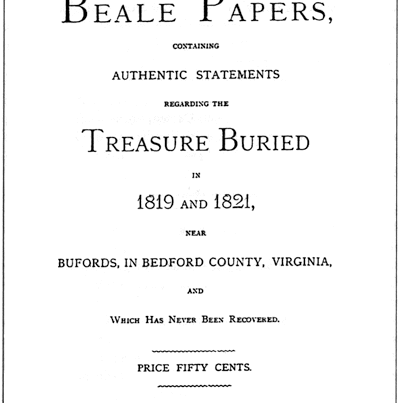

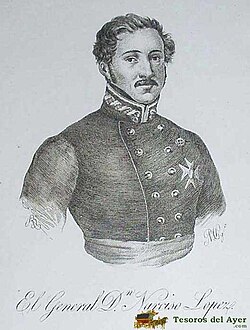




From Today until Sunday (9/28/2025) you can save 20% on ALL items currently available on shotwellpublishing.com with code RELEE
Brion,
You described Dad’s office perfectly. He had that office chair that leaned waaay back. He would tilt backward in that thing in defiance of gravity.
And Gambrell Hall. I grew up playing “school” in those classrooms. I can only imagine what the graduate students thought when they came in to class on Monday mornings to find I’d taken over the blackboard with my colored chalk.
Thanks for the memories, and cheers to Shotwell Publishing.
Great article, Brion.
Why would a South Carolina school use yankee building products?
Truth pioneers are to be commended…
“Read, read, read.”
My grandmother, who among many things was: pianist, music teacher, writer (prose and poetry) as well as teacher at the Mississippi School for the Blind, once told my brother and me that READING was not only the blood of the heart but the blood of the soul, starting with the Bible.
P.S. Her father, my great grandfather was a Captain in the First Mississippi, C.S.A.
Deo Vindice
“You have a lot of reading to do.”
Thank you for sharing your experience, Professor McClanahan. Now, if you’ll excuse me, I have a lot of reading to do.
Twice in your nice article, what do you “pour over the books”? Maybe “pore over the books”.
Your literary output, and that of Shotwell, is admirable.
-Compulsive proofreader
The Abbeville Institute and Shotwell Publishing are two mighty fine Southern organisations.