

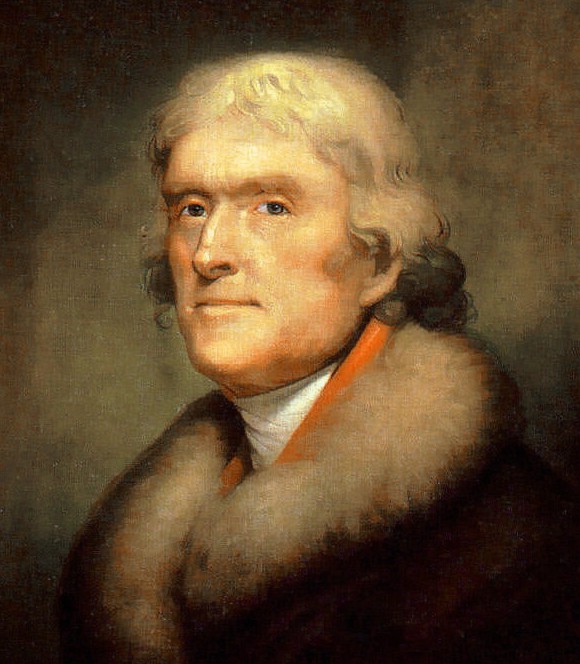
Some two months ago, I asked historian Courtney Crowley, who has become a member of our team at “Thomas Jefferson Lives” (aka, The Real Thomas Jefferson), if she could email four persons in the “Onufian Family”—Annette Gordon-Reed, Andrew Burstein, Kevin Gutzman, and of course “dude” himself, Peter Onuf—and ask whether any would participate in a debate on Jefferson’s avowed paternity. The letter indicated a wish to find a distinguished authority to debate the pro- and anti-paternity sides. Crowley also stated that the debate would be conducted in a format that did not favor one side or the other and that it would be fairly moderated to prevent impoliteness, any possibility of chaos.
I had no expectation of acceptance by any of the candidates. I had aimed on many occasions to set up a debate between myself and one of the Family, but there was never the smallest spark of willingness. That, of course, is sensible, for two good reasons. First, the pro-paternity argument, considered logically and not emotionally, is pathetically weak. Second, the Onufians have already convinced the majority of American historians, through control of the discourse at Jefferson’s Monticello and use of racial intimidation (this just what might be what Burstein calls “emotional history”; see below), that Jefferson fathered all of Sally Hemings’ children.
The first to respond, succinctly and politely, was Gordon-Reed, who strictly speaking is not a pupil of Onuf in that she never studied under him at UVa. She did, however, have Onuf push through his first book on Jefferson and Hemings in 1997 at UVa Press. Since then, they have been cousinly friends in the crusade to celebrated Hemings and destroy Jefferson.
Dear Ms. Crowley,
Thank you for your kind invitation. But I’m afraid I don’t debate this question anymore, and I haven’t for many years. I’ve moved onto considering other aspects of Jefferson’s life and slavery at Monticello. I’m actually at work on another volume of the Hemings family story taking them into the post Monticello world. So I’m afraid I will have to decline your invitation. Thank you for thinking of me.
Best regards,
AGR
Annette Gordon-Reed
Carl M. Loeb University Professor
Harvard University
The reply is misleading. Gordon-Reed has never debated formally the issue. Moreover, when she speaks or is interviewed on Jefferson and Hemings, she chooses venues for interviews where her pro-paternity conclusion goes unchallenged. Nonetheless, hers was a sincerely polite declination.
Former student of Onuf at UVa, Kevin Gutzman, was next to reply. He somewhat surprisingly consented to Crowley’s proposal on July 8, 2026.
Hello Courtney,
Certainly, I’ll be happy to. When do you have in mind?
Kevin
Kevin RC Gutzman, JD, PhD
Professor of History
Western Connecticut State University
But, he later changed his mind.
The next Onufian to reply, and with considerable garrulity, was Onuf’s first pupil, Andrew Burstein.
Courtney,
I appreciate the invite. I am aware that there is continuing interest in the Jefferson-Hemings question. Out of respect, I shall explain why I am declining to engage in public debate on this subject.
As a Jefferson scholar, I care to approach historical questions from a perspective informed by extensive interdisciplinary research and in manuscript sources across established archives. I try to engage with wide-ranging sources and document my work thoroughly, because I know how sensitive the subject of Jefferson’s legacy is and has always been. (I am sometimes accused of caring about him too much, given the amount of attention I spend probing his literary and linguistic skills.) My last word on Jefferson and Hemings is contained in my 2026 book, Being Thomas Jefferson: An Intimate History. I compiled the Index myself, and endnote #32 on p. 380 modestly addresses the “other side” in the paternity debate.
Over the years, I have spoken with many who dispute Monticello’s official position. I am not married to that position, and I try to keep an open mind; but I also do not find the idea at all persuasive that Randolph Jefferson (or any other Jefferson) was Sally Hemings’s sexual partner. The emergence of this convenient scapegoating after 1998 is revealing of fixed prejudices, and I know of no legitimate evidence of Randolph visiting Monticello after 1790. I have examined the cases made by scholars who do not believe Jefferson capable of sex with his servant––which is how I describe the relationship, and which separates my understanding from that of many other scholars who see racial identity as paramount, while minimizing class identity.
In my view, especially given the sensitivity of the Jefferson-Hemings matter, one ought to have firm grounding in cultural and emotional history, the dominant medical theories and sexual prerogatives of men of Jefferson’s day, and related factors. In order to treat the question holistically, it’s not enough to pore over Jefferson’s philosophical and epistolary record and call it quits. In contemporary political life, those with fixed opinions dismiss evidence they don’t like; historians have to be better than that. To me, the question is why intelligent people still need to “like” and “defend” the moral identity of historical actors when evidence points to their divergence from our standards. Well, we all have our unseen cultural prejudices.
So, that’s it. Aside from what I’ve published and documented, I do not wish to weigh in by performing on today’s media (particularly video format) that too often results in knee-jerk reactions, ignorant and invasive online insults, etc. The “gift” of instantaneous global communication has helped make people ever more miserable to one other. Some call that progress; I don’t. I trust you understand, then, why I prefer that my books and journal articles stand as testament to my research findings.
Having gone to these lengths to communicate, and given your honest interest in Jefferson’s legacy, I do not object if you wish to share this email with serious students of Jefferson and early America within your circle. I will be glad to respond, as well, if you decide to share your opinion after reading Being Thomas Jefferson. Beyond that, I hope to pursue “tranquil felicity,” like Mr. Jefferson, in my retirement from academe.
There is much here to unpack. The length of the reply is suggestive of a scholar with disinterest in the issue. That however is not the case. Some comments….
First, ….
I am sometimes accused of caring about him too much, given the amount of attention I spend probing his literary and linguistic skills.
Burstein might spend much time “probing,” but he seldom has anything favorable to say about a man of such unimaginably large accomplishments.
Second, ….
I am not married to that [pro-paternity] position, and I try to keep an open mind; but I also do not find the idea at all persuasive that Randolph Jefferson (or any other Jefferson) was Sally Hemings’s sexual partner. The emergence of this convenient scapegoating after 1998 is revealing of fixed prejudices, and I know of no legitimate evidence of Randolph visiting Monticello after 1790.
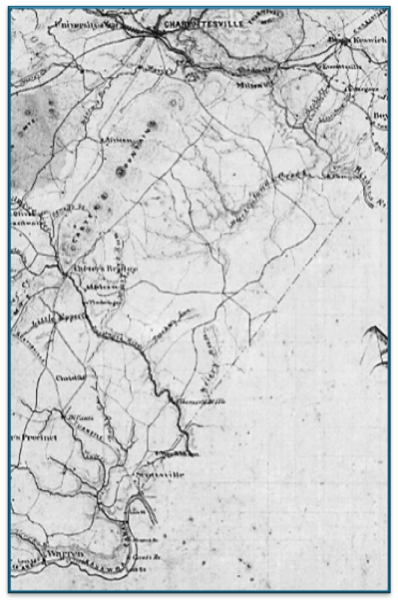
Burstein has never devoted much time and energy to the many persuasive anti-paternity arguments. He merely sloughs off them as he does here. Randolph’s paternity is not “persuasive,” even though slave Isaac Jefferson said, “Ol’ Masser’s [Thomas’] brother, Mass Randall, was a mighty simple man: used to come out among black people, play the fiddle and dance half the night; hadn’t much more sense than Isaac.” This is eyewitness testimony that places Jefferson’s brother at the scene of the crimes, so to speak. Moreover, as I have shown in my book Thomas Jefferson and His Younger Brother: A Study in Cosmopolitanism and Parochialism, Randolph lived at Snowdon some 20 miles to the south of Monticello and he relied much on Thomas for assistance in running his plantation. Their correspondence, having begun in 1789 and having ended in 1815 (the year of RJ’s death), has a gap from 1792 to 1807.
In my book, I ask, “Why is there 15-year gap? Why has Randolph, whom scholars, with unanimity, agree was mightily dependent on Thomas to conduct everyday affairs, not at all written to his older brother?”
I answer as follows:
The answer to that question is, I maintain, that Randolph is handling his business with Thomas at Monticello, whenever Thomas is at Monticello. Randolph needs his older brother’s advice on agricultural matters, and the distance of 20 miles—though a difficult 20 miles—is nowise prohibitive. With epistolary silence, there are frequent trips by Randolph to Monticello, where Thomas can directly advise, and at times manage, Randolph’s affairs as well as offer material assistance.
Sally had children in 1795, 1798, 1799, 1801, 1805, and finally, 1808. Randolph cannot merely be ruled out by fiat: that it is a matter of “convenient scapegoating.”
Let us next to to endnote 32 of page 380 of his newest book where Burstein “modestly addresses the ‘other side’ in the paternity debate.”
In accepting Jefferson’s paternity of Sally Hemmings children, though the evidence is not absolute, my reasoning falls into several categories. Statistically, he is the likeliest partner because, counting back from the six confirmed births between 1795 and 1808, Hemmings never conceived when Jefferson was not present at Monticello [what if Randolph was present in each instance?], yet he was often away for several months at a time; his grandchildren’s claim that their promiscuous since deceased, Carr cousin confessed to having had regular relations with Sally Hemings has been shown by DNA to be impossible. The only other plausible father, because he carried the same Y chromosome, was Jefferson’s brother Randolph, whose visits the Monticello were few and little remarked on—not enough for reasonable doubt.
Additional reasoning concerns the sexualized culture in which Jefferson lived as a man of privilege, and a personal history that makes it difficult to accept the thirty-nine-year-old widower’s neglect of his sexual needs over the next four decades on a private mountain where his desires, his passions, came first. Further, Madison Hemmings’s recorded testimony, given when he was in the sixties reads soberly. In referring to Jefferson as “father,” he noted (nonjudgmentally) an absence of emotional commitment, even as Jefferson uniquely granted freedom to his entire nuclear family, privileging them above all other human beings he owed. Finally, a frequent visitor to Monticello, a planter associated with Jefferson’s work in establishing the University of Virginia, twice recorded in a private diary his deep disappointment that Jefferson sexual relationship with Hemings is being used by other Virginia planters who fathered children with enslaved women to excuse their own actions.
Some comments….
First, Burstein admits that evidence for the pro-paternity argument is “not absolute.” Hmm, what does it take for a scientific hypothesis to be confirmed absolutely? Burstein’s choice of words betrays profound ignorance of scientific methodology.
Second, there is the “statistical” argument made infamous by Fraser Nieman in his dreadful paper, “Coincidence or Causal Connection.” That Jefferson was at or around Monticello on each occasion that Hemings conceived seemed to be a needed condition for Jefferson’s paternity of all of Hemings’ children. It is not. What is needed is proximity of Jefferson and Hemings, and without information concerning Hemings’ whereabouts on each occasion, one cannot merely assume she was at Monticello, though on each occasion, that is likely. Moreover, independent scholar Cynthia Burton has examined thoroughly the days of Jefferson at Monticello and the births of Hemings’ children. The argument is not so tight, but Burton’s work is ignored.
Third, DNA evidence has not ruled out Carr’s paternity. It is merely ruled out with probability, if there were not missteps in the DNA study of 1998, that Carr did not father Eston. No DNA was studied from Hemings’ other children. Perhaps our saintly Sally was sexually promiscuous as was her mother, who had four paramours. Why do Burstein and all other pro-paternity adherents merely assume Hemings’ was not promiscuous? Carr might readily be the father, say, of Madison Hemings, born in 1805.
Fourth, why does Burstein rule out so flippantly Randolph Jefferson’s paternity? I have shown in my book on Randolph Jefferson that he was much dependent on his older brother for advice on his plantation at Snowden, and there was no need for a formal invitation through a letter for a visit when Randolph knew that his brother was at Monticello. There is also, as we have seen, slave Isaac Jefferson’s first-hand testimony that Randolph Jefferson often used to hang around Mulberry Row, where the slaves lived.
Fifth, what of the sexualized culture of Jefferson’s day? Is that not true of all times? Thomas Jefferson’s desires and passions, vaunts Burstein, always came first in the four decades after meeting young Sally. Really? What evidence do we have of that outrageous claim? Burstein’s books? His uses of “emotional history,” whatever that is?
Sixth, we have recently examined the sobriety of Madison Hemings’ claim concerning Jefferson’s paternity. It is not only secondary testimony, but also fraught with errors.
Last, the frequent visitor’s journal of which Burstein speaks id John Hartwell Cocke. This argument was put forth by Gordon-Reed. Cocke, jealous of Jefferson’s celebrity with UVa, is expressing scuttlebutt—nothing more.
Enough of Burstein….
Finally, Dude himself honored us with a reply: brachylogous, but a reply nonetheless.
Dear Courtney,
Please forgive my delayed response to your message. I don’t think Jefferson’s paternity is seriously in question and am therefore not interested in the proposed debate.
With best wishes,
Peter
I am honored that Dude has even replied! I may never again clean my keyboard….
Enjoy the accompanying video….





“Crowley also stated that the debate would be conducted in a format that did not favor one side or the other and that it would be fairly moderated to prevent impoliteness, any possibility of chaos.”
In other words, a true(r) debate, as opposed to the so-called “debates” that the political clowns of today refer to, especially during presidential-posturing-periods.
“In my view, especially given the sensitivity of the Jefferson-Hemings matter, one ought to have firm grounding in cultural and emotional history, the dominant medical theories and sexual prerogatives of men of Jefferson’s day, and related factors. In order to treat the question holistically, it’s not enough to pore over Jefferson’s philosophical and epistolary record and call it quits. In contemporary political life, those with fixed opinions dismiss evidence they don’t like; historians have to be better than that. To me, the question is why intelligent people still need to “like” and “defend” the moral identity of historical actors when evidence points to their divergence from our standards. Well, we all have our unseen cultural prejudices.”
This guy missed his calling. He should have been a politician. You will find less of this kind of thing on the ground at a south Texas cattle ranch!
Love it!
I have mostly ignored this issue as there are plenty of fish to fry in defending the South and Southern patriots from the insane. To the insane, Hemmings will always be pure as the driven snow. I put her in the same category as Fred Douglass…one day he’s a young slave beating up his master in a fistfight…the next day he’s telling women they can wait a few generations to earn suffrage.
I will continue to press home the point the US military officers’ oath of office from 1830 until 1862 read as follows:
“I, _____, appointed a _____ in the Army of the United States, do solemnly swear, or affirm, that I will bear true allegiance to the United States of America, and that I will serve THEM honestly and faithfully against all THEIR enemies or opposers whatsoever, and observe and obey the orders of the President of the United States, and the orders of the officers appointed over me, according to the rules and articles for the government of the Armies of the United States.”
I have taken the liberty to CAPITALIZE the words which destroy any semblance of dishonor cast upon these honorable men.
While I was a cadet at the USAF Academy, the cowards in the history department never taught this fact.
You make an excellent point tying lack of correspondence between the brothers with regular, frequent visits which eliminates the need for written records.
May God bless you and yours.
“While I was a cadet at the USAF Academy, the cowards in the history department never taught this fact.”
Liars are always cowards! It wasn’t that they never taught it. It was that they lied by deliberately ignoring “them.”
Thank you.
i guess Isaac wasnt interviewed by a Democratic newpaper?
Revisionists would not talk about that if he had been.
I just learned that find-a-grave, a free ancestry.com site, has Hemings children routinely listed as Tom’s own.