

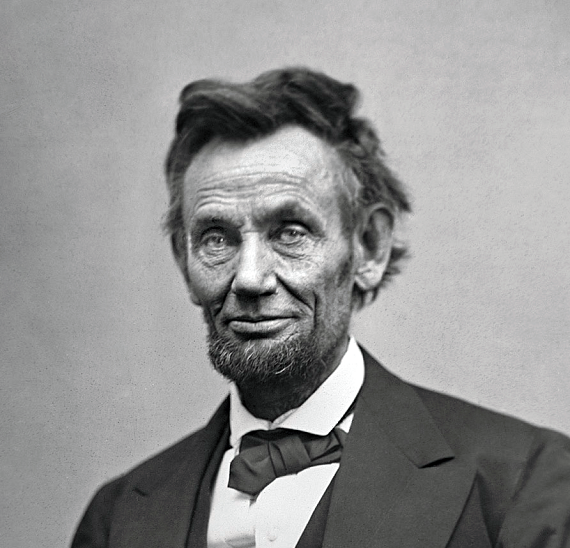
“There is some difference of opinion whether this clause should be enforced by national or by State authority, but surely that difference is not a very material one. If the slave is to be surrendered, it can be of but little consequence to him or to others by which authority it is done.”
-Abraham Lincoln’s First Inaugural Address
There is no doubt that Lincoln spent a good deal of time in his inaugural responding to the slavery issue, attempting to address Southern concerns over his intentions for the institution. Lincoln’s advocacy for the Corwin Amendment in this speech is further evidence that he believed the Cotton States were upset and concerned over the slavery issue, and that secession was related to it.
Now, ignoring the causes that led to the secession of the Upper South, the Cotton States left the Union for multiple reasons, one of which was indeed slavery. However, it was not simply a matter of preserving something that, as Lincoln spent much time assuring them, was constitutionally protected and could not be touched; it was legally protected. Instead, it was the real cause, the maintenance of states’ rights, that could not be disconnected from the occasion, slavery.
This stance was misunderstood by Lincoln, the nationalist, the politician, a believer in the will of the majority and man as his authority, rather than God and law, as the South maintained. To Lincoln, politics was a political war to be won by the majority; you utilize power to your advantage to get what you want and thus benefit yourself and your backers. He was not a principled man who believed wholeheartedly in the Constitution or the Union; he did so only so insofar as it was advantageous to himself. David Donald wrote of “Lincoln, whose one dogma was an absence of dogma.” The 16th President was, as libertarian Murray Rothbard wrote, “a master politician, which means he was a consummate conniver, manipulator, and liar.”
Additionally, historian Lerone Bennett Jr. observes, “There is a grand canyon between what Lincoln said and what he did…He ignored the Constitution when he wanted to and hid behind it when he wanted to.” Scholar David Donald quotes a neighbor of Lincoln’s calling him, “The craftiest and most dishonest politician that ever disgraced an office in America.”
Both sides of the conflict knew Lincoln was a politician. Southerner Benjamin Palmer said, “He is nothing more than a figure upon the political chessboard…moved by the hands of the unseen player. That player is the party to which he owes his elevation.” Likewise, abolitionist Wendell Phillips stated “Lincoln is a pawn on the political chessboard. With fair effort, we may soon change him for a knight, bishop, or queen and sweep the board. “Lincoln was the opposite of the Southern tradition of aristocratic gentlemen. These local public servants were appointed to perform the unpalatable task of politics for the sake of their people and the nation; men like Madison, Jefferson, and John Taylor of Caroline.
Thomas Jefferson said that slavery was the “exclusive right of every state.” Meaning it was up to each state to decide whether to have slavery or abolish it. Essential to the Constitution, and to the Union, is that the states make this choice, as the Tenth Amendment declares. Their right is not to be usurped by a central government. Were the federal government to decide on an issue related to slavery and go past its constitutional limits, that would, in effect, make the document meaningless and drift us into a limitless, all-powerful central autocracy.
“The Constitution… contains no grant of power to the Federal Government to interfere with this species of property…slave property rests upon the same basis, and is entitled to the same protection, as every other description of property.”
-Isham G. Harris, Call for a Referendum on a Tennessee Secession Convention January 7, 1861
The Republicans violated the Constitution and the Dred Scott v. Sandford 1857 Supreme Court ruling by trying to decide the fate of slavery by federal rather than state and individual control. Democratic plank 9 of the 1852 elections plainly stated that an attack on slavery was an attack on states’ rights; you cannot separate the two issues. You cannot have the federal government decide on slavery without it greatly exceeding its original intent and purpose.
That the federal government is one of limited powers, derived solely from the Constitution, and the grants of power made therein ought to be strictly construed by all the departments and agents of the government; and that it is inexpedient and dangerous to exercise doubtful constitutional powers.
Democratic Plank 1 1852
That Congress has no power under the constitution to interfere with or control the domestic institutions of the several States, and that such States are the sole and proper judges of everything appertaining to their own affairs not prohibited by the constitution; that all efforts of the abolitionists or others made to induce Congress to interfere with questions of slavery, or to take incipient steps in relation thereto, are calculated to lead to the most alarming and dangerous consequences.
Democrat Plank 9 1852
The South viewed slaves as legal property. If the Government interfered with slaves, what would stop them from doing the same with any other property? The Rev. J.H. Thornwell in The Rights and the Duties of Masters said the issue was “not simply whether we shall emancipate our Negroes or not, the real question is the relations of man to society, of states to the individual, and of individuals to states.” If this violation by the federal government were allowed to happen, no rights would be safe: the Constitution would then be of no value. The union of states that delegated certain limited powers to the federal government would be destroyed. And finally the government would become limitless in power.
To many Southerners, the fight was to maintain states’ authority in the Union and to preserve the Constitution and people’s self-government.
That when the settlers in a Territory, having an adequate population, form a State constitution, the right of sovereignty commences, and being consummated by an admission into the Union, they stand on an equal footing with the people of other States; and that a State thus organized ought to be admitted into the Federal Union, whether its Constitution prohibits or recognizes the institution of slavery.[1]
-Southern Democrat Party Platform 1860
In 1864, Rev. William A. Hall wrote, “That institution is not a cause of this war, but simply an occasion of it.” In 1862 Rose Greenhow had similarly written, “Slavery, although the occasion, was not the producing cause of the dissolution.” And R.L Dabney also wrote that, “African slavery was not the cause, but the occasion of the strife… All our statesmen, of all parties, had taught us, not only that the reserved rights of the states were the bulwarks of the liberties of the people, but that emancipation by federal aggression would lead to the destruction of all other rights.”
It was perfectly understood by Southerners and antebellum Americans that to preserve the Union and states’ rights and the Constitution one must reject abolition by federal edict; which is why many anti-slavery men, both North and South, rejected federal involvement with slavery or any other issue, because they valued decentralization and diverse sovereign states above their own political desires.
From Lincoln’s and that of a great many Republicans’ perspective, besides the Bill of Rights, the Constitution did not tell them the limits of Government; instead, it was a diving board to jump off of to discover, or interpret what the Government could or could not do, this is to be accomplished at the federal level. Whereas for the Antebellum South, the Constitution was merely the delegated areas of authority that the states had entrusted but not surrendered to them, all else, as the Tenth Amendment dictates, belongs solely to the states. So, the Constitution contains all powers of the federal Government and only those clearly specified by the states; it is to go no further. This is the view of a limited government, whereas Lincoln’s is of an unlimited government, besides a few specified areas.
These are two worlds apart, and the fact that Lincoln did not, or could not see this, is telling. And this is why, in 1861, in the Report on the Committee of Foreign Affairs C.S.A., they stated of the North, “They appear to have no idea of free Government.” As a Vermonter, I can say with confidence that Vermonter’s do not understand liberty; they believe themselves free, but at the same time vote for, and demand totalitarianism. Aimed in the direction they must desire, the right or the left. However, true, genuine liberty and limited government are only allowed in talk and thought, not in practice. Anytime any issue arises, it needs government interaction, and any ideas about a limited government go out the window.
Also, in his inaugural address, Lincoln stated that the Constitution does not say one way or the other if the federal government can interfere with slavery in the western territories. This is a view of a limitless state authority. In his mind, unless the Constitution states that the federal government cannot, it can, or at least so long as the majority in the federal government or courts decides it can. The government then becomes limitless and authoritarian, with few checks on its power. And this is why Georgia Commissioner A.R Wright Esq said, “Even if the slavery question were now settled to the entire satisfaction of her people, Georgia would be unwilling again to confederate with a people whose views of the power of the Federal Government are so entirely different from her own. The power of the Federal Government, she has always contended was restricted, limited and confined within the letter of that instrument…The doctrine of State Rights and State Sovereignty, as enunciated and declared in the “Virginia-Kentucky” resolutions of ’79, we have held to be the chief safeguards of the liberties of the American people. For the first time in our national history this doctrine has been ignored and denied by a commanding majority of the States of the Union.”
Modern nationalistic, power-hungry politicians, as well as historians who are disciples of Lincoln, still confuse slavery and states’ rights, believing the latter is used as a cloak for the former. But when Lincoln stated, “There is some difference of opinion whether this clause should be enforced by national or by State authority, but surely that difference is not a very material one,” he was severely mistaken; it made all the difference in the world, and the bloated, tyrannical government we endure today is the result of Lincoln having his way.
******************************
[1] My emphasis.






“Modern nationalistic, power-hungry politicians, as well as historians who are disciples of Lincoln, still confuse slavery and states’ rights, believing the latter is used as a cloak for the former.”
I have come to believe (a long time back) they are not “confused” but would rather lie than admit what has been written and documented before them a thousand times.
“Men” like Levin, Hanson, Bauer, Fox News et al well into dozens and dozens of so-called conservatives, historians and “media” outlets. They will never change. These are “men” whom you would never want in a foxhole with you. You would never allow them in your home except that they were starving or bleeding. And that only because Christ instructed us to do so (He is perfect, I am not).
These are the same “men” whom Stonewall Jackson so worried about: Yankee bankers, industrialists, Puritanical Yankee liars. They, in fact, have no beliefs. To believe, is to have not only a heart and a brain but a backbone.
Yankees from 1776 until today have demonstrated that whether or not some have the first two, very few have the third.
JMO
I am certain you are correct in most cases. But I do think some have unwilling blinders on, implanted via the education and perspective they received. They unenticingly “interpret” evidence a specific way.
Probably true.
Starting with the “education” that the USA is “one nation, indivisible”.
Once that falsehood is corrected (i.e. the USA was always international, and each state was always a separate sovereign nation unto itself); then the rest is easy.
levin abandoned lincolon…he apparently reads this board…
Mark Levin abandoned Lincoln?! Seriously? WOW! When did it happen? He has been such a raging, execrable, virulent anti-Southern bigot it must have been a truly excruciating experience for him. Any info you can provide about his epiphany will be greatly appreciated.
I haven’t seen his lincolon picture lately…but I’m not a regular watcher of his drivel.
“Modern nationalistic, power-hungry politicians, as well as historians who are disciples of Lincoln, still confuse slavery and states’ rights, believing the latter is used as a cloak for the former.”
Actually this is ironic, because Lincoln used abolition as a cloak for dictatorship; by claiming national union, and therefore “token democracy” in which the people do not consent to their government, but can only choose among its dictated options (i.e. which candidate will wield supreme power over them, via elections– which likewise are controlled by lobbyists through financial support).
No longer could the people of any state overrule their government, as did the people of South Carolina in withdrawing their state from the international union; and therefore no longer did they wield supreme authority over their respective state, as they did in adopting the Constitution in the first place.
And communism was simply blowback to this, as Lincoln established it has “official history” for how the US government was supposedly governed from the start: i.e. not as an international union of democratically sovereign nations; but simply a unified empire that was supremely ruled by despots, chosen by dictated ultimatum-plebiscite, heavily influenced by plutocrats (or as Marx put it: “The oppressed are allowed once every few years to decide which particular representatives of the oppressing class are to represent and repress them.”)
And there’s no denying that; however the solution would be for the people to hold final authority, and not a select minority– and likewise, this was the law as it originated– and remains intact with each state being a sovereign nation unto itself (while Marx called this “armed revolt” when some states exercised their sovereignty).
Accordingly, Marxists believed that Lincolnian “democracy” was legitimate, and did it not see the treasonous international coup that it was; and thus they rejected it for totalitarian systems, as a “lesser of two necessary evils” (a false dichotomy where neither was necessary; but both were indeed evil, since they were based on elite rule, while all voters were both supreme and equal under actual American law).
No Southern military officer ever swore allegiance to the Constitution…nor did any northern military officer until the north CHANGED their military officers’ oath of office to the Ironclad Oath in 1862. Prior to the Ironclad Oath, all officers swore to defend the United States and protect THEM from THEIR enemies.
There is no argument about the loyalty of Southern military officers to the union…their loyalty was not to a union but to the individual Sovereign States in whatever configuration the Sovereign States found themselves.
Lincolon was a big enough axxhat to pretend the United States existed before the States themselves. He hailed from a State that prohibited blacks from entering because the primary concern of the north was prevention of black migration into the north which would interfere with free White immigration from Europe.
The Constitution formed an international union, among sovereign nations– like the UN or the EU; and so any allegiance would be simply _delegated_ power– just with the Confederate Constitution.
And so Article VI of the Constitution, in which state officials are bound by the Constitution; this is purely an international agreement among separate sovereign nations, as with the treaties mentioned in Article VI.
And the US government did not claim that the Constitution ended any state’s national sovereignty, but simply alleged that they never had it to begin with.
“Lincolon was a big enough axxhat to pretend the United States existed before the States themselves.”
Actually he claimed that “the Union is older than the states,” in which he defined “the Union” as beginning with the United Colonies under the Articles of Association in 1774.
However Lincoln likewise denied that any state was ever a sovereignty (which he defined as “a political association without a political superior”), since he alleged that the states “only declared themselves free and independent of Great Britain; and not of each other, or the Union.”
Of course this is nonsensical, because they never had HAD sovereign national dependence anywhere on any state but Great Britain: and they explicitly declared themselves to be THIRTEEN “sovereignties” (to borrow Lincoln’s own term) in 1776, while likewise they officially achieved this status in 1783.
And this is why Lincoln took away free speech on April 27 of 1861, by suspending Habeas Corpus, and Congress rubber-stamped it soon after: i.e. because no state would have supported Lincoln if they KNEW this, but all would have allied AGAINST him (just as James Madison claimed would happen in Federalist No. 46, if the federal government tried to invade ANY state).
THE TRUTH IS NEVER TAUGHT, ANMY MORE, IN PUBLIC SCHOOLS AND MOST PRIVATE SCHOOLS DUE TO THE TWO SOCIALISTIC TEACHERRS’ UNIONS THAT CONTROL THE FEDERAL AND STATES DEPARTMENTS OF EDUCATION!!!!!!
Of course, since the first thing “taught” in government-accredited schools, is that the USA is an indivisible nation; and all other teachings must COMPORT with that falsehood.
Because a simple reading of history, proves that the USA was NEVER a national union; but was always an international union of separate sovereign nations, just like the UN or the EU.
And this is why the US government claims that the states were NEVER 13 sovereign nations; as the Jackson and Lincoln Administrations first claimed and enforced; in essentially declaring Brexit to be a rebellion.
The issue is not state’s rights, but state SOVEREIGNTY.
To avoid subjectivity, we must liberate the fact that the states are separate sovereign nations, by law– not members of a national union.
The states were never united as a sovereign nation; but every state was always a sovereignty unto itself.
No state ever wanted to be subject to Total War, at the whim of the others.
And the issue is not slavery, but democracy; since true democracy existed under each state being a sovereign nation, by the electorate being the supreme legal authority therein– and thus, government derived its just powers by their consent.
Meanwhile the claim of “national union,” was a trick of oligarch-lobbyists to destroy true democracy; by replacing it with “indirect democracy” where every state was supremely ruled by government officials; and this was called “government by the people” by the Lincoln government, through the mental gymnastics that they could choose their own dictators.
Lincoln even said in his First Inaugural Address, that “This country, with its institutions, belongs to the people who inhabit it. Whenever they shall grow weary of the existing Government, they can exercise their constitutional right of amending it or their revolutionary right to dismember or overthrow it.”
However the actual citizens cannot amend the federal government, but only elect officials; and this is likewise controlled by lobbyists.
And so Lincoln likewise denied that the states had ever been thirteen sovereignties, in his July 4 (1861) Message to Congress, in order to deny secession– and thus he destroyed true democracy, for his elite lobbyists who commanded him.
And that’s the real reason why the truth must be liberated: i.e. because true democracy depends on it. Every nation on earth, is a dictatorship: i.e. the people do not consent to their government, but many live under the illusion that they do so.
After Lincoln’s war, every nation either believed that “indirect democracy” was consent to government; or dichotomously rejected electing rulers, in favor of some totalitarian system such as communism, as a form of “liberation” from it.
But in reality, the people did not consent to their government under either system; and they will never consent to their government, until true democracy is re-claimed by American states.
I’ve proposed a method at my listed website, click my name to see it.
Also I must address this quote:
“Now, ignoring the causes that led to the secession of the Upper South”
The cause is irrelevant, since the Union’s claimed that ALL unilateral secession was revolution against “the national union.”
So the issue becomes the simple historical fact, that the states NEVER formed a national union, in which each state was subject to Total War at the whim of the others; since Lincoln’s (and the Union’s) entire legal claim for denying secession, was based on denying that they had ever been 13 sovereignties.
This was not trivial or vague, but was absolute from the start in 1776, and finalized in 1783.