

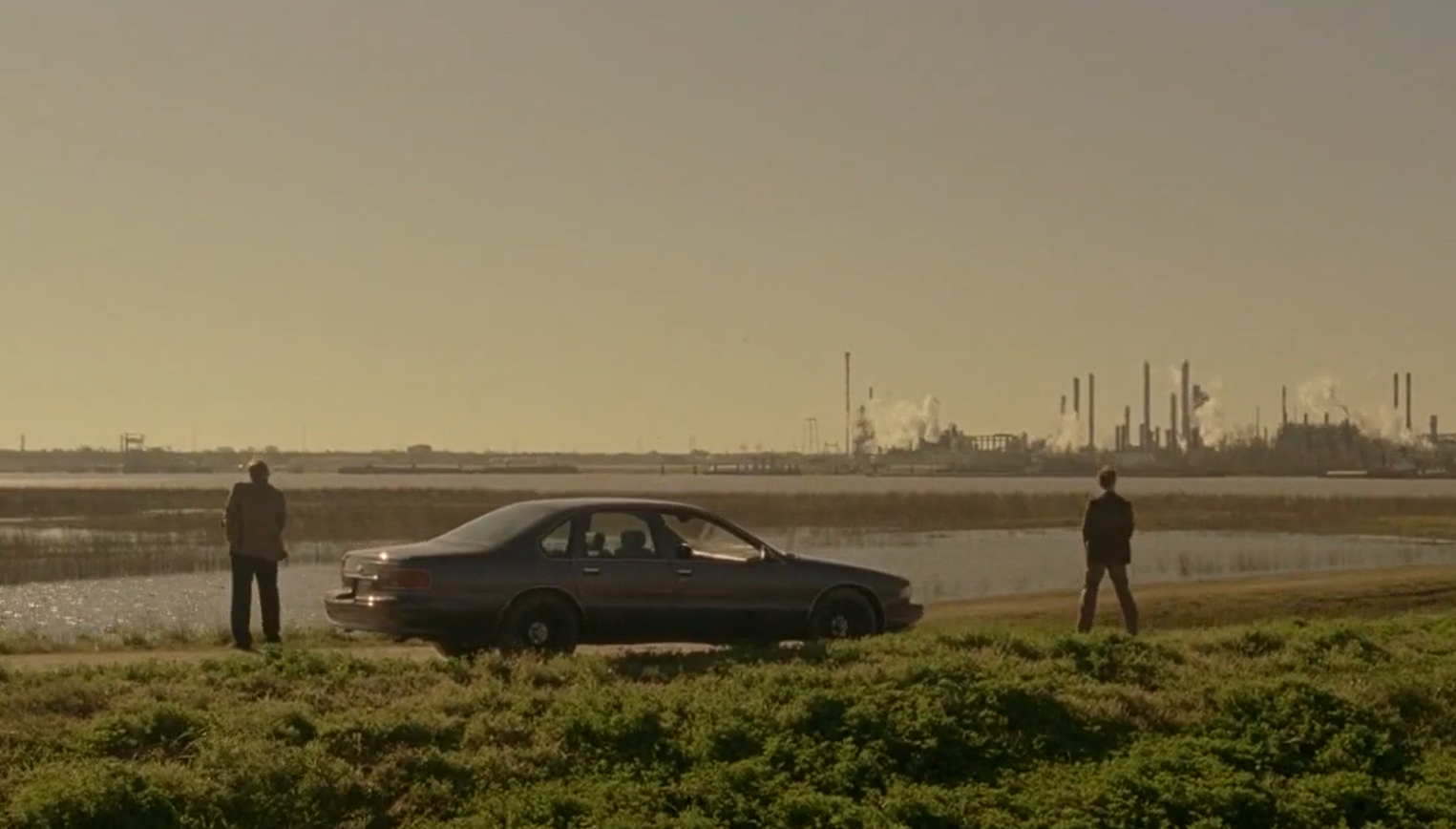
Modern cinema has rarely surprised in recent years. However, there are some exceptions that still save the reputation of contemporary productions and tv series. In my opinion, the first season of True Detective can certainly be considered a near-masterpiece. The creator of the series is Nic Pizzolatto, a New Orleans-born (1975) writer and film producer.
I will try not to spoil the entire plot. In short: The series tells the story of two detectives, Rust (played by Matthew McConaughey) and Marty (played by Woody Harrelson), who are assigned to investigate a ritual crime. Someone murdered a girl and the detectives are trying to find the perpetrator. As the action progresses, mystical, quasi-religious and philosophical themes appear in the series. In addition to the gradual, gripping unraveling of the murder mystery, the plot also touches on numerous philosophical themes. The script is rich in threads drawing on the philosophies of Arthur Schopenhauer and Friedrich Nietzsche, thoughts of a horror writer Thomas Ligotti, and reflections of Norwegian mountaineer Peter Wessel Zapffe. On the surface, then, we are dealing with a manifestation of overwhelming pessimism and nihilism pouring from the screen. Riddles, secrets, voodoo cults and religious rites abound there. It is also interesting that there are threads from the story The King in Yellow by Robert W. Chambers.
The two detectives, Rust and Marty, are undoubtedly opposites. They each represent a different worldview, a different perspective on the world, they share different values and function differently in society. In the key dialogue, when Marty and Rust look at the dark sky, they draw conclusions that are optimistic:
Marty: Well, I know we ain’t in Alaska, but it appears to me that the dark has a lot more territory.
Rust: Yeah, you’re right about that.
Rust: You’re looking at it wrong, the sky thing.
Marty: How’s that?
Rust: Well, once there was only dark. You ask me, the light’s winning.
The story itself ends with the overcoming of nihilism. The ending offers hope regarding the human condition and, on a philosophical level, offers reflection so profound that the viewer feels the need for inner considerations. The series became an inspiration for many interesting research articles in the field of philosophy and psychology. The plot is really unique. But for me, what’s truly captivating about it, is its location. It is worth looking at this series from a slightly different perspective, not necessarily the plot or action itself.
The series was filmed in Louisiana, and several historical and tourist sites can be seen throughout the show. First, the screen features Oak Alley Plantation but not the main building. The second place is Fort Macomb, a Louisiana fortress on the western shore of Chef Menteur Pass, listed on the National Register of Historic Places. Fort Macomb built in 1820 and serving as an underground fortification for Confederate soldiers in the War For Southern Independence. The third interesting place are wetlands south of Lake Charles, all the way to the famous 100 Mile Trail of Historic Cajun (Acadian) Architecture. The richness of Southern culture seems to be extremely noticeable in the series. The camera shots that take us through the entire scenery make an incredible impression. The vistas are impressive, especially on the big screen.
In conclusion, it is worth to say that it is certainly one of those tv series that remains in the memory and should be recommended to almost every viewer who is looking for Southern themes on the cinema screen.





One Comment