

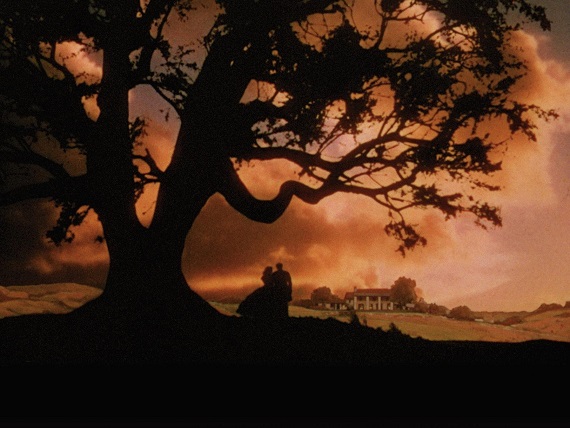
In the movie Gone with the Wind, just after the credits were presented there was a forward line as follows:
“There was a land of cavaliers and cotton fields called the old south. Here in this pretty land gallantry took its last bow. Here was the last to be seen of knights and their ladies fair; of master and of slave. Look for it only in books, for it is no more than a dream remembered; a civilization gone with the wind.”
This opening line was not, I am certain, to my memory, in the text of the novel; only in the movie. But it is a memorable line. I loved it, though saddened in a kind of Southern wistful way.
GWTW is, of course, an historical novel and well-known even among the unread among the Television networks and its slave plantation, Washington, D.C.—or vice versus. And, naturally, many in the T.V. networks, in Wahington D.C. and its sickly bunch (in their self-believed omniscient minds) have deemed it racist (whatever that means). I have never understood what a “racist” is. One man’s racist is another man’s anthropologist, I suppose. But slow-minded dumb rednecks like me try to stumble through life trying to suffer through infantile, anemic insults from Yankees.
But onward to the point:
I was browsing (or whatever it’s called on the internet) and I came across an article by one of the writers of whose essays I have read often and have learned a lot from, Valerie Protopapas: “Rejecting this New South,” RECKONIN’ – Valerie Protopapas, 3-12-22 Her article was structured around an old cartoon “starring” two old Warner Brothers favorites, Bugs Bunny and Yosemite Sam. The short feature was Bugs vs Sam as Yankee (Bugs) vs Confederate (Sam). I recall having seen it as a boy.
I did not live in that time of the “War for Southern independence.” I live in the now (for a bit longer, I guess).
However, in part, Ms. Protopapas says:
“Yet, there is danger in this view of the South—or more precisely, the old South even when it is humorous. There are those who actually believe that had the South prevailed in the War of Secession, this mythical 19th Century way of life would have prevailed and we could once again go back to the South of “moonlight,” “magnolias” and, of course, slavery! But this is nonsense! Nothing is so sure as change….”
Now, to be fair, this is only part of the article, but I don’t think I have taken this out of context (as they say) to the point of missing and presenting the thread of her concept.
However, I find it awkward to believe that such a danger, except on a small scale, exists. But I do believe I know what MS Protopapas is driving at; that there is a certain poetry and nostalgic beauty in that past South, and probably the same Southerners that saw GWTW or the more contemporaneous, Gods and Generals have a vision of ancestral memories, not unlike Margaret Mitchell’s memories and sources she needed to accumulate in order to write her novel.
Such is a fondness (even love) of that past no less than “contemporary past” events that pull folks in. For example, Christians remember Christmas through Christmas carols such as “Oh Little Town of Bethlehem” etc. without expecting the return of Christ, when he comes, in a setting necessarily of 2025 years ago in a small rural(?) town in the Mideast.
The South may never return to a comprehensive agrarian land, though it can be an agrarian society qualitatively, even if industry with its iron and steel and internets and I-phones and the rest of man’s invented wizardry consumes the entire planet. This is the thing any “New South” needs to pray for, I believe. That is, harmony of an agrarian venue and its genuine character–the soul of agrarianism.
Sherman burned the land. He could never burn the heart!
I offer a short story, “I Heard a Voice), that I wrote a few years back, for those who are interested (it is a short, Short Story).
I Heard A Voice – Abbeville Institute
Again from Ms Petropapas’s article:
“Do we reject a “New South” or do we reject this a “New South?” In other words, would we reject a South that had evolved naturally over the years according to the will of its people and in line with their politics, culture and morality rather than being imposed by the sword? I don’t believe that we would. Is it not that which we reject a “New South” forced upon the people of the South by their conquerors? It may seem that this is “splitting hairs,” but it is not. Many objective, decent and rational people when they hear Southerners reject the “New South” envision a desire on their part to return to a time when steamboats plied the Mississippi carrying bales of cotton and young bloods in Virginia rode out to hounds.”
I too believe that, as from this quote, many of these people described as “objective, decent and rational” are just that. However, many are not (see T.V. comment above).
When I read such essays by Ms Protopapas or other essays by historians like her or Dr. Wilson, I am greatly humbled when I say: I write, not as a learned historian. Perhaps I write, as an analogy, like an enlisted soldier (not an officer)) behind the wall at Fredericksburg firing as directed by Generals like Lee (Wilson) or Jackson (Protopapas) or any number of other noted historians who source nonfiction not fiction as a source (note remark above about T.V. etc). The point is, I am not as skilled in strategy or tactics, but I will always be locked and loaded as a corporal when it comes to those gallant men in Gray.
From the writings of MS Protopapas, I have determined that she has a Southern heart at a Northern address. New York, I believe. And she knows her “stuff.” I also know she is not alone in this account.
I don’t believe that the South is very good and the North is very bad. I don’t think in terms of good and bad as a generalization of people. I believe we have been taught (by Christ, our God) who said: “Why do you call me good? None is good but God.”
I do not believe Christians are good because they are Christians. I believe they are Christians because they are not good. Otherwise, what’s the point?
Therein gives me an out for a closing: While I don’t believe that the South is very good and the North very bad, I do believe that the South is pretty good. And the North is, due to its infection with Yankees, well, just kinda bad. Sorry, couldn’t resist.
“There is no such thing as historical permanency. Even stars grow old and die.”
Valerie Protopapas
“Nothing fills me with deeper sadness than to see a Southern man apologizing for the defense we made of our inheritance (emphasis added). Our cause was so just, so sacred, that had I known all that has come to pass, had I known what was to be inflicted upon me, all that my country was to suffer, all that our posterity was to endure, I would do it all over again.” –
Jefferson Davis
I agree with both of these statements, wholly.
Deo Vindice.
And Merry Christmas
The views expressed at AbbevilleInstitute.org are not necessarily those of the Abbeville Institute.





Amen! Thank you, sir!
And merry Christmas!
Terrific column Paul. You capture the feelings of many of us, I am sure. Thank you!
If ai is allowed to read primary source documents, future historians will not be necessary. Everyone will realize the Corwin Amendment existed. Everyone will understand General Lee NEVER took an oath to defend the Constitution. Everyone will realize General George Washington took an oath at Valley Forge to defend FREE, INDEPENDENT, SOVEREIGN STATES.
This war is nearly over…the controllers have lost the monopoly on the message. Their lies are being revealed as we type. If ai is real…if it is allowed to read primary source documents, everyone will know the first black military officers in the New World were those who volunteered to serve their city, State and Confederate States of America as the Louisiana Confederate Native Guard.
Until then, sir, keep sending rounds downrange.
AI claims that the US Constitution united 13 sovereign nations as a single sovereign nation, because the US government said so.
I never capitalize ai…it hasn’t earned the honor yet.
As long as there are Yankees there will be “AI.” As long as there is “The Cause” there will be “I.”
Great article. I especially love the quote from GWTW. When I hear Tara’s theme it always brings tears to my eyes.