

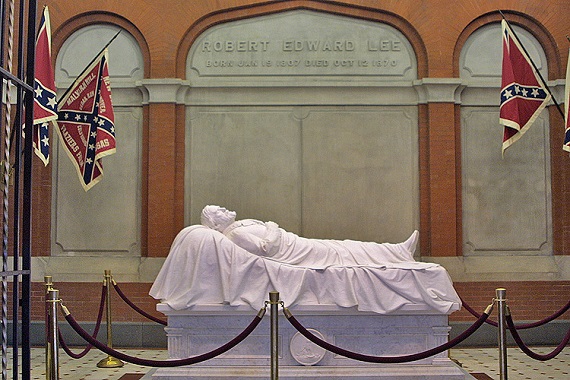
Originally published at the Alabama Gazette.
In a rare case of self-inflicted torture, I watched some of Maine Senator Angus King’s questioning of Pete Hegseth, U.S. Secretary of Defense (now War). Various topics were covered, including the renaming of bases. King falsely accused Robert E. Lee of committing treason by resigning from the U.S. Army and siding with his State in 1861. Since King was born in Virginia, one might ask if he really believes that nonsense or if he is just another historical dimwit.
Much has been written about Lee’s decision to side with Virginia. Yet, in that era, it was commonplace for individuals—mainly in the South—to view their State as their country (the terms are interchangeable). There was certainly historical precedent. Article I of the 1783 Treaty of Paris identifies the thirteen “free, sovereign, and independent” States that made peace with Great Britain. The same language was used in Article II of the Articles of Confederation. Additionally, the compact nature of the U.S. Constitution was understood during the Constitutional Convention. The compact reality was referenced by both Thomas Jefferson and Alexander Hamilton and covered extensively by Albert Taylor Bledsoe (Is Davis a Traitor?), St. George Tucker (View of the Constitution of the United States), John Taylor of Caroline (New Views of the Constitution), and others. Furthermore, Robert Yates’ notes from the Constitutional Convention made it clear the true “States’ Rights federalists” won and the “nationalists” lost and the States did not forfeit their sovereignty. For obvious reasons, nationalists will vehemently deny the States are sovereign and some will claim they never have been.
With his State still in the Union, Virginia’s U.S. Representative Alexander R. Boteler warned the Lincoln Administration that coercing States and threatening to invade them would trigger his home State’s secession. Lincoln’s appeal for 75,000 volunteers from each State to put down the so-called “rebellion” pushed out Virginia, North Carolina, Arkansas, and Tennessee. This call for invasion incensed the governors of Virginia, Tennessee, Missouri, North Carolina, Arkansas, and Kentucky. Although most Southerners understood the Union to be a voluntary coalition, Lincoln claimed the Union preceded the States and was formed through the 1774 Articles of Association, a colonial boycott of British goods. As Professor Thomas DiLorenzo wryly noted, that is like saying a marriage is older than the two spouses.
Robert E. Lee loved the original Union—the one that was destroyed by Lincoln and his corporate, banking, and political supporters. Lee’s family legacy was imbedded in the struggle for American Independence and he opposed a forced Union, stating, “A Union that can only be maintained by swords and bayonets has no charm for me.” Indeed, the American Colonies had broken away from a similar monstrosity. Lincoln became the new “King George.” However, the real King George was much more benevolent than Lincoln, who not only supported war against combatants but also approved total war against women, children, and property.
You can always rely on the usual suspects to claim Lee committed treason – Alan Guelzo, “Taliban” Ty Seidule, Kevin Levin, etc. Indeed, anyone who believes in the Joseph Story “nationalist theory” or that the U.S. is a “democracy” will likely make that claim. After Virginia exercised its sovereign rights, held a convention and voted to leave the Union, critics of Lee cannot fathom his unadulterated allegiance to his home State, choosing instead to believe the theory promoted by Story, Daniel Webster, and others in the 1830s that a “nation” was created—a word absent from the founding documents. They also seem to forget that it took nine States to make the U.S. Constitution valid and there was no guarantee that every State would choose to join it.
Article IV, Section 3 of the constitution states that the federal government cannot interfere in State affairs unless invited by the legislature or governor of that State. Furthermore, treason is defined in Article III, Section 3 using the plural terms “them” and “their” – this references the States, not the general government. Therefore, invading a State is the classic example of treason. Most founders thought such an agenda would be preposterous—they clearly did not envision someone like Lincoln.
Lincoln insisted the Southern States did not actually secede, but they were simply “out of their practical relations with the Union.” Who do you think was aware of this sophistry? Robert E. Lee as well as hundreds of thousands in both the North and the South. Lee refused to be part of an invasion of his home State or any other States that voted to secede. Based on Lincoln’s contention the seceded States were actually still part of the Union and the feds were not invited into any of those States, Robert E. Lee refused to commit treason by being a part of an invasion of those States.
Sources: Union At All Costs: From Confederation to Consolidation, by John M. Taylor; Articles of Confederation (1777), National Archives, at: https://www.archives.gov/milestone-documents/articles-of-confederation; Treaty of Paris (1783), National Archives, at: https://www.archives.gov/milestone-documents/treaty-of-paris, “Robert E. Lee Quotes”, BrainyQuote, at: https://www.brainyquote.com/quotes/robert_e_lee_752993; A View of the Constitution of the United States of America, by William Rawle, Jr .; John Taylor of Caroline County, published New Views of the Constitution of the United States in 1823. Taylor referenced Robert Yates’ book, Secret Proceedings and Debates of the Constitutional Convention. Yates attended the Constitutional Convention and took detailed notes of the proceedings. Using Yates’ notes, Taylor obliterated the claims of ‘nationalists’, e.g., Hamilton, Clay and Lincoln. The Radical Republicans were so adamant about making sure everyone swore proper allegiance to the “constitution” that they instituted the “Soviet-styled” Ironclad Oath in 1862.
The views expressed at AbbevilleInstitute.org are not necessarily those of the Abbeville Institute.



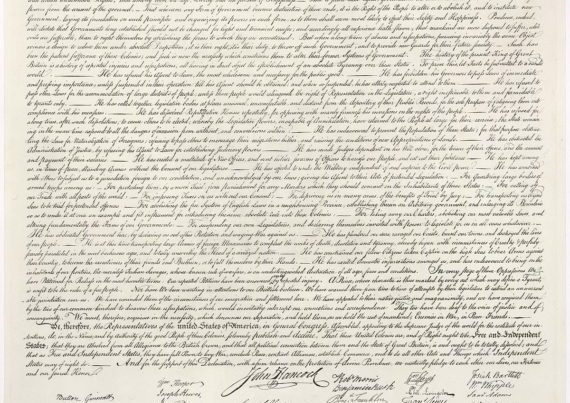



E pluribus unum. Only a tortured mind could pretend a nation was formed out of things that did not exist.
The Ironclad Oath. The yankees forced allegiance to the Constitution rather than the United States. I suppose the same tortured minds could pretend the Ironclad Oath was not Ironclad, nor was it an Oath. Why would the yankees bother with this trivia in the middle of a War? Surely they would realize even the most casual observer of the War would find this change on the part of the yankee to be the smoking gun?
Now, what will the yankees do with the Corwin Amendment? Speaking of amendments, why are the States even included in the amendment process? It’s not as if they existed when the “nation” was formed, according to these historical illiterates.
Thank you for your efforts to shine light upon truth.
You are correct, that “Only a tortured mind could pretend a nation was formed out of things that did not exist.”
In Lincoln’s case, these “things” were the supposed sovereign dependence, that the states had on “on another and the Union,” which he CLAIMED existed under the Declaration of Independence.
As he argued in his July 4, 1861 Message to Congress, against the South’s claims of state sovereignty:
‘Much is said about the “sovereignty” of the States, but the word even is not in the National Constitution, nor, as is believed, in any of the State constitutions. What is a “sovereignty” in the political sense of the term? Would it be far wrong to define it “a political community without a political superior”? Tested by this, no one of our States, except Texas, ever was a sovereignty; and even Texas gave up the character on coming into the Union, by which act she acknowledged the Constitution of the United States and the laws and treaties of the United States made in pursuance of the Constitution to be for her the supreme law of the land. The States have their status in the Union, and they have no other legal status. If they break from this, they can only do so against law and by revolution.’
‘This sophism derives much, perhaps the whole, of its currency from the assumption that there is some omnipotent and sacred supremacy pertaining to a State–to each State of our Federal Union. Our States have neither more nor less power than that reserved to them in the Union by the Constitution, no one of them ever having been a State out of the Union. The original ones passed into the Union even before they cast off their British colonial dependence, and the new ones each came into the Union directly from a condition of dependence, excepting Texas; and even Texas, in its temporary independence, was never designated a State. The new ones only took the designation of States on coming into the Union, while that name was first adopted for the old ones in and by the Declaration of Independence. Therein the “United Colonies” were declared to be “free and independent States;” but even then the object plainly was not to declare their independence of one another or of the Union, but directly the contrary, as their mutual pledge and their mutual action before, at the time, and afterwards abundantly show.’
So, Lincoln claimed that the states had sovereign DEPENDENCE on each other and “the Union–” despite their having no sovereignty of their own, with such belonging SOLELY to the state of Great Britain.
Somehow, Lincoln claimed; that in declaring the colonies to be “free and independent STATES,” they ACTUALLY formed a SINGLE free and independent STATE, of thirteen DEPENDENT states.
Much is said of Lincoln’s mental illness; but this PROVES it beyond all doubt.
The real shame, as that Congress CONCURRED with this “message” to it; just as the Jackson Congress had likewise signed his “Force Bill” in 1833, claiming that the states formed “one nation” in 1776– and that the Constitution simply provided mechanisms to ENFORCE it, which they didn’t have before.
So the pattern of usurpation under mad dictators, suddenly becomes clear; along with their ruthless cronies.
Actually Lee claimed to be COMMITTING treason, in his January 29, 1861 letter to his son Custis Lee, writing that ” Secession is nothing but revolution”:
“Secession is nothing but revolution. The framers of our Constitution never exhausted so much labour, wisdom & forbearance in its formation & surrounded it with so many guards & securities, if it was intended to be broken by every member of the confederacy at will. It was intended for pepetual [sic] union, so expressed in the preamble, & for the establishment of a government, not a compact, which can only be dissolved by revolution or the consent of all the people in convention assembled.”
Here Lee completely misses the US government’s actual argument, that 1) the states had NEVER been able to lawfully secede from the Union; and that 2) the Constitution simply provided enforcement-mechanisms AGAINST it.
However by his own words, Lee CLAIMED that he was committing treason against the United States, by engaging in revolution.
So Lee did not commit treason, since the states were indeed sovereignties; but he did not REFUSE to commit it, since he BELIEVED that it was treason.
(Meanwhile Lincoln insisted the Southern States did not actually secede, for the alleged reason that their revolution simply FAILED; while he did recognize the RIGHT of revolution at least in name. However he simply did NOT recognize that the states had declared themselves to be 13 free and independent states, but that somehow they simply went from being 13 colonies of the state of Great Britain, to 13 dependent states of the a single free and independent state of “the Union.” Accordingly, Lincoln claimed that the states were NEVER 13 sovereignties, and therefore could not secede as such.)
P.S. Les any object: I realize that Lee wasn’t admitting to committing treason IN his Jan. 29 letter to Custis Lee, since Virginia did not secede until April 17, 1861; however this was an admission that his later act of loyalty to his home state, was an act of treason, at least in Lee’s belief– which precludes the claim that Lee REFUSED to commit treason… while revolution is, by definition, an act of treason.
So Lee did act with that intent.
As we all know, Lee refused to make war against his own State. I understand Lee’s pre-war comments about secession and revolution. However, I believe he changed his mind after realizing the bad intentions of Lincoln and his minions. I thought using the word “Refusal” would create a bit of curiosity and draw more attention to the points I was trying to make in the article, especially since so many court historians claim he did commit treason. In reality, based on his decision to not participate in the invasion of sovereign States that Lincoln claimed were still in the Union, in my opinion, he did literally refuse to commit treason.
This is where I have a problem legally defining the 1861 incident, in that each state was a sovereign nation; and so it wasn’t treason against the seceding states, since the officials were legally bound to national authority of their respective state’s electorate.
However it was treason by the officials against their own respective states– and international treachery against the rest, by denying the same national sovereignty which they had fought for and won together as an international confederation.
Meanwhile Lee *technically* did refuse to engage in such treason, against his sovereign nation of Virginia; even though he BELIEVED that he was committing treason against the United States by doing so.
However there was, also technically, no war– civil or otherwise. It was not a civil war, since the states were 34 separate sovereign nations, not dependent states of a national union; meanwhile the Union states each denied their own sovereignty, and thus their sovereign power to LEVY war.. and in any event the 23 Union states, did not officially declare a war of conquest against the 11 Confederate states, to CREATE a single sovereign nation out of all 34… and indeed, even this would require the will of the Union state electorates (who were the supreme lawful rulers of their respective states).
Rather, it was simply an international conspiracy by the Union-state officials, including Lincoln (who as a citizen of Illinois, committed treason against that state); to commit treason against their respective states, and engage in acts of terror against the seceded states (since there was no “national union–” simply an international confederation, which had no sovereignty of its own).
So this is a scandal without precedent.
We can admit General Robert E. Lee made mistakes. General Lee never swore to uphold the Constitution, so he was wrong. The Ironclad Oath was the first to require US military officers to swear allegiance to the Constitution and that was in the year of our Lord, 1862.
The oath General Robert E. Lee took as a cadet entering the officer corps upon his West Point graduation required him to defend the United States from THEIR enemies. The US was not a nation at that time, it was a Republic of Sovereign States. From many Sovereign States, One. This is the motto of the United States. The Southern wife was not allowed to leave her abusive northern husband due to an act of violence on the part of the husband. The federal government did not prevent the invasion of Virginia by the fanatic john brown, nor did the federal government purse brown’s fanatical supporters. The federal government allowed his wife to be abused…and told her to like it…she refused.
Thank you for your contributions. The Ironclad Oath and the Corwin Amendment should be taught to all citizens. Obviously, these facts are omitted from our studies in the modern era because they do not fit the narrative. They can no longer be hidden. Some illiterate yankee historian will have to come up with justification for both of these certainties.
…pursue brown’s fanatical…
>>”We can admit General Robert E. Lee made mistakes.”
Starting with his statement that “Secession is nothing but revolution.”
By concurring with that false claim by the Union, Lee sealed the fate of democracy forever.
Oh, I don’t think RE Lee’s comment was so grave, primarily because he wasn’t speaking as a lawyer. In the same letter decrying abuse of the Constitution and efforts of the Founders he refers to the Preamble as recognizing “perpetual union”, with quotation marks, an assumption by some but only contained in the previous Articles of Confederation. Later in the same letter he makes clear his belief and intentions that “a Union that can only be held together by swords and bayonets… has no charm for me,” closing with expectation of the fait accompli that the “Union is dissolved.”
Lee’s thoughts from the letter weren’t published until decades after the War so these particular statements weren’t know although certainly many who knew him, North and South, knew his sentiments. Lord knows in recent years the comment without a hint of context has been used against him and all Southerners as an admission of guilt. That’s a different story.
Revolution per se is not treason, unless the revolutionaries commit treasonous acts as specifically described in the Constitution*.
Lincoln appointee, CJSCOTUS Salmon P. Chase in decrying the futile prosecution/persecution of President Jefferson Davis for treason, reportedly told members of President Andrew Johnson’s cabinet, “If you bring these leaders to trial, it will condemn the North, for by the Constitution, rebellion is not treason.” Chase was referring directly to the Constitution’s definition of treason*, inferring acknowledgment of the legitimacy of secession and silently acknowledging, de facto, the unspoken fact that the military action which led to open warfare, was initiated by the Lincoln government, not by the Confederate government.
* Article III, Section 3 of the U. S. Constitution states: “Treason against the United States, shall consist only in levying War against them, or in adhering to their Enemies, giving them Aid and Comfort.” It is the only crime actually defined by the Constitution.
The war levied against the States, was levied by the U.S. Government against the Confederate States by forming and announcing a naval blockade and sending a combined naval and army force against South Carolina. By any reasonable consideration of international law and tradition, this was an Act of War against the Confederate States, who had the well recognized right to defend themselves against that naval/military force with like force.
** See Shelby Foote, THE CIVIL WAR – A NARRATIVE, Vol. III, page 1035. Multiple respected jurists reviewed the treason charge against Davis and warned the U.S. government that Davis could not and would not ever be convicted of treason. Which is why the charges against him were eventually dismissed.
Obviously, then, the same legal clearances that applied to President Davis, applied equally to General Lee. Neither they nor any other Confederate committed treason.
Davis was quite upset at the charge being dismissed. He knew that if tried for treason, he would be vindicated and more important, secession would be vindicated. Salmon Chase and others recognized the obvious danger in such an acquittal: The South would win in Court all that it had appeared to have lost on the battlefield, and Southern Independence would finally be won by the sheer force of its irrefutable legality.
…”levying war against THEM”…THEM…THEM…do I need to say it again?
Even thee Framers of the vaunted US Constitution couldn’t resist referring to the United States as a plurality.
I rest my case.
The South never waged war against the northern States. The original resupply of Sumter was was repelled when Star of the West was fired upon for waging war against South Carolina. This was fedgov attempting to impose its will upon a State. Fedgov has no standing as it is made up of the States. If the States decide to hold a Convention, fedgov must wait in the wings to discover if it has a job upon the conclusion of the Convention. A “perpetual union” does not imply perpetual slavery.
Fedgov refused to protect Virginia from invasion. Fedgov did not prosecute northern conspirators supporting the fanaticjohnbrown. There was not a viable Constitution without this primary mission of fedgov being enforced.