

You might be Southern if you think a salad means something held together by Cool Whip.
In the South, we don’t just eat meals. We remember. We gather. We keep our people’s memories alive one bite at a time. As a big man that loves to eat, I’m concerned that we don’t talk nearly enough about Southern food. Every Abbeville conference and Summer school that I’ve ever attended dished out a lot of information about secession, nullification, state’s rights, and John C. Calhoun while also dishing out a lot of chicken, greens, cornbread, and pecan pie. After all, what would be the point of one without the other? Therefore, I feel the need to talk about Southern food, but I want to go beyond just what’s on the plate. I want to talk about the tastes and traditions that tell a good old Southern story, and how our food, recipes, and culture have all shared a place at the dinner table. Not just what we ate, but how it was cooked, why it mattered, and what it tells us about who we came from. In the South, a recipe isn’t just a set of instructions to make food. It’s a story. It’s a legacy. It’s a much deeper cultural meaning that goes far beyond simple nourishment. It’s a hand reaching out from the past holding a cast iron skillet and a stick of butter. I’m not going to tell you how to make cracklin’ bread, but I am going to tell you why it was important to know how to make cracklin’ bread.
Many times, when I’ve talked about Southern music, I compared it to Southern food. Frequently, I encouraged people to consider a plate of peas, greens, and cornbread, and asked them what they think Yankees would call it. Of course, Yankees only have a primitive binary brain to work with in the first place, so they see everything in terms of black and white. They would see that plate of food and call it “soul food,” or “black food,” and we all know that’s nonsense. To us, that’s not black food or white food, it’s Southern food. It belongs to all of us. We all eat the same thing cooked the same ways. Our food is a shared cultural experience among all Southerners. Southern music is that way, and so is Southern food.
Before my mother passed, she gave me the Family Bible that belonged to my great-grandmother, whom we all lovingly called Mama Dera. Mama Dera was a big woman – not fat, not at all. Just a big, good old country girl. She was born in 1894, in Dudleyville, Alabama, which is about 15 miles from the Horseshoe Bend battle site. She raised three sons, including my grandfather, in Society Hill, Alabama, while we all lived in nearby Tuskegee. Mama Dera came into town to Tuskegee every single Friday without fail to go to the beauty parlor and to visit us, and she always stopped off at the truck stop to get a little paper lunch sack of candy for me. I cheerfully admit I am still addicted to the little chocolate footballs because of Mama Dera, but they don’t taste right unless they come out of a little paper lunch sack. It’s not so much the items of food that are important to us as Southerners, but the whole atmosphere around them. In the South, food has context.
A Southern recipe can outlive a memory. I don’t remember what Mama Dera’s voice sounded like, but I definitely remember her biscuits—light as clouds, cut with a jelly jar, and baked in a skillet blackened from decades of love. Food carries family history the way a tree carries rings—layered, marked by time, and full of stories. We gather around food in times of celebration and sorrow. Weddings, funerals, homecomings, wakes, and graduations are all built around the food. It’s not nourishment. It’s testimony. The deviled eggs at the church potluck say as much about your people as the family Bible ever did.
And speaking of Bibles, how many times have you seen a folded recipe card tucked inside one? Maybe it was scrawled in pencil, or maybe it was yellowed with greasy fingerprints, but that’s not an accident. It didn’t get lost and stuck in that Bible by mistake. That little recipe is a sacred document, and the Bible is exactly where it belongs. That’s how we always kept the story going. When families eventually scattered, and the photo albums faded, a passed-down recipe could still call everybody back to the dinner table. That recipe said, “This is who we are. This is what home tastes like. This food is our people”
In the South, the family Bible wasn’t just for Sunday morning and church. It was the original family archive. That was the place to record births, deaths, marriages, baptisms, and yes, recipes. You might find your Grandmother’s handwriting beside the 23rd Psalm: “Don’t forget — low heat for meringue.” Or you might find a dog-eared envelope tucked between Exodus and Leviticus, titled “Mama’s Chicken and Dumplins — for the sick. Double for funerals.” Some of those recipes were barely legible, written in a kind of culinary shorthand. The ladies who wrote them assumed you already knew what they meant.
- “Fry until done.” How many times have I seen that one? No temperature, no time. Just trust your nose, your eyes, and your great-grandmother’s spirit.
- “Add a pinch.” As far as I could tell, this was somewhere between 1/8 tsp and a vague gesture with the salt shaker. If the necessary ingredient was liquid, then it would say “Add a splash.”
- “Cook low and slow.” This was one of my grandmother’s favorites, and it usually meant to simmer on low heat for several hours.
- “Mix ‘til it comes together.” Stir until it looks like something you’d want to eat – not too wet and not too dry.
- “Use enough to coat.” Another of my grandmother’s favorites, which meant eyeball it until it’s good and shiny, but not swimming in it.
- “Use what you got.” Don’t run to the store. If you don’t have buttermilk, use sour cream. If you don’t have sour cream, use mayonnaise. It’s all the same once it bakes.
- “Enough flour to make a stiff dough.” Start with a cup. Keep adding until it feels like Play-Doh and your triceps are burning.
When you see those notes, you realize that food wasn’t separate from faith. It was an extension of it. Baking was a kind of prayer. Serving was communion. In the South, every Sunday dinner was a Holy Eucharist. In those Bibles, you could trace an entire lineage of Southern women who kept the family alive through hard times, heartbreak, and hunger, armed with flour, lard, eggs, milk, and patience. Those recipes they left behind weren’t just instructions. They were love letters.
As a teacher, I’ve heard a lot of excuses from a lot of students, and it’s usually pretty easy to tell who’s faking something and who’s really hurting. I believe the most memorable and touching excuse I ever got from any student came from a young man who’d fallen behind in his assignments during the semester, and he told me that the problem was his grandmother had recently died, and he missed her cornbread so much, he couldn’t stay focused. Of course, his pain went a lot deeper than just cornbread, but as a Southerner, I understood exactly what he meant by that.
If you’ve ever set foot in a Southern kitchen, then you’ve definitely seen those church and community cookbooks. Typically, those spiral-bound treasures showed up in every Southern kitchen from the 1950s to today. You know the kind. They might say “Recipes from the Ladies of First Methodist, Opelika” or “From the Kitchens of the Delta Homemakers, 1968.” You’ve seen them. Each one is a time capsule of regional taste, culture, and memory. And if you flip through the pages, you’ll see the era as much as the ingredients.
- The gelatin salads of the 1960s were legendary.
- The cream-of-mushroom casseroles of the 70s.
- The microwave marvels of the 80s.
But deeper than that, you’ll see the community itself:
- R.L. Thomas’s sour cream pound cake. Not just “pound cake,” but Mrs. Thomas’s pound cake. There’s a difference.
- “Mama Liza’s Corn Pudding — In Memory”
- “Best Ever Caramel Pie (Used at Our Son’s Funeral)”. I’ve actually seen that one.
You can almost hear the voices, see the casserole dishes passed through the fellowship hall, and taste the lemon squares that said “I’m so sorry for your loss” better than words ever could. And when you see a recipe repeated across multiple churches, like “chicken spaghetti” or “buttermilk pie,” then you know it wasn’t just good. It was liturgical canon.
A funny story about those community cookbooks – my wife’s high school did a cookbook for a fund raiser. Fifteen years after she graduated, she and I lived in Ames, Iowa for a time. One night, while browsing the gift shop at a Cracker Barrel in Des Moines, she found her own high school cookbook for sale, right there on that book rack. That was amazing.
Some of the most meaningful Southern recipes were born not out of abundance, but necessity in hard times. The Great Depression. The Dust Bowl. Two World Wars. Segregation and systemic poverty. Across generations, Southern families—Black, white, and Indigenous—learned how to stretch, substitute, and survive. Like Hank, Jr., said, “You can’t starve us out.” Southerners are geniuses at making do with what they have.
Those weren’t recipes you found in any cookbook. Those were the ones you learned by watching. Making cornbread without eggs, turning leftover biscuits into breakfast pudding, fixing syrup and butter sandwiches for the kids to take to school when the sugar ran out, or the infamous Hot Dog Bun cheese sandwich because the bread was moldy.
And yet, these dishes became comfort food, because they were made with ingenuity and with love. For many poor Southern families, food was a way to preserve heritage in the face of hard times. Many food staples were adapted with whatever could be grown in Southern dirt, like okra, black-eyed peas, greens, peppers, onions, corn, butter beans, etc. These were acts of resilience. Of cultural survival. And they weren’t always written down—but they were never forgotten. If your grandmother ever said “a good cook can feed ten with what’ll barely feed five,” she wasn’t kidding.
One day, you’ll be gone, and someone will go through your things. And when they do, they may not keep the furniture or the clothes. But I’ll bet they hold onto that beat-up recipe card with your handwriting on it. They’ll see where you scratched out “1/2 cup sugar” and wrote “make it a full cup.” And in that moment, they’ll remember YOU. Because the recipes we leave behind aren’t just about food. They’re about memory, and presence, and the way a kitchen can become a sanctuary.
So, if you haven’t already done it, write down your family recipes. Please do it. Make time for it. Ask your mama how she gets that crust so flaky. Ask your uncle how he knows when those ribs are done. And if your aunt says, “I don’t measure, I just know”—make her show you anyway. Because in the South, the dinner table is an altar, and every meal is a hymn. And by the way, in the South, that meal in the middle of the day is not lunch – it’s dinner. And that meal at the end of the day is not dinner – it’s supper.
And just a little personal note from me – there are four places where a Southern man NEVER wears a hat – where you sleep, where you learn, where you worship, and where you eat. So, take off that dang baseball cap at the table before your Mama slaps you in the back of the head.
In the spirit of the old David Letterman Show, I’ve put together a Top 10 list called The Top Ten Rules of Southern Cooking. These rules were handed down by Mama Dera, the church potluck committee, and the ghost of Paula Deen. All right, here we go…
If it ain’t fried, it’s just not finished.
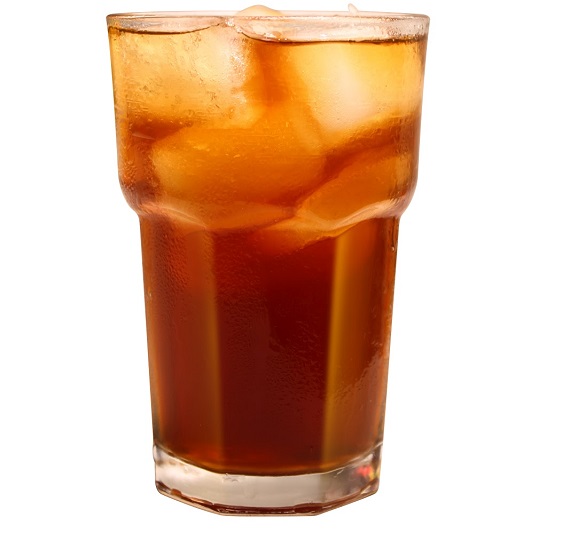
Whether it’s chicken, okra, green tomatoes, or even a Snickers bar at the fair—Southern cooking believes in the power of oil, a skillet, and a prayer. Somebody once actually said to me sarcastically, “If you Southerners could fry sweet tea, you’d do it.” Instead of laughing it off, my immediate thought was, “Hey, I wonder…”
Butter is not a garnish—it’s a food group.
If your biscuit doesn’t shine like a glazed donut, get back in that kitchen and keep trying. By the way, it wasn’t until I was in high school that I learned my mother did not eat biscuits. Although she made the best biscuits I’ve EVER had, she didn’t like them and she didn’t eat them. I was just too busy inhaling them to notice she wasn’t joining in.
Recipes are suggestions. Your ancestors will tell you when it’s right.
Remember the culinary shorthand. When your grandmother says “just a splash” or “just a pinch” or “until it’s done,” that’s code for “either figure it out for yourself, or call the Lord.”
If you don’t have bacon grease in a coffee can by the stove, are you even Southern?
That can is worth more than gold. It’s inheritance. Bacon grease goes in EVERYTHING.
Don’t trust a skinny cook.
Bless their hearts, but if they’re skinny, then they’re not tasting what they’re making.
Never, ever, ever show up anywhere empty-handed, unless you want to be talked about.
Even if it’s just a store-bought potato salad, at least pretend you stirred it in a bowl.
Don’t even think about using Velveeta in a church potluck unless you’re ready for a visit from the church elders.
Trust me, we all know the difference. When the recipe says “Make it pretty,” it means lots and lots of shredded cheese all over the top.
Mac and cheese is not a side dish. It’s a religion.
I always get cracked up when my non-Southern friends are outraged that mac and cheese is one of the choices for a Southern veggie plate. Look, just eat it, and don’t overthink it.
Casseroles are a Romance language.
If we love you, we feed you. If we really love you, we bake something that requires multiple cans of cream-of-something soup.
And finally, the Number One Rule of Southern Cooking:
Your real family history is written on your Grandmother’s recipe cards.
They’re gospel. Don’t you dare mess with gospel, and don’t you dare stir the cornbread. Let the crust form, child. It ain’t pancake batter.
The views expressed at AbbevilleInstitute.org are not necessarily the views of the Abbeville Institute.








But why does it always have to be SWEET tea? I like it straight and strong.
Iced tea is sweet tea. It has sugar in it.
If you want it without, that’s fine; just ask for unsweet tea. Most places have both, but sweet tea is the normal default. Ask for unsweet and you’ll get straight and strong. 🙂
No, I mean every mention of Southern life, every country music song, mentions “Sweet Tea”. It seems obligatory to say, almost a virtue signal, minimum requirement for entry. Never “iced tea”, sometimes “sweet iced tea” but always “Sweet”. “Sweet Tea”.
I like both. Brew and drink my own.
I remember several decades (yes, that’s right) ago when my mother would send me (or my brother) into the yard at suppertime to get some “mint” which grew naturally around the yard. It added a flavor to the tea (which we self-sweetened) and with it sometimes lemon. In my opinion, the best lives have the best memories.
The word sweet in sweet tea is redundant. When I was a child, Mama would always ask me to make the tea. But I wouldn’t have known what she meant if she had said sweet tea. I would have wondered if she had wanted me to put more sugar than I usually did in the tea– and that was right much as it was.
I enjoyed your essay. And the point about soul food’s being the same as good old Southern cooking was excellent.
I love (sweet) tea. I don’t have the physique that I had 15 years ago or longer. I agree with Mrs. Joyce; it’s just tea and you should have to ask for unsweetened tea. Which is what I do these days. However, when it comes to my summertime mint juleps, well, it isn’t unsweetened. Mr. Paul, do you have any fresh mint? With grandparents from New Orleans and the surrounding bayous, we enjoyed a lot of Cajun/Creole cooking. There are a lot of dishes with rice in Louisiana.
It was a refreshing to read about Southern cooking (eating) 🙂
double steeped, super dark…heavy on sweetener. basically national beverage in my household.