

During the past week the federal government announced that two removed Confederate memorials will be returned. The bigger one is Arlington’s “Reconciliation Monument” erected in 1914 and removed in 2023. In 2027 it will be returned on a fifty-year loan from Virginia where it has been stored since 2023.
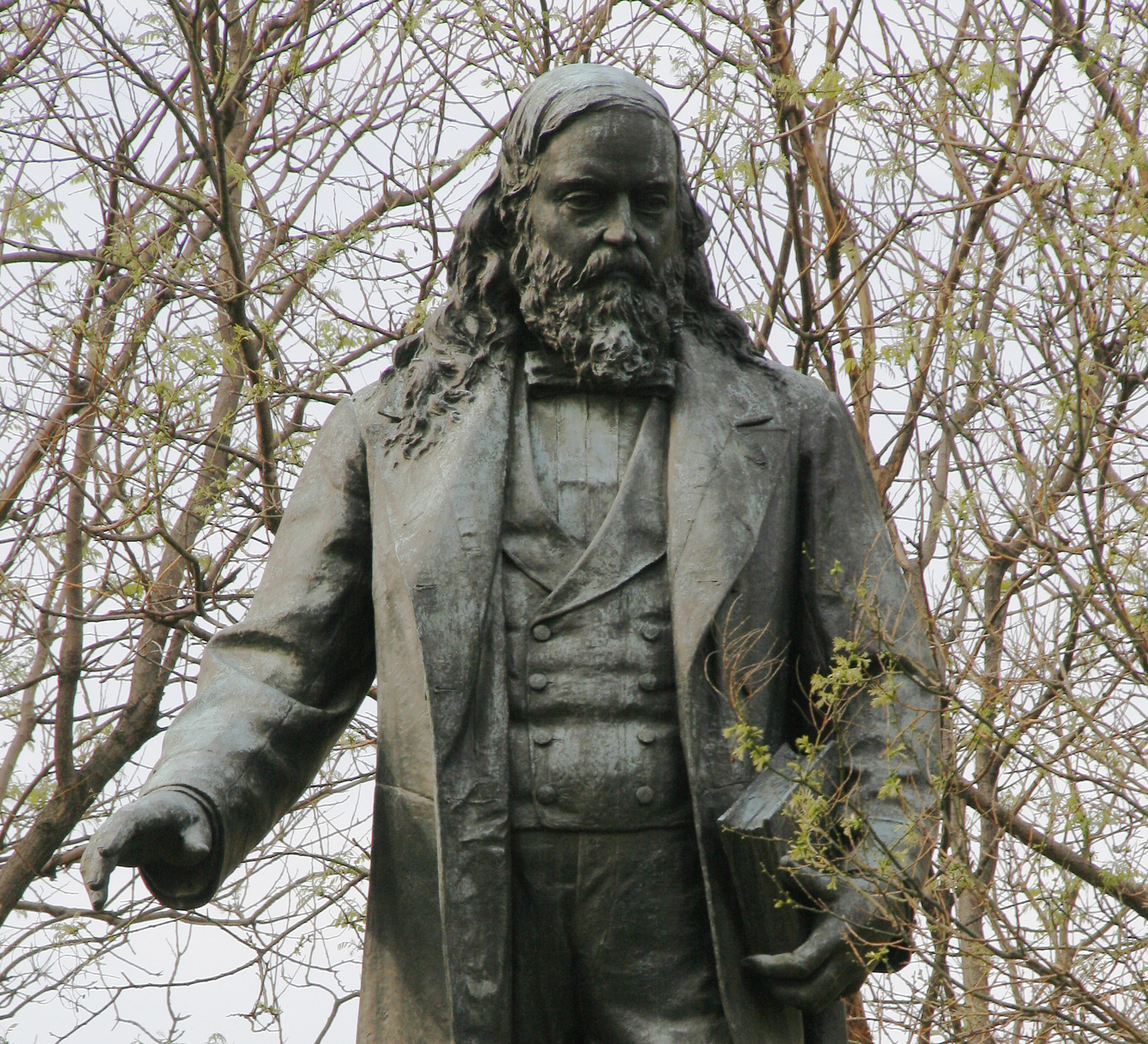
The second one is a statue of Albert Pike erected in 1901. Although he was a Confederate General for about a year, his Freemason brothers were the chief statue advocates. They promised Congress that it would portray him in civilian clothes. Although ebbing in recent years, Masonry had more influence in 1901. Many of America’s founding fathers, including George Washington, Benjamin Franklin, Paul Revere and John Hancock, were members. In fact, every President up to Gerald Ford joined.
Pike’s statue will be restored in October. Presently, statue opponents cite the usual objections concerning his slaveholding and Confederate service. Whether he merits a statue, I cannot say because so much of his activity relates to the secret order of Freemasonry.
In the antebellum era, however, he was the most effective lawyer for the five civilized tribes—Cherokee, Choctaw, Chickasaw, Seminole, and Creek—who were moved from the Southeast to present-day Oklahoma. In 1852 he represented the Creeks in claims against the federal government for appropriating their lands in the Southeast. He soon thereafter started representing the Choctaw and Chickasaws as well. In 1859 he won an award of $3 million for the Choctaw, which is equivalent to $114 million in today’s inflated dollar. Earlier he won judgments for other tribes.
By virtue of his prior work, he persuaded all five tribes to side with the Confederacy. They blamed the federal government for the poor compensation they got for their appropriated lands. Albert Pike was present to help them when nobody else of comparable ability seemed to care.
The views expressed at AbbevilleInstitute.org are not necessarily the views of the Abbeville Institute.





You should have mentioned his “predictions” of the two World Wars… And the one that has not yet come.
I submit that Mr. Pike’s advocacy for compensation of the native tribes forcibly dispossessed by executive promotion and legislative decree is sufficient in itself to justify a statue in his memory.
“…so much of his activity relates to the secret order of Freemasonry.”
Interesting. I don’t know much about the Freemasons. By coincidence, recently a radio station played a piece by Mozart. Before the station played it, they mentioned that three was prominent in the particular composition. I’m supposing that had to do with the time signature. Mozart, I understand, was a devoted Mason, and the radio station said three is an important number in Freemasonry.
I myself, being a proud Freemason of modern time can tell you and the world in general that the precepts of the craft are no more a secret than was in its founding. However, what in presently in the form of the written word anyone who is not a freemason can read for them self. You can see for yourself that the most important aim in freemasonry is simply to make good men better. But getting back to some of the secrecy of freemasonry anything that is stated orally in closed session behind closed doors during lodge such as the various levels of the catechism and the three level of freemasonry cannot be written down or discussed with a non-mason. We will accept anyone regardless of religious convictions all that is required is a belief in God. Bear in mind, Freemasonry in not a religion it is a fraternity of good men with a strong conviction of Morals and a belief in doing good to all men regardless of their affliction with freemasonry or not. Many people do not know just how old this honourable fraternity actuality is? I can tell you it goes back to the time of ancient stone mason guilds of the building of King Solomons Temple that is at least 5,000 years. So, consider this, the fraternity of freemanonery of without question the oldest fraternity that still exist on the planet today and with luck and continued understand it will continue well on int the distant future.
Thank You for taking the time to read my humble coments concerning the craft.