

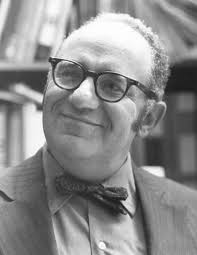
In paying tribute to the “genius, integrity, and courage” of Murray Rothbard, Clyde Wilson observed that “Murray is no longer with us in the flesh, but the fireball of his mind and spirit will be giving us light and energy deep into the 21st century.” This light shines forth from letters recently unearthed in a Pennsylvania warehouse by Daniel J. Flynn, in which Rothbard discussed his support for the antebellum Southern Democrats and expressed opposition to Lincoln’s Republican Party. He wrote that “there were merits in all the positions [of the political parties], except that of the Republican Party.” These comments may seem remarkable to today’s readers, given that the 19th century Republican Party is now regarded by many people – and certainly regarded itself – as having been the “good” party, the party of abolition. From that perspective one might have expected that, as a libertarian supporter of the abolitionist cause, Rothbard would favor the Republican position as being closer to his own views on the evils of slavery. Indeed, many libertarians are great supporters and admirers of Lincoln and it may seem puzzling that Rothbard does not share their admiration. On the contrary, Rothbard emerges clearly as a strong supporter of states’ rights, who saw no merit in the self-righteous excuses given by Republicans for coercion against the Southern States.
To give further context to Rothbard’s defense of the Southern Democrats, the philosophical position he adopted fell within the common ground between libertarians and conservatives which Brion McClanahan wrote about in relation to “the great Southern political philosopher Richard Weaver.” In this philosophical context, Rothbard stood resolutely in defense of liberty and against all forms of federal aggression. In aligning his views on this issue with the Southern Democrat conservatives rather than progressive Republicans, he described the slavery question as “difficult” because, as a libertarian, he believed that slavery violates the right of each man to self-ownership. In his letter, he wrote:
“The slavery question is one I have always found very difficult to cope with … [but] I stand for the right of secession and nullification (the Southern Dem. position).”
It is clear from Rothbard’s other writing, especially in the Ethics of Liberty, that he agreed with the abolitionist William Lloyd Garrison on the urgent need for abolition – but unlike Garrison he was against any form of federal coercion or “coercive abolition by Federal action”. Garrison supported the war once it had started, Britannica noting that “he supported Abraham Lincoln faithfully and in 1863 welcomed the Emancipation Proclamation as the fulfillment of all his hopes.” By contrast, Rothbard consistently rejected the notion that federal aggression is justified if it is wielded with the mantle of a righteous cause, and was entirely against Lincoln’s war. In his view the Republican position, albeit abolitionist, was tainted by its reliance on federal coercion and an unnecessary and unjust war that he described in his “Just War” lecture as “the very opposite of honorable” and as a “monstrous” and “heretical” attempt to “make a god out of the Union”. His uncompromising opposition to Lincoln’s war is clear from these very early letters, where he wrote that he would at all times have been against slavery but would also have been against federal coercion:
“If I were a citizen of a slave state,” he told Meyer, “I would have been in favor of state abolition of slavery, but not Federal. If I were a citizen of a territory, I would have favored that territory go in without slavery in its boundaries. If I were a Northern state, I would have favored civil disobedience against fugitive slave laws, but no coercive abolition by Federal action. I would have probably been a William Lloyd Garrison abolitionist, i.e. secession by the free states from the slave states. As you see, I think there were merits in all the positions, except that of the Republican Party.”
Rothbard was scathing in his critique of the various “righteous causes” of the Yankees, and he did not see abolition as a reason for the federal government to wage war on the states. In this, he reflected the view of the libertarian abolitionist Lysander Spooner. Hence, he stood firmly and resolutely with the right of the South to secede, a theme he picked up elsewhere in his robust defense of the War for Southern Independence as a just war of defense by the Confederate armies. Michael Martin describes some of the reasons why Rothbard also supported the Southern Democrats of later years, known popularly as the Dixiecrats:
Perhaps the best way to interpret Strom and the Dixiecrats for their real principles would be through examining the many prominent supporters they had. Murray Rothbard, the founder of modern libertarianism, is a prime example. Rothbard was a Jewish New Yorker and described himself as a “staunch supporter of the Thurmond movement” and said that, as an economist, he enthusiastically supported the Dixiecrat proposals on national debt and taxes. He also said that their platform was one of the best in American history and one of the finest political statements in America since Calhoun’s exposition.
Rothbard’s antipathy to federal coercion was also shaped by his deep understanding of history and his determination to look past the political spin and government propaganda to understand what was really going on at the time. In his letters to Meyer he writes that “Although an economist, when I move over to history my first love is not economic history but political history”. Rothbard’s love of history is also remarked on by Clyde Wilson, who comments that Rothbard
“deeply understood the religious dimension of the American character, and he deeply understood, and identified with, the rebellious populist streak that makes for what in the national character is truly and distinctly American. It was this, above all else, that deeply offended establishmentarians: the irreverent refusal to accept their elevated self-image at face value.
Indeed, this theme emerges from Rothbard’s “Just War” lecture, where he argued that
“Whereas the Democratic Party in the 19th century was known as the ‘party of personal liberty,’ of states’ rights, of minimal government, of free markets and free trade, the Republican Party was known as the ‘party of great moral ideas,’ which amounted to the stamping-out of sin … This fanatical spirit of Northern aggression for an allegedly redeeming cause is summed up in the pseudo-Biblical and truly blasphemous verses of that quintessential Yankee Julia Ward Howe, in her so-called ‘Battle Hymn of the Republic.’”
Understood from this broader perspective, it becomes clear that there is no conflict between Rothbard’s opposition to slavery and his support for Southern Democrats. Like Spooner, he favored a peaceful end to slavery and saw no reason why that could not have been accomplished. He blamed the warmongering “Puritan millennialists” for the fact that peaceful transition to abolition was not achieved. He observed:
“It should be mentioned that the southern United States was the only place in the 19th century where slavery was abolished by fire and by “terrible swift sword.” In every other part of the New World, slavery was peacefully bought out by agreement with the slaveholders. But in these other countries, in the West Indies or Brazil, for example, there were no Puritan millennialists to do their bloody work, armed with gun in one hand and hymn book in the other.”
The views expressed at AbbevilleInstitute.org are not necessarily those of the Abbeville Institute.






Excellent.
Excellent work, Dr. Wanjiru Njoya.
Slavery needs no defense. It is a way to settle debts. When the debts are great, there is no other alternative.
Sub-Saharan Africans lost wars to each other and all losers put to the sword; to be slaughtered is worse than slavery.
SSA kings established exchange rates for those who would have ordinarily been put to death. European kings needed laborers to work their new continents. “Native Americans” needed regular vaxxine schedules to prevent near extinction upon re-establishment of interaction with Old World vectors of disease.
Slavery was never denied under international law, prior to 1981 when Mauritania became the last nation to abolish it.
So secession was not a means to continue slavery; but on the contrary was simply slavery ENDING itself in the American states naturally, by disqualifying those seceding states from fugitive slave extradition from Union land; which in turn ensured economic destruction of slavery, particularly on the border states, as the Underground Railroad only needed to reach the nearest confederate border. And hence slavery could no longer economically sustain itself, against the increased costs of security and escape, and the loss of the South’s population therefrom– as well as increased tariffs on trade with the Union.
Nobody talks about this, because it’s forbidden to mention the politically-incorrect elephant in the room.
I will say that Murray Rothbard did miss the forest for the trees, in his following statement from the epic work “Wall Street, Banks, and American Foreign Policy:”
“The first major investment banking house in the United States was a creature of government privilege. Jay Cooke, an Ohio-born business promoter living in Philadelphia, and his brother Henry, editor of the leading Republican newspaper in Ohio, were close friends of Ohio U.S. Senator Salmon P. Chase. When the new Lincoln administration took over in 1861, the Cookes lobbied hard to secure Chase the appointment of Secretary of the Treasury. That lobbying, plus the then-enormous sum of $100,000 that Jay Cooke poured into Chase’s political coffers, induced Chase to return the favor by granting Cooke, newly set up as an investment banker, an enormously lucrative monopoly in underwriting the entire federal debt.”
Note here that Rothbard misses the entire plot, of the Lincoln Administration taking over in 1861, thereby covertly conquering 34 sovereign nations under an illegal empire; next to which Cooke&Chase were mere relatively-minor looters in an epic coup d’etat.
Accordingly, while he supported the South’s actions during the Lincoln Administration, Rothbard missed the big picture regarding state sovereignty, instead focusing on the details– on which he was unparalleled, but still missed the elephant in the room… but likewise he will be missed.