

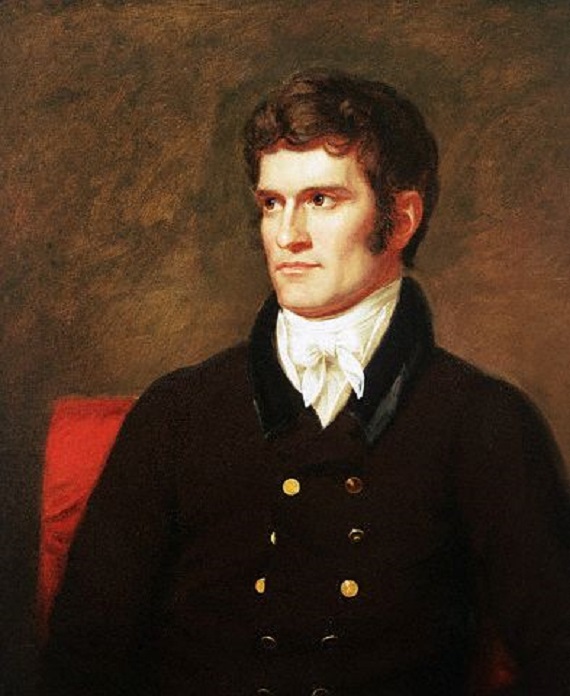
In February 1837 the Senate took up abolition petitions. Senator William C. Rives of Virginia called slavery a misfortune and an evil in all circumstances, though perhaps the lesser evil in some places. He wanted it both ways. Whine about it but do nothing. Just keep everyone calm and get along. No plan. No action. Pure hedging to preserve the Union while sounding moral.
John C. Calhoun saw right through it. He rejected the evil label outright. He said slavery as it existed in the South was a positive good for both races right here and now. As he put it “I hold it to be a good as it has thus far proved itself to be to both and will continue to prove so if not disturbed by the fell spirit of abolition.” He made it clear he was not claiming it good everywhere. Just that it worked in the Southern reality under current conditions. Then he challenged Rives and the others. If it is so evil, exert yourselves to put it down.
No one did. Rives had nothing. Webster and others fell back on constitutional limits. The federal government had no power to touch slavery in the states. That was tacit agreement. Calhoun was right. The compact left them powerless. They all shrugged and moved on.
One does not get the full context by only reading Calhoun’s speech. The live debate record shows Rives’ both ways performance right before and Webster’s constitutional shrug right after. To get the full picture you must go to two places in the record. One for the speech and another for the surrounding debate.
Another reason people miss this context is because critics want the isolated positive good line to paint Calhoun as some wild radical inventing new defenses of slavery. They skip the environment of the full debate. They ignore how Rives acted weak and how the others essentially admitted the Constitution blocked any easy fix. Calhoun went beyond mere defense of the compact. He forced them to put up or shut up. End it if it is evil or agree it is good in Southern circumstances. They agreed it was good by their silence.
Republicans and Democrats benefit from slandering Calhoun by ignoring context and applying presentism. Diminishing Calhoun makes his compact theory, nullification views, and concurrent majority look like outdated extremism or racism. Once you dismiss him, it becomes easier to treat the Constitution as simple national majority rule instead of a compact between sovereign states.
Sources:
U.S. Congress. Appendix to the Congressional Globe. 24th Cong., 2d sess. (February 1837). “Abolition Petitions—Mr. Rives—Calhoun,” 153. Washington, DC: Blair & Rives, 1837.
Calhoun, John C. “Speech on the Reception of Abolition Petitions,” February 6, 1837. In Speeches of John C. Calhoun, 222–26. New York: Harper & Brothers, 1843.
The views expressed at AbbevilleInstitute.org are not necessarily those of the Abbeville Institute.





Who would sign up to be a slave! Nobody! For the matter of that, who would agree to being a slave owner? Too much responsibility, for one thing, if one is committed to being the kind of master the Bible requires, the modern sensibility running counter to the Biblical teaching notwithstanding.
All of that said, something I believe Dr. Wilson wrote some years ago continues to ring in my ear: The North had a theory; the South had a condition. While I’m certain there was likely more that some Southerners could have done to ready the slave for freedom, given that sin and selfishness haunts EVERY human institution, still, a gradual emancipation over time, as Lee and so many others advocated, would undoubtedly have been the best and least damaging policy. Until such time, what Senator Calhoun advocated for – IN CONTEXT – was the best course.
But of course, we’ll never know, because Mr. Lincoln’s war of “emancipation,” producing deaths reaching the million mark, I believe (That’s according to one estimate I’ve seen tallying the deaths of former slaves due to starvation after the war) put an end to all of that. Our more enlightened betters in the mainstream and academia have told us so!
Booker T. Washington said in the first chapter of UP FROM SLAVERY, “the blacks who went through the US slave system are the most fortunate blacks on the planet”.
I never apologize for slavery. To do so is to participate in a ridiculous scam promoted by the same class of morons who have always plagued mankind; those who want something for nothing.
White Southern Males ended the reign of kings on planet Earth. We refused to stop fighting the English king and destroyed his armies in the last two years of the American Revolution at Kings Mountain, Cowpens and Yorktown. We had zero to do with English kings and African kings bartering blacks for rum. We did not build slave ships nor finance the slave trade. We did fight the damn yankees to keep the Republic they said we had…but the Ironclad Oath demonstrated their true colors when it demanded all military swear to defend the CONSTITUTION instead of the STATES.
Today, even the consummate yankee, DJT, has had enough of an oppressive federal government. At least, I hope he has.
Here’s to the celebration of “juneteenth”…the holiday which reminds us THERE WERE ZERO SLAVE UPRISINGS DURING THE WAR BETWEEN THE STATES WHEN MILLIONS OF YANKEES INVADED, SUFFERING HUNDREDS OF THOUSANDS OF CASUALTIES AND WERE FURIOUS NONE OF THE SLAVES THEY ATTEMPTED TO ARM WOULD RISE UP AGAINST THEIR MASTERS.
Slaves loved their masters…which is another reason I NEVER APOLOGIZE FOR SLAVERY.
Any reparations owed are owed the descendants of legal owners of slaves be the owners Caucasian, Negro or Asian. We had our property stolen by a federal government who bought the slaves of yankee congressmen for 300 bucks per head in April 1862. That was a forced sale…but it’s a start in our negotiations, adjusted for inflation, of course.
We live in a wonderful era…the controllers of the narrative sold us their monopoly on history for a few eyeball “likes”. They gave us a world-wide printing press for a bowl of soup. Their greed was their undoing. Evil destroys itself. Always has, always will.
There is too much Presentism laced within this essay. Slavery had been normal and throughout the globe for thousands of years, until roughly the time of the hierarchy-destroying American Revolution encouraged people to think about its wrongness. Why be so judgmental towards the transitional couple of generations? The dismissiveness towards Rives seems entirely subjective and unsupported.
I “whine” about all the evil our government does. Middle Eastern wars for Israel creating miserable failed states like Libya, Syria, Iraq, and Afghanistan…resulting in on the order of a million civilian deaths! Conscripting (enslaving) young Americans and making them kill Vietnamese who never hurt an American. Defrauding Americans of the value of the $s in their bank accounts by the Fed monetizing Federal government debt. Alas, none of this is within my circumference of influence, not being a member of the Epstein class. So I “whine and move on”.
When challenged about Senator Calhoun’s alleged role as the quad essential ‘Devil’ in antebellum American politics, I like to start by quoting from Mr. Traywick’s book, Empire of the Owls.
First,
From “The Slave-Trade in New York”, in the Continental Monthly, January 1862:
The number of persons engaged in the slave-trade, and the amount of capital embarked in it, exceed our powers of calculation. The city of New York has been until of late the principal port of the world for this infamous commerce; although the cities of Portland and Boston are only second to her in that distinction….
Then I cite this poem,
William J. Grayson, from The Hireling and the
Slave.
They drag the Negro from his native shore, Make him a slave, and then his fate deplore;
Sell him in distant countries, and when sold, Revile the buyers, but retain the gold:
Dextrous to win, in time, by various ways, Substantial profit and alluring praise, By turns they grow rapacious and humane, And seize alike the honor and the gain:
Had Joseph’s brethren known this modern art, And played with skill the philanthropic part, How had bold Judah raved in freedom’s cause, How Levi cursed the foul Egyptian laws,
And Issachar, in speech or long report,
Brayed at the masters found in Pharaoh’s court, And taught the king himself the sin to hold Enslaved the brother they had lately sold, Proving that sins of traffic never lie
On knaves who sell, but on the dupes that buy.
Such now the maxims of the purer school Of ethic lore, where sons of slavers rule;
No more allowed the Negro to enslave, They damn the master, and for freedom rave, Strange modes of morals and of faith unfold, Make newer gospels supersede the old, Prove that ungodly Paul connived at sin, And holier rites, like Mormon’s priest, begin;
There, chief and teacher, Gerrit Smith appears, There Tappan mourns, like Niobe, all tears, Carnage and fire mad Garrison invokes, And Hale, with better temper, smirks and jokes;
There Giddings, with the Negro mania bit, Mouths, and mistakes his ribaldry for wit….
There supple Sumner, with the Negro cause, Plays the sly game for office and applause;
What boots it if the Negro sink or swim?
He wins the Senate – ’tis enough for him.
What though he blast the fortunes of the state With fierce dissension and enduring hate?
He makes his speech, his rhetoric displays,
Trims the neat trope, and points the sparkling phrase With well-turned period, fosters civil strife, And barters for a phrase a nation’s life…
Bringing these concepts to the attention of victims of state sponsored indoctrination camps has an unsettling effect and generally results in churlish behaviors if not outright violence. Cornered animals tend to be dangerous ones.
Senator Calhoun had a clear understanding of human nature and antebellum politics. His Disquisition on Government should be included in every high school civics, government and history class. The fact that the American so-called education system precludes the study of Calhoun’s writings is revealing. His ideas concerning the use of power and the warnings against majoritarianism articulated in his concept of concurrent majorities are too dangerous to the Linconian empire we endure now.
The issues that were not resolved in the late War to prevent Southern Independence are now rising from the ruins of our country’s past and causing the question to be asked, ‘ why should we remain in a union that we would not join today?’
The South needs to leave.
Deo Vindice
I like Rives, very much. And thanks to Abbeville and Calhoun’s disquisition like Calhoun the same. Rives had family in New England. He was a National guy but he could see war coming, and he could see our families histories being revised and demolished and worked tirelessly to preserve the historical record.
He lived next door. His wife my ancestral first cousin. His granddaughter a God daughter of Robert E. Lee. He tried to lead a peace commission to Washington, a committee I can find nothing about, save that it was summarily dismissed.
For some reason the Page’s next door, my family, inherited all Dr. Thomas Walkers letters and household item about the same time he married in with us. Of which I possess Dr. Walkers’ key furniture. A small miracle.
Rives went on to be a Confederate Senator. A guy he owned, black man by the name of Colin Byrd asked to be buried before the Walker Graves at Castle Hill, and in prominent relief his stone reading “Y’all done good, and faithful servant” in 1888.
We did good, slavers and enslaved so similar we had become over time and in the most crucial aspect of context as well a character.