The first man to command a large, organized group of black troops during the Civil War did so for the South. No doubt many are unaware of this fact, given the dismissive treatment often given by modern historians to the Regiment of Native Guards, a volunteer home guard unit that existed in New Orleans from May 1861 to April 1862. The Governor of Louisiana, Thomas O. Moore, accepted these men into service and awarded a Colonel’s commission to a man from New Orleans named Felix Labatut. There were other, smaller companies of black and Creole soldiers in Louisiana, but the Native Guard was over 1,000 men. It was the only regiment of its size and racial composition in the Confederate States, making Labatut’s command unique. Labatut led an interesting life and deserves to be better known than he is.
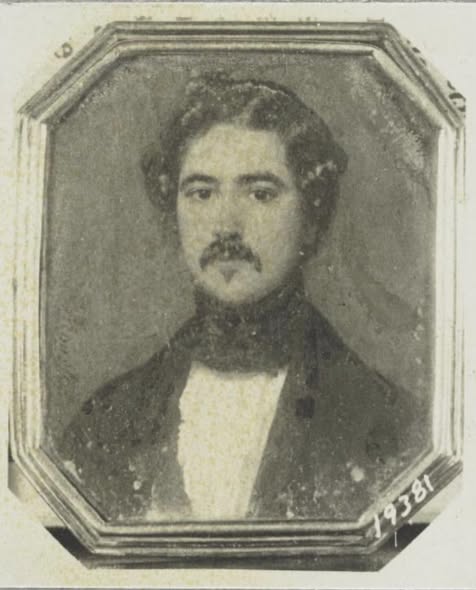
Felix Labatut was born in 1805. He was the son of Jean Baptiste Labatut, an immigrant from France who had been a brigadier general and aide to Andrew Jackson during the War of 1812. Not much is available about the upbringing and education of Felix, but like his father, he became involved in public life at a relatively early age. He was a City Alderman of the second ward in New Orleans at the age of twenty-four[1], during the deadly 1832 Cholera outbreak in the city which claimed 6000 lives out of the 42,000 that lived in New Orleans at the time[2]. He was a prominent enough citizen of New Orleans that his arrival with his wife on the train in 1839 merited mention in the New Orleans True American.[3] He had his and his wife’s portrait painted in Paris that same year by Joseph-Désiré Court, so Labatut was wealthy enough to afford travel to Europe on multiple occasions and pay for work by a prominent French artist.
In 1843, a year that was not kind to the Whig party, Labatut was elected to the legislature as a member of that party by a small 32 vote margin[4], but he resigned before the end of the year and was said to be residing in Paris[5]. No reason was given in contemporary news accounts for his early resignation. Despite his abbreviated career in the Louisiana legislature, Labatut was not finished with politics or with the Whigs. He participated in their Presidential nominating convention in 1848 where he was nominated as a delegate. Zachary Taylor would win the nomination of that convention and ultimately the Presidency.
Labatut spoke at a public meeting commemorating John C. Calhoun after Calhoun’s death in 1850, where the papers placed him among the “distinguished citizens” who gave remarks. In 1852 he would again participate in the Whig National Convention alongside Judah Benjamin. By 1856 Labatut had become much more involved in Southern politics in general, as noted in a proclamation by New Orleans Mayor Charles M. Waterman, who appointed Felix Labatut as a delegate to represent New Orleans in a “Southern Convention” in Savannah Georgia. Labatut continued his work on behalf of New Orleans itself as a member of the Benevolent Association of the Sons of Louisiana, a newly formed mutual aid society that provided support such as financial aid to members in need, burial services, social gatherings, and mutual assistance during illness, death, or other hardships. He was Grand Marshal of a parade to promote and celebrate the group in 1858 on the second anniversary of its creation.[6] And by the time secession was on the horizon, with the Whig party no longer a factor, Labatut was firmly part of the Southern Rights ticket.
All of this paints a picture of a man who spent much of his early adult life in public service which favored his city of New Orleans over the State of Louisiana or national politics, though as time went on he became more involved on a national level with the Whigs and then with the whole South as the country became more divided during the decade of the 1850s. When the decision point came over leaving the Union, Felix Labatut was one of the signers of Louisiana’s secession declaration, so he emphatically chose his side.
Why was he chosen to command the Native Guard? He had no military background, so it was likely a political appointment by the Governor. Labatut was a respected and prominent New Orleans citizen, and a signer of Louisiana’s secession ordinance, making him a prime candidate for some wartime post. In the absence of contemporary records explaining the Governor’s choice it is hard to do much more than speculate, but whatever the reason Labatut was given the job, his selection was approved by many. The New Orleans Delta called him “an old, esteemed, and wealthy citizen”[7] His name appears on military notices to his command, issuing orders. The Native Guard was not sent out into the field to fight, so while in command Labatut was able to continue to be involved with philanthropic work on the home front where he helped organize a lottery to obtain Christmas gifts for Louisiana volunteers and their families.[8] His name appeared on the Confederate Ticket for State Senator in October 1861.[9] Labatut’s command of the Native Guard might be seen as another in a long line of acts of public service to the City of New Orleans.
There is little indication of what his men thought of him, as a white man commanding black and Creole volunteer militia. The few comments we have are positive. A man who only identified himself as “An ex-Native Guard”, writing to the L’Union newspaper in late 1862 referred to Labatut as a “brave and worthy Colonel”. Captain H. Louis Rey, who had joined the USCT by the time he made his comments in December 1862, referred to Felix Labatut as “our worthy ex-Colonel”, who had been “blinded and deceived by ambitious men.”[10] Both of these men had served under him and both thought highly of him personally, judging by these remarks.
The disbanding of the Native Guard seems to have ended Labatut’s military career. He remained in New Orleans, where he was unanimously nominated as the Republican candidate for mayor in 1874[11] during Reconstruction, though he lost the election soundly to Democrat Charles Leeds. His exact date of death and cause has been hard to pin down, though 1889 is a possible year. He had been active and visible in his youth and middle-age, but perhaps he retired and faded from public view in later life. That’s just speculation of course.
Felix Labatut was the son of an immigrant who spent much of his life in public service to the City of New Orleans in numerous ways, and who seems to have been a man of character as attested to by contemporary accounts. His signature of the Louisiana secession ordinance and his command of the first large body of black troops during the Civil War are historical points of interest that make him stand out from many of his contemporaries.
The views expressed at AbbevilleInstitute.org are not necessarily those of the Abbeville Institute.
************************************************************
[1] Daily National Intelligencer (Washington City, DC), November 27, 1832
[2] “History of New Orleans” by John Kendall p 132
[3] True American (New Orleans La.), August 1, 1839, (Morning)
[4] Richmond Daily Whig (Richmond, Va.), July 12, 1843
[5] Baton-Rouge Gazette (Baton-Rouge, La.), December 16, 1843
[6] New Orleans Daily Crescent (New Orleans, La.), November 13, 1858, (Morning)
[7] The Daily Exchange. (Baltimore, Md.) 1858-1861, May 7, 1861
[8] New Orleans Daily Crescent (New Orleans, La.), December 25, 1861, (Morning)
[9] New Orleans Daily Crescent (New Orleans, La.), October 25, 1861, (Morning)
[10] New York Times, November 5, 1862
[11] The New Orleans Bulletin (New Orleans La.), October 15, 1874

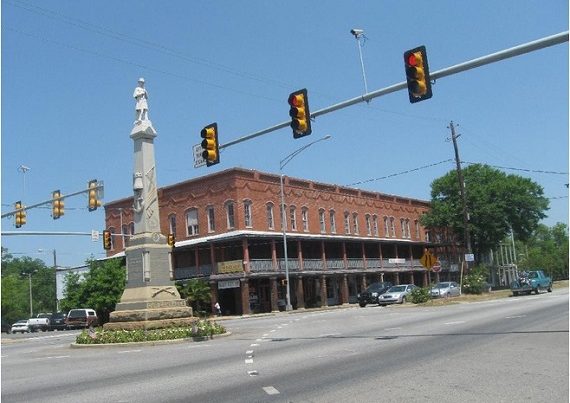



Department of the Gulf, General Order 63…the Louisiana Confederate Native Guard, formerly Confederate volunteer militia, is conscripted by the fedgov…and sent to die at Port Gibson.