

Every folk song collector runs into the same problem the moment the recording machine actually starts turning: the song they are capturing has never had one fixed shape, and the machine is about to give it one anyway. A ballad sung on a porch in Kentucky on a Tuesday might run six verses. Sung again on Thursday by the same person, in a different mood, with different company listening, it might run four, or eight, or end somewhere else entirely. Is that a flaw? On the contrary, that instability is the entire point of an oral tradition. A song that gets passed mouth to mouth, generation to generation, survives precisely because nobody owns the only correct version of it. It is a carried song, reshaped a little by everyone who carries it.
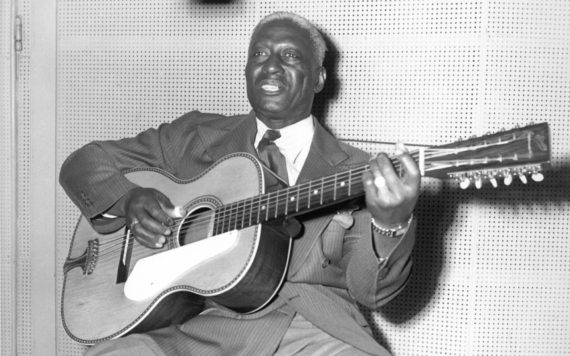
Mississippi native John Lomax and his son, Alan, spent decades trying to capture exactly that kind of music for the Library of Congress, hauling recording equipment that weighed hundreds of pounds into prison farms, mountain hollows, and front porches across the South. The case for what they accomplished is not complicated. Without their recordings, an enormous amount of Southern song would simply not exist anywhere. Huddie Ledbetter’s “Goodnight, Irene” and “Midnight Special” survive because a Library of Congress disc cutter happened to be running at the Louisiana State Penitentiary in 1933. Countless other songs, sung by people who never recorded anywhere else and were never asked to, exist today only because the Lomaxes showed up with a machine on the right afternoon. Oral tradition is resilient, but it is not invincible, and plenty of it has simply died with the people who carried it. The Lomaxes got there in time for a remarkable amount of material that would otherwise be gone. For that alone, we owe them an incalculable debt for their part in rescuing and preserving endangered Southern culture.
The trouble starts with what a recording machine cannot help but do once it is switched on. It cannot capture a tradition. It cannot capture a culture. It can only capture a performance — one specific rendition, by one specific singer, on one specific day. A carried song has no single text to photograph, so the machine photographs whichever version happens to be standing in front of it, and that accident of timing becomes, almost immediately, THE version. The recording doesn’t just preserve the song. It freezes one instance of it and, often without anyone quite intending this, promotes that instance to the rank of “the original.”
“House of the Rising Sun” is the cleanest example of how this actually happens. In the Fall of 1937, Alan Lomax spent a month recording in the mountains around Middlesboro, Kentucky, and came away with three different versions of essentially the same ballad called “Rising Sun Blues.” One version was from a sixteen-year-old girl named Georgia Turner, one from a singer named Dawson Henson, and one from a guitarist named Bert Martin.
All three versions were drawing on the same floating folk material, and none of them was more authentic than the others. When Lomax published “Rising Sun Blues” four years later in his songbook Our Singing Country, he chose Turner’s performance as the version, credited her as the source, and then spliced in additional verses from Martin’s recording to round it out into something he considered complete. That edited composite — one folklorist’s judgment call about which fragments belonged together — is the version that reached the Almanac Singers, the Greenwich Village folk scene, Joan Baez, Nina Simone, Dave Van Ronk, Bob Dylan, and Doc Watson.
Ultimately, The Animals 1964 recording made it one of the most famous songs in the English-speaking world. By that point, it had been renamed “House of the Rising Sun,” and almost everyone who has ever heard it has heard, at root, a single editorial decision made in 1941 about how to stitch two different singers’ versions of a song together. The actual folk tradition behind it, the dozens of other variants sung in dozens of other hollows that nobody happened to record that week, simply lost the race.
Even when only one singer is involved, the same flattening happens. The Lomaxes recorded Huddie Ledbetter, the Louisiana songster known as Lead Belly, performing an original song of his called “Irene” three separate times across three different years — in 1933, 1934, and 1935 — and the song is a different length every time. The earliest take, recorded at the Louisiana State Penitentiary at Angola, runs two verses and two choruses. By the time of the last one it has grown to six verses and six refrains, including an extended spoken passage. Ledbetter himself never sang it the same way twice, which means there was never a single correct “Irene” even from its own author, only a series of performances that happened to get caught on disc at different points in its evolution. And yet the version that eventually got published, copyrighted, and credited as “Goodnight, Irene” had to be one specific text, fixed on the page, with a fixed set of verses in a fixed order. One of the greatest ironies in music is that the act of publishing a folk song requires it to stop being a folk song the moment it goes to print. A living, mutating thing becomes a static one, because static is the only form a copyright office, a lawyer, or a sheet music printer knows how to process.
Ledbetter’s case also shows what happens after the freezing. In January 1935 he signed a management contract with John Lomax that divided performance fees and assigned certain copyrights jointly between them. When “Goodnight, Irene” was eventually published, the credit line stated words and music by Huddie Ledbetter and John A. Lomax. Lomax had not written a single line of it. He had located it, recorded it, and — under a claim fairly common among folklorists of the period — taken a co-author’s share of whatever it earned, on the reasoning that discovery and arrangement deserved compensation alongside composition. Ledbetter died in December 1949. Seven months later, a folk quartet called the Weavers released their own recording of “Goodnight, Irene,” and it became the best-selling single in the country, the number-one song of 1950. Every copy sold credited Ledbetter and Lomax as co-authors, and royalties on that song, and on others Lomax had simply located rather than written, kept flowing under that same credit line for decades afterward. This is the abstract problem made completely literal: a carried song, the kind that belongs to no one because everyone who ever sang it added something to it, got fixed onto a disc, reduced to a single text, and handed an owner who had never written a word of it.
The pattern recurs almost exactly twenty years later, and the Lomax name turns up again. Frank Proffitt, a North Carolina farmer and instrument maker, had learned a murder ballad called “Tom Dooley” from his aunt, who had known the real-life people the song was actually about, and he passed it along to the collector Frank Warner in the late 1930s. Alan Lomax included it in his 1947 songbook Folk Song U.S.A., crediting Warner. For the record, Proffitt never claimed to have written it. But when the Kingston Trio turned the song into a number-one hit in 1958, the record label read simply “Traditional, arranged by Dave Guard” — no credit to Warner, no credit to Lomax, and certainly none to Proffitt. Dave Guard was one of the three founding members of the Kingston Trio, and he had lifted the text almost verbatim from the Lomax book without acknowledgment of any kind. He simply claimed the arrangement as his own under the catch-all shelter of “Traditional.” Proffitt found out his own song had become a national hit only by hearing it on television. It took a lawsuit, not an acknowledgment, to get him any share of the money, and the case was eventually settled out of court with the royalties split among Proffitt, Warner, and the Lomax family, none of whom had written a single note of the song.
However, British musicologist Cecil Sharp showed that this kind of flattening doesn’t always take the same shape. Collecting Appalachian ballads with Maud Karpeles between 1916 and 1918, Sharp did not pick a single authoritative text the way the Lomaxes later did with “House of the Rising Sun.” Working in the comparative tradition of ballad scholar Francis Child, he found ten different singers performing ten different versions of “Barbara Allen” across Georgia, North Carolina, Tennessee, Kentucky, and Virginia, and he wrote all ten of them down side by side rather than declaring one of them correct. On the level of the individual song, Sharp actually preserved the kind of variation a carried song depends on. But his flattening happened a step earlier, in deciding what counted as worth collecting in the first place. He was hunting specifically for what he believed were archaic English and Scottish survivals, so he set aside instrumental playing, harmonized singing, parlor songs, and anything that struck him as too modern or too mixed with outside influence, regardless of how alive those traditions actually were in the same hollows he was working. He never fixed the text of any one song into a single correct version. He fixed something larger: a single idea of what Appalachian folk music was allowed to be, and whatever didn’t fit that idea simply never got written down at all.
What kept that multiplicity alive in practice, though, was not only Sharp’s method but where the song lived afterward. Sharp’s variants stayed inside folk festivals, scholarly songbooks, and revivalist repertoires, circles that train performers to treat a ballad’s many versions as a feature rather than a problem, with no mechanism that forces one performance to eclipse the rest. As previously noted, “House of the Rising Sun” took a different road entirely. Commercial radio and the singles chart are built to produce exactly one winner, and once a song becomes a hit, the hit recording and the song itself collapse into the same thing in most listeners’ minds. The two collectors set the starting conditions, but it was the very different worlds each song passed through afterward — one built to preserve variation, one built to crown a single version — that decided which one would keep its multiplicity and which one wouldn’t.
Once a version wins out commercially, somebody usually ends up owning it outright. When the Animals’ 1964 version of “House of the Rising Sun” became a transatlantic number one, the songwriting credit on the record read simply “Traditional, arranged by Alan Price,” and Price alone collected the royalties on a song that had belonged, by rights, to no one in particular. The band decided that all five band members’ names would not fit on the record label, so they used the name of keyboardist Alan Price as a kind of placeholder (since “Alan” comes first, alphabetically), with the idea that the royalties would be split evenly five ways. However, when Alan Price left The Animals the next year, he kept all the royalties to “House of the Rising Sun,” as he genuinely considered himself the sole arranger and was entitled to the full credit outright — a rift with the rest of the band that never fully closed.
Ironically, the first artist to record the song with the title “House of the Rising Sun” instead of “Rising Sun Blues” was none other than Huddie Ledbetter—Lead Belly—in 1948.
A carried song belongs to whoever is singing it at the moment, which in practice means it belongs to everyone and no one at once, and that is where preservation quietly turns into ownership. A recorded, published, copyrighted song belongs to whoever’s name is on the credit line, which in practice means it belongs to someone very particular indeed, regardless of how many other people contributed to the version that came before it. The Lomaxes did not invent this problem — commercial sheet music and the phonograph industry were already pulling folk material toward fixed, ownable texts before either of them ever picked up a recording machine — but their work accelerated it considerably, simply because they were so good at finding material nobody else had captured yet. Every successful field recording created a new candidate for THE version of something that had never had one before.
None of this is an argument against what the Lomaxes did. An archive that exists is better than a tradition that vanishes, and most of what they recorded would have vanished without them. But it is worth holding both halves of this at once: the recordings rescued an extraordinary amount of Southern music from disappearing entirely, and in the same motion they quietly replaced something fluid and communal with something fixed and ownable. A song that used to answer back, that used to grow or shrink depending on who was singing it and who was listening, got pinned to a page and handed a single author. The South’s musical tradition has always worked the way a porch conversation works — something is said, something is answered, the shape of it changes depending on who is there — and the recording machine, for all the good it did, could only ever capture one side of that conversation at a time and call it the whole thing.
The views expressed at AbbevilleInstitute.org are not necessarily those of the Abbeville Institute.







Truly fascinating. Thank you for putting this together. I had always thought that “Goodnight Irene” was an Irish ballad (probably because an Irish friend of my dad’s used to sing it, with a brogue, when he had a little bit o’ the drink, as they say).
That’s pretty funny! But the more I think about it, the more I’d bet that Lead Belly was influenced by the Ulster Irish, too. Cultural transfer works both ways.
A movie from 2000 called “Songcatcher” staring janet McTeer a fictionalized music professor from 1907 at a New England University who studies the folk ballads of Great Britain and ireland that are becoming lost to time.
She is passed over for a full professorship and goes to visit her sister who is a teacher at a school in the “wilds” of the “uncivilized” North Carolina mountains. While there she hears the mountain people singing their own versions of the “lost”songs that came from Great Britain and ireland very much alive in culture of Appalachia.
Thoroughly enjoyable movie to me. It had the wonderful music a good story. And it showed rhe typical New England haughtiness and how the professor came to see the “uncivilized ans simple mountain people had a rich culture and heritage that should be appreciated.
Unlike many other narratives which very often depict Southerners( hillbillies, rednecks etc) as uneducated dolts who have no complex thoughts . All to often on screen we are presented caricatures highlighting the worst aspects of humanity. This movie showed them as flawed real people with depth ( some were likeable. Others were not)
But anyhow “Barbara Allen” carries story along. The movie opens with the professor playinf piano ans singing a “high class” almost choral style of the song. In rhe kovie a character played by Emmy Rossum of “Phantom of rhe opera” movie ans “Shameless” showtime series fame sings an a capella very Appalachian version of rhe song and the movie final.credirs are accompanied by an Emmylou Harris recording of a modern Nashville country style of Barbara Allen . That shows the multiple versions. And i can appreciate each one of them. .
I remembered my Granny singing that song ans my ex wide remember her grandmother singing barabar Allen. My ex-wife’s grandparents came from near Jamestown, KY in Appalachia while my Granny – born in 1921- was 3rd or 4th generation Floridian from Citra near Gainesville and Ocala. But as far as i can tell our grandmothers sang in a similar style on from the mountains of Kentucky and yhe other from the swamps and orange groves of Florida.
This essay reminded me so much sbout the movie. Apparently the story was loosely based upon a real person whose name escapes me.
The soundtrack is worth buying. I played that CD alot
Somehow, I missed “Songcatcher” completely until about a year ago, when I was searching for different versions of “O Death.” You are absolutely right that it is a fantastic film with excellent cultural credibility.
My mama was a Taylor…shown here with Robert E. Lee…my daddy was shot down on Bourbon Street…by one of Banks’ damn yankees…
The only thing a soldier needs…is a rifle and a possibles bag…I’m sure there are some in New Orleans…buried and wrapped in flags…
Now mamas, tell your children…but don’t tell another soul…you can bribe a Reconstruction judge…with gold from a yankee payroll…
These are the versions we sing…
Really enjoyed this article with the YouTube musical inserts to illustrate the narrative.
Thanks Kim! I enjoyed listening through so many versions before selecting the ones for the essay.