
A review of Confederate Poets and Poems, Volume II and III (Shotwell Publishing) edited by Clyde N. Wilson.
For anyone who might say I do not have a spine, I would refute him or her by saying, “I most certainly do. It’s been damaged twice. And I have the walker, cane, and wheelchair to prove it.”
My first bout with spinal disease occurred in the summer of 2008, when I became a paraplegic from a spinal hematoma. I recovered in time and with the great assist of rehab staff but also my dauntless and determined father. “Surely God would not allow this to happen again,” my mother answered when I expressed worries of a relapse. But He did. In the fall of 2022, I began experiencing acutely painful sciatica in my left leg that, as the months went on, left the leg weak, so much so I had to resort to using a walker to get around. Finally, in late February of the next year, I collapsed, again and again on one afternoon, not able to go even a few steps with the assistance of the walker. To keep this story short, I was taken to Spartanburg and diagnosed with spinal stenosis, a curving of the spine that is quite common but in my case left me once more crippled, in tandem with my earlier bout with spinal disease. No surgery was performed. I went right into rehab at an excellent facility in Spartanburg. My sister was diligent in visiting me, including bringing my mail from home.
One afternoon, among the usual bills and duns for donations, there was a flat package with the familiar Amazon logo emblazoned upon it. I grew excited as I always do at the prospect of a new book. I tore the package open and drew out a slender-to-medium sized, very elegantly produced paperback: Southern Poets and Poems: The Land They Loved Volume I edited by Clyde N. Wilson from Shotwell Publishing in Columbia, South Carolina, an independent house created to publish and showcase works by Southern authors without the usual baggage of negativism. I would have shouted with joy from my hospital bed had I not feared they might transfer me to the psychiatric ward. I had heard that this book, this series, was forthcoming but did not know when. And I had not ordered the book. It was sent to me as a gift by the book’s publishers, Dr. Wilson and Paul Graham, co-founder of the press and a noted author himself. This is the kind of men Wilson and Graham are, thoughtful and generous, and this is the kind of book they publish.
I did not gulp down the book as would have been my normal inclination. I read it slowly, carefully, perhaps no more than a couple of poems a day. I wanted it to last. The first volume covers poets and poetry from Southern colonial days up to the brink of The War Between the States and includes both venerated poets (William Gilmore Simms and Edgar Allan Poe) and more obscure names. These are poems of the Southern homeland, loving and proud without being chauvinistic, cadenced, metrical, rhyming, and delightful. The poems became as much of my therapy as the gym exercises.
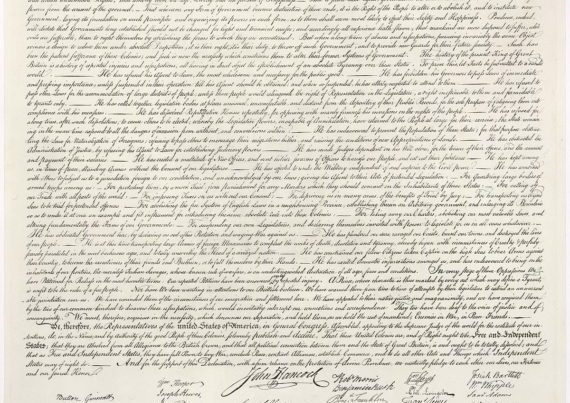
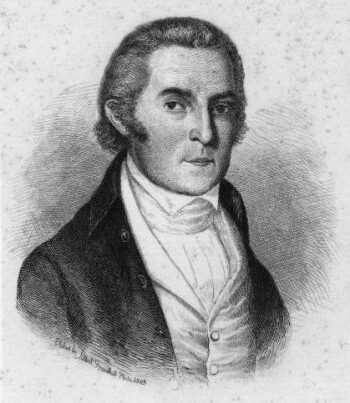
Subsequent volumes in The Land They Loved series have since been published. Confederate Poets and Poems, in two volumes, deals with the War and its aftermath, the defeat, the disappointment, and the determination to carry on, principles and way of life intact, despite such enormous loss. The second of these volumes inspired by the War is divided into four sections: “Trial by Fire,” “Facing Defeat,” “Disbanding,” and “Memory.” The tone of each poem is largely elegiac, but Prof. Wilson undercuts possible lugubriousness by including songs along with the verses, some of them familiar and jaunty, such as “The Yellow Rose of Texas” and “Song of the Texas Rangers,” others more wrenching (“Enlisted Today”). My first encounter with John Innes Randolph’s “I’m a Good Old Rebel,” which began as a poem that eventually was set to music, came when I read a biography of the late U.S. Senator and Supreme Court Justice Hugo Black of Alabama. Black began his legislative and judicial careers as a staunch liberal but drifted rightward near the end of his Court tenure, particularly on issues of law and order. According to his biographer, one one occasion Black, then in his eighties, seated at his desk and surrounded by staff, broke into a hearty rendition of “I’m a Good Ole Rebel.” Among the lines are “I hates the Yankee nation”/And everything they do,”/”I hates the Declaration”/”of Independence too;”/I hates the glorious Union”/”’Tis drippin’ with our blood”/”I hates their striped banner,”/”I fit it all I could.” (That’s the kind of Democrat Alabama used to raise and send to Washington, one unashamed of his identity and heritage.)
In the mix of poems and songs one also finds epitaphs, inscriptions, and disbandment speeches from the likes of Nathan Bedford Forrest and John Mosby, among others, each touched by lyricism, all excellent and genuinely moving.
The volume’s “headliners,” its established names, are Henry Timrod, Paul Hamilton Hayne, Sidney Lanier, and William Gilmore Simms. The work included here by the first three poets strikes me as rather “modern,” even somewhat experimental in syntax and subject matter, presaging the modernists who would arrive on the scene soon enough. But lesser-known poets also give much pleasure. My own favorite is the aforementioned Randolph of Virginia, whose versatility is evident in the juxtaposition of the lively “I’m a Good Old Rebel” with the more sedate “Twilight at Hollywood.” Also fine is Margaret Junkin Preston, another Virginian and sister-in-law of Stonewall Jackson. Her “Regulus” uses Roman history to depict the noble suffering of an imprisoned Jefferson Davis.
Of South Carolina’s Timrod, Dr. Wilson writes, “Timrod’s [‘Ode to the Confederate Dead’] is the most magnificent piece of literature to come out of The War.” Such an encomium obliges one to reprint the masterpiece in full here:
Ode to the Confederate Dead
[Magnolia Cemetery, Charleston, 1867]
Sleep sweetly in your humble graves,
Sleep martyrs of a fall cause;
Though yet no marble column craves
The pilgrim here to pause.
In seeds of laurels in the earth
The blossoms of your fame are blown,
And somewhere, waiting for its birth,
The shaft is in the stone!
Meanwhile, behalf the tardy years
Which keep in trust your stories tombs,
Behold! your sisters bring their tears,
And these memorial blooms.
Small tributes! but your shades will smile
More proudly on these wreaths today,
Than when some cannon-moulded pile
Shall overlook the bay.
Stoop, angels, hither from the skies!
There is no holier spot of ground
Than where defeated valor lies,
By mourning beauty crowned.
Ever-humble, Clyde Wilson makes no claim to be a literary critic. By his own account, he is strictly a historian. But the knowledge, care, and love with which he has assembled these verses belie such modesty. Dr. Wilson’s literary acumen and judgment equal that of most Ph.Ds in the famed Ivory Towers of literary opinion, at least those of my acquaintance. More importantly, Dr. Wilson’s work gives the lie to Mencken’s description of the South as the “Bozart of the Saharas,” a place arid and lacking in learning and culture. The present volume and its siblings provide vivid reminders of the debt America literature owes to Southern poets and poetry.
The views expressed at AbbevilleInstitute.org are not necessarily those of the Abbeville Institute.