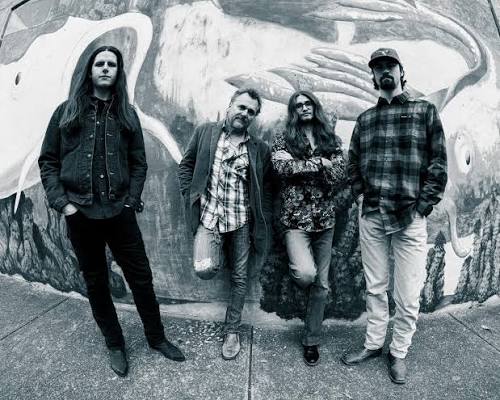
The Alabama Heathens are a Southern rock band from North Alabama in the least marketable sense of the term. They didn’t assemble in a conference room somewhere to look like a region. They formed because some boys from Huntsville, Priceville, and Muscle Shoals kept ending up in the same joints with guitars, and then decided the joints were the whole point. If you’ve never heard of them, that’s not a failing of taste. They do not have a full album yet. What they have is a 2024 EP, a run of singles, and the gut punch that comes from recording in the same town that already taught Southern music how to knock the breath out of the rest of the country.
They are a Southern band whose posture is Southern rock and whose songwriting still sounds like talk. The functional sound is two guitars, bass, and drums, with slide when the song asks for it and no interest in snapping anything into a radio template. Labels will try Americana, independent country, or roots rock and then get tired. The Heathens do the Heathens and let everybody else sort the bin.
For a listener meeting them for the first time, two songs will do the introducing. Start with “99 Miles,” the 2023 single that remains their most-played track. It is a road song with a Southern-rock pulse, and Dylan Johnson already sings it like a man who has been long gone for a while. Then play “Here for the Whiskey.” That is the live-room song: slide up front, a woman in a red-wine dress who is not there for conversation, only to drink a memory off her mind. They shot a video for it at Sports Page in Huntsville, which is exactly the kind of floor the song expects. If “99 Miles” is the door, “Here for the Whiskey” is the joint. Other songs like “Alabama Heathens,” “Thick as Thieves,” and “Better Off Gone” can wait until the names have somewhere to hang.
Dylan Johnson is the lead singer, rhythm guitarist, and primary songwriter. He grew up in Priceville, a small town about thirty minutes from Huntsville, and still lives there. He was named for Bob Dylan. Both grandfathers played bluegrass. The records that formed him were Johnny Cash, Kiss, Steely Dan, and whatever his father kept on the turntable. His first concert was ZZ Top in Huntsville at twelve. He has been full-time music since nineteen, which is either reckless or correct, and in his case has so far been the second thing.
Jude Roberts plays lead guitar and slide. He is from Huntsville, and he is twenty-one. His father is Mike Roberts of the long-running local band 5ive O’Clock Charlie, who also toured with Muscle Shoals songwriter Gary Nichols before Nichols joined the SteelDrivers. Jude’s first electric-guitar reference was his father. After that came Jimi Hendrix, Duane Allman, Derek Trucks, Rory Gallagher, and B.B. King. His mother played Conway Twitty. His father played Judas Priest. He was named for the Biblical Jude, not the Beatles song, which is the sort of household clarification that tells you everything about the record collection. The advice he still quotes from his father is “when in doubt, lay out.”
William O’Rear plays bass and is the original member who stayed. Johnson’s description of him is the right one: a bass player who plays bass. Tim Humlicek plays drums. He is fifty-five, formerly of the local hard-rock band Black Label, and he hits harder than the ages around him would suggest. Earlier lineups had Ethan Chandler on the kit. People come and go. The function of the chair does not.
The origin story is not a press-kit myth, which is fortunate, because the true version is so much funnier. Johnson was already doing solo gigs when a Florence, Alabama, fraternity show at UNA put him in a room with other players connected to Muscle Shoals. After a session, they all said they should start a band. Their first real practice was in a fraternity house. Johnson forgot a mic stand, so they taped a microphone to a piece of drum hardware and sang “Mary Jane’s Last Dance.” As it turned out, Johnson and Roberts had already found each other the ordinary way. Johnson’s aunt knew Mike Roberts; Johnson showed up at the house with a guitar; they talked about records, and then they played. An earlier school-safe version of the group, The Debriefers, had come out of Grissom High with a name that existed only because the first idea they had for a band name would not have survived the school principal. The Heathens as a working original band date from about 2023. The name comes from a song Johnson wrote about the boys he grew up with. Hometown heathens. He was against using it as the band name at first. They used it anyway.
They cut the first EP at The NuttHouse in Sheffield, Jimmy Nutt’s studio in a converted 1955 bank building a few blocks from the old Muscle Shoals Sound. Nutt came out of FAME and has engineered work for Jason Isbell, the SteelDrivers, and Drive-By Truckers-related sessions. Later singles went to Clearwave in Decatur with Jeremy Stephens, who learned the board from Johnny Sandlin, the Allman Brothers’ engineer and a Decatur native. Stephens also recorded early Alabama Shakes and Isbell sessions. Co-headlining the Alabama Smokeshow at Mars Music Hall in July 2024 announced them locally as a band that could hold a crowd. That’s where I saw them perform. I was in Huntsville for a different performance in April, saw the bill, and returned for the July show. I was not disappointed.
Thankfully, in a time when people can’t seem to stop campaigning for something or other, they are not political. Not as a band, and not in the work they put out. Their interviews, songs, and posts stay on the same ground: hometown friends, whiskey, miles, the next gig, slide guitar, and whether a song can make somebody dance or cry. Johnson talks about authenticity and touring. Roberts talks about his father’s guitar advice and wanting people to feel what he felt the first time he heard Hendrix or Derek Trucks. That is the whole public record for the band.
The catalog matches it. “Here for the Whiskey,” “99 Miles,” “Thick as Thieves,” “Better Off Gone,” “Carolina.” None of them are position papers. They write what they know and play it loud. Jude has mentioned God in the ordinary Southern way, making it the kind of excitement only music and God can give you. That is not a platform, and they are definitely not Drive-By Truckers. They have not used the stage to argue elections, parties, or causes. If they have private opinions, they have kept them off the records and out of the interviews.
What they are doing now is the old job. Be the best band in the hometown, then the nearest city, then keep going. Johnson asked Kevn Kinney of Drivin’ N Cryin’ that question at a Huntsville show before the Heathens ever opened for them. Kinney told him to build it in that order and to be good to the people who showed up, because without them you are playing to nobody. They have taken the advice at face value. The later singles include “Here for the Whiskey,” “Throw a Dog a Bone,” “Carolina,” and, in 2026, “Better Off Gone,” the last of those cut at Clearwave with Hammond from Clint Bailey of the Fiddleworms. They have opened for Drivin’ N Cryin’, Dash Rip Rock, Bay Simpson, and, in Dothan, Molly Hatchet and Firehouse. They have also driven seventeen hours to play thirty minutes at a pizza joint in Duluth. O’Rear’s Toyota pulled the trailer. The tires were at fourteen PSI when they arrived. A punk band opened. A polka band played after them. That is not a cute tour story. That is their method.
The gear has local blood in it. On “Better Off Gone,” Roberts’s slide went through an old Fender that belonged to Huntsville bluesman Microwave Dave Gallaher. Johnson’s Telecaster on the same cut was built by Huntsville maker Tom Shepard. More than being a Southern-rock aesthetic, they inherited a whole town’s instrument case.
The funniest thing I’ve learned about them is that they still have not learned “Free Bird,” and they openly admit it. At a Sigma Chi close-out at Birmingham-Southern University, the crowd demanded it all night, so they faked it. Johnson just made up some chords, and Roberts invented a solo that was not on the record. People called it the best “Free Bird” they had ever heard. That’s the sign of a healthy Southern rock band right there.
The Southern cadence in the catalog is easiest to hear if you stop asking the songs to do the same job. “Carolina,” a mid-tempo swayer from 2025, is the one that sits in the chair. “Here for the Whiskey” is a stomper. “99 Miles” is a strummy anthem. Those two have somewhere to get to: a barstool, another hundred miles. “Carolina” does not hurry the errand. At three minutes and forty-four seconds, it is long enough to stay in one place. That is not the quiet indoor kind of relaxing. It is the porch kind. Warm air, a glass in the hand, lightning bugs working the yard, thunder still far enough off that you do not get up. Southern rock can fake this and still be in a hurry, dropping the BPM while the vocal lunges at the next hook. “Carolina” is useful because the sway is the whole point of the record. The groove settles back. Johnson’s vocal is allowed to take the vowel. Roberts’s guitar comments instead of driving. The song is named for a place, which already tells the listener that the destination is not a plot twist. You are looking at land. You are inhabiting duration.
Groove, in this music, is the technique of staying imperfect on purpose. Strict division of the beat is industrial time. A good Southern rhythm section can hurry a chorus a hair and drag a verse a hair without the song falling apart, because the band is listening to each other instead of to a grid. “Here for the Whiskey” is built for that. Johnson, James LeBlanc, and Jonathan Moody wrote it. Roberts came in later and found the slide part. The lyric arrived as a barroom scene. The groove arrived when a second guitar had to decide where to stand without crowding the vocal. Slide guitar in this tradition does not chop the beat into even slices. It arrives a little late, holds, and lets the next chord catch up. That is the shuffle thinking even when the song is moving. The drums and bass settle just after the downbeat. Roberts’s slide guitar phrases across the bar instead of landing on it. Johnson does not punch every syllable onto the kick. “I’m just here for the whiskey” is a spoken cadence set to music. If the beat were perfect, the woman in the red-wine dress would have already left.
The simplest tune they have put out is “Throw a Dog a Bone,” and it carries the other half of the cadence: a melody plain enough to remember and a harmony that leaves the door off the latch. The hook is a proverb. If you are going to leave me on my own, throw a dog a bone. That is a sentence a desperate man would actually say out in the yard. The live version from Trail Days keeps circling the same few words: dog house, bone, throw it down. Southern songs stick because they refuse to spend new pitches when the old ones still work. The blue notes are in the mouth before they are in the scale. “Home,” “alone,” “bone,” and “boy” are not delivered as piano-key vowels. They sit in the cracks, the way a Priceville accent sits in the cracks. A blue note is what happens when sung pitch follows spoken Southern time.
The band itself is a four-piece and wants to stay one. Johnson sings and plays rhythm guitar. His part follows the vocal and keeps the song’s pace tied to speech. Roberts plays lead and slide. He does not double the rhythm part. He answers it. O’Rear holds the left side of the stage and the bottom of the arrangement. Humlicek decides how hard the floor gets hit. They add color only when a song asks for it. Bailey’s Hammond organ on “Better Off Gone” is a session color, not a fifth member. There is no obligatory fiddle in the standing lineup and no studio frosting. Each instrument comes in to do work and leaves when the work is done. Rhythm stays with the singer. Lead stays free enough to phrase. That is the old two-guitar grammar of the Allman Brothers.
Johnson writes the core of the catalog. Co-writers appear on specific tracks. “Here for the Whiskey” is Johnson with LeBlanc and Moody. “Better Off Gone” is Johnson with Brian Maher and Bay Simpson. Roberts’s contribution is arrangement and guitar language more than lyric authorship. The voice of the band is Johnson’s. The sound of the band is the four of them. Johnson also keeps a solo calendar, which is how a frontman stays inside the songs when the van is parked. The ear in the house is wider than the genre tag. Bluegrass from the grandfathers, Steely Dan from the turntable, ZZ Top from the first arena seat. They sound like Southern rock because that is the room they chose, not because it is the only music they were ever allowed to hear.
What makes them a Southern artist worth the name is not the word Alabama on the marquee. It is that they still treat Southern music as a practice instead of a museum display. They come from the counties that already made this music, and they record in the rooms that still make it. Priceville, Huntsville, Sheffield, Decatur. NuttHouse. Clearwave. A Tele built in town. An amp that already had Huntsville blues in it. The songs sound like they do because the men writing them grew up inside the tempo of that place and then took the songs back into its bars.
The views expressed at AbbevilleInstitute.org are not necessarily those of the Abbeville Institute.