Virginia was the first, the largest, and the most populous of the original thirteen British colonies in North America. Even before 1776, Virginia was moving toward republican institutions. During the period from the 1730s through the 1750s, power there shifted from the appointed Council to the elected House of Burgesses. As well as the large planters, the small farmers were steadily wielding more influence. The support of both the large landowners and the small landowners had to be won to gain passage. Government was becoming more representative and the role of the governor became more limited.
Before the French and Indian War, the British North American colonies had been largely self-governing. The colonies were chartered by the crown. Their legislatures would pass laws which were then sent to the king for approval or veto. Subject to that, they governed and taxed themselves. Each component in the British Empire was governed and taxed by its own legislature with all of them being under a common king. After that war, however, Parliament began taxing and interfering with the colonies. This was in violation of the legal order in the British Empire. The Parliament only had the legal power to govern and tax Great Britain itself, which it represented.
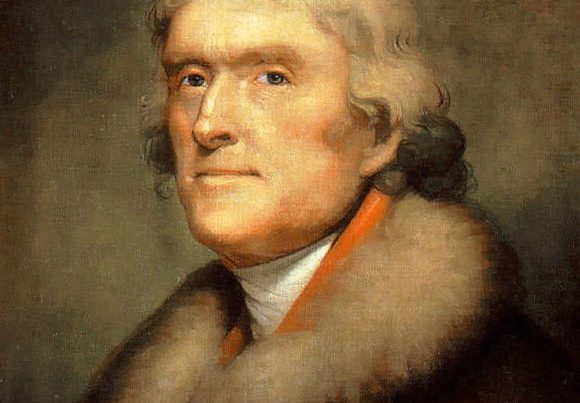
When Parliament responded to the Boston Tea Party by closing the port of Boston, the Virginia House of Burgesses in Williamsburg, the colonial capitol of Virginia, called for a day of “Fasting, Humiliation and Prayer” on May 24, 1774, in solidarity with Boston. Two days later, Virginia Governor Lord Dunmore dissolved the House of Burgesses. The Burgesses then met at Raleigh Tavern in Williamsburg. They requested that the counties of the colony respond by passing resolves in which they were to express their sentiments. Of Virginia’s 61 counties, 45 responded with them. Many leaders emerged from this process. The Resolutions of the Freeholders of Albemarle County were written in Charlottesville, Virginia on July 26, 1774 by Thomas Jefferson. But one set in particular was to have a very profound affect.
George Washington was a Burgess from Fairfax County who was present at those Raleigh Tavern meetings. Fairfax County wanted to draft resolves, but wanted Washington to return there from Williamsburg before doing so. On July 14, 1774, a committee was appointed to draft a set of resolves. On July 17, the committee met at Washington’s home, Mount Vernon. At that meeting, Washington, George Mason, and George Broadwater drafted the Fairfax Resolves. They were adopted by Fairfax County in Alexandria on July 18 and taken by Washington and fellow Burgess Broadwater to the First Virginia Convention in Williamsburg in August. Of all the resolves passed, the Fairfax Resolves have been recognized as “the most detailed, the most influential, and the most radical” in the words of Jeff Broadwater. When Washington delivered these in Williamsburg, he was named to head a “committee to chart future policy responses,” in the words of Ronald Chernow. The Resolves called for a “general Congress” to unite the colonies during a “dangerous” time for America. This assembly became the First Continental Congress. After the committee drew up a plan based on the Fairfax Resolves, Washington was appointed as a delegate from Virginia to the Continental Congress. When war came, Washington left the Continental Congress to command the Continental Army, Mason filled the vacancy in the Virginia Convention caused by Washington’s appointment, and Jefferson authored the Declaration of the Causes and Necessity of Taking up Arms. The colonies thereupon called themselves the United Colonies of North America.
The next year, in 1776, it became clear to the colonies that there was no hope of reconciliation with Great Britain. On May 4 of that year, Rhode Island declared its independence. On May 15, the Fifth Virginia Convention in Williamsburg, which replaced the House of Burgesses, followed by declaring its independence as well. It also sent instructions to Virginia’s delegates at the Continental Congress in Philadelphia “to propose to that respectable body to declare the United Colonies free and independent States, absolved from all allegiance to, or dependance upon, the Crown or Parliament of Great Britain…”
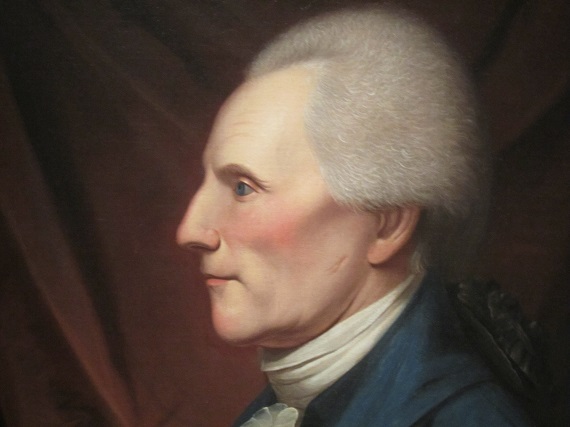
Richard Henry Lee was a Virginia delegate to the Continental Congress. He had previously authored the Leedstown Resolutions on February 20, 1766, which had led to the repeal of the Stamp Act a month later. Those Resolutions were also signed by four other Lees as well. He was already ahead of the directives which had come from Williamsburg. He had written from the Continental Congress to his friend Patrick Henry, who was back in Virginia:
“Virginia has hitherto taken the lead in great affairs, and many now look to her with anxious expectation…”
“We cannot be Rebels excluded from the King’s protection and magistrates acting under his authority at the same time.”
“This proves the indispensable necessity of our taking up government immediately, for the preservation of Society.”
Following his instructions from Williamsburg, Richard Henry Lee introduced a resolution in the Continental Congress on June 7. It was called the Lee Resolution because of his authorship of it. This was the text of the resolution:
“Resolved, That these United Colonies are, and of right ought to be, free and independent States, that they are absolved from all allegiance to the British Crown, and that political connection between them and the State of Great Britain is, and ought to be, totally dissolved.
“That it is expedient forthwith to take the most effectual measures for forming foreign Alliances.
“That a plan of confederation be prepared and transmitted to the respective Colonies for their consideration and approbation.”
The Lee Resolution was ratified on July 2, 1776, whereupon the colonies then became the United States of America. When it was ratified, John Adams said, “The second day of July, 1776, will be the most memorable epoch in the history of America… It ought to be solemnized with pomp and parade…from one end of this continent to the other, from this time forward forevermore.”
Lee was a first cousin of Henry Lee III, otherwise known as “Light-Horse Harry” Lee, a Lieutenant Colonel of cavalry in Washington’s army and the father of Confederate General Robert E. Lee.
To follow up on its secession from the British Empire, Virginia ratified the Virginia Declaration of Rights, written by George Mason, in Williamsburg on June 12, 1776. The Marquis de Condorcet said that the Virginia Declaration of Rights was “the first Bill of Rights to merit the name.” It was the first constitutional protection of individual rights in North America. Similarly, after it ratified the Lee Resolution, the Continental Congress ratified the Declaration of Independence, written by Thomas Jefferson, on July 4, 1776. These stated the reasons for declaring independence by Virginia and the thirteen colonies respectively. The observance which Adams predicted to be remembered on July 2, when actual independence was ratified, has been celebrated on July 4, when the statement of the reasons for declaring independence was ratified, instead. All of these resolutions and declarations were written by Virginians. The Virginia Declaration of Rights influenced Jefferson when he wrote the Declaration of Independence.
A reading of the Fairfax Resolves makes its influence on both the Virginia Declaration of Rights and the Declaration of Independence evident. Resolve 2 stated:
“Resolved that the most important valuable Part of the British Constitution, upon which it’s very Existence depends, is the fundamental Principle of the People’s being governed by no Laws, to which they have not given their Consent, by Representatives freely chosen by themselves; who are affected by the Laws they enact equally with their Constituents to whom they are accountable, and whose Burthens [i.e., burdens] they share; in which consists the Safety and Happiness of the Community: for if this Part of the Constitution was taken away, or materially altered, the Government must degenerate either into an absolute and despotic Monarchy, or a tyrannical Aristocracy, and the Freedom of the people be annihilated.”
And Resolve 3 reads in part:
“Resolved therefore, as the Inhabitants of the american Colonies are not, and from their Situation cannot be represented in the British Parliament, that the legislative power here can of Right be exercised only by our own Provincial Assemblies or Parliaments, subject to the Assent or Negative of the British Crown, to be declared within some proper limited Time.”
Paragraph 2 of the Virginia Declaration of Rights declared:
“That all Power of suspending Laws, or the Execution of Laws, by any Authority without the Consent of the Representatives of the People, is injurious to their Rights, and ought not to be exercised.”
The Declaration of Independence stated:
“That to secure these Rights, Governments are instated among Men, deriving their just Powers from the consent of the Governed, that whenever any Form of Government becomes destructive of these Ends, it is the Right of the People to alter or to abolish it, and to institute new Government, laying its Foundation on such Principles, and organizing its Powers in such Form, as to them should seem most likely to effect their Safety and Happiness.”
The Declaration of Independence leveled its charges against “the present King of Great-Britain” because of the refusal of the Continental Congress to recognize the legitimacy of the power of Parliament over the colonies. The influence of these Resolves in the Declaration can be seen in the following statement referring to Parliament made in the latter:
“HE has combined with others to subject us to a Jurisdiction foreign to or Constitution, and unacknowledged by our Laws; giving his Assent to their Acts of pretended Legislation.”
Resolve 3 goes on to state:
“But as it was thought just reasonable that the People of Great Britain shou’d reap Advantages from these Colonies adequate to the Protection they afforded them, the British Parliament have claimed and exercised the Power of regulating our Trade and Commerce, so as to restrain our importing from foreign Countrys, such Articles as they cou’d furnish us with, of their own Growth or Manufacture, or exporting to foreign Countrys such Articles of our Portions and Produce, as Great Britain stood in Need of, for her own Consumption or Manufactures.”
The influence of this Resolve is seen in the following statement in the Declaration of Independence:
“FOR cutting off our Trade with all Parts of the World.”
Fairfax Resolve 10 stated in part:
“Resolved that the several Acts of Parliament for raising Revenue upon the People of America without their Consent, the creating new and dangerous Jurisdictions here, the taking away of our Trials by Jury, the ordering of Persons upon Criminal Accusations, to be tried in another Country than that in which the Fact is charged to have been committed, the Act inflicting ministerial Vengeance upon the Town of Boston, and the two Bills lately brought into Parliament for abrogating the Charter of the Province of Massachusetts Bay, and for the Protection and Encouragement of Murderers in the said Province, are Part of the above mentioned iniquitous System.”
The sentiment of this Resolve can be clearly seen in the following statements in the Declaration of Independence:
“HE has refused to pass other Laws for the Accommodation of large Districts of People, unless those People would relinquish the Right of Representation in the Legislature, a Right inestimable to them, and formidable to Tyrants only.
“HE has called together Legislative Bodies at Places unusual, uncomfortable, and distant from the Depository of their public Records, for the sole Purpose of fatiguing them into Compliance with its Measures.
“HE has dissolved Representative Houses repeatedly, for opposing with manly Firmness his Invasions on the Rights of the People.
“HE has refused for a long Time, after such Dissolutions, to cause others to be elected; whereby the Legislative Powers, incapable of Annihilation, have returned to the People at large for their exercise; the State remaining in the mean time exposed to all the Dangers of Invasion from without, and Convulsions within.”
Looking at the Lee Resolution, one can see how it also had an influence on the Declaration of Independence. The final paragraph of the latter reads:
“WE, therefore, the Representatives of the UNITED STATES OF AMERICA, in GENERAL CONGRESS, Assembled, appealing to the Supreme Judge of the World for the Rectitude of our intentions, do, in the Name, and by the Authority of the good people of these Colonies, solemnly Publish and Declare, That these United Colonies are, and of Right ought to be, FREE AND INDEPENDENT STATES; that they are absolved from all Allegiance to the British Crown, and that all political Connection between them and the State of Great-Britain, is and ought to be totally dissolved; and that as FREE AND INDEPENDENT STATES, they have full Power to levy War, conclude Peace, contract Alliances, establish Commerce, and all other Acts and Things which INDEPENDENT STATES may of right do. And for the support of this Declaration, with a firm Reliance on the Protection of divine Providence, we mutually pledge to each other our Lives, our Fortunes, and our sacred Honor.”
In both of these documents, it says that the colonies “are, and of right ought to be, free and independent States.” Furthermore, the official title of the Declaration of Independence on the document itself reads, “The unanimous Declaration of the thirteen united States of America.” Notice that the word “States” is capitalized and that the word “united” is not. In the early days of the United States, the four primary founding documents which were revered above all others and which were taught in schools were the Declaration of Independence, the Constitution, the Bill of Rights, and George Washington’s Farewell Address. Today, the fourth is left out and is usually replaced with Abraham Lincoln’s Gettysburg Address. In the latter, Lincoln claimed that “a new nation” was “brought forth” by the Founding Fathers in 1776. However, this clearly is not what we read in the Lee Resolution and the Declaration of Independence. They both put forth that they were establishing themselves as “free and independent States.” Furthermore, in the Treaty of Paris, signed on September 3, 1783, which ended the Revolutionary War, the very first article stated, “His Britannic Majesty acknowledges the said United States, viz., New Hampshire, Massachusetts Bay, Rhode Island and Providence Plantations, Connecticut, New York, New Jersey, Pennsylvania, Delaware, Maryland, Virginia, North Carolina, South Carolina and Georgia, to be free sovereign and Independent States.” In his Notes of Debates in the Federal Convention of 1787, James Madison, also of Virginia, states that in the deliberations at the Constitutional Convention in Philadelphia, the term “national government” was used at first, but not for long. It was very soon stricken and replaced with the term “federal government.” This is because they wanted a central government with limited, delegated powers in a federal system, not one with broad national powers. This further proves that the Union created by the Founding Fathers was totally different from that recreated by Lincoln.
Similarly, one can clearly see that Jefferson borrowed from the Virginia Declaration of Rights when he wrote the Declaration of Independence regarding the first right listed in Paragraph 1 of the former, in which Mason stated:
“That all men are by Nature equally free and independent, and have certain inherent Rights, of which, when they enter into a state of Society, they cannot, by any Compact, deprive or divest their Posterity; namely, the Enjoyment of Life and Liberty, with the Means of acquiring and possessing Property, and pursuing and obtaining Happiness and Safety.”
This will be familiar to anyone who has read the Declaration of Independence. That document says in its second paragraph:
“We hold these Truths to be self-evident, that all Men are created equal, that they are endowed by their Creator with certain unalienable Rights, that among these are Life, Liberty, and the Pursuit of Happiness.”
Jefferson’s original wording was “that they are endowed by their Creator with inherent and unalienable Rights.” This even more closely resembles Mason’s language in the Virginia Declaration of Rights.
This also clearly shows that Jefferson and the other Founders believed that our rights were given by God. If they were given by government, then that government could determine what rights citizens do and do not have. The Founders saw that because our rights were given by God, no man or government could take them away. Speaker of the U.S. House of Representatives J. Michael Johnson (R-LA) acknowledged this fact at Rededicate 250 on the National Mall in Washington, D.C. on May 17, 2026 when he said in a prayer that our rights “come from You, our Creator, and Heavenly Father.” In response, MS NOW anchor Katherine B. Tur-Dokoupil stated, “What about this passage from Mike Johnson declaring that our rights do not derive from government? ‘They come from You, our Creator and Heavenly Father.’ Is this him putting God over the Declaration of Independence?” One wonders from this statement whether Katy Tur has ever read the Declaration of Independence.
Another subject runs through these documents. Fairfax Resolve 17 stated:
“Resolved that it is the Opinion of this Meeting, that during the present Difficulties and Distress, no Slaves ought to be imported into any of the British colonies on this Continent; and we take this Opportunity of declaring our most earnest Wishes to see an entire Stop for ever put to such a wicked cruel and unnatural Trade.”
This sentiment was also stated in the following paragraph which Jefferson wrote in the Declaration of Independence, though it was stricken in the Continental Congress:
“He has waged cruel war against human nature itself, violating its most sacred rights of life and liberty in the persons of a distant people who never offended him, captivating and carrying them into slavery in another hemisphere, or to incur miserable death in their transportation thither. This piratical warfare, the opprobrium of INFIDEL powers, is the warfare of the CHRISTIAN King of Great-Britain. Determined to keep open a market where MEN should be bought and sold, he has prostituted his negative for suppressing every legislative attempt to prohibit or restrain this execrable commerce. And that this assemblage of horrors might want no fact of distinguished die, he is now exciting those very people to rise in arms among us, and to purchase that liberty of which he has deprived them, by murdering the people on whom he also obtruded them, thus paying off former crimes committed against the LIBERTIES of one people with crimes which he urges them to commit against the LIVES of another.”
Early American historian George Bancroft, who wrote the first history of the United States, said in that work of this statement by Jefferson, “These words expressed precisely what had happened in Virginia.” Black American historian George W. Williams stated, “It is due to the Virginia colony to say that the slaves were forced upon them.” African slaves were imported into Virginia in such great numbers in the 60 years before the Revolution that that their number almost equaled that of the white population of the colony by that time. This importation was forcibly done by the British under the empire’s mercantile policy. The House of Burgesses tried passing laws against this practice in vain. Bancroft further stated:
“Again and again they passed laws restraining the importation of negroes from Africa, but their laws were disallowed. How to prevent them from protecting themselves against the increase of the overwhelming evil was debated by the King in Council; and on the 10th of December, 1770, he issued an instruction under his own hand commanding the Governor ‘upon pain of the highest displeasure, to assent to no laws by which the importation of slaves should be in any respect prohibited or obstructed.’”
One such protest, passed in August 1774, stated, “We will neither ourselves import, nor purchase any slave or slaves imported by any other person, after the first day of November, next, either from Africa, the West Indies or any other place.”
Jefferson himself had stated in his Summary View of the Rights of British America in 1774:
“For the most trifling reasons, and sometimes for no conceivable reason at all, His Majesty has rejected laws of the most salutary tendency. The abolition of domestic slavery is the great object of desire in these colonies, where it was, unhappily, introduced in their infant state. But, previous to the enfranchisement of the slaves we have, it is necessary to exclude all further importations from Africa. Yet our repeated requests to this effect by prohibitions, and by imposing duties which might amount to a prohibition, have been hitherto defeated by His Majesty’s negative; thus preferring the immediate advantage of a few British Corsairs to the lasting interests of the American States, and to the rights of human nature deeply wounded by this infamous practice.”
John Adams protested against Jefferson’s paragraph against slavery in the Declaration stating that it might offend the Deep South. Jefferson himself said regarding this:
“In compliance to South Carolina and Georgia, who had never attempted to restrain the importation of slaves, and who, on the contrary, still wished to continue it. Our Northern brethren also, I believe, felt a little tender under these censures, for though their people had very few slaves, yet they had been pretty considerable carriers of them to others.”
John G. Nicolay and John Hay, who served as personal secretary and assistant secretary respectively to Lincoln during his Presidency, stated, “The objections of South Carolina and Georgia sufficed to cause the erasure and suppression of the obnoxious paragraph. Nor were the Northern states guiltless; Newport was yet a great slave mart, and the commerce of New England drew more advantages from the traffic than did the agriculture of the South.”
Bancroft stated that this showed that Virginia wished to extend the rights put forth in the Virginia Declaration of Rights and the Declaration of Independence to all men. In 1778, Virginia became the first political jurisdiction in the world to ban the slave trade. The act then passed stated “that from and after the passing of this act no slaves shall hereafter be imported into this commonwealth by sea or land, nor shall any slaves so imported be sold or bought by any person whatsoever.” Great Britain did not do so until almost 30 years later.
After the Revolutionary War, Virginia gave the Northwest Territory to the United States for the formation of other states. In the Northwest Ordinance of 1787, Jefferson, its author, banned slavery from the states to be formed from it. The states which were formed from it were Ohio, Indiana, Illinois, Michigan, and Wisconsin.
In 1782, the Virginia General Assembly passed a law allowing slaveholders to emancipate their slaves. In the years that followed the Revolution, sentiment for gradual emancipation grew in Virginia and all of the other states of the Upper South and there were numerous societies in those states advocating it. In 1832, a bill to gradually abolish slavery in Virginia came before the General Assembly and fell short of about twenty votes of passage. That bill would have surely passed if it had not been for the fact that Nat Turner’s Rebellion occurred in that state the year before. That rebellion was the result of abolitionist propaganda from New England which incited the slaves which carried it out to rise up and murder their masters. Between 55 and 65 white men, women, and children, including infants, were murdered in it. Thomas Jefferson Randolph, the eldest grandson of Thomas Jefferson, was the foremost advocate of gradual emancipation in the Virginia General Assembly at that time. He summarized the situation thus:
“After the adjournment of the Legislature in 1833, the question was discussed before the people fairly and squarely, as one of the abolition of slavery. I was re-elected on that ground in my county. The feeling extended rapidly from that time in Virginia, Kentucky and Missouri until Northern abolitionism reared its head. Southern abolition was reform and an appeal to the master; Northern abolition was revolution and an appeal to the slave. One was peaceful and the other mutually destructive of both races by a servile insurrection. The Southern people feared to trust the intervention of persons themselves exempt by position from the imagined dangers of the transition.”
A very thorough history of these events was written by Beverly B. Munford in 1909 entitled Virginia’s Attitude toward Slavery and Secession. It is available in several different editions, both print and electronic. In 2007, there was a resolution in the Virginia General Assembly for the state to apologize for slavery. The writer wrote to both his state senator and his delegate bringing these facts and this book to their attention and urging them to vote against it on the grounds of all that Virginia did against slavery. The resolution passed by a unanimous vote. There was not one single member of the assembly who had the courage to vote against it.
A “woke” myth surrounding this period pertains to Lord Dunmore, who was the last British colonial governor of Virginia. On April 21, 1775, he seized the colony’s supply of gunpowder at the Powder Magazine in Williamsburg. The colonists, under the leadership of Patrick Henry, maintained that it belonged to them and not to the British Crown. They did get payment for it, but Dunmore replied according to Jon Kukla, that “if any injury or insult was offered to himself…he would declare freedom to the slaves and reduce the City of Williamsburg to ashes.” On June 8, he fled the Governor’s Palace in Williamsburg and took refuge aboard the HMS Fowey off Yorktown. From there, his small navy raided Patriot military supplies and looted riverside plantations. After an initial success as a result of winning a minor skirmish, Dunmore issued what is known as Dunmore’s Proclamation on November 14, 1775. In it, he denounced the Patriots as traitors and demanded that they be brought to justice. He stated, “I do require every Person capable of bearing Arms, to resort to HIS MAJESTY’S STANDARD, or to be locked up as Traitors to HIS MAJESTY’S Crown and Government.” But there is one other thing he said therein which is a source of controversy today. He said, “And I do hereby further declare that all indentured Servants, Negroes, or others, (appertaining to Rebels,) free that are able and willing to bear Arms, they joining HIS MAJESTY’S Troops as soon as may be, for the more speedily reducing this Colony to a proper Sense of their Duty, to HIS MAJESTY’S Crown and Dignity.”
The “woke” myth is that by this action, it was the British who represented freedom by offering freedom to the slaves while the Patriots represented slavery by continuing to keep their slaves. This is refuted by the fact that the Northern states began freeing their slaves during the Revolutionary War. Pennsylvania was the first state to pass a law abolishing slavery in 1780 and by 1800, every state in the North had done so except New Jersey and Delaware. And as regards Virginia, this charge is refuted by the writer in the preceding section. As for Dunmore’s “freedom” for slaves, it was only for slaves of Patriots who would join the British forces. Those who did were formed into what became known as the Royal Ethiopian Regiment. No freedom was offered to the slaves of Loyalists. This included Dunmore’s own slaves, and he owned nearly 100 of them. Those who did escape with Dunmore when he left the next year were settled in the Caribbean and were located in areas where there were no slaves. That way, the slaves who were in those British dominions would not come in contact with free blacks and, thereby, the latter would not get any notions of freedom. Furthermore, the British slave trade continued unabated during this period and for decades after it. In 1779, British General Sir Henry Clinton followed suit by issuing the Phillipsburg Proclamation which declared all slaves of Patriots in the United States free. Once again, not any slaves of Loyalists. Perhaps Lincoln took a page out of Dunmore’s and Clinton’s playbooks when he issued the Emancipation Proclamation.
In the Democrat controlled Virginia State Capitol Building, all Confederate statues and busts have been removed and the three remaining Confederate statues on the grounds outside it are now slated to be removed. Once they are, that will leave Elizabeth Keckley as the only person from the period of the War Between the States to have a statue on the Virginia State Capitol grounds, and she was a traitor to her native state during the war who gave aid and comfort to the enemy. And she did this in spite of the fact that her business before the war grew after she was complimented for a dress which she had made for Mary Anna Custis Lee, the wife of then Colonel Robert E. Lee. And inside the building, there is interpretation which states that Dunmore’s Proclamation provided freedom to the slaves. The last time the writer was there, he left a comment pointing out the facts stated above, and the fact that Robert E. Lee, whose statue has been removed from that building, freed all of his slaves ten weeks before the Emancipation Proclamation while Dunmore freed none of his. Virginia’s civil leaders today show no knowledge of the state’s history.
In 1787, George Mason went to the Constitutional Convention as a delegate from Virginia. He was very active there, delivering 130 speeches. However, in the end, he was unable to sign it. One of his main objections to it was that it had no Bill of Rights. Mason became an Anti-Federalist and opposed the ratification of the Constitution. He also went to Virginia’s state ratifying convention as a delegate. He fought ratification there, but when the convention ratified the Constitution, he was successful in making Virginia’s ratification conditional upon the inclusion of a Bill of Rights in the Constitution. After the ratification of the first ten amendments to the Constitution, Mason said that even though it was not perfect, “I cou’d put my Hand and Heart to the new Government.”
One can see why. Mason’s Virginia Declaration of Rights also had a later influence on the Bill of Rights. The former stated in Paragraphs 16 and 12:
“That Religion, or the Duty which we owe to our Creator, and the Manner of discharging it, can be directed only by Reason and Conviction, not by Force or Violence; and therefore, all Men are equally entitled to the free exercise of Religion, according to the Dictates of Conscience; and the it is the mutual Duty of all to practise Christian Forbearance, Love, and Charity toward others.”
“That the Freedom of the Press is one of the greatest Bulwarks of Liberty, and can never be restrained but by despotic Governments.”
The Bill of Rights was submitted to the U.S. Congress on September 25, 1789 and consisted of twelve articles. The third through twelfth articles were ratified as the first ten amendments to the Constitution on December 15, 1791. The second article was ratified by Congress much later as the 27th Amendment on May 7, 1992. The first article was never ratified. One can see the influence of the above cited provisions in the Virginia Declaration of Rights on the third article of the Bill of Rights, which became the 1st Amendment to the Constitution. It states:
“Congress shall make no law respecting an establishment of religion, or prohibiting the free exercise thereof; or abridging the freedom of speech, or of the press; or of the right of the people peaceably to assemble, and to petition the Government for a redress of grievances.”
Originally, 150 proposed amendments were submitted to Congress in 1789. James Madison eventually submitted the twelve in the Bill of Rights. Some of those submitted were combined into one amendments. This was the case with the 1st Amendment, which combined the following three written by Madison:
“The civil rights of none shall be abridged on account of religious belief or worship, nor shall any national religion be established, nor shall the full and equal rights of conscience be in any manner, or on any pretext, infringed.”
“The people shall not be deprived or abridged of their right to speak, to write, or to publish their sentiments; and the freedom of press, as one of the greatest bulwarks of liberty, shall be inviolable.”
“The people shall not be restrained from peaceably assembling and consulting for their common good; nor from applying to the legislature by petition, or remonstrances, for redress of their grievances.”
One can see the original intent from the reading of these. An “establishment of religion” in the final form was previously rendered “nor shall any national religion be established.” This forbade the establishment of a national church, such as European countries had. Today, some say that “an establishment of religion” refers to the exercise of religion. However, the same amendment says “or prohibiting the free exercise thereof.”
Paragraph 13 of the Virginia Declaration of Rights stated:
“That a well regulated Militia, composed of the Body of the People, trained to Arms, is the proper, natural, and safe Defense of a free State; that standing Armies, in Time of Peace, should be avoided, as dangerous to Liberty; and that, in all Cases, the Military should be under strict Subordination to, and governed by, the civil Power.”
One can see the influence of this on the fourth article of the Bill of Rights, which became 2nd Amendment to the Constitution:
“A well regulated Militia, being necessary to the security of a free State, the right of the people to keep and bear Arms shall not be infringed.”
Paragraph 10 of the Virginia Declaration of Rights stated:
“That general Warrants, whereby any Officer of Messenger may be commanded to search suspected Places without Evidence or a Fact committed, or to seize any Person or Persons not named, or whose Offence is not particularly described and supported by Evidence, are grievous and oppressive, and ought not to be granted.”
The influence of this can be seen in the sixth article of the Bill of Rights, which became the 4th Amendment to the Constitution, which states:
“The right of the people to be secure in their persons, houses, papers, and effects, against unreasonable searches and seizures, shall not be violated, and no Warrants shall issue, but upon probable cause, supported by Oath or affirmation, and particularly describing the place to be searched, and the persons or things to be seized.”
Paragraph 8 of the Virginia Declaration of Rights states:
“That in all capital or criminal Prosecutions a Man hath a Right to demand the Cause and Nature of his Accusation, to be confronted with the Accusers and Witnesses, to call for Evidence in his Favour, and to a speedy Trial by an impartial Jury of his Vicinage, without whose unanimous Consent he cannot be found guilty, nor can he be compelled to give Evidence against himself; that no Man be deprived of his Liberty except by the Law of the Land, or the Judgment of his Peers.”
One can see the influence of this in the seventh article of the Bill of Rights, which became the 5th Amendment to the Constitution. It states:
“No person shall be held to answer for a capital, or otherwise infamous crime, unless on a presentment of indictment of a Grand Jury, except in cases arising in the land or naval forces, or in the Militia, when in actual service in time of War or public danger; nor shall any person be subject for the same offence to be twice put in jeopardy of life or limb; nor shall be compelled in any criminal case to be a witness against himself, nor be deprived of life, liberty, or property, without due process of law; nor shall private property be taken for public use, without just compensation.”
It can also be seen in the eighth article of the Bill of Rights, which became the 6th Amendment to the Constitution. It states:
“In all criminal prosecutions, the accused shall enjoy the right to a speedy and public trial, by an impartial jury of the State and district wherein the crime shall have been committed, which district shall have been previously ascertained by law, and to be informed of the nature and cause of the accusation; to be confronted with the witness against him; to have compulsory process for obtaining witnesses in his favor, and to have the Assistance of Counsel for his defence.”
Virginia’s prominent influence on the independence and formation of the United States is clearly evident. George Washington is known as “the Father of His Country,” Thomas Jefferson is known as “the Father of the Declaration of Independence,” James Madison, who drew up the Virginia Plan, is known as “the Father of the Constitution,” and George Mason is known as “the Father of the Bill of Rights.” All four of these men were Virginians and their influences are seen throughout all of these documents. If they were still alive today, they would strongly oppose the usurpations of power in Washington, D.C. and in the General Assembly in power in Richmond today, just as they opposed the similar usurpations of power by the British in their day.
While George Washington was in the field commanding the Continental Army when the Declaration of Independence was written and signed, he had previously coauthored the Fairfax Resolves, which had an influence on the Declaration. Also, Washington had enlisted in the Fairfax Independent Company of Volunteers prior to assuming command of the Continental Army. The Continental Army did not have uniforms previous to this and, as a result, when he arrived, the uniform of the Fairfax Independent Company became the uniform of the Continental Army. Elite local units and officers of the Virginia colonial militia had worn blue uniforms, as did the Fairfax Independent Company. Washington had ordered the officers of the Virginia Regiment in the French and Indian War to wear blue uniforms. Thus, the Continental Army uniforms were blue.
The House Chamber of the U.S. Capitol is surrounded by a bas relief of 23 portraits of “lawgivers.” Among them are Moses, King Edward I of England, Hugo Grotius, and Sir William Blackstone, to name a few. But only two Americans are to be found there. They are Thomas Jefferson and George Mason, both of whom were also Virginians. The slogan of the Virginia American Revolution 250 Commission is “America: Made in Virginia.” Indeed, it was.
Sources:
Jeff Broadwater, George Mason: Forgotten Founder. Chapel Hill: University of North Carolina Press, 2006.
Donald J. Senese, ed., George Mason and the Legacy of Constitutional Liberty: An Examination of the Influence of George Mason on the American Bill of Rights. Fairfax, VA: Fairfax County History Commission, 1989.
Ronald Chernow, Washington: A Life. New York: Penguin Press, 2010.
Richard L. Perry, ed., Sources of Our Liberties: Documentary Origins of Individual Liberties in the United States Constitution and Bill of Rights. Chicago: American Bar Foundation, 1959.
Virginia Commission on Constitutional Government, We the States: An Anthology of Historic Documents and Commentaries thereon, expounding the State and Federal Relationship. Richmond, VA: William Byrd Press, Inc., 1964.
The Fairfax Resolves, July 18, 1774. Fairfax, VA: Fairfax County History Commission, n.d.
The Virginia Declaration of Rights, June 12, 1776. Fairfax, VA: Fairfax County 250th Commission, n.d.
The Declaration of Independence, Milestone Documents in the National Archives. Washington: National Archives and Records Administration, 1992.
James Madison, Notes of Debates in the Federal Convention of 1787, Bicentennial Edition. New York: W.W. Norton & Company, 1987 (1966).
The Bill of Rights, Milestone Documents in the National Archives. Washington: National Archives and Records Administration, 1986.
Beverly B. Munford, Virginia’s Attitude toward Slavery and Secession. New York: Longmans, Green, and Co., 1909.
Randolph H. McKim, A Soldier’s Recollections: Leaves from the Diary of a Young Confederate. Harrisonburg, VA: Sprinkle Publications, 1996 (1910).
Jon Kukla, Patrick Henry: Champion of Liberty. New York: Simon & Schuster, 2017.
- John Van Til, Liberty of Conscience: The History of a Puritan Idea. Phillipsburg, NJ: P&R Publishing, 1972.
National Archives and Records Administration, Milestone Documents: www.archives.gov/milestone-documents/list
Jon Brown, “MS NOW Anchor Katy Tur Draws Backlash for Questioning Rights as God-Given: ‘Historically Ignorant.’” Christian Post, May 20, 2026: www.chriistianpost.com/news/ms-now-anchor-draws-backlash-for-questioning-god-given-rights.html
Lori Jonas, “Blue and Buff.” Arlington Historical Society, Arlington, Virginia: https://arlingtonhistorical.com/items/show/350
For further information about the American Revolution in Virginia:
Charles W. H. Warner, Road to Revolution: Virginia’s Rebels from Bacon to Jefferson (1676-1776). Richmond, VA: Garrett and Massie, Publishers, 1961.
The Road to Independence: Virginia, 1763-1783. Richmond, VA: Social Studies Service, Division of Humanities and Secondary Administration, Virginia Department of Education, n.d.
Michael Cecere, Great Things are Expected from the Virginians: Virginia in the American Revolution. Berwyn Heights, MD: Heritage Books, 2008.
Charles A. Mills, Virginia in the American Revolution. Charleston, SC: History Press, 2025.
Michael Cecere, Cast Off the British Yoke: The Old Dominion and American Independence. Berwyn Heights, MD: Heritage Books, 2014.
Andrew Gallup, A Sketch of the Virginia Soldier in the Revolution. Berwyn Heights, MD: Heritage Books, 2008 (1999).
Michael Cecere, In This Time of Extreme Danger: Northern Virginia in the American Revolution. Berwyn Heights, MD: Heritage Books, 2006.
Activities Committee, comp., Honoring Fairfax County, Virginia Patriots of the Revolution. Fairfax, VA: Fairfax County 250th Commission, n.d.
For further information about the Christian background of the Declaration of Independence:
Herbert W. Titus, America’s Declaration of Independence: The Christian Legacy. Chesapeake, VA: Titus Publications, 1995.
Gary T. Amos, Defending the Declaration: How the Bible and Christianity Influenced the Writing of the Declaration of Independence. Charlottesville, VA: Providence Foundation, 1989.
Thomas G. Rose, Reclaiming the American Dream by Reconstructing the American Republic. Paris, TN: American Enterprise Publications, 1996.
Nathaniel S. McFetridge, Calvinism in History, Calvin Classics, Vol. 1. Edmonton, AB: Still Water Revival Books, 1989 (1882).
Douglas F. Kelly, The Emergence of Liberty in the Modern World: The Influence of Calvin on Five Governments from the 16th Through 18th Centuries. Phillipsburg, NJ: P&R Publishing, 1992.
Roy S. Moore, One Nation Under God. Pasadena, MD: Institute on the Constitution and Montgomery, AL: Foundation for Moral Law, 2014.
For further information about the struggle for religious liberty in Virginia during the American Revolution:
John H. Ragosta, Wellspring of Liberty: How Virginia’s Religious Dissenters Helped Win the American Revolution and Secured Religious Liberty. New York: Oxford University Press, 2010.
Hamilton J. Eckenrode, Separation of Church and State in Virginia: A Study in the Development of the Revolution. Richmond: Virginia State Library, Department of Archives and History, Archives Division, 1910.
Charles F. James, Documentary History of the Struggle for Religious Liberty in Virginia, and William Wirt Henry, The Presbyterian Church and Religious Liberty in Virginia. Harrisonburg, VA: Sprinkle Publications, 2007 (1900).
David F. Coffin, Jr., ed., Religious Liberty: The “Virginia Doctrine.” Fairfax, VA: New Hope Presbyterian Church, n.d.
George W. Pilcher, Samuel Davies: Apostle of Dissent in Colonial Virginia. Knoxville: University of Tennessee Press, 1971.
Thomas V. DiBacco, Moorfield: Home of Early Baptist Preacher Jeremiah Moore. Fairfax, VA: Fairfax County Office of Comprehensive Planning, 1971.
Jeremiah Moore, An Enquiry Into the Nature and Propriety of Ecclesiastical Establishments: In a Letter to Howard Griffith, Reprint of Old Writings, No. 1. N.p.: Primitive Baptist Library, n.d. (1810).
Paul C. Kemeny, “Eighteenth-Century Virginia Presbyterians on Christian Nationalism: A Threat to Souls, the Church, and the Body Politic,” Modern Reformation, June 9, 2026: www.modernreformation.org/resources/essays/eighteenth-century-virginia-presbyterians-on-christian-nationalism-a-threat-to-souls-the-church-and-the-body-politic?vcrmeid=zNNpMZiOUZXDRpghjHg&vcrmiid=aZyLUSJEx06K05p8B3Aa6g
Gospel of Liberty. DVD. Directed by Andrew Gardner. Williamsburg, VA: Colonial Williamsburg Productions, 1997. Distributed by Worcester, PA: Vision Video, Inc.
The views expressed at AbbevilleInstitute.org are not necessarily those of the Abbeville Institute.




Dear Brothers and Sisters in Christ,
As a follower of the Lord Jesus Christ, saved by grace through faith and committed to the authority of Scripture, I can no longer in good conscience support the modern state of Israel. Baptist theology has long emphasized the distinction between the Church and national Israel, and the New Testament call to discern truth, justice, and righteousness in all earthly powers (see Romans 13 and Ephesians 6). After much prayerful study and observation of the world, my support has ended. Today, on July 2, this letter stands as my new Declaration of Independence.
Our forefathers in America seceded from Great Britain to defend the freedoms that we were born with as Englishmen. In that same spirit, this Declaration of Independence is now to be free of Jewish control.
The Jewish influence I now see at work—through longstanding support for communist ideologies, outsized control over media, finance, pornography, education, and the levers of American politics and military policy—has become impossible to ignore. They control a disproportionate share of these powers in America and Europe relative to their small part of the population-and use it for our genocide. While professing a special claim to the land, many promote third-world immigration that transforms and weakens Christian nations in the West, all while fiercely guarding their own ethnic state. This includes Jewish attempts to make America and Europe less Christian and less white, Jewish blackmail attempts with Epstein files and sex trafficking, Jewish wokism and social credit scores, and Jewish control of the ADL and SPLC. They have also been at the forefront of support for LGBTQ agendas and anti-gun legislation, as well as the forefront of the civil rights movement. We support their wars and their communist lifestyle in Israel while our own people suffer. This hypocrisy stands against the biblical principles of honesty, stewardship, and love of neighbor. All of this is against our original founding and framing beliefs as a nation according to the original founding.
For these reasons, I now believe the land currently controlled by Israel should be turned over to the Muslims, even though I despise their false religion, their treatment of Christians, and their expansionist ways. Biblical justice and the witness of the Church demand a different path than unconditional political allegiance to one group.
If I had any remaining wish in these matters, it would be that we in the West gain greater control over Istanbul (ancient Constantinople) and see it returned fully to Greece under terms that protect Christian heritage and limit Islamic dominance.
I share this not in hatred, but in sorrowful conviction, seeking first the Kingdom of God and His righteousness. May the Lord grant us all wisdom and courage in these dark days.
In Christ, General Kromwell