“A meddling Yankee is God’s worst creation; he cannot run his own affairs correctly, but is constantly interfering in the affairs of others, and he is always ready to repent of everyone’s sins, but his own.”[1]
So opined a North Carolina newspaper in 1854, a quote also attributed to Confederate general Daniel Harvey Hill. And yet, 172 years later, Southerners are still dealing with meddling Yankees.
The latest episode of this long-running saga took place in Mississippi, where a born-and-raised Californian, who spent his professional years teaching and writing about biology and ecology at a university in New York, but who now lives in the Magnolia State, decided to offer his advice on settling a dispute over the state’s annual Confederate Heritage Month designation each April. His solution: A companion celebration we should call “Jim Crow Heritage Month.” Writes Professor Christopher Norment in Mississippi Today:
Identifying the most appropriate month for this recognition might require waiting until the GOP-dominated Mississippi Legislature redraws legislative districts to diminish Black voter power. Symbolically, though, November would be an excellent choice for Jim Crow Heritage Month, because in November of 1890 Mississippi adopted its post-Reconstruction constitution, which used a poll tax and literacy tests to disenfranchise Black voters. As the president of the convention, S. S. Calhoun said, “We came here to exclude the Negro. Nothing short of this will answer.” Consequently, the percentage of registered eligible Black voters in Mississippi decreased from 67% in 1867 to less than 6% in 1892.
Now, that’s heritage.[ii]
Well, aside from a Carpetbagger moving to a state with such a such a shameful history, and aside from said Carpetbagger daring to lecture longtime native Mississippians about it, the biology professor emeritus from New York doesn’t seem to know the sordid history of his own section of the country. “Jim Crow” did not originate in the South, and certainly not Mississippi; racial segregation began in the North, what was, at one time, the most racist part of the country.
Let’s begin with C. Vann Woodward’s epic work, which I’m sure Mr. Biologist read many times in grad school. In The Strange Career of Jim Crow, Woodward notes that the system of segregation, though generally blamed on the South, “was born in the North and reached an advanced age before moving South in force.” Northerners “made sure in numerous ways that the Negro understood his ‘place’ and that he was severely confined to it.” Both political parties in the North, Democrats and Republicans alike, “vied with each other in their devotion” to white supremacy. “It is clear,” concludes Woodward, “that when its victory was complete and the time came, the North was not in the best possible position to instruct the South, either by precedent and example, or by force of conviction, on the implementation of what eventually became one of the professed war aims of the Union cause – racial equality.”[iii]
Nor are they in any position now to lecture the South. As Eugene H. Berwanger has written in Frontier Against Slavery, “discrimination against the Negro and a firmly held belief in the superiority of the white race were not restricted to one section but were shared by an overwhelmingly majority of white Americans in both North and South.”
Abolitionist Henry Ward Beecher, a famous New York pastor, complained that blacks “cannot even ride in the cars of our city railroad, … are snuffed at in the house of God, or tolerated with ill-disguised disgust.” They are given “the most menial callings to the bottom of society. We heap upon them moral obloquy more atrocious than that which the master heaps upon the slave.” One of the most influential newspapers of the day, Harper’s Weekly, opined in October 1862 that “a mortal antipathy for the negro is entertained by a large class of persons at the North.”[iv]
Even William Lloyd Garrison commented how “vulgar and brutal, and yet how fearfully prevalent, is the spirit of colorphobia at the North.” Colorphobia, wrote James Buffums, editor of the Lynn Record, a piece republished by Garrison in The Liberator, “signifies dread of color as applied to the human species; and what seems strange, is much more prevalent at the North than the South.”[v]
By contrast, Southern society in the Old South was much more integrated, which is a feature of any agricultural, plantation system. Much of the Northern condemnation of the South stemmed from the idea of racial mixing, which horrified most Northerners, what was then called “racial amalgamation.” This was the main reason behind Northern opposition to blacks, not just slaves, in the western territories. Reading their words today seems like something straight out of Nazi Germany.
Congressman Henry C. Murphy of New York, Norment’s neck of the woods, was in complete opposition to anyone “who shall bring the wretched beings to our Free States, there to taint the blood of whites, or to destroy their own race by vicious courses.”
In 1857, four years before he became President and three years after becoming a Republican, in a speech in Springfield, Illinois, Abraham Lincoln spoke against the amalgamation of the white and black races. Discussing the Kansas territory, then the hot national topic, Lincoln stated that a “separation of the races is the only perfect preventative of amalgamation but as an immediate separation is impossible the next best thing is to keep them apart where they are not already together. If white and black people never get together in Kansas, they will never mix blood in Kansas.”[vi]
In the seventh debate with Stephen Douglas, during their famous exchanges in 1858, Lincoln declared that he favored “our new Territories being in such a condition that white men may find a home” and “better their condition in life.” He went on to say that he sought free western territories “as an outlet for free white people everywhere, the world over.” It must be noted that Lincoln himself emphasized those four words and, when he stressed them, he received loud and continuous applause from the crowd.[vii]
To Lincoln’s way of thinking, amalgamation had to be stopped, by any means necessary, even if it meant adopting the plan of his arch-nemesis in Illinois. At a speech in Springfield, Illinois on June 26, 1857, Lincoln stated very clearly in answering a charge made by Stephen Douglas: “But Judge Douglas is especially horrified at the thought of the mixing blood by the white and black races: agreed for once – a thousand times agreed. On this point we fully agree with the Judge; and when he shall show that his policy is better adapted to prevent amalgamation than ours we shall drop ours, and adopt his.” So, you see, Lincoln was an avid segregationist.
Senator James Harlan of Iowa, who served two stints in the US Senate and later as Secretary of the Interior under Andrew Johnson, spoke to the Upper House on January 4, 1860, in a speech entitled “Shall the territories be Africanized?” In it he made this remark, “The decision of this question will determine by what race of men the unoccupied territories shall be peopled. The policy of the Republican party invites the Anglo-Saxon, the Celt, the Gaul, and others of Caucasian blood, by its proposed pre-emption and homestead laws, to enter and occupy them, and by the exclusion of slavery it will practically exclude the negro and kindred races.” His point was crystal clear: Northerners did not want blacks in the western territories. Northern Jim Crow would prevail.[viii]
Yet I can find no writings from Professor Norment condemning these attitudes nor pointing out Northern Jim Crow. Let’s continue, looking a little closer to Norment’s New York.
According to slavery scholar Ira Berlin, “New York City in the 17th and 18th centuries was the largest slave-holding city on the North American continent. There were more slaves in New York than in Charleston or New Orleans. Slaves made up a quarter of New York’s population at various times. New York had slave auctions and slave whipping posts and slave rebellions. There were over 10,000 slaves in New York in the third decade of the 19th century.” In fact, slavery was not fully abolished in New York until 1827, at least according to most historians, yet there were still 75 slaves listed on the 1830 census.[ix] Not to mention New York, Rhode Island, and other Northern states complicity in the Atlantic slave trade, but that’s another story.
Of course, Norment and his defenders might respond by noting that at least New York freed its slaves. Yes, though it was by gradual means, which usually allowed slaveowners to sell their slaves south rather than free them and lose their investment. This had the practical effect of not ending slavery but simply shifting it elsewhere. But that doesn’t excuse the Northern system of segregation, noted above by Beecher and Lincoln, nor the treatment of blacks in later years across the North.
Traveling in New York City after observing the Battle of Gettysburg, during his famed tour of America, Lt. Col. Arthur Fremantle of the British Army witnessed the so-called draft riots in the summer of 1863, which really amounted to race riots. Though the citizens of New York City, who had flirted with secession in 1861, disliked the draft and its $300 buy-out clause, the real focus of their anger was aimed at blacks, both in the North and the South. “The people who can’t pay $300 naturally hate being forced to fight in order to liberate the very race who they are most anxious should be slaves,” he wrote in his diary. “It is their direct interest not only that all slaves should remain slaves, but that the free Northern Negroes who compete with them for labor should be sent to the South also.”[x]
The violence in the city, which included the lynching of numerous blacks and the burning of an orphanage for black children, plagued the city for days. Fremantle observed a crowd chasing a black man through the streets chanting, “Kill all ni**ers!” Such a display was shocking and seemed out of character. “Never having been in New York before,” he wrote, “and being totally ignorant of the state of feeling with regard to Negroes, I inquired of a bystander what the Negroes had done that they should want to kill them? He replied civilly enough – ‘Oh sir, they hate them here; they are the innocent cause of all these troubles.’” In fact, Fremantle observed that no “colored man or woman was visible or safe in the streets, or even in his own dwelling” during those days of upheaval. Dr. Samuel W. Mitcham called it the “greatest mass murder of African Americans in United States history,” with perhaps as many as 200 lynched in four days.[xi]
Fremantle wasn’t the only foreign visitor who noticed the racial bigotry prevalent in the North. Alexis de Tocqueville, a Frenchman who visited the United States in 1831, wrote in Democracy in America that “in those parts of the Union in which the Negroes are no longer slaves they have in no wise drawn nearer to the whites. On the contrary, the prejudice of race appears to be stronger in the states that have abolished slavery than in those where it still exists; and nowhere is it so intolerant as in those states where servitude has never been known.”[xii]
Indeed, the state of Oregon, which had certainly never known servitude, excluded blacks from residing within its borders in its original state constitution, the same one they submitted to Congress, which was approved for statehood. Other Northern States used laws to exclude free blacks, or even amended their constitutions to do so.
Lincoln’s own state of Illinois excluded blacks from residing and punished any white man who brought a free black person into the state. To do so would result in a public flogging. “When we say that all men are created equal, we do not mean that every man in organized society has the same rights. We don’t tolerate that in Illinois,” said Illinois Senator Lyman Trumbull, a friend of Lincoln’s. “There is a very great aversion in the West – I know it to be so in my State – against having free Negroes come among us. Our people want nothing to do with the Negro.”[xiii]
Ohio was no different. During a debate in 1862 over emancipation in the District of Columbia, John Sherman of Ohio, brother to William Tecumseh, said, “This is a good place to begin emancipation…. This is a very Paradise for free negroes. Here they enjoy more social equality than they do any where else. In the State where I live we do not like negroes. We do not disguise our dislike. …the whole people of the northwestern States are, for reasons, whether correct or not, opposed to having many negroes among them, and that principle or prejudice has been engrafted in the legislation of nearly all the northwestern States.”[xiv]
Ohio Senator Benjamin F. Wade, one of the most ardent champions of black equality, once became so exacerbated by all the “ni**er” cooks in Washington that he complained of their “odor,” saying that the food had been cooked by so many negroes that “I can smell and taste the ni**er … all over.”[xv]
We could fill an entire volume with quotes like these but those should suffice as proof of Northern bigotry and racism.
So what about voting, which seems to be Norment’s chief aim? Most Northern states did not allow free blacks to vote and those that did had very small black populations.
Lincoln’s Navy Secretary, Gideon Welles, wrote in his diary in September 1865, months after the end of the war, “I am no advocate for social equality, nor do I labor for political or civil equality with the negro. I do not want him at my table, nor do I care to have him in the jury-box, or in the legislative hall, or on the bench. The negro does not vote in Connecticut, nor is he taxed. There are but a few hundreds of them. Of these perhaps not half can read and consequently cannot vote, while, if the restriction is removed, all will be taxed.”[xvi] Like a number of Northern states, Connecticut, at this time, had a literacy test for voting, something Norment condemned in Mississippi, but not in his own section of the country.
In 1865, at the close of the war, Northern states like Michigan, Ohio, Connecticut, and Wisconsin held referendums on extending suffrage to free blacks, but voters decisively rejected each one by large majorities, thus proving there was still entrenched opposition. Some of these states, such as Michigan, were controlled by Republicans (Ulysses S. Grant won Michigan in 1868 by a large majority). During this period, radical Republicans began to force black voting in the South, even while it remained impossible for blacks to vote in their own states.
After three failures in both Iowa and Minnesota, black male suffrage was finally approved in a popular election in 1867. This represents the only time in American history where black suffrage was approved in a popular election, but the total number of black voters in both states was less than 2,000.
Has Norment written about any of this? Not a word that I can find. He seems content to bash the South, even while living in the South and considering himself a “transplant,” yet he has turned a blind eye to the sins of his own section, the truest trait of the Yankee. But he knows nothing of the true history of the South, only what he has conjured up in his own mind.
In fact, unbeknownst to many, by 1860 there were more free blacks in the South than in the North. Harvard University’s Henry Louis Gates, Jr., an African-American professor of history, expressed shock and surprise to learn these facts. He wrote in a PBS article:
In that raging year of Lincoln’s election and Southern secession, there were a total of 488,070 free blacks living in the United States, about 10 percent of the entire black population. Of those, 226,152 lived in the North and 261,918 in the South, in 15 states (Delaware, Kentucky, Maryland, Missouri, North Carolina, Tennessee, Virginia, Alabama, Arkansas, Florida, Georgia, Louisiana, Mississippi, South Carolina and Texas) plus the District of Columbia. Let me break that down further: A few months before the Confederacy was born, there were 35,766 more free black people living in the slave-owning South than in the North, and removing D.C. from the equation wouldn’t have shifted the result. And they stayed there during the Civil War.[xvii]
An interesting question, indeed. Why did they remain? Better treatment, obviously. Aside from the fact that the slave population grew ten-fold by natural increase from the end of the African Slave Trade until freedom, which is of itself evidence of better treatment than in any other slave society in the world, free blacks in the South owned property valued at $25 million in 1860, which would be about $1 billion in 2026 dollars. They were not given the “most menial callings,” to use Beecher’s words about Boston’s free blacks, for many had businesses of their own. And that’s not to mention the one percent of free blacks that owned slaves themselves. But I digress.[xviii]
Most abolitionists did not travel to the South in the antebellum days but those that did were astonished by what they found. John Abbott was an abolitionist from Maine and, after a trip to the South in 1859, he wrote, “They seem kind, generous, warm-hearted,” he said, wondering if there might be “another class” of Southerner that he had not yet met. “Is it possible that the worst part of the slave-holders, with bowie-knives and revolvers, have over-awed the conscientious portion of the community?” He was referring to all the invective he had seen in Southern newspapers. Abbott was also surprised to see how blacks were treated in the South. “I am struck with the kindness with which the white population addresses the negroes, and the manifestly friendly relations which generally exist between the two classes. The Negrophobia at the North is unknown at the South.”[xix]
New York City lawyer, and diarist, George Templeton Strong, noted in October 1850, “My creed on that question is: That slave-holding is no sin. That the slaves of the Southern States are happier & better off than the ni**ers of the North, & are more kindly dealt with by their owners than servants are by their masters.”[xx]
Yet, despite the clear evidence from history, Yankees like Horment seem content to pretend none of it exists, pointing only to the sins he can somehow easily spot in the South. It’s a classic case of not removing the log from his own eye while he picks at the splinter in someone else’s.
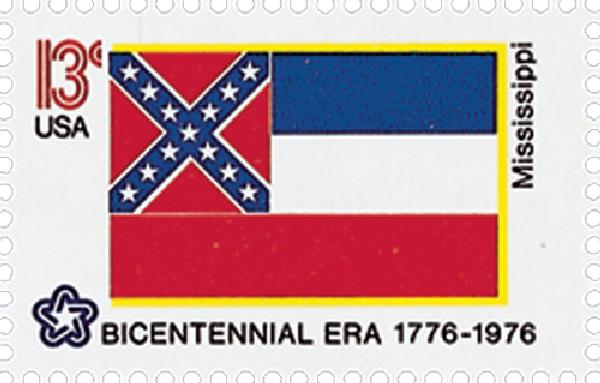
To assuage itself of past sins, Mississippi, he says, should honor the legacy of those who battled against the Jim Crow system by invoking “the heritage of Hiram Rhodes Revels (the first African American from Mississippi to serve in the U. S. Congress), Medgar Evers, James Meredith, the Freedom Riders, Robert Moses, Fannie Lou Hamer, William Winter and the Legislature’s 2020 decision to remove the Confederate battle flag from the state flag.” Note that he does not mention the Civil Rights Museum in Jackson, opened in 2019, which costs tens of millions of dollars to construct and maintain. Yet he continues:
“This noble and courageous heritage could propel Mississippi toward a more equable distribution of political, economic and social power. But that’s wishful thinking and appears unrelated to how Tate Reeves and the GOP leaders in Mississippi imagine the ‘heritage and … opportunities which lie before us.’”
But the same was said about the removal of the Confederate battle flag. And such talk will continue until every last vestige of Southern history is removed from society and replaced by what Yankees consider “acceptable.”
When will the lesson be learned? You cannot give leftists an inch. It’s always something else with them. They are in perpetual revolution and the only solution is to say “No, we will not do this!” And then send a Carpetbagger like Norment back to where he came from. There he can cry over the sins of the North that he somehow refuses to see.
****************************************************
[1] Clyde Wilson, “Those People,” Part 1: https://www.abbevilleinstitute.org/those-people-part-1/
[ii] https://mississippitoday.org/2026/07/28/mississippi-confederate-heritage-jim-crow/
[iii] C. Vann Woodward, The Strange Career of Jim Crow (Oxford: Oxford University Press, 2002), 17-18, 21.
[iv] Larry Tagg, The Battles That Made Abraham Lincoln: How Lincoln Mastered his Enemies to Win the Civil War, Free the Slaves, and Preserve the Union (El Dorado Hills, CA: Savas Beatie LLC, 2012), 287; Harper’s Weekly, October 4, 1862.
[v] William Lloyd Garrison to Samuel Joseph May, April 6, 1863; William Lloyd Garrison, The Liberator, July 19, 1839.
[vi] Abraham Lincoln, Speech in Springfield, Illinois, June 26, 1857, Roy Basler, ed., Collected Works, II, 408.
[vii] Lincoln, Seventh and Last Debate with Stephen A. Douglas at Alton, Illinois, October 15, 1858, Basler, ed., Collected Works, III, 312.
[viii] Senator James Harlan, Speech of January 4, 1860, “Shall the territories be Africanized?”
[ix] https://www.historynewsnetwork.org/article/ira-berlin-the-surprising-importance-of-slavery-in
[x] Walter Lord, ed., The Fremantle Diary: A Journal of the Confederacy (Short Hills, NJ: Buford Books, 1954), 242.
[xi] Ibid., 240-242; Samuel W. Mitcham, The Greatest Lynching in American History: New York, 1863 (Shotwell, 2020).
[xii] Alexis de Tocqueville, Democracy in America, I, 343.
[xiii] Thomas J. DiLorenzo, The Real Lincoln (2002), 22, 28.
[xiv] Samuel S. Cox, Three Decades of Federal Legislation, 1855-1885 (New York, 1885), 245.
[xv] Tagg, 288.
[xvi] Diary of Gideon Welles, September 28, 1865, Volume 2, 372-374.
[xvii] https://www.pbs.org/wnet/african-americans-many-rivers-to-cross/history/free-blacks-lived-in-the-north-right/
[xviii] Thomas Fleming, A Disease in the Public Mind, 206.
[xix] Richard N. Current, Northernizing the South, 31.
[xx] Diary of George Templeton Strong, October 5, 1850.
The views expressed at AbbevilleInstitute.org are not necessarily those of the Abbeville Institute.




Superb!
There is nothing so satisfying as someone who can back their assertions with sources.
I have heard that seven of the non-slave stato that remained in the Union had laws either forbidding Blacks from residing in the state or even entering the state. Could you tell me or us which and the specific restrictions? Thank you.
“And then send a Carpetbagger like Norment back to where he came from.”
People like Norment are not ‘from’ anywhere. They are like germs that float around looking for a host they can live off of and maybe kill.
I want the reader to go to Amanda Marie Green’s facebook site. There you will see a true liberal mental disorder on display. Green is running for Congress in Florida’s 2nd district. Her incompetence knows no bounds. Her primary endorsement is from an old Dim the voters of FL2 cast aside a decade or so ago when he betrayed our district in his second vote on obamacare. His first vote was a nay…but he couldn’t stand up like a man and do the right thing…he had to bow to the communists running the Dim show…so he was a yes on his second vote.
Green has the audacity to blame Republican outgoing Congressman Dunn for the rise in healthcare over the past few years…I suppose having affordable healthcare and being able to “if you like your doctor, you can keep your doctor” was just another Dim lie. Of course, she lies. She has no sense of what is actually real in this life.
She doesn’t mind murdering babies and says there are plenty of good reasons to do so…financial, health of mom, inconvenience…and above all…it’s nobody else’s business if you murder your baby.
The coupe de grace is her profession of faith…”black women are the economic backbone of their families”…I will say again…BLACK WOMEN ARE THE ECONOMIC BACKBONES OF THEIR FAMILIES…EVEN LOUDER…BLACK…WOMEN…ARE…THE…ECONOMIC…BACKBONES…OF…THEIR…FAMILIES.
Well, a commie Dim says it, so it must be true. Go ahead and page through her facebook…lots of black men are pictured…a couple black sheriffs…DO THEY KNOW THEIR WIVES (IF ANY) ARE THE ECONOMIC BACKBONES OF THEIR FAMILIES?
Come on, black sheriffs…are you so SPINELESS as to sell your vote for just another handout? I mean, after all…IT’S OBVIOUS YOU’RE NOT EARNING YOUR KEEP.
Thanks for the fine article, Mr. Walters. I just returned from visiting my Mississippi relatives, who are delightful to be with. But ssshhhh, please don’t tell anyone.