
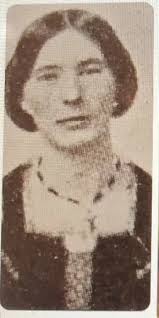
The story of Maria Dolores “Lola” Sánchez reveals a forgotten chapter in American Civil War history, another one that illuminates the substantial yet underappreciated contributions of Hispanic Americans to the Confederate cause. Born in 1844 to Cuban parents who had settled in Florida during the mid 1840s, Lola descended from one of Florida’s oldest and most distinguished families of Spanish descent. Her great grandfather, José de Sánchez Ortigosa Jr., was born in St. Augustine in 1724 during the First Spanish Period, establishing roots that ran deeper than most Anglo families in the region could claim, according to the American Battlefield Trust.
The Sánchez family settled on the east bank of the St. Johns River at Federal Point, opposite the port town of Palatka, approximately 63 miles south of Jacksonville. Her father, Don Mauricio Sánchez, had received the title “Don” from Spanish King Ferdinand VII. Lola grew up alongside her sisters Francesca, called Panchita, and Eugenia, as well as brothers Emanuel and Henry in this prosperous household.
When war erupted between the states, support for secession ran strong among Florida’s families of Spanish descent. Lola’s older brother Manuel Román Sánchez enlisted in the Confederate Army’s St. Augustine Rifles, later designated Company H of the 2nd Florida Infantry. He fell wounded and captured at Gettysburg during the Florida Brigade’s assault on Cemetery Ridge on July 2, 1863.
The war arrived at the Sánchez doorstep on March 11, 1862, when Union warships appeared in St. Augustine’s harbor and the city surrendered without resistance. Federal forces imposed martial law and used the area as a base to launch raids into the surrounding countryside where the Sánchez family resided. Intelligence was clearly leaking to Confederate Captain John Jackson Dickison, known as the Swamp Fox of the Confederacy, who commanded Company H of the 2nd Florida Cavalry from the western bank of the St. Johns River.
Suspicion fell upon Don Mauricio. Despite his elderly condition and failing health, Union authorities arrested him in early 1864 on fabricated charges of being a Confederate spy. They imprisoned him in Fort Marion, the Castillo de San Marcos, in St. Augustine. Every plea from the Sánchez family for his release met with refusal. This grave injustice transformed Lola and her sisters from ordinary young women into active Confederate intelligence operatives.
The sisters devised an ingenious espionage strategy rooted in Southern hospitality. They deliberately ingratiated themselves with Union officers stationed near their home, regularly preparing elaborate meals of Cuban cuisine and entertaining Federal soldiers with conversation and music. The officers, lulled into complacency by the sisters’ warm hospitality, frequently discussed sensitive military plans in their presence, never suspecting the charming young women posed any threat.
The evening of May 21, 1864, brought the opportunity that would make Lola Sánchez a Confederate legend. Three Union officers arrived at the Sánchez residence with guests for dinner. While the meal was being prepared, Lola overheard a conversation on the front porch revealing Federal plans to raid Confederate supplies at St. Augustine via the USS Columbine the following morning, then advance to Horse Landing to ambush Captain Dickison’s Confederate soldiers while they slept.
Recognizing the urgent danger facing Southern forces, Lola immediately convened a meeting with her sisters. They crafted a careful plan to allow her escape without alerting their Yankee guests. Eugenia would continue dinner preparations and maintain the deception that Lola remained in the kitchen assisting. Panchita would distract the Federal officers with song and lively conversation. This would permit Lola to slip away unnoticed.
Lola rode a mile and a half on horseback through dangerous terrain in the darkness, crossing the St. Johns River by ferry to reach Captain Dickison at his camp. She delivered the intelligence immediately, providing Dickison precious time to mobilize his troops. Within less than two hours, Lola completed the perilous journey and returned home without the officers realizing she had been missing. Her courageous act of espionage became the catalyst for the successful Battle of Horse Landing.
Armed with Lola’s warning, Captain Dickison repositioned his forces and prepared an ambush. On May 22, 1864, he placed artillery on the banks of the St. Johns River near Palatka and opened fire on approaching Union gunboats, damaging several vessels. The USS Columbine, a side wheel steamer gunboat, continued upstream. The following day, May 23, when the Columbine reached a sharp bend in the river at Horse Landing, Dickison’s artillery struck its rudder and shattered its steam stack. Unable to steer, the ship ran aground under withering Confederate fire.
The engagement proved devastating for Federal forces. Of the 148 men aboard the Columbine, only 66 survived the Confederate volleys. The Southerners burned the grounded vessel, achieving one of the war’s most remarkable victories. The Battle of Horse Landing stands as one of the only instances in American military history in which a cavalry unit captured and destroyed an enemy gunboat.
Miraculously, Confederate forces suffered no casualties in the engagement. In honor of the Sánchez sisters whose intelligence made the victory possible, Dickison’s men captured a Union pontoon boat and christened it “The Three Sisters” for Lola, Panchita, and Eugenia. The name served as a tribute to the crucial role these Hispanic women played in defending the Confederacy.
Following the battle, Panchita traveled to St. Augustine to plead for their father’s release. She offered to take his place as a prisoner, a gesture of filial devotion that moved the authorities. They released Don Mauricio and allowed both father and daughter to return home. Remarkably, despite their extensive espionage activities, the Union Army never discovered the spy operation conducted by the three Sánchez sisters throughout the entire war.
The sisters continued their intelligence gathering for another year until the war’s conclusion in 1865. After the conflict ended, all three married former Confederate soldiers. Lola married Corporal Emanuel Lopez of the 3rd Florida Infantry. The Battlefield Trust records that they had eleven children together, including a daughter named Leonicia. Panchita married Captain John R. Miot of the 6th South Carolina Cavalry and relocated to South Carolina, where she lived until her death in 1931. Eugenia married Private Alberto Crespin Rogero, who had served in the 2nd Florida Cavalry and fought at Horse Landing, and resided in St. Augustine until her death in 1932.
Lola died in 1895 and was laid to rest in St. Ambrose Cemetery in Elkton, Florida. Her legacy lived on through her descendants. In 1909, the daughters of Lola and Panchita served as pages at the State Convention of the United Daughters of the Confederacy in St. Augustine, honoring their mothers’ wartime service to the South.
All three Sánchez sisters became devoted members of the United Daughters of the Confederacy, an organization dedicated to preserving Confederate memory and heritage. The names of Lola, Panchita, and Eugenia Sánchez appear in gold letters on a plaque listing 106 Confederate heroines, which hangs in the United Daughters of the Confederacy Memorial Building in Richmond, Virginia. This permanent recognition ensures that their contributions to the Confederate war effort will not be forgotten.
Lola Sánchez’s espionage, motivated by her father’s unjust imprisonment, led to one of the war’s most extraordinary military outcomes. Her midnight ride through dangerous territory to warn Confederate forces stands alongside similar acts of courage by women throughout Southern history. Yet unlike more celebrated figures, Lola and her sisters operated in an ethnic and cultural context that mainstream historians have systematically marginalized.
The Sánchez sisters exemplify the Hispanic contribution to the Confederacy and the broader American South. From the Spanish founders of St. Augustine in 1565, through the colonial period, and into the antebellum era, families of Hispanic descent built communities, established businesses, and participated fully in Southern society. When the Confederate States of America sought independence, these families defended their homeland alongside their Anglo neighbors.
Maria Dolores Lola Sánchez secured a lasting, if underappreciated, place in American history through her bravery, quick thinking, and devotion to the Confederate cause. Her story, along with those of thousands of other Hispanic Southerners, deserves recognition as an integral part of the diverse ethnic tapestry that characterized the American South and the Confederacy it sought to establish. The gold letters spelling her name in Richmond stand as testament to a heritage that mainstream narratives continue to ignore, but which remains essential to understanding the full complexity of Southern history and the Civil War era.





Thank you. That was very interesting. One of the other instances of a cavalry unit defeating gunboats was when Forrest captured several union boats at Paris Landing in October 1864.
Fascinating! Thank you.