What is a Melungeon?
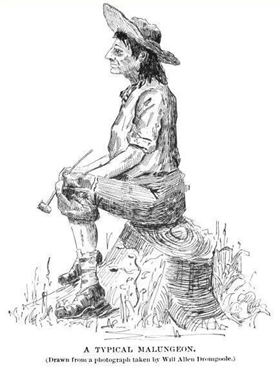
Deep in southern Appalachia, there is a people whose history is clouded with ambiguity, but also intense distinction. Their exact origin is relatively unknown, but they have called these particular mountains home since well before the American War for Independence. The Melungeon (pronounced Meh-Lun-Jin) people are a historically distinct group whose roots lie in the rugged mountains of east Tennessee, southwest Virginia, northwest North Carolina, and southeast Kentucky. They are routinely cast as a “tri-racial” collection of families that created a distinct community over the course of two centuries.
Etymology of “Melungeon”
The term “Melungeon” is a relatively modern one. It first appeared in Southwestern Virginia, particularly Scott County, in 1813. The term “Melungeon” was first used by Susannah Kitchen and Squire William Brickey to describe a group of people they thought local parishioners of their church in Stony Creek were harboring. Squire Brickey served as the first commissioned Justice of the Peace in Scott County and served as clerk and deacon at Stony Creek Primitive Baptist Church, near Fort Blackmore. The account was recorded in the church minutes which Brickey most likely authored. The etymology of the term is French, stemming from mèlange which means “mixture”. The extreme southwestern counties of Virginia already had an existing French influence. Prior to 1763, these counties were adjacent to the vast French territory that stretched between the western Appalachians and the Mississippi River. While large French settlements were never present in the area, it was utilized as trade routes. Additionally, the French alliance with Native tribes such as Cherokee and Shawnee (who lived and traded within these boundaries) influenced some of the linguistic patterns among these tribes. Cherokee descendants, even into the 19th century, were using French words they had learned through earlier colonial interactions. In 1793-94, a French nobleman, Baron Pierre Francois de Tubeuf, established a French settlement in the area after gaining title to thousands of acres in what was then Russell, now Wise and Scott counties. Tubeuf planned to build a city there just about ten miles above Fort Blackmore. Initially joined by at least five other French families (the Brickeys included), the settlement declined after Tubeuf’s death. Brickey (originally spelled Briquet) was of French Huguenot origin whose family had arrived in the colonies about 1680.
Ironically, people who would classify as Melungeon would not refer to themselves as such. Historically, this was not a term utilized by these people and it was more of a derogatory racial epithet to describe them. More than not, individuals of this community would refer to themselves as “Indian”, “part-Cherokee”, or “Black Dutch”. It became more common in the mid-20th century to use the term “Melungeon”, primarily as this group garnered increased attention from the fields of genealogy, anthropology, and ethnography who wanted a standardized terminology.
Origin Theories
The origins of the Melungeon’s remains a mystery for both historians and genealogists. Some theories about the Melungeon people push their origins back into the pre-Columbian era, suggesting that their ancestry may include groups who arrived in the Americas before the voyage of Christopher Columbus. Among the most enduring of these ideas is the legend of Prince Madoc, a Welsh prince said to have sailed to North America in the 12th century and established a settlement that later blended with Indigenous populations. They supposedly lived along the western border of Appalachia and spread to the lower Midwest, following the Ohio River. Many notable explorers such as Meriwether Lewis and Christopher Newport; colonial-era military personnel such as George Rogers Clark; and statesmen such as Thomas Jefferson, Thomas Hinde, and John Sevier believed this theory. Jefferson even directed Lewis and Clark to search for these mysterious people on their expedition west. In 1799, along the Alabama and Ohio Rivers, skeletons of men were discovered with breastplates bearing the Welsh coat of arms. Accounts of John Sevier and other notable men wrote about discussions with Native leaders who spoke of these people that their ancestors had encountered. It was believed that the Melungeons were a remnant who decided to stay in the mountains and intermarried with other Natives and Scots-Irish settlers over the following centuries.
Other hypotheses point to possible contact between Native groups and Mediterranean peoples such as Iberian, Moorish, or even Phoenician sailors who may have crossed the Atlantic through early navigation or drift voyages. Supporters of these theories often cite similarities in physical features, certain surnames, and fragments of cultural practices that appear distinct from typical Anglo-American frontier populations.
Some believed them to be the descendants of Portuguese sailors who were bound under the Spanish crown, migrating from Florida into the mountains of East Tennessee, eventually intermarrying with Native populations like Creek, Cherokee, Monacan, and Shawnee. Others thought they were the descendants of the lost colony at Roanoke, who disappeared and were thought to be taken away by Native captors eventually integrating with that population. Some researchers have suggested they are a lost tribe of Israel that had migrated into western Europe and traversed the Atlantic Ocean long before explorers arrived on the continent. Many accounts of Native tribal leaders mention a people who already had settlements upon their arrival. They spoke of wars with these groups and that the Natives continually pushed them deeper into the mountainous regions of the eastern seaboard. Many also stated that after several conflicts, these inhabitants made a deal with the Natives that they would willingly migrate to the other side of the mountains if they could be left alone. This was arranged and the accounts of interaction between Natives and these mysterious people stopped. Later explorers, frontiersmen, and military personnel attempted to locate these people to no avail, but uncovered structures and relics that local Native populations in the area did not claim were theirs.
While all of these theories are fun, there is not enough historical or genetic evidence at this time to suggest any are true. However, many families from Appalachia have genetic traces of some of the aforementioned groups.
The Unknown Record
What is really unknown regarding the Melungeons is their origin point in history and what genetically constitutes a true Melungeon. It is unclear whether these populations emerged suddenly in the colonial period or whether they were the continuation of older, undocumented groups that had already developed distinct identities. Genetic studies have provided some clues about mixed ancestry, but they cannot fully explain when or where that mixing first occurred. Because written records do not exist for these communities prior to widespread European contact, a lot rests on oral traditions, genetic clues, and scattered early accounts.
Before they appear in clearer records in the late 18th and early 19th centuries, there is little agreement on where these communities were located or how they first formed. It is unclear whether Melungeon ancestors emerged gradually through interactions among Europeans, Africans, and Natives on the colonial frontier, or whether already mixed groups migrated into Appalachia from coastal regions like Virginia or the Carolinas. Other interpretations emphasize the possibility of early interactions between Native peoples and small groups of outsiders who arrived before widespread colonization, creating isolated mixed-ancestry communities deep in the Appalachian Mountains. Over generations, these groups could have blended culturally and genetically, forming the foundation for what would later be identified as Melungeon populations. In this way, the pre-Columbian dimension of Melungeon history remains less a set of proven claims and more a space defined by gaps, where family memory, regional myth, and limited evidence leave the earliest chapters still largely unwritten.
There is also significant uncertainty about how these early families lived and organized themselves during the colonial period. Questions remain about their economic roles and land ownership patterns. Historians do not fully understand the extent to which Melungeon ancestors were socially isolated versus integrated into surrounding frontier settlements, nor how they navigated legal systems that increasingly enforced racial boundaries. Because they did not fit neatly into the normative racial categories of colonial society, it is debated how accepted or segregated Melungeon families were among other frontier peoples. Many Melungeon families settled in secluded mountain communities where geographic isolation allowed them to maintain tight-knit social networks and distinctive family lineages. Even family connections between well-known surnames associated with Melungeon heritage are not always clearly documented in early records. Early census and court records often labeled individuals inconsistently; sometimes as “free persons of color,” sometimes as “white,” and occasionally with ambiguous terms like “mulatto” – making it difficult to trace a continuous identity or community across generations.
Because so much of their history was unrecorded, the colonial-era origins of the Melungeons remain fragmented; built from partial records, local traditions, and ongoing interpretation rather than a single, definitive narrative. Despite the unknowns, is it clear they persisted, contributing to the cultural fabric of Appalachia.
The Genetic Record
What has been determined through DNA research is that those who are traditionally considered Melungeon are often registered as “tri-racial”. Today, ongoing historical research and genealogical study continue to shed light on their complex origins and enduring legacy in the region. Tested descendants show a heavy European segment of DNA, but often have small hints of African and Native segments anywhere between 1%-5%. What has been noticed in male descendants of Melungeons is that they often have an African Y-DNA haplogroup. Y-DNA tracks only the direct, paternal line and isolates it. So, genetic genealogists now theorize that many Melungeons are descended from interracial relationships and marriages between African or “Mulatto” males and European women in the early to mid-17th century.
It is important to remember that (despite the radical Left telling us constantly that America’s history is the story of harsh chattel slavery and racial segregation from day one) early colonial race relations were significantly more fluid than they were after the American War for Independence. There existed both European and African indentured servants that worked toward freedom and achieved it well before the seemingly harsher slave system became dominant. These indentured servants often intermarried and, once free, could engage in colonial society in an entirely mainstream way alongside other settlers who were free Whites. There is plenty of evidence of these “Free Persons of Color” being granted land, participating in courts, holding membership in Anglican churches, and building businesses alongside their fellow colonial settlers. The children of these European and African unions, under Virginia law (and elsewhere), were often considered “free” and “White” because their racial status depended upon their maternal heritage. So, the children of African males and European females were free to pursue life as they pleased. The law did eventually change and become stricter, closing the door on that early colonial chapter of American history. Many of the early descendants (grandchildren and great-grandchildren) of the original interracial unions moved further west as laws grew less tolerant; settling in the hollers of the Appalachian Mountains where there was no established racial hierarchy and the reach of the law was basically non-existent.
Because settlements of Native communities still existed all throughout the mountains and western Appalachian valleys, these bi-racial people naturally came across them as they migrated. It is really unknown how these initial interactions fared as there are very little primary sources documenting it. However, positive relations must have developed as genetics confirm that these groups integrated and produced children together in the 17th and 18th centuries, becoming a tri-racial community.
Genetic testing and an array of DNA-targeted investigations have tried to pinpoint the origin of these people, but it has proved incredibly difficult. This is primarily due to the tight-knit genetic pool descendants originate from, where extreme isolation and familial networks required inbreeding to reproduce. This cross-breeding of families over the course of nearly 400 years so muddies the genetic data, it is hard to tell where DNA components originated from. Furthermore, as travel became easier and infrastructure installed, many of the Melungeon descendants began moving away or married into more genetically diverse populations, diluting the genetic data needed for conclusive results. The typical Melungeon characteristics (physically and genetically) are fading away. There are probably thousands of people in Appalachia and beyond that have Melungeon roots, but would never know it because their ancestors intermarried with a variety of other settlers, overriding the genetic markers to where they are almost non-existent.
While only a limited sample of results derived from targeted genetic testing exists, the vast majority depict a similar genetic heritage: largely European with varying degrees of Sub-Saharan African included. Samples also show a distribution of Native tribal DNA, but this appears less common among the “Melungeons” as a whole and more sporadically placed in communal clusters, indicating that all Melungeons are not necessarily the same genetically.
Conclusion
I have a personally vested interest in the history of Melungeons. I became interested in them after I discovered a branch of my family most likely had Melungeon roots. This came largely as a surprise after casual DNA testing was conducted out of pure interest. However, it provided the only answer that made the most sense with the records, data, and research that were available. So, while I would not consider myself “Melungeon”, at least one of my direct lineages fits this genetic anomaly. Ironically, the aforementioned Squire William Brickey was also my 5th great-grandfather. In an odd turn of events, Brickey’s great-great-granddaughter ended up marrying the descendants of the Melungeons he had forced out of his congregation and community. But, that’s Appalachia for ya’.
The story, both historically and genealogically, of the Melungeons is fascinating and there is existing research regarding this group, but there is much more to be done to better understand their origins and cultural customs of this Southern enclave. While they do not fit cleanly in the lines of the primary settlers of Appalachia (historically understood), they are nonetheless an integral part that defines a region within a region. They are the ancestors to many of Appalachia’s residents today and beyond. The Melungeons are a story of Southern resilience and a reminder that history is not always so “black and white” (in this case quite literally) and that this country has a rich history of inherited, organic traditions that live on despite the odds being against them.
The views expressed at AbbevilleInstitute.org are not necessarily those of the Abbeville Institute.




Very interesting, lot of theories. The early colonial frontier had a mixture of African white and native, but Vurginia law in 1660 made the permanent servitude of Africans a “seemingly”harsh system? Uh yeah, watch your white superiority Cole. There are many of these tri-racial groups, Sappony, Lumbee, Guinea, Turks (in SC) mixed race. Melungians were counted as “colored” by the racist census director Plecker in the early to mid 20th century.
I grew up in West Tennessee and later lived in Lynchburg, Virginia on the east side of the Blue Ridge. I took a job in Ashland/Russell Kentucky in northeast Kentucky and lived there for thirteen years. It wasn’t until I was transferred to Texas, then back to Kentucky due to a company merger that I happened to see a Kentucky public TV program that I had ever heard the word Mulengeon. Bear in mind that I knew a lot of people from Eastern Kentucky, Southwest Virginia, Northeast Tennessee in the military. Not one single time did anyone ever mention the word Melungeon or claim to be one. I suspect the Melungeon theory comes more out of the 1990s than any other time. By the way, my great-great-grandmother said she was Black Dutch. She was from western North Carolina. Guess what! She actually WAS Black Dutch! Her parents were German Anabaptists who moved to North Carolina from Pennsylvania after the Revolution. “Black Dutch” is a term applied to Germans with dark hair and features. Some of her descendants thought she was Cherokee because she called herself Black Dutch when she really was Black Dutch!
Also another group is called Black Irish.
There appears to have been a chain migration of people with my surname to present day Sullivan County, TN in the late 18th century starting with Letitia Shelby (nee Cox) wife of Evan Shelby and mother of Issac Shelby (Governor of KY) living at their home ‘Sapling Grove’ at present day Bristol TN (John Sevier lived with them there for awhile). They were shortly followed by enough with the same surname that they collectively constituted the largest surname group among the signers of the first Watagua Association charter. I presume there was a family connection among them since the connection is assumed by their descendants in the present day but haven’t seen the conjecture proven.
Growing up I was exposed to the ongoing Cherokee vs Black Dutch dispute among my Sullivan County kin such that I spent a long afternoon staring at my g-g mother’s old daguerreotype photo of an paternal ancestor who looked so strangely dark that I later spent one of my two days visiting Amsterdam in the early ‘80s asking befuddled Dutch where I could find information on their purported Black Dutch countrymen. Since then I’ve lived through the shifting dna results starting with significant native dna ‘results’ turning into larger than average Spanish contributions to otherwise British Isles results. I quit tracking the shifting DNA landscape several years ago but noted the purported rediscovery about 14 years ago of recorded evidence of the grave of one of Juan Pardo’s soldiers at the foot of a creek near a great grandparent’s home discovered and recorded before the civil war, and later forgotten.
https://holstonia.co/knowledge-base/conquistadors-at-saltville-a-new-historical-perspective/
My impression is that no one lived in the Appalachian Mountains year around until escaped indentured people did. The Cherokee certainly didn’t. Who would (with 18th century technology) but desperate people? A lot of evidence suggests indentured people were treated more harshly than slaves (who were a long-term investment). The majority don’t seem to have survived their term of indenture according to the few historians who’ve tried to assess it.
Their interactions with slaves could easily account for the 1-5% Negroid DNA among Melungeons.
Several articles I read a few years ago dealt with the history of the Melungeon, relating its origin to one or two Turkish ships carrying slaves that ran aground off the coast of Virgina and North Carolina back in the late 17th century. Allegedly, the word had its origin in the Turkish word “Mal-an-çan” which meant more or less the “cursed of God”. The Portuguese, Spanish and Turkish slaves escaped the ships and fled into the western areas of Virginia and North Carolina. There was even a governor of West Virginia some years back who had traced his family back to these escaped slaves. And the article even maintained that Elvis Presley was a descendant of the Melungeons.