
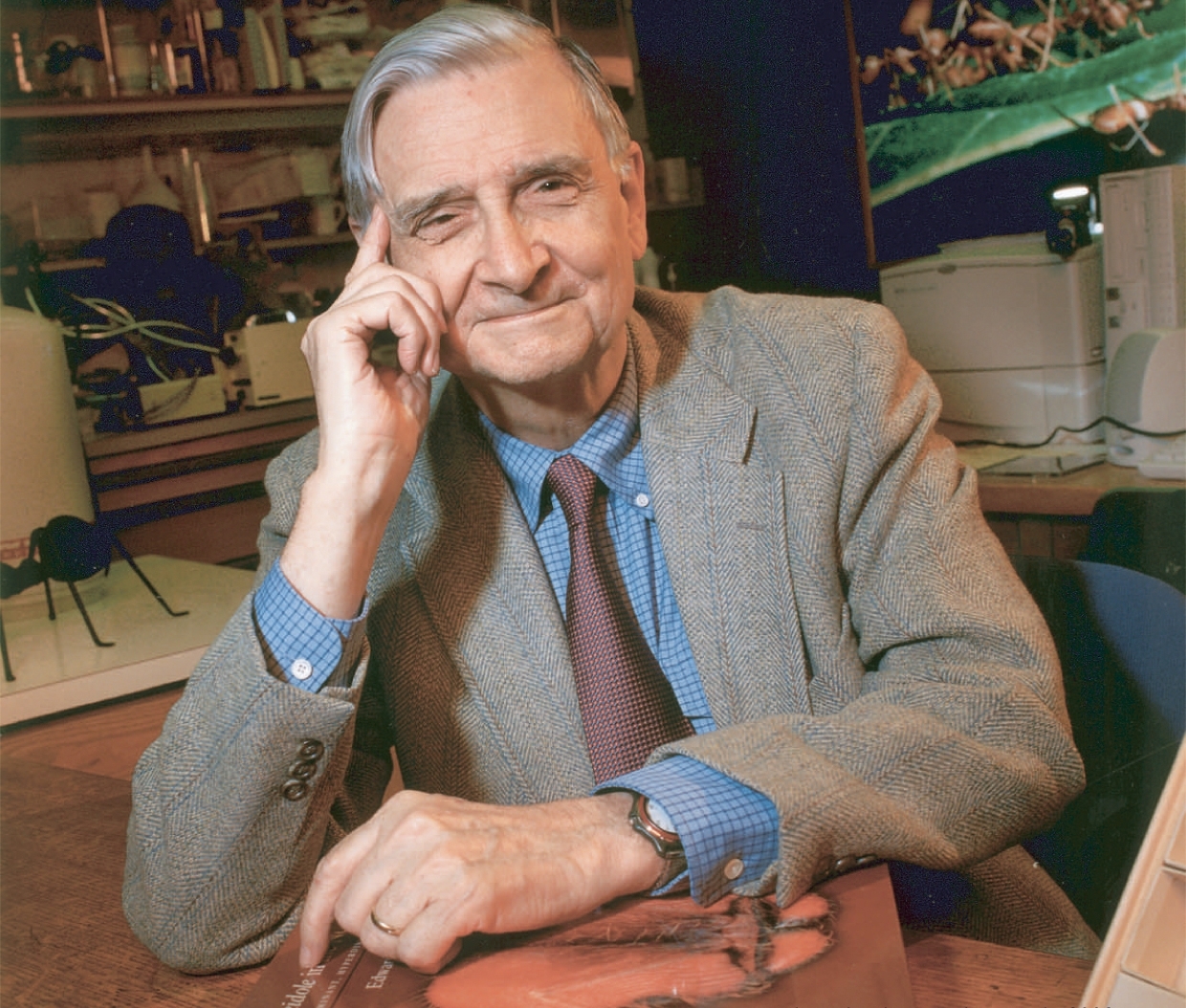
Edward Osborne “E. O.” Wilson was born June 10, 1929, in Birmingham, Alabama. At the age of seven, he spent time with family friends in Paradise Beach, Florida, where he fell in love with the salt marshes, bays, and creeks and their fascinating wildlife. He particularly loved birdwatching. But one day, he snagged a fish on his line, pulled it suddenly, and it hit him in the face. A fin pierced his eye, resulting in permanent partial loss of vision.
The birds he once enjoyed following became colorful blurs he could no longer identify. He turned his attention to insects, creatures he could bend close to and examine. Ants caught his attention, and he read all the books on insects he could get his hands on.
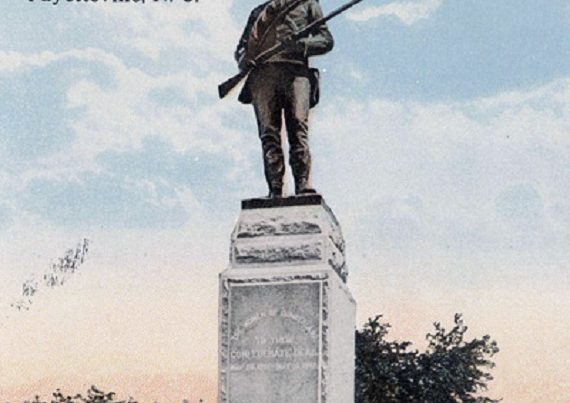
The following year, Edward attended the Gulf Coast Military Academy in Biloxi, Mississippi. Here he learned history, science, and Southern culture, which stuck with him for life. In Naturalist, his autobiography, he wrote:
“Young men could aspire to no higher calling than officer rank in the military. The South continued her antebellum dream of the officer and gentleman, honorable, brave, unswerving in service to God and country. Our men, and especially our officers, were nonetheless the finest soldiers in the world at that time. They were Southerners, men not to be trifled with.”
Later, Wilson earned a BS and MS in biology at the University of Alabama, and completed his PhD at Harvard, where he was admitted as a Junior Fellow of Harvard’s Society of Fellows. This enabled him to join several expeditions to study and collect specimens. His scientific travels took him to Cuba, Mexico, Australia, and New Guinea, which became the basis of several papers and books on ants, establishing him as the world authority on the subject.
In 1975, Wilson published his groundbreaking work, Sociobiology: The New Synthesis. In addition to documenting the role evolution played in shaping behavior, it argued against the doctrine of tabula rosa, which held that humans are born as a blank slate and are the products of their environment. This rubbed the egalitarian left the wrong way, claiming that Wilson was promoting racism and misogyny. His colleagues Richard Lewontin and Stephen Jay Gould openly attacked his views. In February, 1978, while defending his work at the American Association for the Advancement of Science, members of the International Committee Against Racism surrounded Wilson and doused him with ice water.
But Wilson was a fighter. In 1978, he published On Human Nature, a vigorous and meticulously researched defense of sociobiology. Even critics acknowledged the soundness of his arguments. The following year, Wilson’s book won the Pulitzer Prize for non-fiction.
While open to debate with anyone, E. O. Wilson never backed down from his core beliefs. He spoke and wrote passionately about humanity’s deep ties to nature, believing those ties refuted leftist egalitarianism. He once wrote, “I believe that in the process of locating new avenues of creative thought, we will also arrive at an existential conservatism. It is worth asking repeatedly: Where are our deepest roots?” In 2009 he told a New York Times reporter, “I’m not saying that everyone should be paid the same. People have tried that and it was a dismal failure. Karl Marx was right, but he picked the wrong species. With the ants, he was right. In their world, the individual is nothing, the society is everything.”
Scholar, Southern gentleman, and rebel, E. O. Wilson revolutionized modern biology and forced public discourse to address topics once thought taboo.
The views expressed at AbbevilleInstitute.org are not necessarily those of the Abbeville Institute.