


Few political figures in the 20th century confronted communist subversion and federal overreach as aggressively as Martin Dies Jr. of Texas. Born in Colorado City, Texas on November 5, 1900, Dies emerged from the Lone Star State’s conservative Democratic tradition to become one of the century’s most consequential congressional investigators. His father, Martin Dies Sr., served as a Democratic congressman from 1909 to 1919, instilling in his son both a reverence for constitutional government and a deep suspicion of centralized power. The younger Dies would carry these principles to Washington, where he waged a tireless campaign against forces he believed threatened the very foundations of the American republic.
Dies earned his law degree from National University in Washington in 1920 and won election to Congress in 1930 at just 29 years old, taking his seat in 1931 as the youngest member of Congress, representing East Texas’s Second Congressional District — his father’s old seat. His early career coincided with the Great Depression and Franklin Delano Roosevelt’s sweeping New Deal programs. Initially, Dies supported most New Deal economic reforms, including bank reform and farm credit programs. Yet by 1935 Dies began distancing himself from New Deal liberalism, fighting the administration on coal-industry regulation and minimum-wage legislation, and by 1937 had turned against Roosevelt entirely.
By 1937, Dies’s support for Roosevelt had crumbled. His breaking point came with deficit spending, centralized agricultural controls, and particularly the rising power of labor unions in national Democratic politics. The Congress of Industrial Organizations wielded increasing influence and Dies watched with growing alarm as New Deal programs lacked sunset clauses and temporary expedients became Washington’s permanent posture.
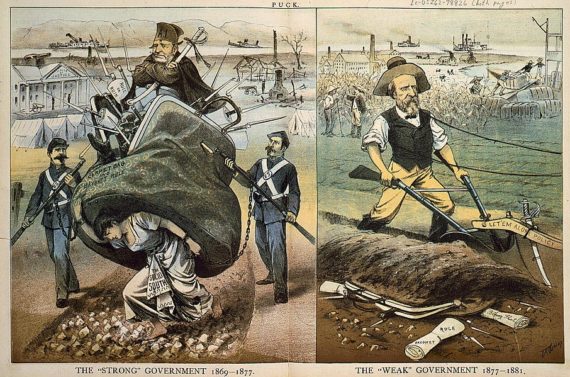
The South had experienced firsthand the consequences of federal consolidation during and after the Civil War. Lincoln’s expansion of executive power, the suspension of habeas corpus, and the Reconstruction policies that followed had left deep scars on the Southern body politic. Dies understood that the New Deal represented another wave of federal centralization, this time cloaked in the language of economic emergency rather than military necessity. The pattern was unmistakable to any student of American history willing to look beyond the prevailing progressive narratives of the era. What Lincoln had begun with bayonets, Roosevelt sought to accomplish through bureaucratic agencies and federal spending programs that created dependency rather than independence.
Dies believed the New Deal was concentrating dangerous federal power while simultaneously enabling radical left-wing infiltration of the government. He took it upon himself to use the congressional investigative process to expose and challenge the institutional pillars of Roosevelt’s expanding administrative state. The WPA Federal Theatre Project became one of his most visible targets. The committee declared it a “hotbed of Communists” and “one more link in the vast and unparalleled New Deal propaganda network.” This campaign contributed to the program’s complete elimination in June 1939, demonstrating that congressional oversight could serve as a check on executive branch overreach.
On May 26, 1938, Dies successfully shepherded H. Res. 282 through Congress, establishing the Special Committee on Un-American Activities with himself as chairman. The committee became so closely identified with its founder that it was popularly known as the “Dies Committee” throughout his tenure. While the mandate nominally covered both fascist and communist subversion, Dies concentrated his efforts on exposing Soviet-aligned infiltration of American institutions, recognizing that communism posed the greater long-term threat to the constitutional republic.
The committee’s investigative methods were aggressive and effective. Dies understood that public hearings served multiple purposes beyond mere fact finding. They educated the American people about subversive activities occurring within their own government and cultural institutions. They put those who sought to undermine American sovereignty on notice that their activities would not go unchallenged. Most importantly, they provided Congress with the information necessary to take legislative action against communist front organizations.
This robust congressional backing emboldened Dies to take on the most powerful figure in Washington. The Dies-Roosevelt conflict became one of the defining political rivalries of the late New Deal era. Dies mounted a campaign against Secretary of Labor Frances Perkins for her handling of deportation proceedings involving alleged communist Harry Bridges, and a formal impeachment resolution — H. Res. 67, introduced by Representative J. Parnell Thomas of New Jersey — was filed in January 1939, sending a clear signal that the executive branch would be held accountable for its immigration enforcement failures. In March 1942, Dies wrote directly to Vice President Henry Wallace claiming that 35 members of his Board of Economic Warfare had communist organizational ties.
Roosevelt personally condemned Dies’s tactics. After the 1938 Michigan gubernatorial race, in which Governor Frank Murphy lost his reelection bid following HUAC testimony that labeled him “a Communist or a Communist dupe,” FDR called it a “flagrantly unfair and un-American attempt to influence an election.” Yet Dies remained undeterred. In his 1963 memoir The Martin Dies Story, he claimed that Roosevelt personally tried to obstruct his anti-communist investigations. The two men operated from fundamentally opposed visions of the federal government. Roosevelt was building a large interventionist state supported by labor unions and liberal agencies, while Dies used the investigative power of Congress to expose and challenge the very institutions that made that state function.
The Texas Congressman found crucial support from Vice President John Nance Garner, a fellow Texan and New Deal skeptic who co-founded the committee with Dies specifically to discredit and throttle the New Deal from within.
Dies soon carried his case from the committee room to the printed page. In 1940, The Trojan Horse in America was published under Dies’s name — though the TSHA Handbook notes it was “actually written by J. B. Matthews,” his chief committee investigator. The book cemented Dies’s national reputation among conservative audiences. Drawing on committee testimony, it argued that communists had infiltrated American institutions wholesale, identifying organizations such as the American Youth Congress, the National Negro Congress, the International Workers Order, and several CIO unions as Trojan Horse operations serving Soviet interests. The book provided Americans with a comprehensive analysis of communist front organizations and their methods of infiltration.
Dies returned to Congress in 1952, winning election to a new congressman-at-large seat — though notably, HUAC itself refused to readmit him, having concluded that he “had damaged the cause of anticommunism.” He introduced H.R. 226, a bill to criminalize Communist Party membership and provide penalties for party members — provisions he called the real “enforcement provisions” that the Communist Control Act of 1954 ultimately adopted in modified form, though without the direct membership penalties Dies considered essential. Though the political landscape had shifted, Dies remained committed to the cause he had championed since the 1930s.
The Texas congressman died in Lufkin, Texas on November 14, 1972, having witnessed both the vindication of many of his warnings about communist infiltration — through the Venona decryptions and post-Cold War archival revelations — and the continued expansion of federal power he had spent his career opposing.
Martin Dies Jr. left behind a legacy as sprawling and resilient as the Texas plains. He lived his life in fierce defiance of any power that dared to place a yoke upon the American republic.
The views expressed at AbbevilleInstitute.org are not necessarily those of the Abbeville Institute.




A remarkable individual. We could use someone like Dies today.
Thank you for this. There should be more remembrances of Southern/Conservative Democrats such as Dies. They are uniformly neglected in any account of American conservatism. It is a rich field that no scholar has truly deeply plowed.