
Frequently, I have described Southern music as a blending of influences. The interaction between Scots-Irish settlers and enslaved Africans produced a musical synthesis that is audible, traceable, and well documented. One can easily point to specific features to prove it. There are ballad forms, fiddle repertory, banjo construction, and rhythmic sensibility to reasonably identify their origins in Southern music. The resulting music bears the marks of that contact in ways that can be heard, analyzed, and historically supported, as you can hear the Irish in Southern music, just as easily as you can also hear the Africans in Southern music.
Additionally, the synthesis is clean, because of the obvious iconic nature of the ingredients involved. If you take sodium, hydrogen, carbon, and oxygen and combine them, you don’t just get a pile of elements sitting next to each other. You get baking soda, something that behaves differently than any of its parts. Southern music works the same way. Therefore, it’s natural to be curious about whether Native American music participates in this same process to blend in with Southern music. Since Native peoples were present in the same landscape, shouldn’t their musical influence also be detectable as a component of Southern music? It seems logical. If Southern music is a compound like baking soda, then its ingredients ought to be identifiable. If Scots-Irish and African elements can be isolated, then Native elements should be as well. That expectation, however, imposes a model that the historical record doesn’t support. I’m not suggesting the Native American influence is not there in Southern music. I’m suggesting we just can’t see it.
Scholars typically identify cultural musical influence by isolating specific features. We can look at melody, rhythmic patterns, the types of instruments used, or formal design structure of the songs. All of these can usually be traced with reasonable confidence back to a particular source, and this method works best when a feature is strongly associated with a single tradition. The banjo, for instance, can be linked to West Africa with a high degree of certainty, just as Anglo-Celtic ballad structures can be recognized within Southern repertory through their narrative forms and melodies. In such cases, the variables separate cleanly enough to be named, allowing influence to be heard, analyzed, and historically supported. It is precisely this expectation of identifiable features, however, that creates a problem when we turn to Native American music, where no comparable feature presents itself with the same clarity in the development of Southern music.
Where Native music appears, it tends to take forms that are not exclusive to Native traditions. Pentatonic melodies, cyclical repetition, polyrhythms, call-and-response form between a leader and a group, and drone textures in the harmony are noticeable within Southeastern Native music, but the problem is that they are not uniquely Native American. These same traits are also well established in European and African musical systems that converged in the South. The result is not a distinct, traceable strand, but a condition more familiar to statisticians than to historians known as shared variance, or what is more precisely termed multicollinearity. When multiple independent variables contribute to the same observable outcome, their individual effects become difficult, and sometimes impossible, to separate back out. The presence of these musical behaviors is not in question. What cannot be determined with confidence is how much of any one of them belongs to a specifically Native source.
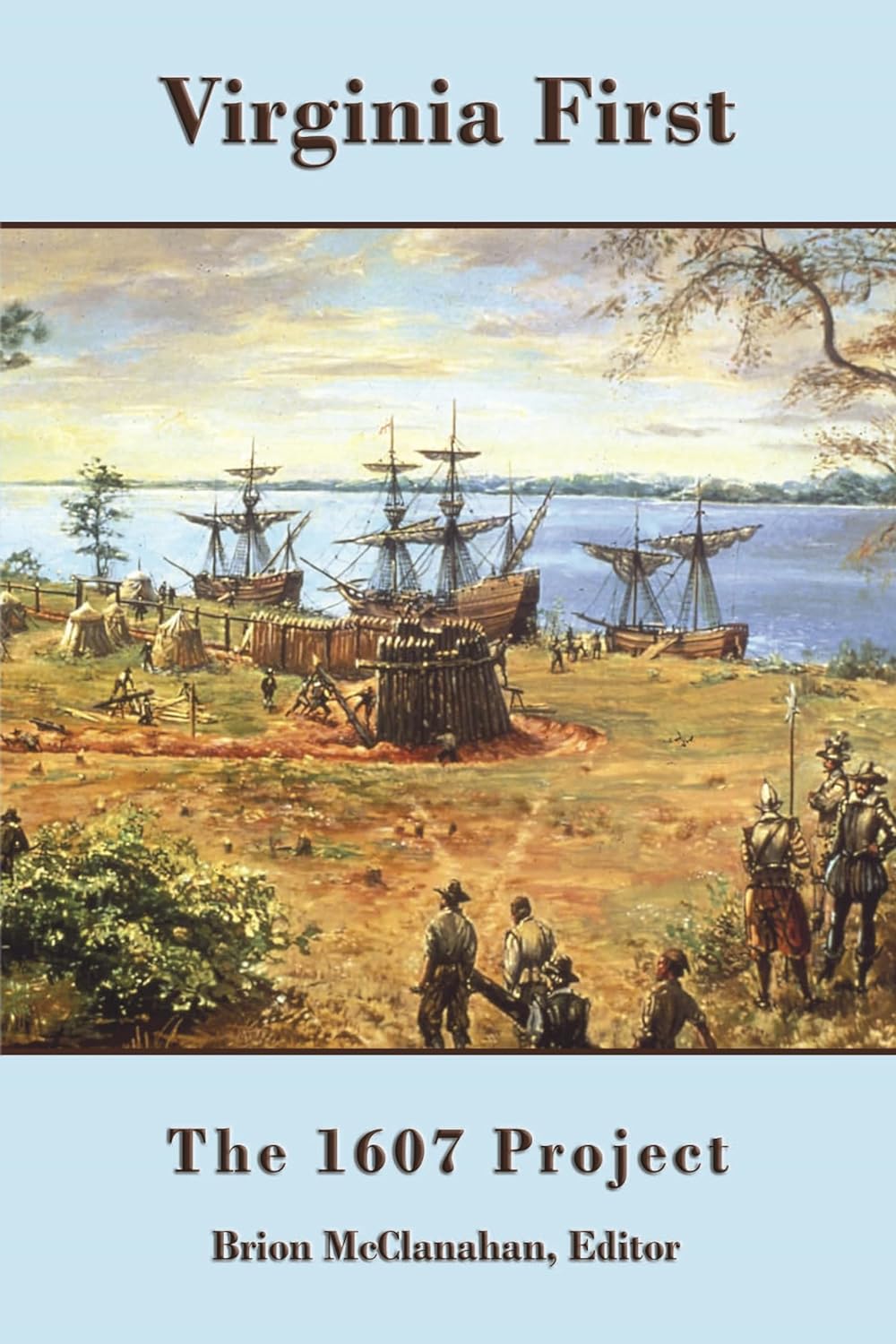
Ironically, the fact that Indigenous music has so much in common with European music, making it difficult to isolate, is the very fact that made it so easy for Europeans and Africans to assimilate with it in the first place. This dynamic can be observed in the earliest documented encounters between English settlers and Native American music in the Virginia colony. When Captain John Smith and the Jamestown settlers encountered the Powhatan people in the early seventeenth century, they did not describe a world of strict musical separation, and what emerges from the record is something much more complex. There are documented instances in which Native and English sound worlds met and blended frequently within the day-to-day life of the Jamestown colonists, including astounding occasions in which Native participants contributed chant-like elements within English worship hymns. This was not a theoretical possibility but an actual event that occurred within the fragile and negotiated environment of the early colony, and when set alongside developments in New England, the contrast becomes clear. In Puritan Massachusetts, Native peoples were NOT incorporated into a shared musical space in the same way. Instead, they were translated, instructed, and expected to convert and conform to English forms within a regulated religious framework.
This contrast is enormous and highly significant on a massive scale. It reflects two distinct approaches to cultural contact, where the Southern one allows for moments of shared practice, however limited and uneven, and the Northern one emphasizes discipline, segregation, and conformity. The significance of this distinction lies in the environment it created. The Southern colonies developed within a cultural condition in which the crossing of musical boundaries was not only imaginable, but permitted and encouraged in practice. In reality, they blended almost too easily. Therefore, within this setting, Native American musical systems did not become a separate, iconic structural component of Southern vernacular music. Southern culture became influenced and changed by Native culture, while Native culture did not become influenced and changed by the South. They were present, heard, and occasionally participated in shared contexts, but they remained intact traditions that were ceremonial, communal, and bounded by conditions that resisted absorption.
That continuity is still visible today in Southeastern ceremonial practices such as the stomp dance traditions maintained by Muscogee and Cherokee communities. The stomp dance is usually reserved for social gatherings within the Native community, and not something typically put on display for tourists. These are not fragmentary survivals but complete musical systems, organized around call-and-response singing, percussive accompaniment through shell shakers, and circular dance formations tied to ritual meaning. The music does not exist as an independent object but as part of an activity that cannot be separated from it. Its structure, performance, and purpose are inseparable. One can hear elements of the stomp dance in Southern music, but it’s a little harder to hear elements of Southern music in the stomp dance. As you watch this video, pay attention to the call-and-response form, the shuffle beat, and the clogging-style nature of the steps. Did those elements flow from Natives to the South, or the other way around?
This pattern is not confined to a single example. Comparable ceremonial systems appear across Southeastern tribes, including the Cherokee, Yuchi, Choctaw, and Chickasaw. In each case, the music is embedded within specific dances, seasonal cycles, and communal functions. It is organized around leader–group interaction and sustained through participation rather than performance. These are not repertories designed for circulation beyond their communities, but practices maintained within them. As a result, they persist not as components within Southern music, but as parallel systems that continued alongside it.
This helps explain why Native influence is so often asserted and so rarely demonstrated at the level of specific musical features. The problem is not simply a lack of evidence. It is a problem of attribution. When several traditions produce comparable musical behaviors, the resulting sound does not carry a clear signature of any one of them. It carries the imprint of their convergence. You don’t hear sodium, hydrogen, carbon, and oxygen. You hear baking soda.
The implication for Southern music is significant. The tradition is not only a record of what blended, but also a record of what could not be disentangled once it did. Some influences remain visible because they introduced elements that were structurally distinct and historically traceable. Others, operating through shared musical logics, disappear into the common fabric. Their presence is real, but it is not recoverable as a discrete component, and reflects a difference in the nature of cultural contact.
The Scots-Irish and African traditions encountered one another under conditions of sustained and enforced proximity. Shared labor, shared space, and repeated interaction created the circumstances under which musical systems could merge. Repertories circulated. Techniques were exchanged. Over time, distinct traditions became interwoven in ways that are now foundational to what is recognized as Southern music.
The relationship between Native American musical traditions and the developing Southern repertory followed a different pattern. Muscogee ceremonial music, particularly in forms such as the stomp dance, remained tied to specific communities, functions, and cycles. It was not organized for circulation beyond those contexts. It was not designed for adoption by outsiders. It remained, in a meaningful sense, intact within its own system of use. And when migrating communities of Southerners encountered large communities of Natives, they typically displaced the Natives instead of sustaining a long-term shared proximity. Seen in this light, emerging Southern music absorbed the musical systems present in its environment that could circulate. It incorporated traditions that were transferable across communities, adaptable to new contexts, and capable of functioning outside their original settings.
In contrast, there were some Southern and borderland traditions, particularly in Louisiana and South Texas, where Native groups such as the Chitimacha, Coushatta, and various Coahuiltecan peoples remained part of the local population. In those cases, Native American presence is more visibly embedded in the cultural matrix. Yet even here, the influence is rarely traceable as a discrete musical element. It appears instead in patterns of community continuity, mixed-heritage populations, and performance contexts shaped by shared regional life, rather than in isolable features of melody, harmony, or instrumentation.
If the expectation of identifiable ‘ingredients’ is set aside, a different kind of influence comes into view. Native American musical traditions in the Southeast existed within the same physical and temporal landscape as the emerging Southern musical culture. They operated according to a functional logic in which music was inseparable from activity—dance, ceremony, seasonal cycles, and communal practice. In this respect, they share a structural orientation with many Southern traditions, where music is likewise embedded in work, worship, and social life rather than presented as an autonomous object.
This similarity, however, should not be mistaken for direct transmission. It is better understood as a convergence of musical behavior within a shared environment. Multiple cultures in the South developed and maintained systems in which music served a function beyond performance. That convergence helps explain why Southern music, once formed, retained a strong orientation toward use rather than display. It does not require that one system be the source of another.
The more precise conclusion, then, is not that Native American music is an ingredient within Southern music, but that it was part of the ground on which Southern music developed. Its presence shaped the conditions of the region, even as its own forms remained largely distinct. What can be observed is not a transfer of repertory, but a pattern of selective permeability: some musical systems entered into circulation and became foundational, while others remained outside that process. This is not a deficiency in the historical record. It is itself a historical fact. Southern music is a process shaped by contact, constraint, and the differing capacities of musical systems to move beyond their original contexts. To understand it fully requires attention not only to what was combined, but also to what remained apart.
The views expressed at AbbevilleInstitute.org are not necessarily those of the Abbeville Institute.





“Use, rather than display”. Indeed