
Do you have a piano in your church? An organ? A guitar? A bass and drum set? A pedal steel? I’ve visited a lot of churches all over the South covering more denominations than I can count, but I have never once encountered a fiddle in any of them.
The fiddle has probably acquired more theological baggage than any other musical instrument in American history. In the rural South, particularly in the culture surrounding the old brush arbor camp meeting, it was sometimes called “the devil’s box,” which is a name that sounds at first like a colorful bit of folklore but actually tells us something important about the social world in which Southern fiddling developed. The phrase wasn’t because fiddlers were purposefully trying to make their instrument sound mysterious, dangerous, or supernatural. It came from people who regarded the fiddle with social suspicion, particularly preachers and churchgoers who associated it with dancing, drinking, courtship, and the worldly amusements that existed outside the meeting house. No one believed that wood and strings were intrinsically evil and possessed, but in some communities, the fiddle was unwelcomed because the music made people do things that respectable religious society was trying very hard to restrain.
That conflict was much older than the camp meeting. In 1618, only eleven years after the settlement at Jamestown, Virginia Governor Samuel Argall prohibited dancing and fiddling on the Sabbath. The order was directed at a community whose social life did not conveniently stop when Sunday arrived. Contemporary observations described a settlement in which Indians and colonists alike spent evenings drinking, smoking, singing, and dancing. Somewhere in that world was a fiddler whose playing apparently contributed enough to the festivities to attract the governor’s attention. Argall therefore prohibited the fiddling along with the dancing on Sunday. The order could control a particular day of the week, but it could not eliminate the appetite for the music. The dance simply waited for Monday.
The later camp-meeting tradition gave the conflict a more distinctly religious character. By the time of Cane Ridge in 1801 and the great revival movement that followed, the boundary between sacred and secular music could be seen quite clearly in rural Southern communities. The congregation gathered under the arbor or in the meeting house to sing hymns, spiritual songs, and other religious music. The fiddle belonged somewhere else. It belonged to the dance, the Saturday-night gathering, the drinking party, and the social world that revival preachers increasingly regarded as a threat to religious conversion. Fire-and-brimstone preaching therefore gave the old suspicion a theological vocabulary. The devil was said to ride the fiddle bow. The fiddle became the devil’s instrument because of what it represented in the social life of the people who played it.
The earliest prohibition in 1618 was essentially a rule concerning Sunday behavior. The camp meetings that came later went further, because they addressed the player himself. A man who became converted was sometimes expected to demonstrate the sincerity of his conversion by giving up the fiddle. Some players destroyed their instruments, breaking them over a stump or smashing them against a wall. Others apparently found less violent solutions. Charles Wolfe, in The Devil’s Box, recorded stories of old cabins being dismantled years later and workers discovering battered fiddles hidden behind the walls. The implication was that the former owner had been a fiddler who had subsequently “got religion.” He could not quite bring himself to destroy the instrument on which he had spent so much of his life, so he hid it where the new religious order could not see it. The story is revealing precisely because the fiddle survived. The conflict was never simply between good people and a bad instrument. It was between a person’s religious obligations and something he just loved to play.
That helps explain why “the devil’s box” became such an appropriate name. The phrase belonged particularly to the revival tradition and to those who had accepted its judgment about fiddling. Wolfe’s account makes the meaning fairly straightforward: the fiddle was called the devil’s box because some people believed that playing it was sinful. The same language could even be applied by fiddlers who had themselves been converted. A. P. Carter, for example, was reportedly capable of playing the fiddle but refused to do so on record because he regarded it as the devil’s box. In 1926 he refused a Brunswick offer to record square-dance tunes billed as Fiddlin’ Doc, out of respect for his mother’s religious objection to the fiddle. The name therefore belonged as much to the converted player as it did to the preacher. The dancers, meanwhile, had little reason to surrender an instrument that continued to supply the music for their gatherings.
The exclusion of the fiddle from the meeting house was also more than an individual preacher’s dislike of one particular musician. Rural churches of the Old Regular Baptist tradition and other similar communities commonly kept all instruments outside the worship service. Robert Cantwell, writing about those churches, described fiddling as an activity associated with idleness, while instruments themselves were excluded from the meeting house. The distinction between sacred and secular music could consequently become quite physical: the human voice was permitted inside, while the fiddle remained outside. Shape-note singing and Sacred Harp singing could take place within the religious community because they were organized around the hymn, the book, and the congregation. A fiddle, by contrast, had no text that could be examined or corrected. Its music was inseparable from movement, and movement—particularly dancing—was the very behavior the revival tradition sought to restrain.
There is an interesting irony in that distinction. The religious community could regulate a hymn because a hymn belonged to an ordered textual tradition. Words could be selected, omitted, or corrected. The congregation could be taught what to sing and how to sing it. However, a fiddle tune operated quite differently. It didn’t require a text nor a preacher to tell people what it meant. It simply began, and people knew what to do with it. The problem was therefore not really the bow moving across the strings. The problem was the feet that responded to it.
Once the devil had been attached to the fiddle, he naturally began appearing in the fiddle repertory itself. “The Devil’s Dream,” for example, was already an old Scottish reel under the title “The De’il Among the Tailors,” dating to roughly 1790, and American fiddlers were playing it by the 1830s. The tune accumulated its own American mythology, including the story that it had been composed by Satan and played on the devil’s box. Laura Ingalls Wilder remembered her father playing it in the Big Woods during the 1870s, and Uncle Jimmy Thompson, the first fiddler associated with the Grand Ole Opry’s microphone broadcasts, kept the tune in his repertoire. In some fiddling traditions, knowing how to play “The Devil’s Dream” was almost a test of whether a fiddler deserved to be taken seriously.
The name was hardly unique. Traditional fiddling produced a whole repertory of titles that drew upon the same imagery: “Hell Among the Yearlings,” “Hell Broke Loose in Georgia,” “Devil in the Woodpile,” and “Fire on the Mountain,” among others. Charles Wolfe also recorded the old practice of putting rattlesnake rattles inside a fiddle to affect its tone. To a preacher, the association of the fiddle with the serpent and the devil was a little too obvious. To the fiddler, the rattles were simply another way of making the instrument sound distinctive. The two were looking at the same fiddle and hearing two entirely different things.
The devil also entered the stories told about how fiddlers acquired their remarkable abilities. The Frank C. Brown collection of North Carolina folklore contains a story in which a prospective fiddler is instructed to take his instrument to a main road or crossroads before sunrise on five consecutive mornings. On the fifth morning, another fiddler appears and teaches him to play. That teacher, of course, is the devil. The story is not really about purchasing an instrument or making a formal bargain. It is a story about acquiring mastery. The young player encounters a stranger who possesses knowledge he does not have, and that knowledge comes from a source that respectable society has already identified as forbidden.
Another version, associated with the Delta, makes the bargain more explicit. The fiddler surrenders the instrument at midnight, something supernatural tunes it and returns it, and the price is the player’s soul. Here the familiar Faustian bargain is present: extraordinary musical ability is obtained in exchange for something of ultimate value. The North Carolina story is somewhat different. There is no signature and no explicit sale. There is simply a teacher waiting at a crossroads who should not be there. In both versions, however, the devil is attached to the mystery of musical mastery. The story acknowledges something that fiddlers themselves have always understood: a person who can make an instrument do things that other people cannot make it do possesses a kind of knowledge that can appear supernatural to those who do not have it.
The folklore continued even after death. Vance Randolph, in his collections from the Ozarks, recorded the saying that Hell already contained more fiddlers than it could use. A fiddler who died could therefore be sent somewhere else: Fiddler’s Green, supposedly seven miles beyond Hell. Randolph encountered Fiddler’s Green as a place originally reserved for fiddlers and later extended to sailors, peddlers, and others. The related image of the graveyard fiddler carries the same idea in a darker form. The musician is dead, but the music continues. The fiddle has been refused by the meeting house and, in the story, accepted by the cemetery.
Yet there is another tradition in the history of Southern fiddling that complicates the devil mythology considerably: the fiddlers’ contest. In 1736, Hanover County, Virginia, held a fiddlers’ contest in which the winner received a violin. That is a long way from a bargain with Satan. It is a public competition in which two musicians play, an audience listens, and everybody decides who played better. The contest tradition was already well established long before the commercial recording era transformed Southern fiddling into entertainment for a mass audience.
By the twentieth century, the fiddlers’ convention had become an important part of Southern musical life. In 1924, Lowe Stokes defeated Fiddlin’ John Carson at an Atlanta fiddlers’ convention. Stephen Vincent Benét encountered the story and turned the world of the mountain fiddlers’ contest into his poem “The Mountain Whippoorwill” the following year. The poem is significant because, although it deals with a fiddler competing through the night for a prize, it does not require a literal devil to explain the intensity of the contest. The stakes are musical. The fiddler wants to win because he believes he is good enough to win.
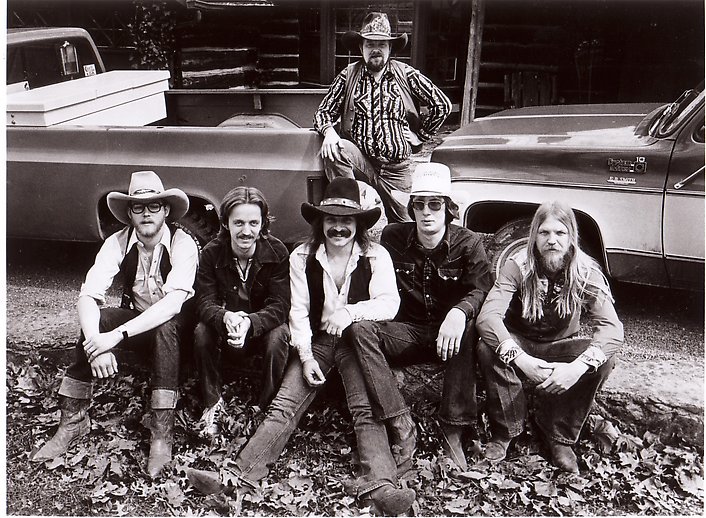
That older tradition eventually supplied much of the cultural material for one of the most famous modern versions of the fiddle-and-devil story. Charlie Daniels said that Benét’s poem may have remained somewhere in his memory from high school. In 1979, while recording Million Mile Reflections, Daniels and his band realized that they did not yet have a song built around the fiddle. Daniels began with an idea, the band began playing, and “The Devil Went Down to Georgia” emerged. In the song, Johnny wagers his soul against a golden fiddle. The devil plays first, accompanied by a band of demons, and Johnny answers him with the language of the traditional fiddle repertory, including “Fire on the Mountain” and “Hell Broke Loose in Georgia.” Johnny wins, receives the golden fiddle, and leaves the devil defeated.
It is tempting to regard “The Devil Went Down to Georgia” as the invention of a modern songwriter, but that would miss the much older tradition from which the song drew. Daniels did not invent the devil, the fiddle contest, the supernatural fiddler, or even much of the vocabulary surrounding the contest. What he did was bring those elements together in a modern country song and give them a satisfying conclusion. Most importantly, Johnny does not surrender his soul. He wins through his playing. The contest becomes more important than the bargain.
That distinction gets close to the heart of the whole tradition. The Faustian version of the story is a theology of purchase: the musician becomes extraordinary because he has acquired supernatural assistance and must eventually pay for it. The fiddlers’ contest represents a different kind of theology, one based on skill. The musician does not sign a contract with the devil. He picks up the instrument and plays. If he is good enough, he wins.
That may be why the devil has always been such a useful character in the folklore of Southern fiddling. The devil represents the judgment that the church once placed upon the instrument, but he also represents the extraordinary ability that ordinary people sometimes heard in the hands of a great fiddler. The same instrument could be condemned from the pulpit and celebrated at the dance. A preacher could hear temptation in it while a fiddler heard a catchy tune. Neither was necessarily misunderstanding what the other heard. They were simply assigning different meanings to the same sound.
The fiddle’s long association with the devil therefore tells us less about the instrument than it does about the Southern culture surrounding it. The fiddle belonged to a social world that existed beyond the controlled environment of the meeting house. It accompanied dancing, courtship, drinking, humor, competition, and communal celebration. It was portable, inexpensive, and capable of playing without a congregation, a hymnbook, or a minister. Most importantly, it made people move. A hymn could bring people together inside the church; a fiddle tune could pull them together outside it.
That is why the name survived. “The Devil’s Box” was never really a description of what was inside the fiddle. It was a description of what people believed happened when the fiddle was played. The devil was not hiding in the wood. He was a convenient name for everything respectable religious society feared might happen once that bow began to move.
And perhaps there is a final irony in that. The old preachers could condemn the fiddle, the meeting house could make it stay outside, and a converted fiddler could even hide his instrument behind a cabin wall. None of that stopped the music. The dance survived the 1618 prohibition. The fiddlers survived the revival. The tunes survived the sermons. Even the devil himself eventually became part of the repertoire.
The fiddle was called the Devil’s Box because the church could not make it into a hymn. The fiddlers, however, had no such difficulty. They simply kept playing.
The views expressed at AbbevilleInstitute.org are not necessarily those of the Abbeville Institute.