Ask most Americans who built the South and the answer drifts toward the British Isles. English planters claimed the Tidewater, Scots-Irish settlers cleared the backcountry, and Irish laborers dug the canals. Tucked inside that familiar story runs a quieter thread spun by people from the lands of modern Poland, and it stretches from Jamestown to Texas, New Orleans, Baltimore, and the West Virginia coalfields.
The thread began in 1608, barely a year after the English landed at Jamestown. On or about October 1, 1608, the supply vessel Mary and Margaret delivered what Virginia Company of London records describe as “8 Dutchmen and Poles,” skilled craftsmen recruited for their ability to produce glass, pitch, tar, and other commercial materials the colony desperately needed. Historian James S. Pula, writing in The Polish Review and as a contributor to Encyclopedia Virginia, noted that the records identify between 3 and 4 Poles specifically, that nobody knows their exact names, and that the names later honored on a 1958 commemorative plaque rest on tradition rather than documents.
Shut out of the colony’s first elections, the craftsmen put down their tools. The Virginia Company’s court record of July 21, 1619, settled the matter by declaring: “Upon some dispute of the Polonians resident in Virginia, it was now agreed (notwithstanding any former order to the country) that they shallbe enfranchized, and made as free as any inhabitant there whatsoever.” Some labor historians contend it was America’s first strike, though Pula viewed it as more of a work stoppage that won equal standing rather than a true organized labor action, and added that the Virginia episode left no continuous Polish community behind.
Two centuries passed before Poles surfaced again in the Southern record. Jan L. Perkowski and Jan Maria Wozniak write in the Handbook of Texas that Polish veterans of Napoleon’s wars joined roughly 400 men who founded the doomed camp of Champ d’Asile near present-day Liberty in 1818, soon dispersed by famine and the threat of Spanish military opposition, and that a few Poles later fought at the battles of Goliad and San Jacinto. One early arrival, Simon Wiess, was born in Lublin in 1800 and built a Neches River store so central to local trade that traders renamed the spot Wiess’s Bluff. Historian Robert Wooster’s Wiess entry in the Handbook of Texas calls him “the son of middle-class parents of German origin.”
That slipperiness had a cause. No Polish state existed between 1795 and 1918, so clerks logged Poles as Prussians, Austrians, or Russians depending on which empire had absorbed the territory where a given immigrant was born. Pula’s work in Polish American Studies tackles this problem directly, using census data rather than anecdotes to reconstruct the Louisiana community.
After Russia crushed the uprising of 1830 and 1831, educated officers scattered across the globe. Men such as Gaspar Tochman, Ignatius Szymanski, and Hypolite Oladowski drifted south as individuals, as did Valery Sulakowski, who the Texas Legislature confirmed worked as a civil engineer in the region. Few in number, they nevertheless stood out for their schooling and military pedigrees.
The real colonization arrived with a Franciscan friar. T. Lindsay Baker’s biography in the Handbook of Texas explains that Father Leopold Moczygemba, born in Pluznica, Upper Silesia, on October 18, 1824, reached Galveston in September 1852 to serve German Catholics around New Braunfels and Castroville. His letters home lured roughly 100 Silesian families aboard the Weser out of Bremen. They landed at Galveston on December 3, 1854, and founded Panna Maria in Karnes County on December 24, hearing their first Mass beneath a live oak on Christmas Eve.
Some 700 more followed in 1855, with 30 families arriving in 1856, and settlers fanned out to Bandera, St. Hedwig, San Antonio, and Yorktown. Panna Maria produced the first Polish church in America, consecrated September 29, 1856, and in 1866 St. Joseph’s School became the first Polish school in the United States. Drought soured the dream, however, and Baker records that the Poles “in anger forced Moczygemba to leave Panna Maria entirely.” He died in Dearborn, Michigan, on February 23, 1891, and his descendants brought him home on October 13, 1974, reinterring him near that same oak at Panna Maria.
By 1861 Texas counted about 1,500 Poles. After the war, landowners recruited newcomers as tenant farmers to replace enslaved labor, and New Waverly took shape in 1867 as the first Polish colony in East Texas. Poles founded or filled Cestohowa, Kosciusko, Falls City, Bremond, Brenham, and Chappell Hill. Bremond hosted the state’s first Polish National Alliance chapter in 1889, and Father John W. Yanta launched a Texas chapter of the Polish American Congress in 1971. Texas Poles never built a Polish language press, yet the 1990 count found 237,557 Texans of Polish descent.
The Civil War split these communities in untidy ways. Peter Kiolbassa, a Panna Maria teacher and organist, served as bugler in the Panna Maria Greys, fell captive at Arkansas Post in January 1863, defected to the Union, and rose to captain of a Black cavalry unit before entering Chicago politics.
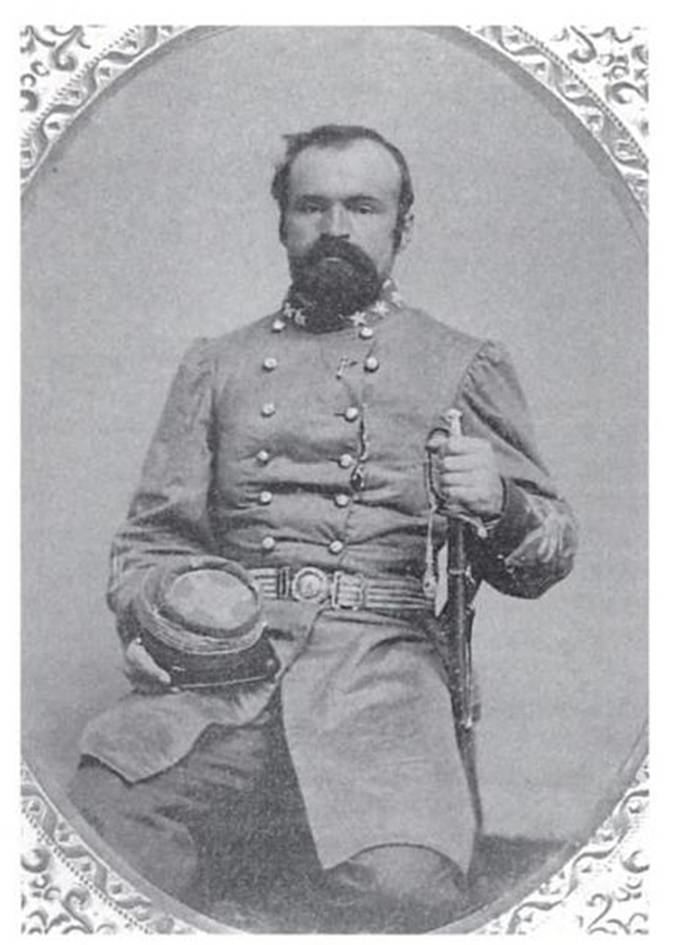
In New Orleans, Tochman won permission to raise a Polish Brigade. Confederate war clerk J. B. Jones met him in Montgomery and dryly noted in May 1861 that Tochman “is authorized to enlist a regiment or two of Polanders in New Orleans, where I am told there are none.” Jones had it nearly right. Irish, German, and French immigrants filled the ranks, and the regiment that emerged—organized June 16, 1861 as the 1st Regiment, Polish Brigade and later re-designated the 14th Louisiana—was a genuinely multi-lingual force. Sulakowski commanded that regiment before resigning in February 1862 and becoming chief engineer of the Confederate engineering department in Texas, where he ordered the construction of Fort Manhassett near Sabine Pass.
Peace brought a larger wave. Baltimore Poles settled Fells Point beginning in 1868 and became a central part of the city’s oyster shucking workforce. By 1870 Baltimore had more than 100 packing houses and stood as the leading center of canned oyster production in the country, employing thousands of Eastern European immigrants in its canneries. As Chesapeake Bay stocks depleted, the great Baltimore canning companies opened branch plants along the Gulf and South Atlantic coasts, recruiting their Polish and Slavic workers from Fells Point and carrying them south each winter to canneries in North Carolina, South Carolina, Georgia, Florida, and Louisiana. From 1890 into the 1920s, several thousand European immigrants made that journey annually. In 1913 Polish oyster shuckers in Morgan City, Louisiana, twice walked out of the cannery of Dunbar, Lopez, and Dukate, and workers on the oyster dredgers refused to return their boats from the reefs until wages were raised.
Farther inland, Poles were the third largest immigrant group in West Virginia’s coal mines by 1908, their numbers swelling to almost 15,000 by 1930 working the mines and the iron and steel operations at Wheeling and Weirton. The grandest Polish monument in the South spans the Mississippi. Ralph Modjeski, born Rudolf Modrzejewski in Kraków on January 27, 1861, was the son of renowned Polish actress Helena Modjeska. He became what contemporaries called “America’s greatest bridge builder,” and he led the firm Modjeski, Masters and Chase in designing the Huey P. Long Bridge at New Orleans.
The American Society of Civil Engineers records that its dual-track railroad portion stretched 22,995 feet, making it the longest high-level railroad bridge in the world at the time. The Historic American Engineering Record of the National Park Service concluded in 2005 that “it remains today one of the great bridge engineering accomplishments for railway and highway bridges built in the country.”
The headlines moved on from the Poles long ago, but the story of the Southern Poles holds up as well as Modjeski’s steel.
The views expressed at AbbevilleInstitute.org are not necessarily those of the Abbeville Institute.