

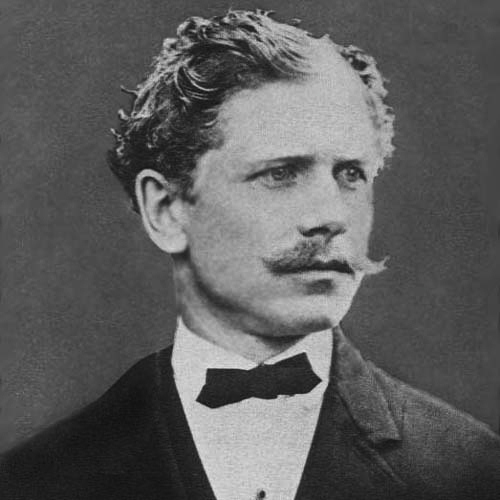
Ambrose G. Bierce was born in Ohio in 1842. When the War Between the States came in 1861, he enlisted as a Union soldier in the 9th Indiana Infantry. He fought in numerous battles, including Philippi, Rich Mountain, and Shiloh. He suffered a severe brain injury at the Battle of Kennesaw Mountain which caused him to resign from the army, but not until after fighting in the Nashville Campaign.
After the war, he wrote short stories about the war and became a famous author. He published a collection of these stories in his book Tales of Soldiers and Civilians in 1891. His most famous short story about the war was “An Occurrence at Owl Creek Bridge,” which was made into several movies and radio shows and was featured as an episode of both Alfred Hitchcock Presents and The Twilight Zone. It was the story of a Confederate soldier who faced execution by Union troops.
When E.L. Salmon bitterly protested against decorating the graves of Confederate veterans in a Memorial Day oration, Bierce, who was wounded by Confederate fire, responded to his fellow Union veteran by writing the poem “The Brave Respect the Brave.” This is what he wrote:
What! Salomon! such words from you,
Who call yourself a soldier? Well,
The Southern brother where he fell
Slept all your base oration through.
Alike to him — he cannot know
Your praise or blame: as little harm
Your tongue can do him as your arm
A quarter-century ago.
The brave respect the brave. The brave
Respect the dead; but you — you draw
That ancient blade, the ass’s jaw,
And shake it o’er a hero’s grave.
Are you not he who makes to-day
A merchandise of old reknown
Which he persuades this easy town
He won in battle far away?
Nay, those the fallen who revile
Have ne’er before the living stood
And stoutly made their battle good
And greeted danger with a smile.
What if the dead whom still you hate
Were wrong? Are you so surely right?
We know the issues of the fight —
The sword is but an advocate.
Men live and die, and other men
Arise with knowledges diverse:
What seemed a blessing seems a curse,
And Now is still at odds with Then.
The years go on, the old comes back
To mock the new — beneath the sun
Is nothing new; ideas run
Recurrent in an endless track.
What most we censure, men as wise
Have reverently practiced; nor
Will future wisdom fail to war
On principles we dearly prize.
We do not know — we can but deem,
And he is loyalest and best
Who takes the light full on his breast
And follows it throughout the dream.
The broken light, the shadows wide —
Behold the battle-field displayed!
God save the vanquished from the blade,
The victor from the victor’s pride.
If, Salomon, the blessed dew
That falls upon the Blue and Gray
Is powerless to wash away
The sin of differing from you,
Remember how the flood of years
Has rolled across the erring slain;
Remember, too, the cleansing rain
Of widows’ and of orphans’ tears.
The dead are dead — let that atone:
And though with equal hand we strew
The blooms on saint and sinner too,
Yet God will know to choose his own.
The wretch, whate’er his life and lot,
Who does not love the harmless dead
With all his heart and all his head —
May God forgive him, I shall not.
When, Salomon, you come to quaff
The Darker Cup with meeker face,
I, loving you at last, shall trace
Upon your tomb this epitaph:
“Draw near, ye generous and brave —
Kneel round this monument and weep
For one who tried in vain to keep
A flower from a soldier’s grave.”
The views expressed at AbbevilleInstitute.org are not necessarily those of the Abbeville Institute.





I recently re-watched the Twilight Zone episode, “An Occurrence at Owl Creek” based on the writings of Ambrose Bierce. For some reason, I was reminded that the Doobie Brothers song, I Cheat the Hangman, was inspired by this story according to the songwriter, Patrick Simmons. The song itself is very somber and the latter, strictly musical section of the tune, is based on Mussorgsky’s “Night on Bald Mountain.” One version is here: https://www.youtube.com/watch?app=desktop&v=-If-Xqr7Mos
Although Bierce literally fought against the right of self-government, at least he had respect for his opponents and the dead in general. This is unlike the modern Godless Jacobins who seem Hell-bent on destroying anything Southern and Christian.
The broken light, the shadows wide —
Behold the battle-field displayed!
God save the vanquished from the blade,
The victor from the victor’s pride.
This verse says it well. For all the efforts of veterans of that war to reconcile a broken nation, the fools of today do not understand the power of forgiveness and reconciliation. The evil spirit of this world enters many who would rather shame and blame, divide and sever the ties that bind. The God of all saw fit to allow that awful brawl, to break down selfish pride and humble all. Yet it strengthened a rejoined nation with a will and a way to fight generations of international villains. Today we find ourselves divided again on many fronts. Oh, for the strength and power of wisdom in a true understanding of our history.
“Draw near, ye generous and brave —
Kneel round this monument and weep
For one who tried in vain to keep
A flower from a soldier’s grave.”
This verse reminds me of of those who took down the Confederate monuments here in Richmond, Virginia (although we no longer have those monuments to “kneel around”).