

Reflections on The Dunning School: Historians, Race, and the Meaning of Reconstruction (University Press of Kentucky, 2013) edited by John David Smith and J. Vincent Lowery
It is said that history is written by the victors. This assertion is certainly borne out by the current teaching and interpretation of American history. The Reconstruction period is a particular example of the manipulations of contemporary interpreters and scholars of American history. It is worth recalling at the outset that this period, a consequence of postwar political actions, is presented by many contemporary mainstream historians as an almost mythical struggle between good and evil. In this struggle, “noble representatives of the North” attempted to hold “evil and unruly Southerners” accountable for their immoral actions. A situation arose that was aptly summarized by Clyde Wilson: “A great deal of historiographical effort has been devoted in the last (…) decades to redeeming the besmirched reputation of Reconstruction, a hopeless task for any but blindest ideologues” (Wilson, p. 166). However, long before the interpretation of the history of the Reconstruction period took this turn, there existed works that, in a unemotional manner, demonstrated the fiasco, chaos, and lawlessness characteristic of the period. These works, broadly speaking, are today referred to as the Dunning School (after the mentor of this group of historians, William Archibald Dunning).
The Dunning School was the first to propose a robust, source-based historical framework for the period. It was the first such extensive and meticulous research study devoted to a specific segment of American history. Second, the Dunning School’s work synthetically and coherently portrays the climate of the Reconstruction period. Third, the Dunning School attempted to analyze Southerners’ reactions to Radical Republican policies. However, such a perspective on the facts of the time does not fit the contemporary, romanticized version of Northern history, whose narrative is based primarily on the myth of the Righteous Cause. According to this myth, the North was morally and ethically superior to the “backward South,” and all occupation activities in the South were supposedly intended to improve the lives of the freed people. The Dunning School, with its completely different description of events, obviously stood in the way of the propaganda narrative of the victorious North.
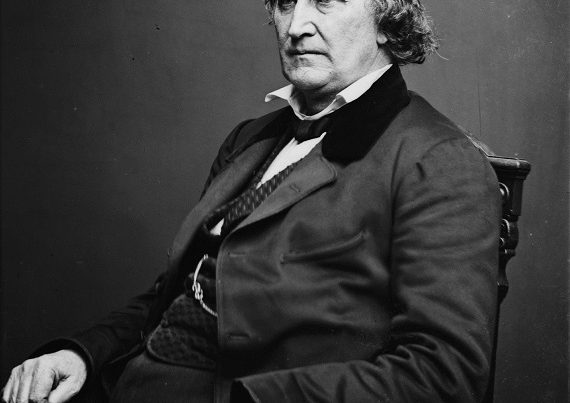
Very quickly, mainstream academia launched an attack on the Dunning School. Far from being based solely on scholarly polemics with the Dunning School’s theses, the attack also resorted to ad hominem arguments. Based on the mentality of individual Dunning School historians, their conclusions were deemed archaic, tainted with racist prejudice, and one-sidedly favoring the defeated South. Interestingly, the Dunning himself, was not even from the South.
One of the more comprehensive works in recent years attempting to reexamine the legacy and achievements of the Dunning School is a work edited by two history professors, John David Smith and J. Vincent Lowery. This monograph, published in 2013, brings together ten essays analyzing the work of various representatives of the Dunning School. Each essay also seeks to examine a different aspect of historical analysis. The foreword to the work is written by one of the most popular and widely read contemporary historians of the period, Eric Foner. In the aforementioned work, Foner invokes the notion that “the Dunning School has fallen completely out of favor among historians” and reduces the Dunning School solely to the issue of race relations (Smith & Lowery, p. xii). As one of the leading representatives of the Righteous Cause mythology, Foner, completely unjustifiably, reduces the Dunning School’s work to social issues, which are in fact a general disease of the United States, not a malady unique to the South. As Leszek Nowak notes: “if racism is understood as the view that assigns inferiority status to people distinguished by certain biological characteristics, then of course, almost all of America, at that time was racist in that sense” (Nowak, p. 385). For obvious reasons, Foner makes no mention in the Foreword of a detailed description of the political intrigues of Radical Republicans during the Reconstruction period. Even if he is aware of this, he does not address it, likely believing that “the ends justify the means.” For him, the Dunning School is merely a relic of the old legitimization of racism and discrimination. For the authors of this work, the Reconstruction period is thus reduced to attempts to build a noble “multiracial democracy” (Smith & Lowery, p. xii), to which the South was supposedly opposed. It is worth noting that Foner is extremely biased; in his historical journalism, he adheres to the dogma that nothing could be created in the South that did not include racial segregation. Therefore, there is no room in this interpretation for attempts to understand the other side. The fundamental problem with this type of conclusion is that attempting to highlight, even the noble intentions of Radical Republicans, does not erase or justify the pathological political actions, nor the rampant corruption and abuses of the federal government. This is precisely what the works of Bowers, Fleming, and Reynolds perfectly describe. In all of this, the Dunning School is additionally attacked for relativizing the actions of the Ku Klux Klan and indirectly justifying the violence of white supporters seeking to preserve racial segregation.
In his work, William A. Dunning rightly diagnoses the problem of race relations, which the advocates of the Righteous Cause refuse to acknowledge. Any immersion in the source texts of the period reveals the fundamental fact that Republicans were intent on fueling political conflict between the population of white Southerners and African Americans. The social conflict within the South itself allowed radicals to justify implementing broad legislative solutions that, while noble in their intentions to address social issues, ultimately benefited only specific political groups incorporated into the South by the North.
Later works by authors such as Kirkpatrick Sale and Jim Downs strongly confirm Dunning’s observations regarding the achievements of Reconstruction. Even leftist activist historian Howard Zinn was forced to admit that African Americans were defrauded during the Reconstruction period. Jim Downs, describing the suffering of African Americans with a scholarly approach, notes that the challenge to the Dunning School’s findings stemmed primarily from attempts to demonstrate that 19th-century documentation and source material from that period were supposedly based on racism. The image of African Americans outlined in the work of W.E.B. Du Bois was adopted, portraying freed African Americans as active political activists engaged in initiatives to improve the lives of their community members. The perception of freed slaves as incapable of independent existence and political participation was considered a manifestation of Dunning School racism and prejudice (Downs, p. 181).
Due to a distaste for Dunning’s historical legacy, research on the health and mental well-being of freed slaves has been dogmatically abandoned. Interestingly, the mainstream historians’ acceptance of Du Bois’s interpretation completely ignores the crucial fact that Du Bois was never a slave. He was raised free from birth and received his higher education without significant obstacles. He therefore had a completely different experience and a completely different picture of the situation than Booker T. Washington, who knew life in the plantation South. Other weaknesses of Du Bois’ work was his far-fetched interpretation of African-American class consciousness according to Marxist classification.
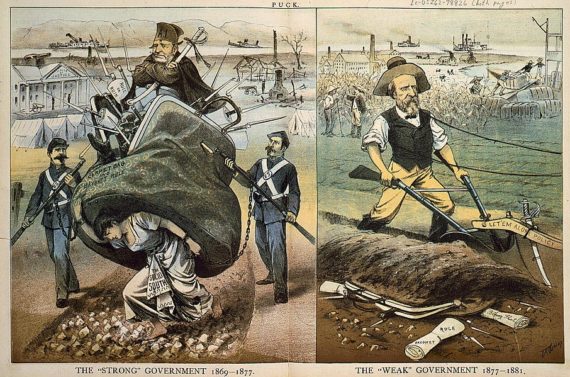
Radical Republicans exploited the sentiments of the freed Black slaves purely instrumentally, completely dismissing their needs and problems. African Americans were meant solely to maintain Republican interests. It’s also worth remembering that Northerners’ support for the radical Republicans’ actions stemmed, as Thomas E. Woods rightly points out, primarily from economic, rather than social, motives. Reflecting on race relations, a radical stance characterized only a small group of abolitionists and their acolytes at the time. Attacking Dunning on his racial views, however, is an attempt to bury one’s head in the sand, especially on issues that, in a cool-headed historian’s assessment, are a natural consideration when analyzing such events. The double standards described by Dr. Wanjiru Njoya are applied here. Dunning’s critics completely ignore the political intrigues initiated by radicals surrounding President Andrew Johnson. The 39th Congress, which as completely dominated by Radical Republicans, did not recognize the new Southern states’ governments, despite the fact that it had met the necessary requirements under the law. Republicans, defying President Johnson, passed the military occupation. In the eyes of law, even if we accept Lincoln’s view that secession had no legal force, this occupation was a violation of the law. Republicans have definitely broken with the constitutional constraints imposed on them. In fact, they continued their notorious violations of the Constitution even after Lincoln. Lincoln had simply opened the door to Republican to contempt for constitutional law. In a later period, when general Grant succeeded as a president, as historian Dominique Venner sarcastically describes in Gettybsurg: “during these seven years, the radicals established their dictatorship over the South, sheltered behind the prestige of the victorious general, whose political licidity and energy shone all the less brightly as he was overtaken by his immoderate love of drink” (Venner, p.280).
The suffering of African Americans is just one element of the argument used in contemporary public debate today by advocates of the Righteous Cause to undermine the South’s aspirations for independence. Nevertheless, it must be emphasized, that this suffering is the result of the hecatomb unleashed by the federal government in its war with the South. Emancipation ended in failure in the sense that it did not bring any further, real, systemic solutions for the freedmen.
In research, which is by definition supposed to be a search for truth, any admixture of ideology can very effectively distort the final results of objective research. The most common consequence of ideologization is a selective approach to available sources, various figures, historical periods, and events, dictated by personal preferences. For example, some scientific giants are forgiven for being prisoners of their era, while others are not. Biologist and naturalist Charles Darwin, whose theory of evolution currently constitutes a paradigm in biological sciences, displayed extreme racism and prejudice in his reflections on social issues. Yet he is tolerated by ideologues only because maintaining the dominance of his theory serves as the main source of attack on conservative values, religion, and tradition. In other words, ideology in science exploits only those aspects and tolerates only those it deems useful. I would therefore argue that this is precisely the fate that befell the Dunning School. Its conclusions simply do not fit the current desired trends at this stage of the discourse sweeping through history education.
In conclusion, the Dunning School is not without its flaws, and in many respects it was rife with prejudices. But, it is also worth recalling here that, as Leszek Nowak noted: “scientific racism mainly flourished at Harvard University, but played marginal role in the South” (Nowak, p. 384). Nevertheless, the Dunning School’s observations of the political processes that unfolded during the Reconstruction period should be considered fundamental to understanding the subsequent trajectory of American history. Dunning scholars effectively demonstrated the struggle between republican ideas and theories of the rule of law and the radical postulates of advocates and eulogists of an extreme, revolutionary version of democracy fueled by resentment and demands for revenge. Dunning scholars had the misfortune of having to describe events whose complex nature precluded drawing clear conclusions that would, in turn, allow them to survive in mainstream academia and enjoy a growing “citation index.”
The work by Smith and Vincent Lowry, cited here and the subject of this discussion, although rich in bibliographic and factual material, unfortunately adheres to the Righteous Cause tenet, which prevents the practice of history from transcending extreme reductionism. However, it would be unfair not to point out the strengths of this work. Its strongest merit is undoubtedly that it does not negate the influence of the Dunning School on the development of in-depth, reliable research on Reconstruction and on opening a broad discussion in assessing this period of American history. The authors of the monograph even note the fact that many historians unaffiliated with the Dunning School have independently reached similar conclusions. In summary, then, the question posed in the title of this text, who fears the Dunning School?, must be answered decisively: those who see history primarily as a tool for social engineering, political crusade, and simple propaganda for the needs of the moment.
Bibliography:
Downs J., Sick From Freedom: African-American Illness and Suffering Duting the Civil War and Reconstruction, Oxford University Press, 2012.
Nowak L., Zielony konserwatyzm amerykańskiego Południa, Wydawnictwo Rambler, Warszawa, 2015.
Smith J.D., Lowery V., The Dunning School: Historians, Race, and the Meaning of Reconstruction, University Press of Kentucky, 2013.
Wilson C.N., War, Reconstruction and the End of the Old Republic, [in:] J.V. Denson (ed.), The Costs of War. America’s Pyrrhic Victories, Transaction Publishers, 1997.
Venner D., Gettysburg, Editions du Rocher, 1995.
The views expressed at AbbevilleInstitute.org are not necessarily those of the Abbeville Institute.




“…Republicans were intent on fueling political conflict between the population of white Southerners and African Americans.” An important function of the Union League, which has been virtually memory-holed.
Everyone in the 19th century believed their own ethnicity was the superior one. And they viewed intermarriage between races as wrong. Darwin’s work intensified these views. There was no word “racist” before 1903. Be aware of how Presentist you are being to apply the 2026 interpretation.
What a dishonest word “Reconstruction” is to describe the continuing destruction and impoverishment of the South after Lincoln’s War. At least 5 states defaulted on their debts built up under deeply corrupt Carpetbagger/Scalawag rule. One suspects that the inaccurate term used by those experiencing that period (Negro rule) contributed to the increase in feeling of racial superiority/inferiority during the subsequent “Progressive Era.”
Excellent work, Karol,
“Southerners’ reactions to Radical Republican policies” is often misunderstood. Reconstruction era is in my opinion, the most misunderstood time in US History. Naturally, the Left and Neo-cons alike believe the South wasn’t punished enough.
Fine essay, Karol. I still want you on my show to talk about TJ and Kosciusko….