

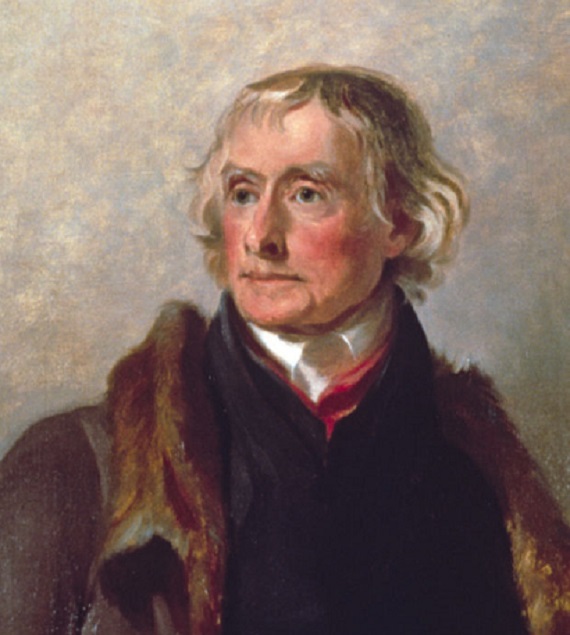
Thomas Jefferson had, in his first term as US president, one of the most successful presidencies in US history. Knowing the pricelessness of books, he sanctioned the Library of Congress and helped to build it. He purchased the Louisiana territories for 10 million dollars—a pittance—and doubled the size of the country. He began a course to reduce the US debt, and despite purchasing the Louisiana lands, the federal debt was reduced from 83 to 57 million after his second term. He opened the military academy, West Point, in 1802. Instead of paying a tribute to Barbary pirates so they would not pester American mercantile vessels, he began a war with the pirates, the First Barbary War, and won—thereby obviated paying tribute not to be attacked. He began the Lewis and Clark expedition to explore the west in 1803. He had a cabinet that was not only exemplary in terms of the intelligence of its members, but it was one of the most concordant cabinets in US history.
Consequently, Jefferson’s second term was highly anticipated. So too was his speech, his Second Inaugural Address, introducing that term.
Like his First Inaugural Address, this address was masterly, well-thought-out.
Jefferson begins with prolog of sorts, in which he thanks the American people for their confidence and trust in him, which incites “zeal … so to conduct myself as may best satisfy their just expectations.” He adds that he enumerated the principles of just republicanism in his first address and that he believes that he has acted consistently with those principles during his first term.
Jefferson next turns to foreign affairs. His policy has ever been “to cultivate friendship of all nations.” He has treated all nations, as the moral law dictates, in the manner that dictates relations between all persons.
Domestic concerns are next on his agenda. He appeals to the good judgment of the people to determine if he has been successful in “suppression of unnecessary offices,” riddance of “useless establishments and expenses,” both of which have led to discontinuance of “internal taxes.” Still, there is revenue enough for infrastructure like canals, rivers, and roads; for manufactures; and for education. In the event of war, he hopes to meet that large expense by revenue generated by increases in “population and consumption.” The aim is to meet expenses “without encroaching on the rights of future generations by burdening them with the debts of the past”—Jefferson’s notion of generational sovereignty, or “the earth belongs in usufruct to the living.”
Jefferson next turns to political disapprobation (i.e., objections of certain Federalists) concerning the Louisiana Purchase. Many dissenters argue that increase in the confederation of states will eventuate in dissolution of the union, and secession. He counters, “Who can limit the extent to which the federative principle may operate effectively? The larger our association, the less will it be shaken by local passions.” Moreover, the land west of the Mississippi is destined to be well-peopled. Is not it better for it to be peopled by Americans than by “strangers of another family” (Mexicans, Frenchmen, etc.)?
The subject of religion is next addressed. There is nothing in the Constitution that covers religious prescription by the federal government. That is a matter for the individual states and for church authorities.
The largest issue covered is the fate of the “aboriginal inhabitants.” Indians, like all others, are deserving of the rights of men. They breathe the air of “liberty and independence.” It has been their fate to occupy a country in which “the stream of overflowing population from other regions directed itself on these shores.” He continues, “Without power to divert, or habits to contend against, they have been overwhelmed by the current, or driven before it.” They are now “reduced within limits too narrow for the hunter’s sake,” and so, “humanity enjoins us to teach them agriculture and the domestic arts; to encourage them to that industry which alone can enable them to maintain their place in existence, and to prepare them in time for that state of society, which to bodily comforts adds the improvement of the mind and morals.” The federal government has introduced American indigenes to implements of husbandry and domestic householding, has made ready instructors “in the arts of first necessity,” and has offered them the protection of the law “against aggressors from among ourselves.” Yet many natives still resist. “They, too, have their anti-philosophers, who find an interest in keeping things in their present state.”
The last sentiment is revelatory of Jefferson’s inflexible commitment to progress in human affairs. He laments the horrid position of Indians—the overwhelming increase in the population of Whites makes westerly expansion inevasible—and to his mind proffers a win-win solution: education in the ways of Whites, and as he elsewhere says, miscegenation with Whites. That two-pronged solution, much to Jefferson’s dissatisfaction, would prove to be anathema to most Indians, hence, his comment on Natives’ “anti-philosophers.”
Freedom of the press, as was the case in his first term, is also a pressing concern. Gossip, defamation, and scandal drive many publications. Yet truth has always been a remedy. “Since truth and reason have maintained their ground against false opinions in league with false facts, the press, confined to truth, needs no other legal restraint.” If all parties are given a full hearing, “public judgments will correct false reasonings and opinions.” That is not a perfect antidote, but it is the only possible antidote. One wonders if Jefferson exaggerates humans’ appetence for truthful news.
Jefferson’s penultimate concern is articulation of his principles of republicanism:
- that political efforts directed to the public good,
- that cultivation of peace,
- that civil and religious liberty be undisturbed,
- that law and order be maintained,
- that equality or rights be sustained, and
- that each man has the property of his own labor or that of his father.
Jefferson ends with a thankful appeal to God.
Like his First Address, this address is also the product of much thought and coherently and well-structured. It is also an authentic, non-political address. Moreover, it is an address, unlike the two prior presidencies, on a new model of governing: stewardship, or government by and for the people being governed.



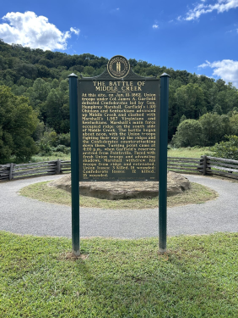



When the yankees burned the University of Alabama, for no military purpose other than to commit war crimes, locals were allowed to preserve one book…they chose to save a copy of the Koran…everyone in Alabama already had a Bible.
Great article Dr. Holowchak! Thank you.
Thank you. If only we could get back to this!!!
Here is the video I forgot to add….
https://www.youtube.com/watch?v=A2DuQ0KTGgw
” education in the ways of Whites”
That might be putting it too politely. Indians were stone age societies. And the differences in level of advancement between whites and Indian actually increased from 1492 to 1804, even as Indians purchased goods from whites. They never learned to make any of the goods (cloth, metal tools, guns, etc.) themselves (a small minority of Cherokee excepted). The optimism about Indians becoming American citizens during Jefferson’s presidency seems to have disappeared by 1830.
I am like Jefferson a scientist and progressivist. Yet I do make some allowance for different ways of living. I have Rousseau-like moments! Thanks for comments!
Doc, I’m as libertarian and tolerant as they come. I have no problem with how anyone lives as long as they don’t hurt others. From the point of view of the Federal govt in the early 1800s though, it wasn’t that simple.