
According to everyone’s favorite font of leftist wisdom, Wikipedia, “it is not clear which side caused the fires” which consumed Columbia, South Carolina, on February 17, 1865. You get a similar answer from AI on Google. However, anyone who cares to read the voluminous eyewitness testimony (from both Southern and Northern sources) will be left in no doubt about who was responsible for the destruction of the city after General Sherman’s troops arrived.
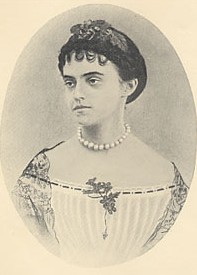
One of the most notable eyewitnesses of this atrocity was a young South Carolina woman named Emma LeConte. She and her family resided on the campus of South Carolina College, where her father, Joseph LeConte, was a professor of chemistry and geology. Educated in part by her brilliant father, Emma was widely read and possessed an exceptional intellect. She was seventeen years old when General William T. Sherman’s army captured and occupied Columbia, and in her diary, she penned vivid, passionate reports of all that was going on around her, painting an unforgettable picture of destruction, horror and tragedy. She wrote of how the soldiers exulted in the destruction of the city, and that although at first they tried to make excuses for the fires, one of them frankly admitted “that Sherman had ordered them to burn it, that they expected to burn it, and that they did burn the hole of secession.”
Emma’s diary was first published in 1957 as When the World Ended. Edited by Earl Schenck Miers, the book was sparsely annotated and marred with more than a few errors. South Carolina author and literary historian Dr. James E. Kibler has for many years wanted to publish a new edition of the diary, and finally, in 2026, that has happened. The Diary of Emma LeConte: A Story of War and Survival, 1864-1865, is the first fully annotated and illustrated edition of Emma’s diary, preserving her words as she wrote them as closely as possible. Among the book’s numerous illustrations, Dr. Kibler, an authority on antebellum Columbia, has included some rare and never before published images.
Dr. Kibler’s fine introduction paints a full picture of Emma, her father, and her family, as well as the prewar social life of Columbia, which Joseph LeConte called in his memoir “the most pleasant and cultivated I have ever known.” These included the societies of Harvard, Philadelphia, Berkeley, California, and Athens, Georgia. After the war, Professor LeConte and his brother John LeConte found conditions in South Carolina unbearable, and in 1868, they were elected to a professorship at the new University of California at Berkeley, and moved there in 1869.
This new edition of the diary is further enhanced by the addition of two letters written by Emma’s relations recounting their own experiences during the burning of Columbia. One is a graphic letter penned by Emma’s aunt, Josephine LeConte, who wrote to her son about a week after the burning of the city. On the night of February 17th, Sherman’s soldiers made several attempts to burn down her home, a fine brick house at the corner of Pendleton and Sumter streets known as the “Fourth Professor’s House.” Her husband John LeConte, a supervisor of the Confederate Nitre and Mining Bureau, had been ordered away, but a family friend, Dr. Carter, was with Josephine and her family, and their combined efforts saved the house from destruction.
Mrs. LeConte also related how some drunken Union soldiers perished by fire in a city hospital. Other Union soldiers, finding the corpses and thinking that they were dead Confederates, “severed the heads from the bodies, caught them up on their bayonets, and danced around to the tune of ‘damnation to the rebels.’”
A second interesting letter was written by Emma’s cousin Mary Tallulah (“Lula”) LeConte on February 28, 1865. Both manuscripts are found in the LeConte Family Papers at the Bancroft Library at the University of California, Berkeley.
Emma was fervently patriotic, and when she heard of General Lee’s surrender in April, she wrote that “there seemed no ground under my feet.” Recording her despair and grief that all the suffering and sacrifice of the Confederates had ended in defeat, she wrote, “The South lies prostrate—their foot is on us—there is no help. During this time we breathe, but oh! who could have believed who has watched this four years’ struggle that it could have ended like this!…Is all this blood spilled in vain—will it not cry from the ground on the day we yield to these Yankees?…Why does not the President call out the women if there are not enough men? We would go and fight too—we would better all die together…”
The diary covers a period from December 1864 to August 1865, and though brief (a little less than 100 pages of text), it is powerful and moving, and is highly recommended for anyone interested in one of the darkest hours in the history of the war and the state of South Carolina.
The views expressed at AbbevilleInstitute.org are not necessarily those of the Abbeville Institute.





‘Historian’ Victor D. Hanson said, and I quote him here because I witnessed him say this, “They deserved it.” The man is sick. Other current day Yankees would likely say ‘Why should we believe a racist, Yankee hating Nazi Fraulein?’ ‘An Eva Braun of the South.’
Excellent article, thank you Ms. Stokes!!
PS: yes, just this small part of her writings is powerful and moving.
I don’t know who loves himself more, VD Hanson or Mark Levin. It would not surprise me if either, or both, promoted their own “go fund me” effort to build their own statues.
Ditto, Paul!!
If Dr. Kibler put his mind into it, it is a must read.
Great article Mrs. K. Stokes and keep up the good work!
Today, I purchased these two books, A Southern Muse: Selected Literary Essays by M. E. Bradford and The Diary of Emma LeConte: A Story of War and Survival, 1864-1865. I love reading diaries from the women of the South during our unsuccessful attempted at independence and anything by M. E. Bradford.