

This piece was originally published at fee.org
Taylor’s arguments are as relevant today as they were in the 1820s.
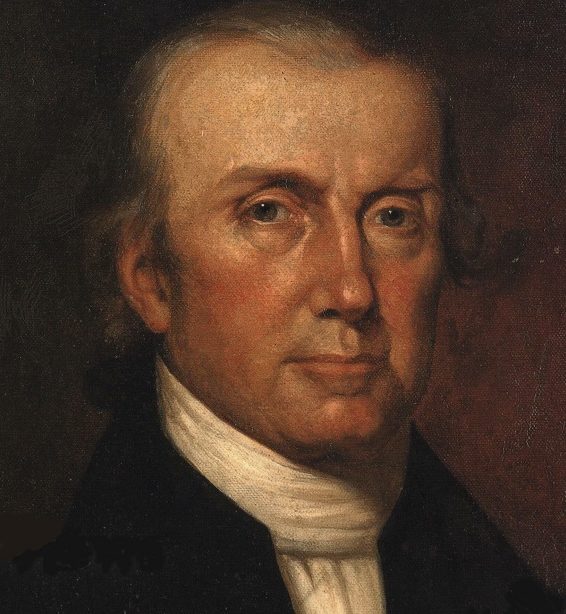
John Taylor (1753–1824) of Caroline County, Virginia, is not often remembered as a key figure in the early American Republic, but for champions of liberty, perhaps he ought to be. While Taylor’s life included stints as a lawyer, Revolutionary War officer, member of the Virginia House of Delegates, planter, and United States Senator, of chief concern for this writer is his 1822 book, Tyranny Unmasked.
Written in the context of the Panic of 1819, America’s first major economic crisis following the ratification of the Constitution, the work saw Taylor passionately critiquing what he regarded as the “property-transferring policies” of his day. While Tyranny Unmasked was primarily an assault on protective tariffs, Taylor’s arguments for economic and political liberty also ventured into other areas such as banking, government spending, and the Constitution, among other topics. His perspective, described by some as being “more Jeffersonian than Jefferson himself,” can provide valuable lessons to Americans today; in a book filled with numerous intriguing insights, here are a few key points.
Protectionism and ‘National Prosperity’
Much of the impetus for Taylor’s writing Tyranny Unmasked stemmed from an 1821 report by the House Committee on Manufactures which advocated protective tariffs as the desirable policy for American commerce and industry. The most pressing reasons cited by the Committee’s report were the poor standing of the federal government’s finances and the nation’s economy. The report noted that “at the end of thirty years of its operation, this government finds its debt increased $20,000,000, and its revenue inadequate to its expenditure.”
On top of this, the American economy was generally in disarray, as the Panic of 1819 unleashed widespread monetary and credit chaos, unemployment, and insecurity throughout the young republic. In response, the protectionists in Congress advocated a policy of protective tariffs which would in their view benefit American commerce and industry, as well as raise federal tax revenue and lead to “an overflowing treasury,” a supposedly sure sign of “national prosperity.”
The European Example?
John Taylor was having none of it, as he compared such pronouncements for protectionism and “national prosperity” to the monarchical governments of Europe. Taylor described the European monarchies as oppressive arrangements where the governing elites lorded over the governed citizenry, a situation not befitting a free people, and one certainly at odds with the American federal republic. He explained:
The prosperity of European nations, is reiterated to provoke our envy, and urged as an argument to convince our reason. Yet it is only a palpable evasion, and a delusive bait. The delusion lies in substituting the word “nations” for “governments,” and the bait, in varnishing over the miseries of European nations, with the wealth of privileged classes, in order to hide the hook intended to be swallowed.
Taylor was asserting the ethical and political superiority of republican governments with genuine free market economies over the monarchical and economically controlled arrangements of Europe. He contended, “The fact is, that all the European governments are so constituted, as to be completely able to sacrifice the national interest to their own.”
Taylor was not inclined to follow the suggestions of the American protectionists by enacting a similar type of economic policy to that of European monarchies. He believed that protective tariffs, by limiting foreign trade and allowing for domestic producers to raise their prices, would inevitably benefit some industrialists at the expense of other Americans. For Taylor, this would be an alarming step towards further adopting the European model of political economy. As such, the pleasant-sounding allusions to so-called “national prosperity” were mere rhetorical schemes for allowing some segments of the population to gain economic advantages over others.
Liberty vs. Power
Writing over twenty years prior to the publication of Marx’s Communist Manifesto, Taylor seemed to pre-empt reactions to Marxism as he insisted on a republican, free-market approach to political economy in contrast to the mercantilist arrangements of Europe:
Enmities among men are produced by a clashing of interests, and the intention of republican governments is not to promote, but to prevent this clashing, by a just and equal distribution of civil or legal rights. If artificial enmities are superadded to natural, their true intention is defeated; and the very evil is aggravated, they are intended to correct. Such is the policy which has arrayed class against class in Europe, and marshalled all its nations into domestic combinations, envenomed to get or to keep the patronage of their governance.
Rather than resorting to the same type of economic policies which benefited some classes at the expense of others and caused general unease in Europe, Taylor instead championed what amounted to the Jeffersonian ethos of “equal rights for all, special privileges for none.”
Here Taylor was expounding a type of classical-liberal class analysis, one which insisted that the real class conflict was between those benefiting from, and those paying for, political power and economic special privileges. Taylor’s perspective aligned with the Court versus Country dichotomy, which was rooted in English history as well as in the origins of the American Revolution. According to this outlook, most political and economic disagreement could be framed by understanding the conflicting interests of, on the one hand, the politically connected seeking economic favors (the Court), versus most of the population who did not have access to such special privilege (the Country).
It seemed clear that in 1822, John Taylor was continuing this Court vs. Country perspective and conceived of the protectionists in Congress and their industrial benefactors who sought to benefit from favorable legislation as the Court faction. By contrast, the more humble, hard-working, and honest everyday citizens of America (most often farmers at the time) were the Country segment. His insistence upon republican principles grounded a vision for a restrained government which allowed natural market forces to operate, and which treated all factions and interests equally, without catering unfairly to one at the expense of all others.
Conclusions
So, what can be learned from John Taylor’s criticisms of special privilege legislation and his firm advocacy for republican free markets? In the context of his time, Taylor’s ideas were well-argued but on the defensive. Congress ultimately passed protective tariffs in the following years, eventually coalescing into the Nullification Crisis of the 1830s. Nationalist politicians like Henry Clay made protectionism and government intervention into the economy a key component of the famous (or infamous) American System platform.
In the longer term, through political bickering, a bloody Civil War, and many more run-ins with protectionism and special privilege legislation, John Taylor’s ideas appear to have largely lost out in American legislative history. Despite this, his views remain as well-argued and relevant to lovers of liberty as they were in the early 1820s. Perhaps we would do well to adhere to his premonitions about the dual capacity of human nature for both good and evil, and to more adequately observe “the unalterable laws of commerce, upon which political economy is founded.”
Additional Reading:
Tyranny Unmasked by John Taylor
John Taylor of Caroline: More Jeffersonian than Jefferson by History on the Net
Country Ideology, Republicanism, and Libertarianism: The Thought of John Taylor of Caroline by Joseph R. Stromberg
The Constitutional Republicanism of John Taylor of Caroline by Joseph R. Stromberg
The Political Economy of John Taylor of Caroline by Joseph R. Stromberg
The views expressed at AbbevilleInstitute.org are not necessarily those of the Abbeville Institute.