

Let’s consider a man who falls in love with a woman, and proposes to her that they enter the union of matrimony. Things go well until he discovers that she is transferring his wealth to her brothers and other family members. He remains in the marriage, but the final straw comes when he learns that she is even trying to poison him. He goes to a divorce lawyer to leave this union. Shortly thereafter, her three brothers find out what he intends, and they confront him. He tries to explain his reasons, but they won’t listen. “We will not allow you,” they snarl, “to break the glorious union with our sister, and we will stop you if you try.” Outraged, the man stands his ground to fight. Though he resists bravely, he loses, and has to remain in his inglorious marriage. This story is a key to explaining why the South left the Union, and refuting the charge that by seceding the South “fought for slavery.”
If keeping slavery was our ancestors’ overriding concern, they faced fewer risks to the institution by remaining in the Union than by choosing the perils of disunion and possible war. Significantly, as the sectional conflict loomed, Jefferson Davis confided to his wife that the upheaval of war, regardless of the outcome, probably would doom slavery.1 By staying in the Union, the South could have ratified the Corwin Amendment to the Constitution, endorsed by Abraham Lincoln, which would have given explicit legal protection to slavery in the slave-holding states. Also, by remaining in the Union, the South could have kept access to the Western territories for slave ownership, as well as keeping the constitutional provision for the return of fugitive slaves.
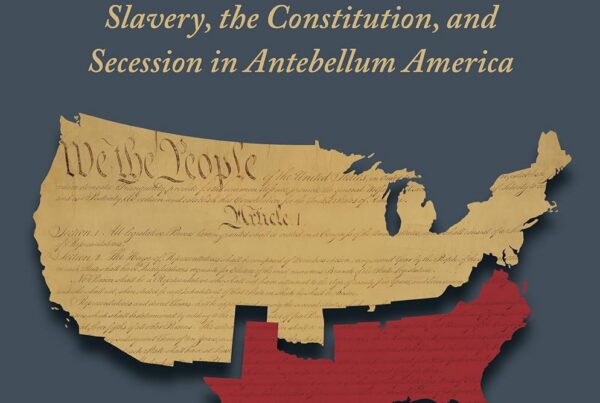
So what was the South’s fundamental motivation for secession? The marriage between North and South began amiably, but frictions developed due to different values, perspectives, and interests. As time went on the fractures widened, and Southerners perceived that Northerners were not trustworthy, and that they intended political, economic, and social harm to the South. The realization of this malice was the South’s motive for leaving the Union.
The political harm was the North ignoring the Constitution. One example was public funding of private ventures for internal improvements (roads, canals, etc.). The Constitution, Southerners noted, did not authorize this kind of funding. Furthermore, they observed that almost all of these improvements benefited the North. Another concern involved the constitutional provision for the return of fugitive slaves. Putting the issue of slavery aside, when Northerners proposed to break this agreement, Southerners reasoned, what else in the Constitution would they choose to ignore?
The economic harm was the use of protective tariffs which benefited the Northern industrial economy at the expense of the agrarian South. In 1832, high tariffs prompted South Carolina to nullify those tariffs, which led to a tense confrontation with the federal government. The two parties eventually reached a compromise, but this nullification crisis, as it was called, made the South acutely aware of its economic vulnerability to growing Northern power.
The social harm involved Northern promotion of slave insurrection. After around 1830, many Northerners began viewing Southerners as not just wrong about slavery but deeply wicked as well. This attitude was particularly prevalent in New England, a region which enriched itself with the transatlantic slave trade. There the Transcendentalist cult fostered an arrogant and judgmental mindset, one far more self-righteous than righteous. In response, Southerners grew defensive about slavery, which was unfortunate because anti-slavery sentiment in the South had been growing up until that time, particularly in the upper states.
In 1832, Virginia considered legislation to abolish slavery. The measure failed, but it had strong support. Thereafter, however, a shrill Northern minority went beyond simply demonizing Southerners to advocating and promoting immediate emancipation through violence. All the while, Northerners offered no serious proposals to end slavery peacefully—the way it ended almost everywhere else in the 19th century,
Massachusetts senator Daniel Webster lamented the consequences of Northern agitation on Southern opinion, as did Nehemiah Adams, a Northern abolitionist who traveled through several Southern states.2 He reported that the common conditions of Southern slaves did not match the lurid depictions of Uncle Tom’s Cabin, a work which inflamed Northerners against the South by an author who had little firsthand knowledge of the region. In contrast, Adams observed that the treatment of slaves in the South compared favorably, in many respects, with the treatment of the Northern working class. He still favored abolition, but urged conciliation with the South and allowing Southerners to find their own way to deal with slavery. Most interestingly, Southerners never felt the impulse to travel to the North and incite its downtrodden workers to revolt.
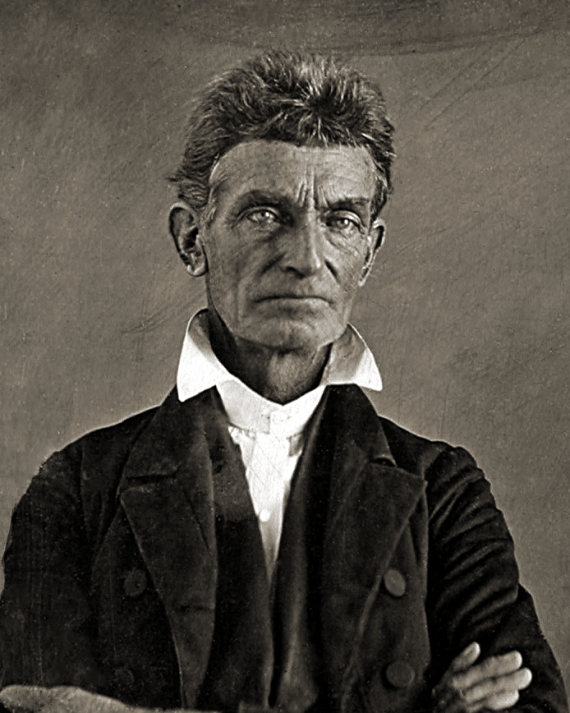
By the end of the 1850s a cluster of events took place which finally convinced many Southerners that continued union with the North was no longer tolerable, as it posed a profound threat to their well-being, and even their lives. Beginning in spring of 1859 they were outraged when the Republican Party and 68 Republican congressmen (out of a total of 92) endorsed Hinton Helper’s book The Impending Crisis as a campaign document for the 1860 election. 3 This unbalanced and incendiary work justified insurrection as a legitimate means to end slavery. That fall, their outrage increased when John Brown attempted a slave insurrection in Virginia, and prominent Northerners endorsed and praised him. The following year, the Republicans, a party with virtually no support in the South, won the presidency and both houses of Congress, after running on a platform of sharply increasing tariffs. These were the final straws for the lower tier of Southern states, and they withdrew from the Union.
To the charge we “fought for slavery” we should reply: Southerners fought for the right to deal with slavery in their own way and in their own time peacefully—without the meddling of hostile Northern fanatics. For the time being, at least, Southerners preferred the status quo of slavery to the chaos of violent and immediate emancipation, a viewpoint some lower-tier states expressed in their secession documents.
After the lower tier of the South withdrew, the upper tier of states, comprising about half of the Southern population, opted to remain in the Union. They were appalled, however, when Republican President Lincoln commanded them to send troops to help subdue their sister states. This was a clear violation of the constitutional compact, state’s rights, and an unequivocal demonstration of Northern malice toward the South. As the lyrics of the Bonnie Blue Flag proclaimed: “As long as the Union was faithful to her trust/Like friends and like brothers, both kind were we and just/ But now, when Northen treachery attempts our rights to mar/ We hoist on high the Bonnie Blue flag that bears the single star.” With this sentiment in their hearts and minds, the citizens of the upper-tier states excited the Union.
The primary impetus to wage war on the seceded states, most significantly, did not come from abolitionists, some of whom were pleased to be rid of slave-holding states. That impetus came instead from Northern political and business elites, whose interests Lincoln served. Initially, some of them accepted the view of our country’s founding generation that states could leave the Union. Yet by the Spring of 1861 most were in favor of using force against the departed states. As historian Charles Adams revealed in his book When in the Course of Human Events, these elites had counted the economic costs they would suffer if they lost the tariff revenues from their Southern cash cow.4
As the war commenced, it became clear to many Europeans that the North was waging war for power and profits. To blur this perception and keep the Europeans from aiding the South, the North embraced anti-slavery as a moral cover for its war of aggression. One example was Lincoln’s Emancipation Proclamation, a propaganda sleight of hand which emancipated no one. Thus began the Righteous Cause Myth (RCM), the fable that the altruistic North fought only to end slavery, even while its armies surged forward to enslave free Southern men in a Union they legally chose to leave.
Were Southerners overestimating Northern malice and ill intentions toward them? Not at all. In fact, as the war and its aftermath revealed, they underestimated them. The Emancipation Proclamation, for example, also served as a thinly veiled attempt to incite slave revolts and the widespread massacre of white Southern civilians. Lincoln admitted that this outcome was acceptable as a means to aid Union victory.5 Northern hatred intensified with the belief that Southerners were “traitors” to the glorious Union. This impelled Yankee armies to inflict wanton cruelty on Southern civilians. Blacks suffered this cruelty as well as whites. Northerners in their arrogance never stopped to wonder why people so mistreated should want to be their countrymen. When Reconstruction began Northern radicals tried to foment racial warfare with their Union Leagues.
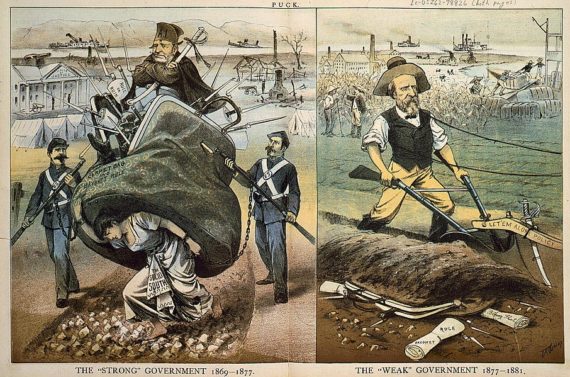
Also, as Reconstruction unfolded, the radicals revealed their utter contempt for constitutional government and the South with the forced ratification of the 14th Amendment. Lincoln fought his war with the justification that the Southern states could not leave the Union. After the war, Republican radicals such as Thaddeous Stevens ignored Lincoln’s claim, and said that those states were out of the Union. To get back in, said the radicals, they would have to ratify the amendment. Where does the Constitution authorize amendments enacted by non-states? With this blatant illogic and extortion, the 14th Amendment illegally became law, and its ill effects on limited government continue with us to this day.
During the war, Northern armies largely destroyed the Southern economy. During Reconstruction, swarms of carpetbaggers looted and plundered much of what remained. There was no Marshall Plan for devastated Dixie. For decades afterward, various Northern policies, such as unequal freight rates, kept the South impoverished. That legacy also remains to this day.
Sadly, the kind of hostility our ancestors faced is very much with us in the present. The deranged and spiteful radicalism of John Brown and Thaddeous Stevens lives on in the Cultural Marxist elites who act as the moral arbiters of America’s Establishment. Indeed, that hostility has broadened to include all traditional areas of our country. Now we witness again a growing national divide. One hopes that our United States can remain united. Nevertheless, citizens in all states that remain faithful to our country’s founding and traditional identity probably will face growing challenges and dangers. As these citizens navigate the future, state’s rights and other facets of our Southern heritage can offer guidance and inspiration. Love of our heritage today is a mighty weapon against the malice of our foes.
Bibliography
1. https://www.perseus.tufts.edu/hopper/text.jsp?doc=Perseus:text:2001.05.0038
2. A Southside View of Slavery: Adams, Nehemiah: 9780692271100: Amazon.com: Books
3 Hinton Rowan Helper, Racist and Reformer: A Letter to Senator John Sherman of Ohio on JSTOR
4. When in the Course of Human Events: Arguing the Case for Southern Secession: Adams, Charles: 9780847697236: Amazon.com: Books
5. Was the Emancipation Proclamation Trying to Incite a Slave Rebellion? – Discerning History
The views expressed at AbbevilleInstitute.org are not necessarily those of the Abbeville Institute.





“The most fortunate group of blacks on the planet are those who went through the US slave system.” BT Washington, UP FROM SLAVERY, Chapter 1. The same BT Washington who inspired blacks all over the US to name their schools after him…until communist infiltration destroyed black society.
Issac Bishop’s highly readable treatise, “Defending Dixie”, basically corroborates everything said here in this article and your own comments…
Excellent essay!
“Reconstruction” is as dishonest a word to describe that period of continued destruction as “Civil War” is dishonest…to describe the attempt at an amicable divorce that Lincoln converted into Lincoln’s War. One of hundreds of indications of the impoverishing nature of “Reconstruction”: 50 years after Lincoln’s War, the South had 18% of the US population, but only 6% of its bank deposits.
What he said. My family owned 25 slaves
Next door at Castle Hill, 100. We were one large extended family, even moreso after the War.
When Sheridan advanced, waves of thousands of enslaved people fled to us before him seeking provisions and safety
We would be one people today, comfortably
‘Why did you MAKE me invade, murder, rape, pillage and burn my way through your states?!’ – Yankee version of the war.
Oh, pshaw Mr. Vinson, this is the Neo-Confederate lost cause revisionist history version of events./TOTAL SARC