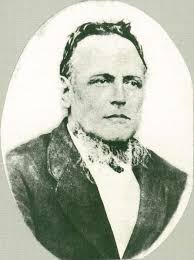
When 200 Union cavalrymen rode toward Laredo on March 18, 1864, their mission seemed straightforward. Destroy 5,000 bales of Confederate cotton stacked at San Agustín Plaza, worth millions of dollars at wartime prices, and cripple the South’s economic lifeline to Mexico. What stood between them and their objective was a garrison of just 42 men commanded by a Mexican American colonel who would rather die than retreat.
Colonel José de los Santos Benavides understood what those cotton bales represented. For three years, he had protected the trade route that allowed Confederate Texas to export cotton through Mexico and import desperately needed war materials. The Union blockade had strangled Southern ports, but the Rio Grande remained open, and Benavides’s Tejano cavalry kept it that way. Now, facing odds of nearly five to one, the highest-ranking Mexican American officer in Confederate service would defend his hometown in what would become his finest hour.
Born on November 1, 1823, in Laredo, Texas, Santos Benavides entered a world defined by fluid borders and shifting allegiances. His lineage traced directly to Tomás Sánchez de la Barrera y Garza, the Spanish captain who founded Laredo in 1755. This distinguished ancestry placed the Benavides family among the elite of northern Mexico’s frontier society, where land ownership, trade connections, and political influence defined social standing.
Benavides grew up in a tumultuous borderlands environment where five different flags would fly over Laredo during his lifetime. The Republic of Mexico, the short-lived Republic of the Rio Grande, the Republic of Texas, the United States, and finally the Confederate States of America all claimed sovereignty over his hometown.
His formative political education came from his uncle, Basilio Benavides, who served three terms as alcalde (mayor) under Mexican rule before becoming mayor and state representative after Texas annexation. Basilio was one of only two Tejanos serving in the Texas legislature during Santos’s youth, and he carefully mentored his nephew in the arts of border politics and diplomacy. This tutelage proved invaluable as Benavides learned to navigate the complex ethnic, economic, and political currents that defined the Texas Mexico borderlands.
Benavides’s political philosophy emerged from direct participation in Mexico’s Federalist Centralist Wars of 1838 through 1840. As a teenager, he fought for the Federalist cause, which championed regional autonomy and local governance against Centralist efforts to concentrate power in Mexico City. The geographically isolated northern frontier of Mexico had long supported Federalism because distant central authority proved ineffective in addressing local security concerns, economic development needs, and border management challenges.
Benavides’s success as a merchant and rancher provided the economic foundation for his political ascent. Operating extensive commercial enterprises with his brothers, he became known as the “Merchant Prince of the Rio Grande,” accumulating substantial wealth through trade, land holdings, and livestock operations. In 1856, his influence had grown sufficiently for election as mayor of Laredo. By 1859, Laredo’s citizens elected him chief justice of Webb County, the highest judicial position in local government.
When South Carolina seceded from the Union in December 1860, followed by Texas in February 1861, Benavides threw his support behind the Confederacy.
In the spring of 1861, Benavides received a captain’s commission in the 33rd Texas Cavalry Regime, assigned to the Rio Grande Military District. The regiment operated along the Rio Grande border, patrolling the vast expanse between Corpus Christi and Laredo, defending against Union incursions, and suppressing pro Union guerrilla activity. Benavides commanded predominantly Tejano troops, Mexican Americans whose families had lived in the region for generations.
By November 1863, Benavides’s leadership earned him promotion to colonel and authorization to raise his own regiment of Partisan Rangers. The partisan ranger designation allowed for Benavidez to have greater operational flexibility, permitting raids, reconnaissance missions, and guerrilla tactics suited to the fluid borderlands environment.
Benavides’s first major engagement demonstrated both his tactical skill and the political complexities of border warfare. On May 22, 1861, Juan Nepomuceno Cortina, a Mexican rancher who had previously raided Texas settlements and became a folk hero to many poor Tejanos, invaded Zapata County with approximately 30 men and attacked Carrizo, the county seat. Captain Benavides led Confederate forces from nearby Fort McIntosh to intercept Cortina’s band. When reinforcements arrived from Laredo, Benavides launched a coordinated attack. The 40-minute battle ended in decisive Confederate victory.
Benavides’s most significant contribution to the Confederate war effort involved maintaining the cotton trade route from Texas to Matamoros, Mexico. When Union naval forces blockaded Gulf Coast ports in 1861, the Confederacy desperately needed alternative methods to export cotton and import war materials. Cotton represented the South’s primary source of foreign exchange. The Rio Grande offered a solution. As an international waterway, the river remained open to foreign traffic under international law. Confederate merchants could transport cotton overland to the border, ship it across to Matamoros or downstream to the neutral Mexican port of Bagdad, and from there export it to Europe.
This trade transformed Matamoros into a boomtown. Benavides’s forces provided essential security for this commerce. They escorted wagon trains carrying cotton from inland Texas to border crossing points, protected merchants from bandits and raiders, and ensured that cotton bales reached Mexican territory safely. When Union forces occupied Brownsville in November 1863 and attempted to interdict the trade, Benavides helped shift the cotton route upriver to Laredo, maintaining Confederate access to Mexican markets.
The Battle of Laredo stands as Benavides’s finest military achievement. On March 18, 1864, Major Alfred F. Holt led approximately 200 soldiers of the Union First Texas Cavalry northward from Brownsville toward Laredo. Their mission was to destroy 5,000 bales of cotton stacked at San Agustín Plaza awaiting shipment into Mexico. Colonel Benavides commanded a garrison of just 42 men. When news arrived that Union forces approached, Benavides made swift defensive preparations.
The numerical disparity was overwhelming, nearly five Union soldiers for every Confederate defender. Yet Benavides deployed his men with tactical acumen, utilizing defensive positions that maximized their firepower and minimized their exposure. When Holt’s Union cavalry attacked, Benavides’s troops repelled them with devastating rifle fire. For three hours, the Confederates held their ground through three separate Union attacks. Benavides, though reportedly ill at the time, refused to withdraw.
As darkness fell, the Union force retreated without achieving their objective. Confederate casualties were zero. The Federals suffered several killed and wounded, along with the humiliation of defeat by a force one-fifth their size. The 5,000 cotton bales were saved and subsequently shipped into Mexico, generating crucial revenue for the Confederacy.
In addition to conventional military operations, Benavides conducted counterinsurgency campaigns against pro Union raiders operating from Mexican sanctuary. On September 1, 1863, Major Benavides led 79 men across the Rio Grande in pursuit of Octaviano Zapata’s raiders. The Confederate force tracked Zapata to a location near Mier, Tamaulipas. After a brief firefight, Zapata’s band dispersed, leaving 10 men dead, including Zapata himself.
Benavides’s Regiment participated in the Civil War’s final land engagement, a surreal battle fought more than a month after Robert E. Lee’s surrender at Appomattox. On May 12, 1865, Union Colonel Theodore H. Barrett ordered a 500-man column to attack Confederate outposts near Brownsville, despite knowing that the war was effectively over. The battle at Palmito Ranch ended in Confederate victory. For Benavides and his men, Palmito Ranch represented a fitting conclusion to their service, undefeated in combat to the war’s final moments.
By any conventional measure, Benavides compiled a remarkable military record. He participated in more than 100 engagements and never lost a battle under his command. His forces operated across vast expanses of South Texas and northern Mexico, often without adequate supplies, equipment, or logistical support, yet maintained effectiveness and morale.
When the Confederacy collapsed in 1865, Benavides returned to his mercantile and ranching operations, partnering with his brother Cristóbal to rebuild their commercial empire. From 1879 to 1885, Benavides served three terms in the Texas House of Representatives.
During the 1880s, Benavides became a central figure in one of South Texas’s most colorful political feuds between the Botas and the Guaraches. The Reform movement, led by Benavides, adopted the guarache, a humble peasant sandal, as their symbol to represent the common man against elite corruption. This political rivalry erupted in spectacular violence on April 7, 1886, in what became known as the Laredo Election Riot.
Benavides’s cross border connections and political prominence led to his selection as an envoy to the United States for Mexican President Porfirio Díaz during the reciprocity controversy in 1880. In 1884, Texas appointed Benavides as the state’s delegate to the World’s Industrial and Cotton Centennial Exposition in New Orleans.
Santos Benavides died at his home in Laredo on November 9, 1891, at the age of 68. He was buried in Laredo’s Catholic Cemetery. Today, Colonel Santos Benavides Elementary School in Laredo bears his name, maintaining his memory in the community his family helped found.
The views expressed at AbbevilleInstitute.org are not necessarily those of the Abbeville Institute.




“Santos Benavides died at his home in Laredo on November 9, 1891, at the age of 68. He was buried in Laredo’s Catholic Cemetery. Today, Colonel Santos Benavides Elementary School in Laredo bears his name, maintaining his memory in the community his family helped found.”
In Jackson Miss. There is (was) an elementary school named Jefferson Davis. About 15 years ago the “powers to be” changed the name to Obama Elementary due to the “racist name” it had carried for years.
Let’s hope that the same rotten “powers to be” don’t get the same notion down in Laredo (a place I have visited many times).
Excellent! One of my collateral ancestors is Severo Y’Barbo, who was a private in Company B of the Second Louisiana Cavalry, CS. His great-grandfather was Antonio Gil Y’Barbo, who supplied Spanish Luisiana with cattle from his ranch Lobonillo during the American Revolution. Antonio Gil Y’Barbo’s parents were married at the Alamo and he himself founded Nacogdoches after being ordered to leave Los Adaes in what is now northwest Louisiana.
Texas Heaven Texas.
Excellent work, Jose Nino!