

If you have seen the 1976 Clint Eastwood film “The Outlaw Josey Wales,” you may remember that it opens when the hero, a peaceful Missouri farmer, has his home destroyed and his wife killed by Kansas Jayhawkers. He then joins the Southern guerilla fighters. This was the reality for thousands of Southerners living in western Missouri.
An even better film, “Ride with the Devil,” (1999) has a similar beginning and result. Both films are based on novels by Southern authors, Forrest Carter and Daniel Woodrell. The latter film was made by Ang Lee, a director who evidently does not suffer from Yankee self-righteousness.
The bloody Kansas/Missouri fighting between the North and South, which began even before Fort Sumter, is a very interesting and controversial event in our history. It has created a considerable literature, the bulk of which portrays brutal Southern barbarians preying upon righteous Kansas settlers. This vigourously promoted interpretation is a tissue of lies. There is not a bit of Northern righteousness to be found in this conflict although there was a great deal of confusion and divided loyalties.
Instead, Union activity in this border region was a campaign of terror against civilians—looting, burning, torture, rape, and summary executions. Good men raised as proud Americans had no choice but to resist to the best of their ability.
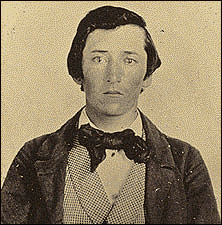
We now have an honest picture of the border warfare: James C. Edwards has written as definitive an account of William Clarke Quantrill and his fighters as can be made: William Clarke Quantrill: What History Doesn’t Want You to Know (Shotwell Publishing 2026).
Edwards is even-handed in his approach and his research is exhaustive. He presents both sides’ views of particular events and honourably indicates where the known sources do not provide a definitive answer. His bibliography lists five pages of primary sources: contemporary letters and newspapers and statements of the time. Another five pages is comprehensive as to the secondary writing on the subject.
In 1862 the Union government declared the guerillas to be outlaws who could be executed on sight, although they were legally enrolled Confederate Partisan Rangers who sometimes fought (ably) in battles with regular Confederate armies. After numerous executions of prisoners and civilians suspected of Southern leanings, the guerillas had no choice but to deal in kind.
President Truman, born and raised in western Missouri, defended the Confederate guerillas as good men. He knew that his unoffending grandparents had been burned out of their home by Kansas Jayhawkers. It is said that when Truman’s mother visited the White House she refused to sleep in the Lincoln bedroom.
Quantrill’s raiders were very good fighters. They had nothing to lose. They often charged, having only revolvers, into Yankee forces twice their number and armed with good rifles. They usually sent the Unionists fleeing. As in other theatres, Yankee officers were bitter about being so often whipped and expressed their rancour by accusing their enemies of every sort of crime and imprisoning the women of their families.
Beginning almost immediately, blatantly false news about atrocities by the Confederates, began to appear and have continued to the present. Every time the Confederates won it was a “massacre” while righteous Northerners never committed any “massacre.”
Edwards gives us definitive accounts of the Lawrence raid and of the Union armies depopulation of five Missouri counties. I wish I could discuss these issues more fully, but space requires me to leave these matters to the readers.
An important source for the author is a manuscript memoir written by William Gregg, one of Quantrill’s chief officers. He was encouraged to write the memoir with promise of publication as a book and then the Yankees deceitfully reneged on the promise. The document remains in manuscript. Somebody who wanted to contribute to Southern history could transcribe this document and publish it as a book.
You should note Edwards’s postscript, where he discusses the difficulties of presenting honest history of such matters.
Incidentally, Edwards clears up my confusion about Kansas Jayhawkers and Kansas Red Legs. These groups had different leaders but were equal in their murderous rages against Southerners, under the guise of U.S. soldiers. One Union general referred to them as nothing but “banditti” who outraged even decent Unionists. One of the worst of the banditti was James Lane who was elected to the U.S. Senate by Kansas Republicans.
The views expressed at AbbevilleInstitute.org are not necessarily those of the Abbeville Institute.





Thank you for the review, I look forward to this one
“You should note Edwards’s postscript, where he discusses the difficulties of presenting honest history of such matters.”
It is a mountain to climb!
“It is said that when Truman’s mother visited the White House she refused to sleep in the Lincoln bedroom.” Interesting.
Saw the following just today:
“Tom Hanks Will Play His Distant Relative Abraham Lincoln in Upcoming Movie”
“…the film (“Lincoln In the Bardo”) will “explore one of the most intimate moments of Lincoln’s life, centering on his relationship with his recently deceased 11-year-old son.” I could be interested in that part of Lincoln’s life.
I would also be interested in seeing a movie, if it’s done right, about how Jefferson Davis and his wife, Varina, dealt with the death of their son, when the son suffered a bad fall in Richmond, late in the war I believe.
However, in the bardo? I thought it was just Mary Lincoln who involved herself in that. If it was Abe, too, he should have read the Bible more, and realized trying to get involved with the dead is not a good idea. Recall Saul and the witch of Endor summoning Samuel.
I’ve attempted in recent years, with more time on my hands, to expand my knowledge of the Late Unpleasantness beyond Virginia. Never knowing where to start on the border war, James C. Edwards’s William Clarke Quantrill: What History Doesn’t Want you to Know, seems like a good place.
I’ve got a bone to pick, though. Ang Lee’s “Ride With the Devil” is truly a fine movie, and no doubt effectively documents the terror and treacherous nature of border war.
But no movie is better than “The Outlaw Josey Wales”. Nothing is better than “The Outlaw Josey Wales”. …… Maybe dogs, good dogs.
The last scene alone:
“I don’t believe no five pistoleros could down Josey Wales. I think he’s still alive. I think I’ll go down to Mexico and try to find him.”
“….. and then?”
“He’s got the first move. I owe him that. I think I’ll try to tell him the war is over. What do you say…. Mr. Wilson?”
“I reckon so. I guess we all died a little in that damn war.”
I may or may not read it. I’ve got other things on my mind besides refighting a war that ended 80 years before I was born. One comment I’m not sure I’d accept. Wilson claims the Missouri guerrillas (they were NOT bushwhackers, who were Unionists) were armed only with revolvers. I’ve read a lot of books by Confederate veterans of Forrest’s cavalry in which they said they carried as many as four revolvers along with a shotgun and carbine, and that the shotgun was most effective at close range. One Confederate cavalry veteran who fought under Forrest described their tactics against charging Federal cavalry. First, they fought dismounted. First they engaged the attackers with their rifles and carbines until they were close enough to use shotguns, then they pulled out their revolvers. Missouri is just across the Mississippi from West Tennessee. It is well known that partisans armed themselves with captured Union arms and ammunition.
“…were armed only with revolvers.”
Not what he said. He said “OFTEN” armed only with revolvers.
That war that “ended 80 years before” you were born is more relevant than ever. There is increasing talk of secession even in the North. And it is always, by the way, a worthwhile endeavour to correct misinformation about the past.
Exactly. The shooting ended but the principle has never surrendered nor ever died. Never will insofar as who was republican and who was Republican. JMO
The opening scene of the movie Frank & Jesse is another good one. “It was four years after the Civil War and the South was still occupied by Union troops who protected the carpet baggers and railroad men and the pursuit of their business.”