

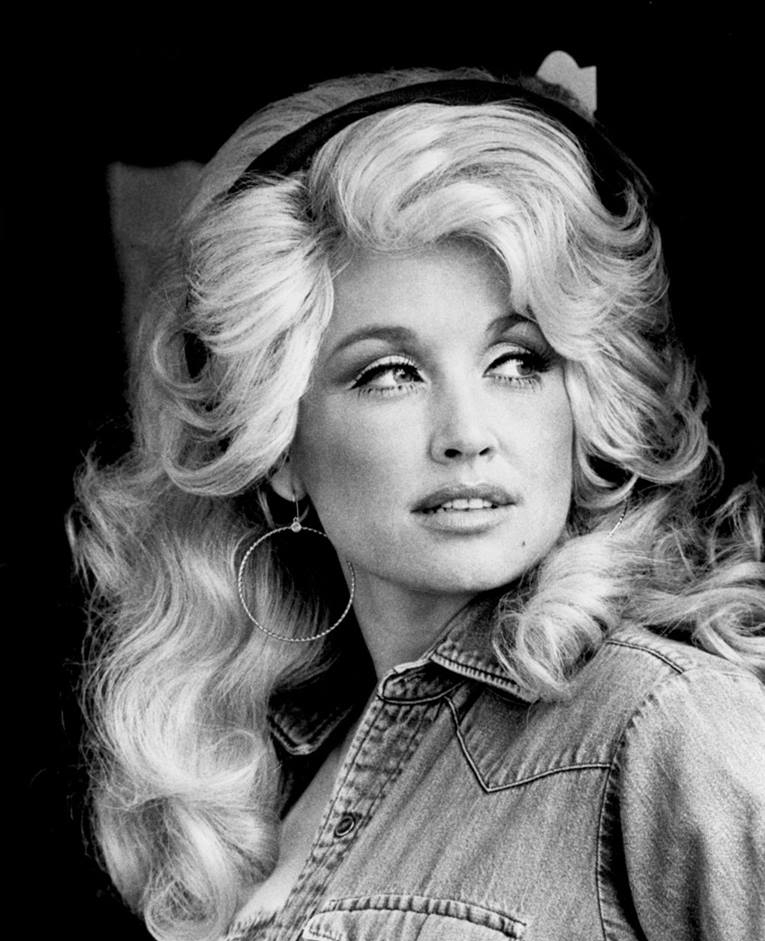
When a life as public as Dolly Parton’s closes, the temptation is to sort the woman by the last arguments attached to her name. The internet-fueled predictable reaction is to give her a cultural Judgment Day based on cherry-picked items of discontent while ignoring her contributions to both music and the South as a whole. That is a poor way to hear a singer, and a poorer way to keep a tradition. Songs contain what was written, sung, owned, and carried without apology offered or required, and so does a culture and civilization.
“Coat of Many Colors” is still a child walking to school in a garment her mother made from scraps. The song names the ridicule and declines to be ruled by it. The child knows what the coat means, knows how it looks to other people, and knows why those looks do not get the last word. No one standing outside that coat gets to tell her what it’s like to be inside that coat. It is a delicious metaphor for the way Dolly lived her real life, including the end. That is not a political program. It is a Southern habit of speech, and a Southern woman’s way of slicing people to ribbons before they know they’ve even been cut. Tell the story straight. Keep your dignity. Do not decorate the facts in order to please a stranger. Dolly already answered her critics before they’d even formed the thoughts.
“Jolene” is still a plea with no bridge and no escape. There is no harmonic exit and no new vantage from which the narrator can pretend she is not afraid. She remains calm while her extreme Southern accent on the name Jolene stretches into the thing she cannot afford to lose. Containment is the power. “My Tennessee Mountain Home” is still East Tennessee set to melody. Dolly’s accent was never a schtick nor a costume put on for the chorus. She could scale it back when a pop song needed to travel, such as “Here You Come Again,” or “9 to 5,” but she never traded it in. That was craft and a brilliant market strategy working together. It was not a confession nor a recantation.
This is the part of Dolly’s “permanent record” that counts. She kept the music. She kept the accent. She put work back into the county that raised her. She wrote songs a civilization can still use when it needs to tell the truth without raising its voice. Those are her contributions to Southern culture, and they didn’t come from a checklist of items “only a true Southerner would know.”
What is now being asked of her is something smaller. It is an audit of later public choices, with Southern standing as the penalty. That accounting treats heritage as a club with current dues. Miss a payment, and the early work is declared void. “Coat of Many Colors” does not become a lesser song because the woman who wrote it later disappointed an auditor. “Jolene” does not lose its key. A tradition that fragile was never a tradition in the first place. The South is more than Dixie and more than a single chapter of war. Heritage is deeper than either. It lives in speech, in work, in relationships, in the way a story is told, and in the songs a place keeps. Anyone who needs a frozen banner to certify a Sevier County girl has already mistaken a symbol for a civilization. For whatever mathematics a cultural auditor applies to her life and music, Dolly still remains on the plus side of the ledger.
Southern music is not a purity test. It is a body of work. You can quarrel with a later decision and still love the songs. That doesn’t make you a traitor and hypocrite, but a reasonable human. You can wish a public sentence had been different and still know that the mountain voice and guitar held its place. People who cannot process both at once have not enlarged the South. They have reduced it to the last fight they remember. Greatness in this tradition has been endurance and the capacity to pass through commercial and institutional pressure without surrendering the sound that first made the singer a force of nature. Dolly belongs to that narrow company. Her personality was a strategic asset and her work was serious. She definitely crossed over and she definitely never relocated her center of gravity. Both are true at the same time.
People are encouraged to form their own opinions of Dolly based on their own values and beliefs. That’s a celebration of the very Southern culture in question. No one is ever allowed to tell me that my opinions are useless because they don’t follow the herd. That’s the very definition of Yankee puritanism at its most vile. People will continue to measure her by tests that the songs themselves do not sit for, but that’s okay, too. The songs are patient. They do not change their minds. “Coat of Many Colors” is still proud of the scraps. And the little mountain home is still Home. A little ol’ Southern girl who was raised right left behind a full life that can withstand the storm.
The views expressed at AbbevilleInstitute.org are not necessarily those of the Abbeville Institute.




Beautifully said, thank you and God Bless
„ Beauty is truth, truth beauty, – that’s all , Ye know on earth , and all ye needs to know on earth „ John Keats
I’m reading this in Sevier County and enjoying it. In 1970 Dolly releases ‘Daddy Come and Get Me’. Her cad of a husband gets a new gal and commits her to a mental institution because she takes the news badly. Her route out of this mess is family and in particular her father. The song implicitly appeals to the roots and family tradition she made one of her hallmarks and that has made her beloved of East Tennesseans. Here’s a few verses:
. . .
“When he said he loved another, I was crazy with jealousy
That’s ’cause I was crazy over him and I couldn’t stand to set him free
And I couldn’t stand to lose him and I cried and cried for days
And he said that I was crazy but he just put me in here to get me out of his way
Daddy come and get me
Oh Daddy come and get me and take me home with you
I’m depending on you Daddy ’cause there’s nothing else I can do
And you said that I could come to you if I ever was in need
But Daddy I can’t come to you, you’ll have to come to me
Oh Daddy, come and get me”
I’m a Southern boy. I believe in Southern ideals and I’m not ashamed of my roots.
I admired and respected Dolly Parton’s music, her story, and especially her business instincts. I even have my own “Coat of Many Colors” story. But let’s be honest—Dolly was an entertainer, and she knew how to ply her trade and work an audience.
I became a little less enamored with her when she removed “Dixie” from her Stampede restaurants and began catering more and more to mainstream liberal sensibilities. And frankly, I don’t believe Dolly was any more Southern than Donald Trump. She backed down and changed the name of her restaurants because someone might find it offensive.
That’s exactly the kind of subtle surrender that has gotten us into the mess we’re in today. Every time we erase a piece of our heritage because somebody claims to be offended, we give those attacking our history another victory.
History has shown us what happens when people in power deliberately try to erase the past. Pol Pot’s regime in Cambodia is an extreme example. The Khmer Rouge attempted to destroy the country’s existing social and historical order and even sought to create an entirely new society. I’m certainly not suggesting Dolly was a communist. I’m making a different point: constantly backing down in the name of not offending anyone can eventually leave you with nothing left to defend.
And who did Dolly offend by doing this? Me.
I’m tired of the old genteel Southern habit of worrying so much about offending others that we willingly surrender our own heritage. There’s nothing wrong with being polite, but there’s also nothing wrong with standing your ground.
I’ll say it again: Dolly was an entertainer, and she knew how to work an audience.
If you believe Dolly was Southern simply because she came from the South and embraced Southern imagery, then maybe she worked you, too.
Yes,well stated sir!
“People will continue to measure her by tests that….” at first glance i thought this said ‘measure her by her breasts.