

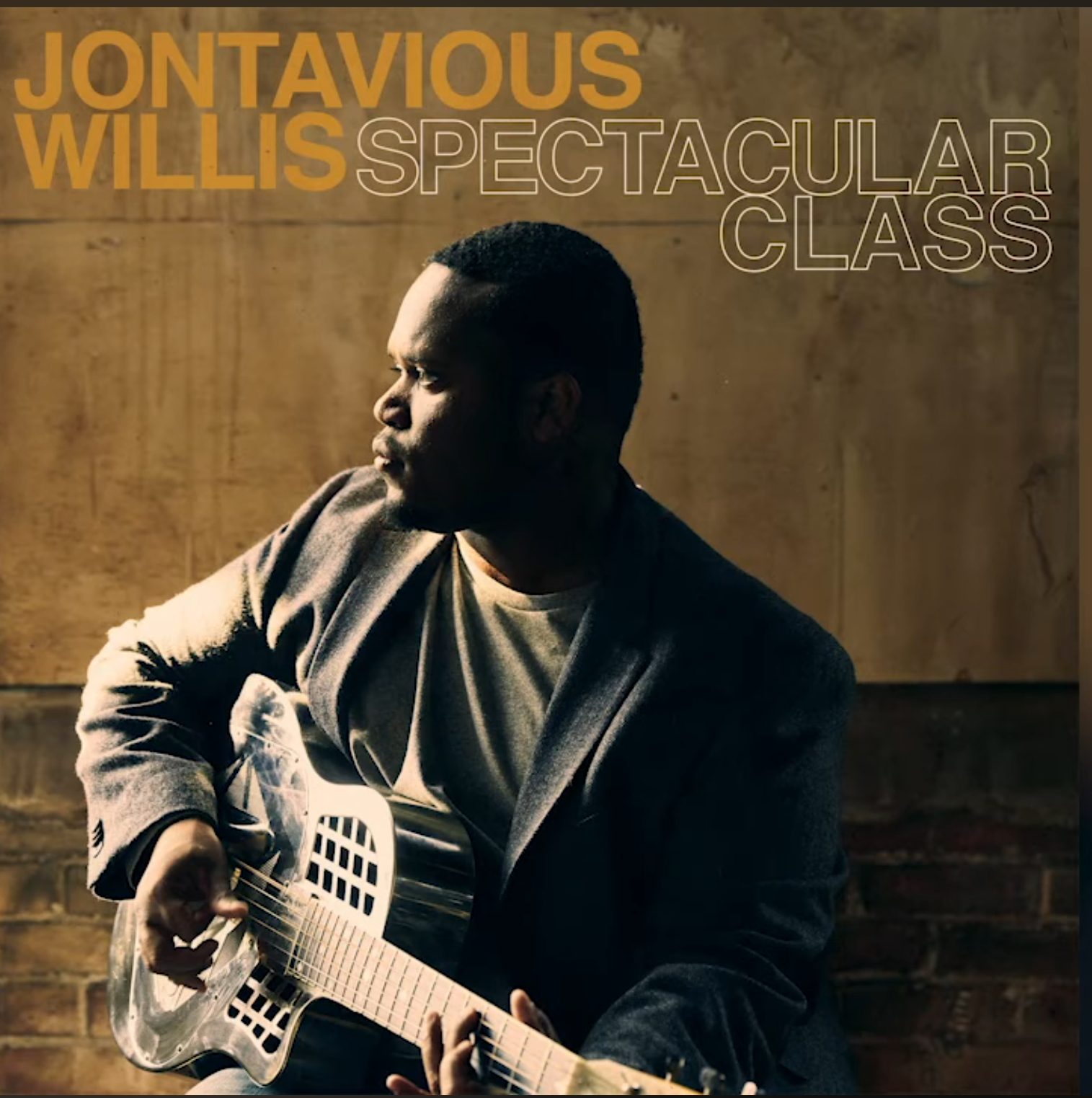
Are the Blues dead? Are the Blues an exhibit in the mythical Southern Museum of the Past, or are the Blues still a living, breathing creation? A relatively new Southern artist named Jontavious Willis offers a clear answer to that question. He didn’t come up playing through some sort of nostalgia circuit. He learned the Blues the old way—by doing it, by listening hard, by playing in rooms where the music had to work or it failed. Born in rural Georgia and steeped in Southern Black musical tradition, Willis absorbed country Blues, gospel phrasing, and front-porch rhythm as a spoken language instead of a syllabus.
Jontavious Willis is a Southern Blues artist from Greenville, Georgia, who came up playing for real people in living rooms, clubs, and festivals without receiving any kind of conservatory training. Wider recognition followed his win at the International Blues Challenge in the solo/duo category in 2019, confirming what regional listeners already knew. Since then, he has released multiple albums, toured extensively, and appeared regularly at Blues and roots festivals.
He performs both solo and with a band. His solo performances emphasize his Piedmont-influenced fingerstyle guitar and his ability to captivate a room through voice, rhythm, and space. When he performs with a band, the groove just gets wider without losing its grounding. In both settings, he writes his own songs, drawing from traditional Blues and folk structures without freezing them in time. When he performs older material, he treats it as functional rather than sacred, and he’s not afraid to mix it up and change a song.
What sets him apart is command of the guitar. His playing is not flashy or arrogant, but remains confident and authoritative. Alternating bass lines move with intention, his thumb-and-finger independence will remind you of earlier players without imitating them, and he allows his sense of time to breathe. Willis most often plays vintage-style Gibson flattops, particularly small-body L-series instruments. These guitars emphasize midrange clarity and quick note decay, allowing rhythmic flexibility and dynamic control.
Willis doesn’t treat the Blues as something fragile to be handled with care. He treats it the way earlier musicians did: as a sturdy, trusty tool for saying what needs to be said in the present. His songs are definitely not period pieces. They address love, uncertainty, pride, humor, loneliness, and everyday survival—subjects the Blues has always carried—but they speak in a contemporary voice that doesn’t apologize for existing now. Many younger Blues musicians sound like museum archivists, and their sound is technically flawless, but has no feeling or soul. Willis is a participant, and sounds like it. He stretches the Blues form, lets lyrics run long or snap short, and trusts instinct over reverence. He’s not afraid to be a Blues man. He knows the tradition well enough to lean on it without collapsing into it.
The social dimension of his work emerges without any kind of formal musical declaration. He doesn’t soften his message and pander to either an academic or a commercial audience. By emphasizing Black Southern experience, vernacular speech, traditional musical forms, and lived emotional truth, he asserts continuity with his Blues legacy. Historically, the Blues has rarely functioned as explicit political commentary. It has instead concerned itself with survival, dignity, humor, frustration, love, and endurance under difficult conditions that were often unnamed. Willis stands squarely within that lineage. His songs focus on personal choices and mistakes, responsibility, resilience, and human foolishness rather than platforms or slogans.
Personally, Willis follows an older Southern and Blues-adjacent posture in which musicians keep their personal politics private and allow their music to speak. He’s not disengaged from his culture, but he doesn’t cultivate a controversial public political identity alongside his musical one.
For listeners encountering him for the first time, several songs offer reliable entry points. “Low Down Ways” presents Willis at his most fluent, built around a relaxed groove, a conversational vocal, and guitar work that walks and talks at the same time. “West Georgia Blues” establishes place without romanticizing it, treating geography as lived reality rather than backdrop. “Ghost Woman” highlights his humor and narrative timing, traditional in structure but never stiff. “Hobo Willie” reveals the Piedmont influence in full stride, with thumb-driven rhythm and a story that unfolds naturally. “Cow Cow Blues” demonstrates his approach to tradition through innovation and personality rather than modernization.
“Cow Cow Blues” was written by pianist Cow Cow Davenport who recorded it in 1928, and features a driving, rolling left-hand piano pattern that Willis translates perfectly to the guitar. The original piece relies on a heavy, locomotive-style that combines the left hand with syncopated right-hand fills. On guitar, Willis recreates that same rhythmic propulsion through alternating bass patterns and percussive thumb work, essentially adapting a piano architecture into a Piedmont-style fingerpicking framework. In Willis’s hands, “Cow Cow Blues” becomes a case study in continuity instead of an academic historical reference. He takes a piano-driven urban Blues song and revoices it through Southern acoustic guitar as someone who understands how the language operates rather than merely how it sounded in 1928.
Groove emerges most clearly in “Low Down Ways,” where rhythm operates as feel rather than measurement. The tempo remains moderate, but the pulse lives inside the performance rather than on a fixed grid. Syncopation arrives slightly ahead of or behind expectation, and small fluctuations in speed appear as natural adjustments rather than formal changes. The groove is maintained through repetition and physical memory rather than precision, aligning Willis with a long Southern tradition in which rhythm is negotiated in real time.
Simplicity and modal harmony work together in “Ghost Woman.” The melody is built from a small repeating cell that returns with subtle variation, behaving more like speech than formal song. Blue notes lean into pitches between scale tones, following Southern inflection patterns. Harmonically, the song avoids functional resolution and centers on a dominant tonal gravity. The stability of the harmony allows repetition and phrasing to carry meaning, leaving the song open rather than conclusive.
Willis’s relationship to his Southern home is grounded in familiarity rather than aspiration. Land appears as presence rather than metaphor, shaping the people within it rather than serving as backdrop. Churches, kitchens, yards, and gathering places are implied through pacing and tone rather than described. Home is not treated as nostalgia, but as something active and lived inside. The land continues, the roads lead where they lead, and life unfolds without explanation.
Taken together, these elements show an artist whose work operates from inside Southern tradition rather than gesturing toward it. His music values cadence, timing, and lived perspective over surface markers or assertion. He practices the Blues daily, speaks it fluently, and carries it forward without ceremony. Jontavious Willis is a Blues man.








The blues were invented in Europe…every musical genre was present in “classical” music. The hymn “Amazing Grace” is nothing but the blues…
If one wants to argue European influence, that is a different discussion. If one wants to argue European origin, the evidence is overwhelming and unambiguous. The blues is an American form, born in the South, shaped by African American experience, and carried forward through practice rather than prescription.
Do you mean Sub-Saharan Africans?
Thanks for exposing me to Jontavious Willis. I always admire guitar playing that has elements of a 2nd voice (to the vocal) rather than normal accompanying chords. Not easy. Cow Cow approaches Mississippi Blues and Big Road Blues and Chris Smither stuff (another Southerner–New Orleans).
Blues man indeed