Were the American Whigs the natural extension of the Federalists? This is a complicated question and one that creates a simplistic understanding of the American past. It also removes both Thomas Jefferson and James Madison from any complicity in the intellectual origins of the Whig Party.
The Federalists as a “national” political faction died in 1815, tarnished by their war time activities in opposition to the War of 1812 and the open support for nullification and secession among some of their more prominent members like Timothy Pickering. Local pockets of Federalism remained until around 1830, but their influence was limited to State political issues. Southern Federalists generally abandoned their allegiance to the old order after Napoleon’s defeat in 1815, though they remained strongly anti-French and anti-Democratic. As James Broussard noted in his landmark study of Southern Federalists, opposition to the French Revolution and Napoleon animated Southerners more than any other issue. They saw the federal government as the only check against blood thirsty Jacobins and Godless democrats.
But the Federalists did leave behind an economic legacy and a belief in the power of the central government. In fact, both President Jefferson and President Madison tapped into those positions to advance their own political agendas.
Jefferson’s Sixth Annual Message to Congress in 1806 outlined a proto-Whig position on federally funded internal improvements, tariffs, and a “national university.” He argued that each required a constitutional amendment for implementation, but he believed that each would strengthen the bonds of Union and shore up American manufacturing, communication, and transportation. By 1815, President Madison dropped the call for an amendment and simply urged Congress to consider legislation to that effect. He signed the Second Bank of the United States into law but then vetoed the Bonus Bill, authored by John C. Calhoun, which would have spent federal dollars on “internal improvement” projects. Madison fell back on the amendment argument, but not everyone thought this was necessary, most importantly Henry Clay.
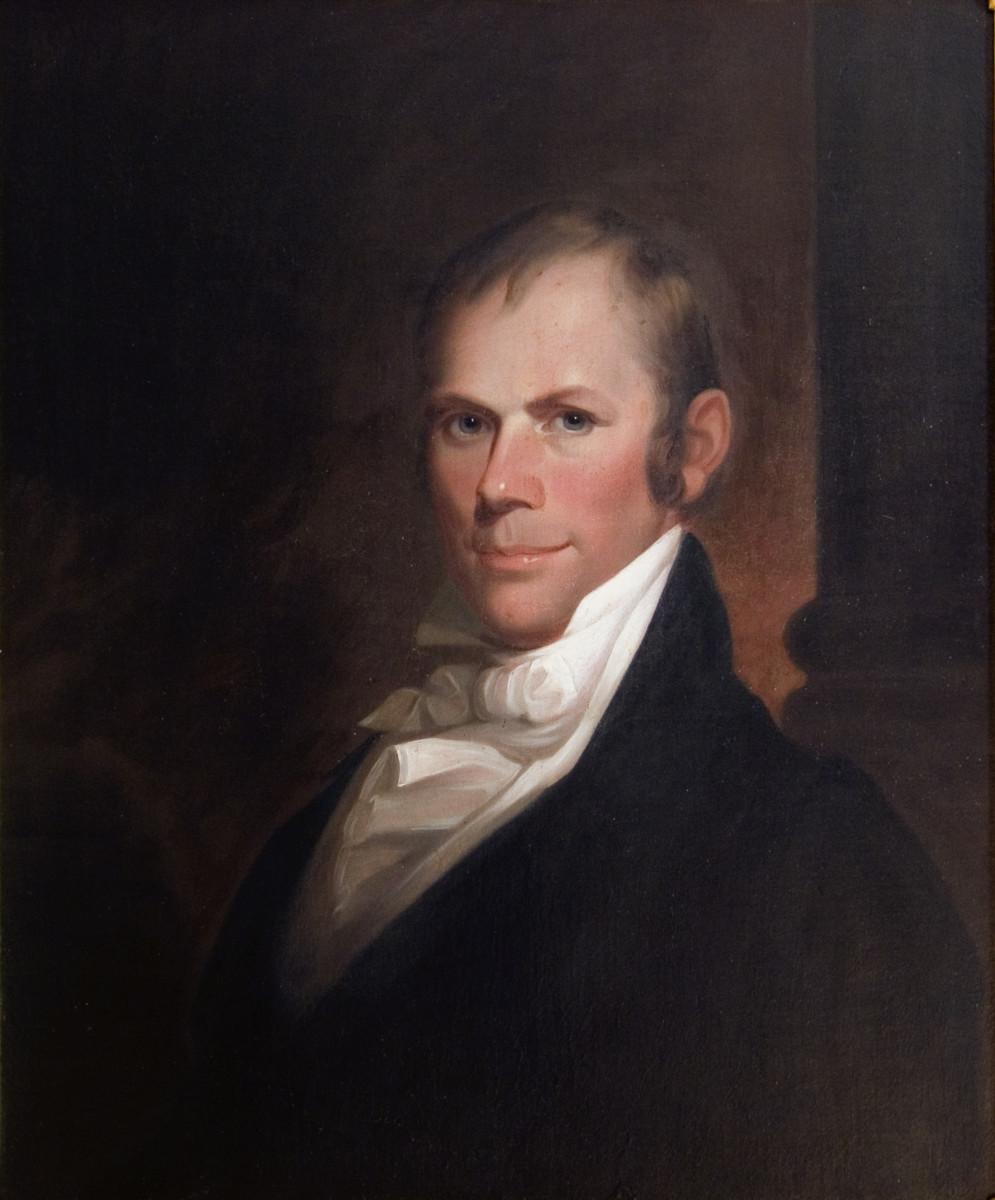
As Michael Holt correctly argues in his massive The American Whig Party, Clay always considered himself to be a Jeffersonian Republican. Clay believed in the economic messaging created by the ongoing dispute between the British and the United States from 1805 to 1815, and he saw a “nationalist” economic program as a boon for Western farmers in Kentucky and beyond. The Constitution mattered little when buying votes meant political power. When Clay helped orchestrate the election of John Quincy Adams to the presidency in 1824, he solidified support for a “National Republican” faction in Washington D.C. Holt describes Clay as a “Madisonian Nationalist.”
John Q. Adams, like Clay, had never been a Federalist. The Old Federalists did not trust him, nor did they trust his father. Neither were not purists. Adams wrote disparagingly about the Hartford Convention and held a grudge against men like Pickering for making his father’s life difficult. But like Clay, Adams believed in their economic program with a “republican” stamp. Adams helped create the ahistorical “proposition nation” myth in 1839, and while President advanced the political-economic agenda that both Jefferson and Madison outlined in their separate annual messages. Alexander Hamilton took a bullet to the stomach in 1804, but both his political and economic agenda would find new life from unlikely sources, namely Jefferson and Madison.
Therein lies the confusion. Hamilton was the leader of the Federalist faction until his death, and because the Whigs adopted parts of his agenda during their rise to power in the antebellum period, they are often seen as the natural outgrowth of the Federalists.
But the Whigs did not campaign like the Federalists nor did they have the same disdain for “democracy” and popular government. Old Federalists would have been as wary of Henry Clay as the Old Republicans. The Old Republicans would have recognized Clay’s political tactics, as they utilized the same methods in Virginia at times, but they always stood a bit more aloof from the popular fray. Clay embraced the kind of homespun frontier democracy that made Abraham Lincoln possible. It was vulgar, uneducated, unsophisticated, unconstitutional, and power hungry. But it was nationalist and favored a kind of “Americanism” that resonated with the masses.
Lincoln needed Clay’s political machinations to rise to power. His “government of the people, by the people, and for the people” could not have been possible without the Log Cabin and Hard Cider campaign of 1840 when William Henry Harrison won the election over the “aristocrat” Martin Van Buren. John Tyler spoiled their party. He was a “Whig” in the purest sense, an Old Republican who distrusted Andrew Jackson because Jackson represented the worst of aspects of democracy. Governor John Floyd of Virginia held the same view, and he hated Henry Clay. That is why Clay booted Tyler from the “Party.” He wasn’t an “American Whig.” Tyler renamed his plantation Sherwood Forrest in response and later seceded when Virginia did in 1861.
Both the Old Federalists and the Old Republicans feared military dictatorships. So did the Whigs, at least while Jackson was in office. That all changed with Honest Abe, but the Old Federalists predicted a man like Lincoln would eventually assume the presidency. Popular National Democracy always created a Napoleon. It just took a few decades.
This isn’t to argue that Jefferson was exactly one of them. He wasn’t, but perhaps Madison was a more dangerous president than historians might have accepted. He was, after all, always a nationalist, the same nationalist who went to Philadelphia in 1787 looking to essentially erase the States. He argued differently during the ratification debates of 1788 and attempted to thwart Hamilton’s bank in 1791, but by 1816, Madison was back to being a nationalist. Little Jemmy never completely ditched his youthful support for centralized government. John Randolph thought the War of 1812 would fundamentally change America. He was correct.
The “National Republicans” ultimately transformed the United States into a consolidated “United State,” but we need to understand that while they embraced the economic underpinnings of Hamiltonianism, they were the bastardized “Jeffersonian Republicans” of Henry Clay and John Quincy Adams, men who distorted the Declaration and “republican government” to meet their reformist, democratic ends.
The views expressed at AbbevilleInstitute.org are not necessarily those of the Abbeville Institute.




Well said. I think you analyze it well. I think insightful Federalist Fisher Ames would definitely have had a problem with Henry Clay.
I suspect the fairly profound problem of financing the War of 1812–war playing havoc on a tariff tax system–softened Madison on a central bank. John Randolph was as right about the War of 1812 fundamentally changing America as Lindbergh was about the sequalae of FDR manipulating the US into War II (that if it happened the US would never again be able to mind its own business).
Sure doesn’t take long for the Framer’s Constitutional idea and behavior of decentralization to shift into centralization when someone acquires power. It’s like a disease that inflates the ego and is “progressive“ in that it always escalates getting worse. Patrick Henry was right. Liberty over Union. Else Liberty goes the way of extinction trampled by despotism.
Thanks Dr. McClanahan. Keep up the helpful writings.
“Shall liberty or empire be sought.” P. Henry
“Sure doesn’t take long for the Framer’s Constitutional idea and behavior of decentralization to shift into centralization…”
Government is inherently corrupt and corrupting. A good constitution can help (ours could have been better had several whigs [in the pre-Revolutionary sense] attended who declined to] attended), but the perverse incentives are unavoidable when a group of people are given power. Power corrupts. That fact being featured in our education could help a lot too. Government may be a necessary evil, but we must all bear in mind its propensity to be evil.